Kirjojen hintavertailu. Mukana 11 342 296 kirjaa ja 12 kauppaa.

Kirjahaku

Etsi kirjoja tekijän nimen, kirjan nimen tai ISBN:n perusteella.

7 kirjaa tekijältä Thomas R. Guskey

How's My Kid Doing?

How's My Kid Doing?

Thomas R. Guskey

Jossey-Bass Inc.,U.S.
2003
nidottu
In How's My Kid Doing? noted educator Thomas R. Guskey has created a practical handbook for parents who have trouble understanding their school-age children's grades, report cards, and test scores. This down-to-earth guide will help parents make sense of school reports and offers a helpful resource that can open communications between parents and teachers.
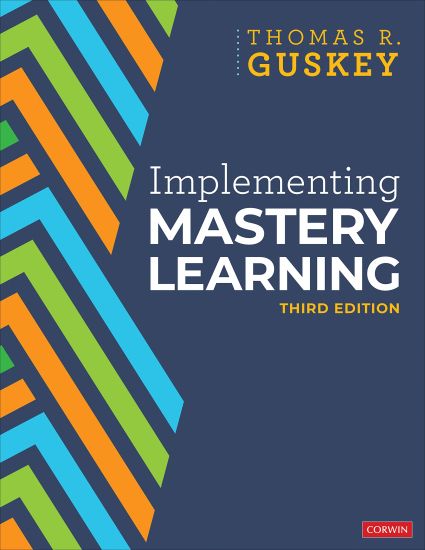
Implementing Mastery Learning

Implementing Mastery Learning

Thomas R. Guskey

SAGE PUBLICATIONS INC
2022
nidottu
The definitive classic—updated for our times. After 50 years, Benjamin Bloom’s revolutionary work on mastery learning is more relevant than ever. One of the most widely researched and proven-effective education methodologies in existence, it provides a direct challenge to the traditional, deterministic, time-based approaches to teaching and learning that have perpetuated inequities for generations of children. Mastery learning is the progenitor of many of today’s most promising teaching methods, including competency-based learning, personalized instruction, and differentiated instruction. It helped to elevate the importance and use of formative assessment as a powerful instructional practice. This timely new edition of the foremost practical guide includes: Recent applications of the principles of mastery learning to distance, hybrid, and blended learning environmentsUpdates including evidence from recent implementation efforts, the results of the most current research on mastery learning and its implications for practiceStep-by-step guidance on implementation across grade levels and subject areasSupplemental, on-line chapters that unpack the development of effective formative assessments and connections between RTI and mastery learning Written by one of the most highly regarded scholar/practitioners in the field and the leading interpreter of Bloom’s work, this updated guidebook is essential reading for teachers, school leaders, professional learning communities, and anyone who believes that all students can learn well, achieve success, and become confident learners.
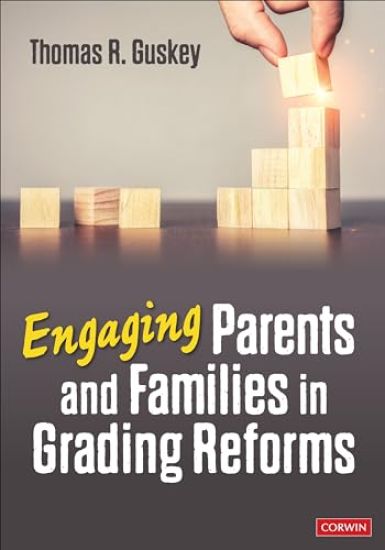
Engaging Parents and Families in Grading Reforms

Engaging Parents and Families in Grading Reforms

Thomas R. Guskey

SAGE PUBLICATIONS INC
2024
nidottu
Improve grading practices with support from families Educators seeking to transform age-old grading practices face numerous challenges, particularly when it comes to gaining support from students’ families. This practical guide from a world-renowned expert on grading and assessment practices offers concrete strategies to turn parents and families into trusted partners in grading reform efforts. The book enables educators to anticipate, understand, and effectively address families' concerns over grading reforms and build trust through authentic engagement. With clear and actionable strategies that educators can implement right away, the easily digestible chapters unpack the complexities of the change process, clarify the purpose of grading, and show how to enhance the use of computerized grading programs. Other features include: Strategies to ease opposition to grading reform from parents and familiesInsights into how to improve report cardsGuidance on how to effectively communicate student performance with parents and families A must-have resource for educators navigating the challenging journey of grading reform, Engaging Parents and Families in Grading Reform is a comprehensive guide to grading reform that emphasizes family engagement to ensure success.
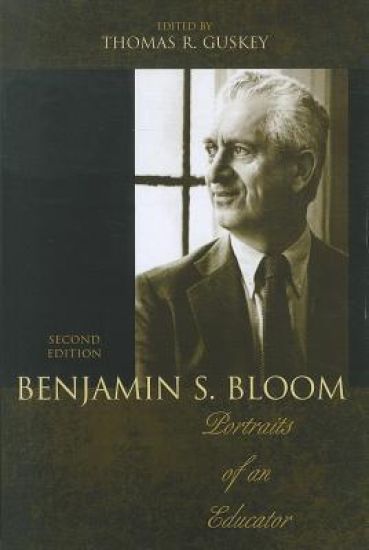
Benjamin S. Bloom

Benjamin S. Bloom

Thomas R. Guskey

Rowman Littlefield Education
2012
nidottu
Few individuals in the history of education have had greater impact on educational policy and practice than Benjamin S. Bloom. During a career that spanned over five decades, his research and writing guided the development of innumerable educational programs and provided powerful insights into the untapped potential of educators to help all students learn well. Benjamin S. Bloom spent most of his professional life at the University of Chicago, where he held the Charles H. Swift Distinguished Service endowed chair. At this university, he founded and chaired the program in Measurement, Evaluation, and Statistical Analysis (or MESA), authored or co-authored 17 books, and wrote numerous journal articles. He served as the president of the American Educational Research Association (AERA), a member of the National Academy of Education, and a founding member of the International Association for the Evaluation of Educational Achievement (IEA). Also the recipient of several awards, perhaps his greatest accomplishment was the profound influence he had on his students and professional colleagues. Much of his time was spent in one-to-one interactions with them, which have become known as "Bloom Stories" and have gained legendary status. Many of the "Bloom Stories" are humorous and show his amazing quick wit. Others recall the kindness and encouragement, and subtle wisdom he showed in helping students and colleagues overcome obstacles or setbacks. No matter what the topic, Benjamin Bloom's stories are touching remembrances that offer special insight into his uniqueness as a preeminent scholar, colleague, mentor, and friend. This book is a collection of these stories, with brief reviews of some of Bloom's major professional contributions.
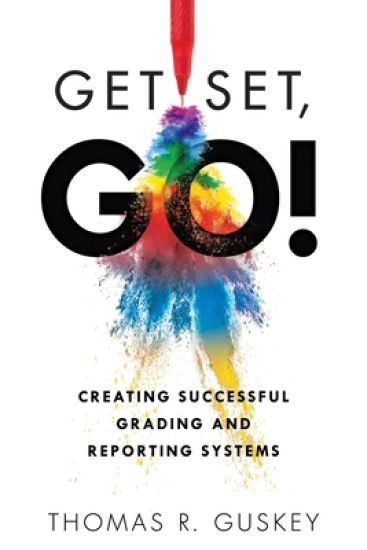
Get Set, Go!: Creating Successful Grading and Reporting Systems (an Action Plan for Leading Lasting Grading Reform in Changing Classrooms)
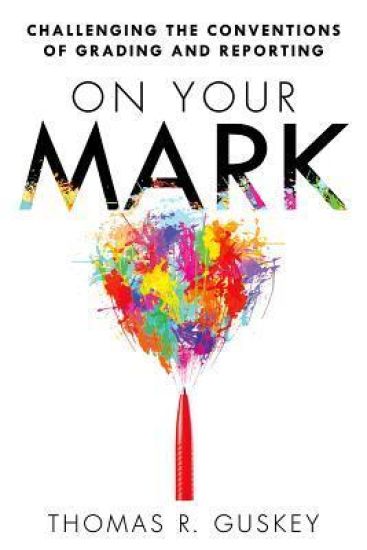
Make school a better experience for students by ensuring grading and reporting practices are honest, accurate, meaningful, and fair. A companion to the best-selling and award-winning On Your Mark, this practical guide details how to successfully lead lasting grading reform. Dr. Thomas R. Guskey simplifies the transition by guiding educators through six essential steps--from developing a coalition devoted to change to creating a systematic plan. Use this resource to develop a new system of grading in your school or district: Become familiar with the process of implementing a rigorous new system of reporting that aligns with the goals of standards-based grading. Acquire numerous tools and strategies that will assist in the process of implementing a new grading system. Study the six steps that are essential to any successful attempt to reform grading, as well as how to succeed in each. Learn how to form a change action plan that covers the entire system of implementation and improves the student experience. Contents: About the Author Introduction Chapter 1: Learn From Failures Chapter 2: Form a Coalition for Change Chapter 3: Understand the Change Process Chapter 4: Clarify the Purpose of Grading and Reporting Chapter 5: Report Multiple Grades for Cognitive Outcomes Chapter 6: Report Multiple Grades for Noncognitive Outcomes Chapter 7: Get Assessment Policies and Practices Right Chapter 8: Develop a Systematic Plan for Implementation References and Resources Index
Teacher as Assessment Leader, The, Second Edition: (Practical Strategies for Utilizing Formative Assessment)
In The Teacher as Assessment Leader, Second Edition, editor Thomas R. Guskey and expert contributors offer research-backed strategies for re-envisioning assessment to enhance student learning and teacher instruction. The authors provide actionable steps, practical examples, and strategies for utilizing formative assessments. These strategies promote a growth mindset, proficiency, self-regulation, and student ownership, ultimately fostering improved instructional effectiveness and student achievement. K-12 teachers can use this book to: Adopt new perspectives on assessment's role in guiding student learning Employ practical strategies to improve instruction and enhance student achievement Promote regular assessment analysis to enhance instructional strategies Encourage student self-efficacy in identifying and pursuing learning goals Lead and collaborate with colleagues in developing more effective, practical assessments and alternative instructional strategies Contents: Introduction Chapter 1: Leading the Assessment Revolution From Within Chapter 2: Harvesting Assessment Evidence to Yield Effective Responses Chapter 3: Assessing Beyond the Labels Chapter 4: Sharing Leadership to Align Assessment Practices Across the School Chapter 5: Using Data as a Flashlight, Not a Hammer, to Illuminate Evidence That Matters Chapter 6: Developing Self-Regulatory Learners Through Assessment Chapter 7: Designing Assessments to Accelerate Learning Chapter 8: Approaching Learning and Assessment as a Subtle Curator Chapter 9: Leading the Way to Student Success