Kirjojen hintavertailu. Mukana 11 342 296 kirjaa ja 12 kauppaa.

Kirjahaku

Etsi kirjoja tekijän nimen, kirjan nimen tai ISBN:n perusteella.

8 kirjaa tekijältä Thomas Shevory

Body/Politics

Body/Politics

Thomas Shevory

Praeger Publishers Inc
2000
sidottu
Negotiating the terrain between techno-optimism and eco-pessimism, this work establishes the political connections between technologies of the body, property, and the environment. Specific technologies of the body, such as surrogacy and in vitro fertilization, are examined in relation to their political and legal constructions. Next, Shevory analyzes private property as an evolving historical concept that implicates environmental and biological transformations with particular attention given to biotechnology cases. He then considers the body's appearance and its alterations through plastic surgery, dieting, or piercing as political constructions.A theoretical overview specifies technoprogressivist (liberal) and technophobic traditions, especially as they have evolved in the United States during the second half of the 20th-century. Drawing upon critical and feminist theories, Shevory specifies a body politics that negotiates the terrain between these two traditions. Body technologies and markets, he argues, interact to consolidate and reinforce dominant systems of power, while at the same time resisting and sometimes subverting them. Technology is often a factor in the fragmentation of evolving political ideological discourses on the left and right; however, the resulting instabilities create the potential for both the expansion of global capital and its subversion via democratic interventions.
John Marshall's Achievement

John Marshall's Achievement

Thomas Shevory

Praeger Publishers Inc
1989
sidottu
This collection of essays, the result of a John Marshall Symposium held in conjunction with the state of West Virginia's celebration of the Bicentennial of the U.S. Constitution, examines the contributions of John Marshall and the early Supreme Court from a variety of political and methodological perspectives that have been encouraged by current approaches to constitutional theory and history. It fills a gap in analysis of the constitutional foundations laid by the Marshall Court. It reflects the continuities and changes that have transpired in legal scholarship and political philosophy over the last three decades.Divided into analyses of Marshall's legal decisions, his political philosophy, and his methods of legal interpretation, the essays represent a strong and healthy diversity of opinion on Marshall's contribution to American political and legal development. The essays consider the question of how Marshall's judicial reasoning can be best applied to the continuing process of interpreting the Constitution. Marshall's contributions thus become the starting point for an exercise in political engagement. While often celebrating Marshall's achievements, the contributors attempt to move beyond mere celebration toward a critical analysis of constitutional meaning and political philosophy. Legal scholars and historians alike will welcome this cogent collection and the insight it provides into the early development of constitutional thought and interpretation.
John Marshall's Law

John Marshall's Law

Thomas Shevory

Praeger Publishers Inc
1994
sidottu
This study draws on critical historical analysis and contemporary language theory to illuminate John Marshall's jurisprudence and political philosophy in new ways. It challenges both liberal and conservative views and it defines Marshall's constitutional interpretations, political ideology, and pragmatic interests anew. It shows how his pragmatism and republican revisionism impacted decisions about matters of property, contract, and debt. Legal scholars, political scientists, and historians interested in law and language, 19th-century history, and republicanism will find this study especially interesting.
Notorious H.I.V.

Notorious H.I.V.

Thomas Shevory

University of Minnesota Press
2004
nidottu
The real story behind the Nushawn Williams case: media distortions, judicial contortions, ruined livesIn the fall of 1997, public authorities in Chautauqua County, New York, were granted an exception to the state’s HIV confidentiality law-and released Nushawn Williams’s name and picture to the press, deeming him a “public health threat,” the source of a “near epidemic” of HIV transmission. Williams, who is HIV-positive, had unprotected sex with many young women and girls and infected at least nine of them. In Notorious H.I.V. Thomas Shevory sorts through the ensuing media panic and legal imbroglio to tell the story behind the Nushawn Williams case. Through media reports, legal documents, and interviews with many of the participants-including Williams, who eventually pled guilty to reckless endangerment and statutory rape charges and is currently serving time in a maximum security prison in New York-Shevory exposes the significant exaggerations, misunderstandings, and distortions that riddled the Williams case from the start. He contends that Williams’s portrayal as an “AIDS monster” served political purposes; specifically, representations of Williams helped to foster the passage of HIV-transmission statutes, resulting in criminalizing a public health problem in a virtually unprecedented fashion.Notorious H.I.V. also traces the impact of such high-profile cases on communities. Shevory provides a nuanced portrait of the hard economic and cultural realities of Jamestown, New York, and, drawing on Williams’s narratives, of the life of a lower-level drug dealer in a small upstate city. His work shows how media coverage robs individuals like Williams of their humanity, creating a pervasive atmosphere of threat that warps the integrity and fairness of the criminal justice and penal system.
Toxic Burn

Toxic Burn

Thomas Shevory

University of Minnesota Press
2007
nidottu
Debates over global warming and fossil fuel dependence dominate public discussions of the environment. For many of us, these debates are abstract because environmental problems do not yet disrupt our daily lives. But in communities throughout the United States and around the globe, environmental activism is not a matter of choice, it is a necessity. East Liverpool, Ohio, is one of those places. Since 1993, the eastern Ohio River Valley has been home to a massive hazardous waste incinerator. The WTI incinerator in East Liverpool burns 60,000 tons of hazardous waste each year, has experienced dozens of accidents, and is located within 100 yards of an elementary school. Yet, it continues to operate. Toxic Burn is a gripping account of the activist movement against the imposing WTI incinerator in this struggling rust belt town. Drawing on personal interviews with key participants as well as official documents, Thomas Shevory tells the story of building, maintaining, and resisting the incinerator. It begins in the 1970s with community leaders who responded to failing pottery and steel industries by proposing the incinerator as a source of jobs and tax revenue. The incinerator’s opponents fought back, challenging EPA permits in court. They also enlisted the support of Greenpeace and publicly called presidential hopeful Al Gore to task for the Clinton administration’s backing of the incinerator. These activists’ efforts have not only helped to curtail the industry’s expansion, Shevory concludes, but have also encouraged movement toward more sustainable models of industrial production. Hazardous waste disposal is a hot-button issue in many communities. By analyzing the obstacles faced by the WTI incinerator’s opponents, as well as their victories, Toxic Burn shows that the actions of decent and determined citizens are powerful and essential to developing new environmental models and ultimately saving the health and lives of those in the path of potential disaster. Thomas Shevory is professor of politics at Ithaca College. He is also author of Notorious H.I.V.: The Media Spectacle of Nushawn Williams (Minnesota, 2004).
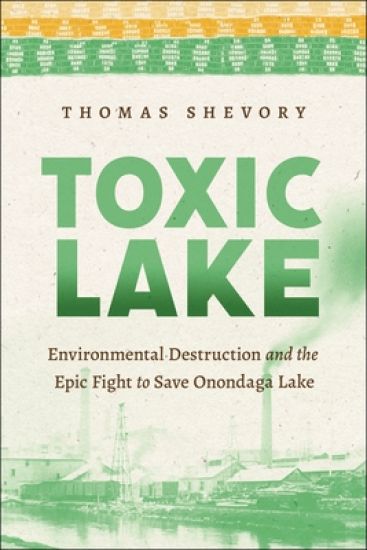
Toxic Lake

Toxic Lake

Thomas Shevory

NEW YORK UNIVERSITY PRESS
2024
sidottu
2024 Outstanding Academic Title, given by Choice Reviews The environmental history of "the most polluted lake in America." Native Americans have long regarded Onondaga Lake as one of the most sacred spaces in the continent, the place where peace between nations was achieved and the Haudenosaunee Confederacy was created. In the mid-twentieth century, however, it acquired a wholly different reputation as "the most polluted lake in America." Toxic Lake is an environmental history of this complex ecological system, tracking how it was tarnished, the costly efforts to clean it up, and the controversies those efforts generated. Thomas Shevory argues that the history of Onondaga Lake mirrors the larger environmental history of the US, from colonization to the industrial era, resulting, eventually, in the rise of social movements and legislative action for environmental protection. Layered within this history is the dismissal of indigenous land claims and the marginalization of indigenous voices in clean-up efforts. Toxic Lake illustrates that the failure to prevent the environmental destruction of Onondaga Lake was part of a political climate which favored unregulated industrial production and urban growth, ignoring the destructive impacts on local environments. Shevory argues this larger failure was the result of an active process of privileging the economic interests of polluters over other business interests, expanding neighborhoods, and indigenous rights. He concludes with an investigation of New York's recent declaration that the clean-up is complete, questioning what exactly that means and whether the lake's status as a sacred space will ever be re-established. Toxic Lake is a compelling work of history, demonstrating the disastrous effects of pollution and the importance of community involvement in environmental activism.
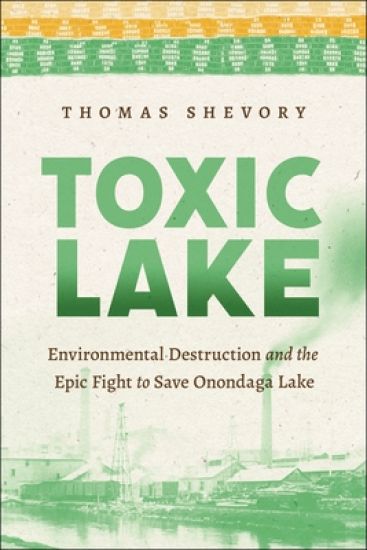
Toxic Lake

Toxic Lake

Thomas Shevory

NEW YORK UNIVERSITY PRESS
2023
pokkari
2024 Outstanding Academic Title, given by Choice Reviews The environmental history of "the most polluted lake in America." Native Americans have long regarded Onondaga Lake as one of the most sacred spaces in the continent, the place where peace between nations was achieved and the Haudenosaunee Confederacy was created. In the mid-twentieth century, however, it acquired a wholly different reputation as "the most polluted lake in America." Toxic Lake is an environmental history of this complex ecological system, tracking how it was tarnished, the costly efforts to clean it up, and the controversies those efforts generated. Thomas Shevory argues that the history of Onondaga Lake mirrors the larger environmental history of the US, from colonization to the industrial era, resulting, eventually, in the rise of social movements and legislative action for environmental protection. Layered within this history is the dismissal of indigenous land claims and the marginalization of indigenous voices in clean-up efforts. Toxic Lake illustrates that the failure to prevent the environmental destruction of Onondaga Lake was part of a political climate which favored unregulated industrial production and urban growth, ignoring the destructive impacts on local environments. Shevory argues this larger failure was the result of an active process of privileging the economic interests of polluters over other business interests, expanding neighborhoods, and indigenous rights. He concludes with an investigation of New York's recent declaration that the clean-up is complete, questioning what exactly that means and whether the lake's status as a sacred space will ever be re-established. Toxic Lake is a compelling work of history, demonstrating the disastrous effects of pollution and the importance of community involvement in environmental activism.
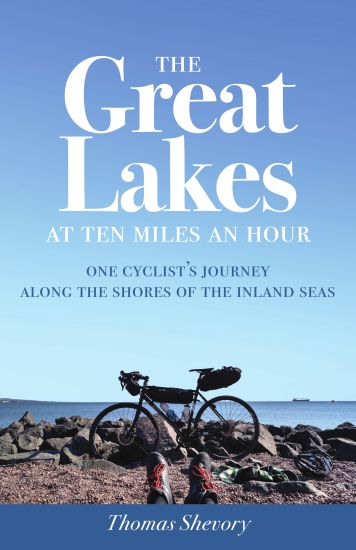
The Great Lakes at Ten Miles an Hour

The Great Lakes at Ten Miles an Hour

Thomas Shevory

University of Minnesota Press
2017
nidottu
The Great Lakes are a remarkable repository of millions of years of complex geological transformations and of a considerably shorter, crowded span of human history. Over the course of four summers, Thomas Shevory rode a bicycle along their shores, taking in the stories the lakes tell-of natures grandeur and decay, of economic might and squandered promise, of exploration, colonization, migration, and military adventure. This book is Shevorys account of his travels, shored up by his exploration of the geological, environmental, historical, and cultural riches harbored by North Americas great inland seas. For Shevory, and his readers, his ride is an enlightening, unfailingly engaging course in the Great Lakes place in geological time and the nations history. Along the northern shore of Lake Huron, one encounters the scrubbed surfaces of the Canadian Shield, the oldest exposed rock in North America. Growing out of the crags of the Niagara Escarpment, which stretches from the western reaches of Lake Michigan to the spectacular waterfalls between Erie and Ontario, are the white cedars that are among the oldest trees east of the Mississippi. The lakes offer reminders of the fur trade that drew voyageurs to the interior, the disruption of Native American cultures, major battles of the War of 1812, the shipping and logging industries that built the Midwest, the natural splendors preserved and exploited, and the urban communities buoyed or buried by economic changes over time. Throughout The Great Lakes at Ten Miles an Hour, Shevory describes the engaging characters he encounters along the way and the surprising range of country and city landscapes, bustling and serene locales that he experiences, making us true companions on his ride.