
Kirjahaku
Etsi kirjoja tekijän nimen, kirjan nimen tai ISBN:n perusteella.
10 kirjaa tekijältä Thomas Simmons
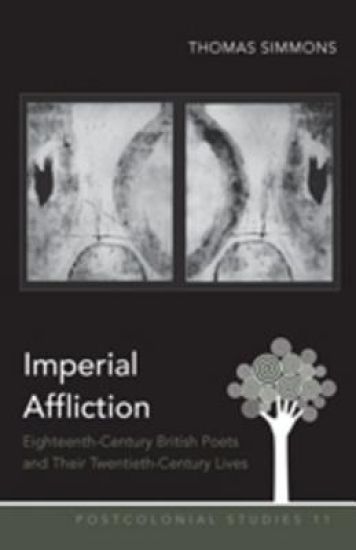
«In many ways», Robert J.C. Young writes, «colonization from the very first carried with it the seeds of its own destruction.» Imperial Affliction examines some ways in which Young’s observation could be applied to problems of subjectivity and influence within the colonizing nations themselves, particularly eighteenth-century Britain. How might these «seeds of destruction» manifest themselves as problems of identity? How might the very selves with greatest access to self-affirmation – the idea of the empire, the idea of British citizenry, the idea of the British self – actually find themselves vulnerable, confused, or damaged? Using multiple forms of postcolonial critique, this book turns back to salient eighteenth-century British lives and work for a different kind of enlightenment. Among its central subjects are the elusive subjectivity of William Collins; the exilic religious experience of William Cowper and its multiple readings in the twentieth century by a self-fashioned exilic, Donald Davie; the «missed encounter» between Christopher Smart and Samuel Johnson, and the ways in which that problem was re-inscribed in the work of W. Jackson Bate and Lionel Trilling; the problem of imperial fixity in James Cook’s journals with a view to Gray’s «Elegy» and Goldsmith’s «Deserted Village»; and the problem of purity as a paradoxically privileged and exilic force in the work of John Newton and Christopher Smart. In these explorations, this book illustrates both an expanded view of eighteenth-century colonial liabilities and a new emphasis on postcolonial critique as a means of exploring the fissures always present in imperial ambition.
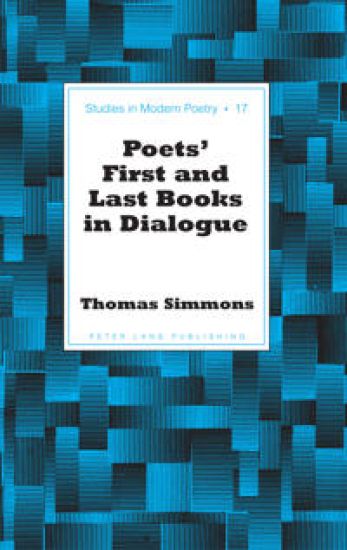
A poet’s œuvre is typically studied as an arc from the first work to the last work, including everything in between as a manifestation of some advance or reversal. What if the primary relationship in a poet’s œuvre is actually between the first and last text, with those two texts sharing a compelling private language? What if, read separately from the other work, the first and last books reveal some new phenomenon about both the struggles and the achievement of the poet? Drawing on phenomenological and intertextual theories from Ladislaus Boros, Julia Kristeva, Theodor Adorno, and Peter Galison, Poets’ First and Last Books in Dialogue examines the relevant texts of Robert Lowell, Elizabeth Bishop, Anne Sexton, Thom Gunn, Sylvia Plath, and Ted Hughes. In each of these poets’ first books, Thomas Simmons examines both the evidence of some new phenomenon and a limit or unsolved problem that finds its resolution only in a specific conversation with the final text. By placing the texts in dialogue, Simmons unveils a new internal language in the work of these groundbreaking poets. The character of this illumination expands in a coda on Robert Pinsky, whose career is particularly marked by what neurologist Antonio Damasio calls the moment of «stepping into the light.»
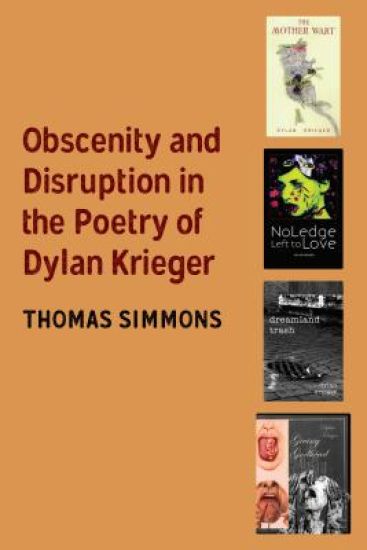
Obscenity and Disruption in the Poetry of Dylan Krieger
Thomas Simmons
Peter Lang Publishing Inc
2019
sidottu
Obscenity and Disruption in the Poetry of Dylan Krieger is the first full-length study of the radical poetry of Baton Rouge-based poet Dylan Krieger. Wickedly smart, iconoclastic, daring in their critiques of religion and contemporary culture, Krieger’s poems rank with Allen Ginsberg’s and Adrienne Rich’s as the most provocative and avant-garde of any recent generation. With its debt to third-wave feminism and the "Gurlesque," Krieger’s work nevertheless moves outward and backward across the landmines of sexual precocity and religious fundamentalism and across the entire western project of epistemology as Krieger came to understand it at the University of Notre Dame. Though this book necessarily stays close to Krieger’s specific poems, it follows her lead in stretching her cultural, sexual, and religious furies to their apotheosis in a manifesto of liberation.
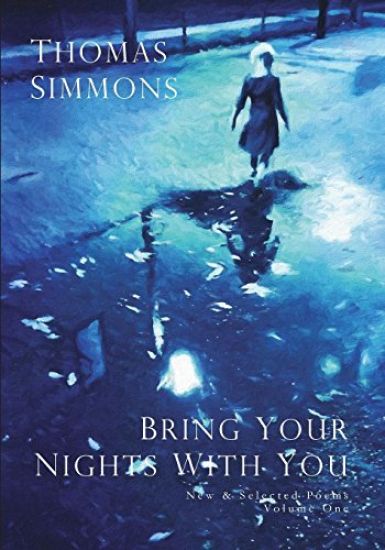
Praise for BRING YOUR NIGHTS WITH YOU: New & Selected Poems, 1975-2015IT IS as if all of human experience, knowledge, and geography are encoded and distilled within this new double volume of poetry by Thomas Simmons, such is the tremendous conceptual, intellectual, and sonorous range of the work. The poet incorporates so much worldly perception and literature within these pages that it is as if the reader is being offered a vision of both human and unearthly existence at once.The drama of voice and also of diction magnify and amplify this literary magnificence, the mature work of a humanist whose learning and poetic ability extends beyond any specific personal moment, engaging with a thoroughly extensive mortal terrain. However, there exists an unseen sub-textual performative quality inside all of these poems which raises the words and lines off the page--within the mind of the reader--and which supply the language with an enigmatic non-verbal quality: simultaneous, immediate, and so profoundly finite. This uncanny pneuma is intrinsic to the worth of these two fine books.It is as if the poet is foretelling his own life, but in paradoxical retrospect, such is the vivacious and vital nature of consciousness at work in these lines. It is a distinction of writing and awareness, of both sadness and fascination, as thepoet's attention careers away from a world before grace towards an imperishable and indelible comprehension.The poet says, Among those I loved you were the first ... whose only choice was to prevent my ever reaching you; and then later, How to say good-bye when one has already gone? Such sentiments are the mysterious and contrary threads that run through the fabric of this wonderful poetry binding the emotions and material detail into one strong medium, a tissue of song whose mastery lies not only in the expression but in its even greater indication of what cannot be said. Such is the genius of knowing the unspeakable and yet being competent and compassionate enough to endure that terrific and necessary effort which art can only imply.--Kevin McGrath, Harvard University There's a deep, rumbling power to these poems, a kind of wild but tempered energy that comes only when you're lucky enough to encounter a poet capable ofweaving accessible narrative with vivid, well-crafted lyricism. There's humor, too, not to mention savage intelligence paired with refreshing humanity and political conscience. In short, Simmons has gifted us with a collection spilling over with my favorite breed of poems: the kind you can teach in a classroom, lounge with on a beach, or cling to in the waiting room of an E.R., confident that at the veryleast, you're in good company.--Michael Meyerhofer, author of What To Do If You're Buried Alive
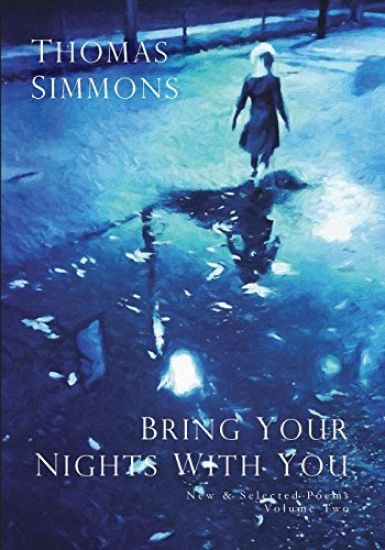
Praise for BRING YOUR NIGHTS WITH YOU: New & Selected Poems, 1975-2015IT IS as if all of human experience, knowledge, and geography are encoded and distilled within this new double volume of poetry by Thomas Simmons, such is the tremendous conceptual, intellectual, and sonorous range of the work. The poet incorporates so much worldly perception and literature within these pages that it is as if the reader is being offered a vision of both human and unearthly existence at once.The drama of voice and also of diction magnify and amplify this literary magnificence, the mature work of a humanist whose learning and poetic ability extends beyond any specific personal moment, engaging with a thoroughly extensive mortal terrain. However, there exists an unseen sub-textual performative quality inside all of these poems which raises the words and lines off the page--within the mind of the reader--and which supply the language with an enigmatic non-verbal quality: simultaneous, immediate, and so profoundly finite. This uncanny pneuma is intrinsic to the worth of these two fine books.It is as if the poet is foretelling his own life, but in paradoxical retrospect, such is the vivacious and vital nature of consciousness at work in these lines. It is a distinction of writing and awareness, of both sadness and fascination, as thepoet's attention careers away from a world before grace towards an imperishable and indelible comprehension.The poet says, Among those I loved you were the first ... whose only choice was to prevent my ever reaching you; and then later, How to say good-bye when one has already gone? Such sentiments are the mysterious and contrary threads that run through the fabric of this wonderful poetry binding the emotions and material detail into one strong medium, a tissue of song whose mastery lies not only in the expression but in its even greater indication of what cannot be said. Such is the genius of knowing the unspeakable and yet being competent and compassionate enough to endure that terrific and necessary effort which art can only imply.--Kevin McGrath, Harvard University There's a deep, rumbling power to these poems, a kind of wild but tempered energy that comes only when you're lucky enough to encounter a poet capable ofweaving accessible narrative with vivid, well-crafted lyricism. There's humor, too, not to mention savage intelligence paired with refreshing humanity and political conscience. In short, Simmons has gifted us with a collection spilling over with my favorite breed of poems: the kind you can teach in a classroom, lounge with on a beach, or cling to in the waiting room of an E.R., confident that at the veryleast, you're in good company.--Michael Meyerhofer, author of What To Do If You're Buried Alive

Transition Planning for Secondary Students with Disabilities
Robert Flexer; Robert Baer; Pamela Luft; Thomas Simmons
Pearson
2013
nidottu
Transition Planning for Secondary Students with Disabilities, 4/e is a comprehensive and practical resource for anyone involved in dealing with and meeting the transition needs of students with disabilities. The authors describe the varied transition needs readers are likely to encounter in their work and provide a succinct look at the options and career paths potentially available. They cover implementing transition systems, creating a transition perspective of education, and promoting movement to postschool environments.