Kirjojen hintavertailu. Mukana 11 342 296 kirjaa ja 12 kauppaa.

Kirjahaku

Etsi kirjoja tekijän nimen, kirjan nimen tai ISBN:n perusteella.

4 kirjaa tekijältä Thomas W. Merrill

The Chevron Doctrine

The Chevron Doctrine

Thomas W. Merrill

HARVARD UNIVERSITY PRESS
2022
sidottu
A leading expert on the administrative state describes the past, present, and future of the immensely consequential—and equally controversial—legal doctrine that has come to define how Congress’s laws are applied by the executive branch.The Constitution makes Congress the principal federal lawmaker. But for a variety of reasons, including partisan gridlock, Congress increasingly fails to keep up with the challenges facing our society. Power has inevitably shifted to the executive branch agencies that interpret laws already on the books and to the courts that review the agencies’ interpretations.Since the Supreme Court’s 1984 decision in Chevron v. Natural Resources Defense Council, this judicial review has been highly deferential: courts must uphold agency interpretations of unclear laws as long as these interpretations are “reasonable.” But the Chevron doctrine faces backlash from constitutional scholars and, now, from Supreme Court justices who insist that courts, not administrative agencies, have the authority to say what the law is. Critics of the administrative state also charge that Chevron deference enables unaccountable bureaucratic power. Thomas Merrill reviews the history and immense consequences of the Chevron doctrine and suggests a way forward. Recognizing that Congress cannot help relying on agencies to carry out laws, Merrill rejects the notion of discarding the administrative state. Instead, he focuses on what should be the proper relationship between agencies and courts in interpreting laws, given the strengths and weaknesses of these institutions. Courts are better at enforcing the rule of law and constitutional values; agencies have more policy expertise and receive more public input. And, unlike courts, agencies are subject to at least some political discipline.The best solution, Merrill suggests, is not of the either-or variety. Neither executive agencies nor courts alone should pick up the slack of our increasingly ineffectual legislature.
The Chevron Doctrine

The Chevron Doctrine

Thomas W. Merrill

HARVARD UNIVERSITY PRESS
2024
nidottu
“Wise and illuminating…Merrill’s treatment of the rise of Chevron, and its various twists and turns over the decades, is keenly insightful.” —Cass R. Sunstein, New York Review of Books “Merrill is one of the brightest and best scholars of administrative law in his generation. This book...is must-reading for any citizen who has an interest in the constitutionality of the administrative state.” —Steven G. Calabresi, Northwestern University Pritzker School of Law “A model of how to conduct rigorous, level-headed, and fair-minded analysis of a subject that has generated enormous legal controversy. There is no more judicious mind among American legal scholars than Thomas Merrill’s.”—Nicholas Parrillo, Yale Law School “A must-read for practicing or prospective administrative lawyers. They, as well as a broader audience, will find much good sense in the author’s judicious treatment of perennial questions of lawful government.”—Michael S. Greve, Claremont Review of Books The Constitution makes Congress the principal federal lawmaker. But for a variety of reasons, including partisan gridlock, Congress increasingly fails to keep up with the challenges facing our society. Power has shifted to the executive branch agencies that interpret laws and to the courts that review their interpretations. Since the Supreme Court’s 1984 decision in Chevron v. Natural Resources Defense Council, this judicial review has been highly deferential: courts must uphold agency interpretations of unclear laws so long as these are “reasonable.” But the Chevron doctrine faces backlash from constitutional scholars and, now, from Supreme Court justices who insist that courts, not administrative agencies, have the authority to say what the law is. Critics of the administrative state charge that Chevron deference enables unaccountable bureaucratic power. In this groundbreaking book, Thomas Merrill reviews the history and consequences of the Chevron doctrine and suggests a way forward.
Hume and the Politics of Enlightenment

Hume and the Politics of Enlightenment

Thomas W. Merrill

Cambridge University Press
2015
sidottu
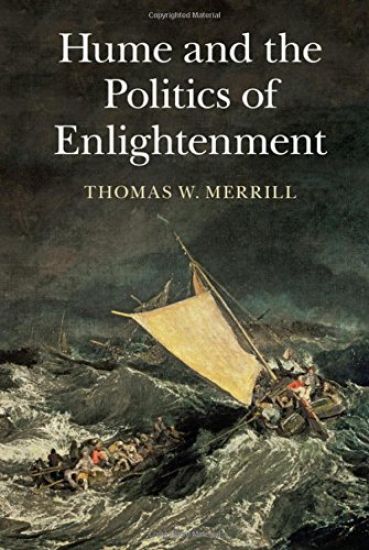
'Methinks I am like a man, who having narrowly escap'd shipwreck', David Hume writes in A Treatise of Human Nature, 'has yet the temerity to put out to sea in the same leaky weather-beaten vessel, and even carries his ambition so far as to think of compassing the globe'. With these words, Hume begins a memorable depiction of the crisis of philosophy and his turn to moral and political philosophy as the path forward. In this groundbreaking work, Thomas W. Merrill shows how Hume's turn is the core of his thought, linking Hume's metaphysical and philosophical crisis to the moral-political inquiries of his mature thought. Merrill shows how Hume's comparison of himself to Socrates in the introduction to the Treatise illuminates the dramatic structure and argument of the book as a whole, and he traces Hume's underappreciated argument about the political role of philosophy in the Essays.
Hume and the Politics of Enlightenment

Hume and the Politics of Enlightenment

Thomas W. Merrill

Cambridge University Press
2018
pokkari
'Methinks I am like a man, who having narrowly escap'd shipwreck', David Hume writes in A Treatise of Human Nature, 'has yet the temerity to put out to sea in the same leaky weather-beaten vessel, and even carries his ambition so far as to think of compassing the globe'. With these words, Hume begins a memorable depiction of the crisis of philosophy and his turn to moral and political philosophy as the path forward. In this groundbreaking work, Thomas W. Merrill shows how Hume's turn is the core of his thought, linking Hume's metaphysical and philosophical crisis to the moral-political inquiries of his mature thought. Merrill shows how Hume's comparison of himself to Socrates in the introduction to the Treatise illuminates the dramatic structure and argument of the book as a whole, and he traces Hume's underappreciated argument about the political role of philosophy in the Essays.