Kirjojen hintavertailu. Mukana 11 244 527 kirjaa ja 12 kauppaa.

Kirjahaku

Etsi kirjoja tekijän nimen, kirjan nimen tai ISBN:n perusteella.

15 kirjaa tekijältä Tim Cook

Fight To The Finish

Fight To The Finish

Tim Cook

Plume
2016
nidottu
Winner of the 2016 Ottawa Book Award An unforgettable chronicle of Canadians fighting the Second World War. Historian Tim Cook displays his trademark storytelling ability in the second volume of his masterful account of Canadians in World War II. Cook combines an extraordinary grasp of military strategy with a deep empathy for the soldiers on the ground, at sea and in the air. Whether it's a minute-by-minute account of a gruelling artillery battle, vicious infighting among generals, the scene inside a medical unit, or the small details of a soldier's daily life, Cook creates an utterly compelling narrative. He recounts in mesmerizing detail how the Canadian forces figured in the Allied bombing of Germany, the D-Day landing at Juno beach, the taking of Caen, and the drive south. Featuring dozens of black-and-white photographs and moving excerpts from letters and diaries of servicemen, Fight to the Finish, along with its companion volume, The Necessary War, broadens our understanding of the Second World War with a gripping account of Canadians who fought abroad, and the home front that was changed forever."
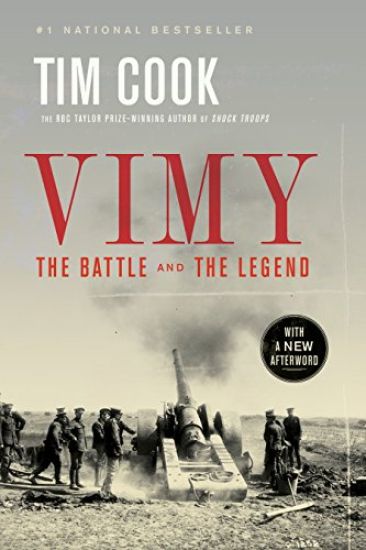
Vimy

Vimy

Tim Cook

Prentice Hall Press
2018
nidottu
#1 NATIONAL BESTSELLERLonglisted for British Columbia's National Award for Canadian Non-Fiction 2018 A bold new telling of the defining battle of the Great War, and how it came to signify and solidify Canada's national identity Why does Vimy matter? How did a four-day battle at the midpoint of the Great War, a clash that had little strategic impact on the larger Allied war effort, become elevated to a national symbol of Canadian identity? Tim Cook, Canada's foremost military historian and a Charles Taylor Prize winner, examines the Battle of Vimy Ridge and the way the memory of it has evolved over 100 years. The operation that began April 9, 1917, was the first time the four divisions of the Canadian Corps fought together. More than 10,000 Canadian soldiers were killed or injured over four days--twice the casualty rate of the Dieppe Raid in August 1942. The Corps' victory solidified its reputation among allies and opponents as an elite fighting force. In the wars' aftermath, Vimy was chosen as the site for the country's strikingly beautiful monument to mark Canadian sacrifice and service. Over time, the legend of Vimy took on new meaning, with some calling it the "birth of the nation." The remarkable story of Vimy is a layered skein of facts, myths, wishful thinking, and conflicting narratives. Award-winning writer Tim Cook explores why the battle continues to resonate with Canadians a century later. He has uncovered fresh material and photographs from official archives and private collections across Canada and from around the world. On the 100th anniversary of the event, and as Canada celebrates 150 years as a country, Vimy is a fitting tribute to those who fought the country's defining battle. It is also a stirring account of Canadian identity and memory, told by a masterful storyteller.
The Fight For History

The Fight For History

Tim Cook

Prentice Hall Press
2021
sidottu
NATIONAL BESTSELLERA masterful telling of the way World War Two has been remembered, forgotten, and remade by Canada over seventy-five years. The Second World War shaped modern Canada. It led to the country's emergence as a middle power on the world stage; the rise of the welfare state; industrialization, urbanization, and population growth. After the war, Canada increasingly turned toward the United States in matters of trade, security, and popular culture, which then sparked a desire to strengthen Canadian nationalism from the threat of American hegemony. The Fight for History examines how Canadians framed and reframed the war experience over time. Just as the importance of the battle of Vimy Ridge to Canadians rose, fell, and rose again over a 100-year period, the meaning of Canada's Second World War followed a similar pattern. But the Second World War's relevance to Canada led to conflict between veterans and others in society--more so than in the previous war--as well as a more rapid diminishment of its significance.The Fight for History is about the efforts to restore a more balanced portrait of Canada's contribution in the global conflict. This is the story of how Canada has talked about the war in the past, how we tried to bury it, and how it was restored. This is the history of a constellation of changing ideas, with many historical twists and turns, and a series of fascinating actors and events.
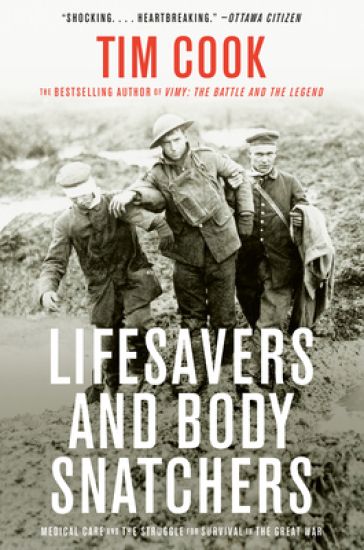
Lifesavers And Body Snatchers

Lifesavers And Body Snatchers

Tim Cook

Prentice Hall Press
2022
sidottu
Exposes the shocking story of the exploitation of human body parts during the Great War. Tim Cook has spent over a decade investigating the hidden history of Canadian medical doctors harvesting the body parts of slain soldiers and transporting their brains, lungs, bones, and other tissue or bones to the Royal College of Surgeons (RCS) in London. At least 1,200 individual Canadian body parts were removed from dead soldiers and sent to London, where they were stored, treated, and some put on display in exhibition galleries at the RCS.
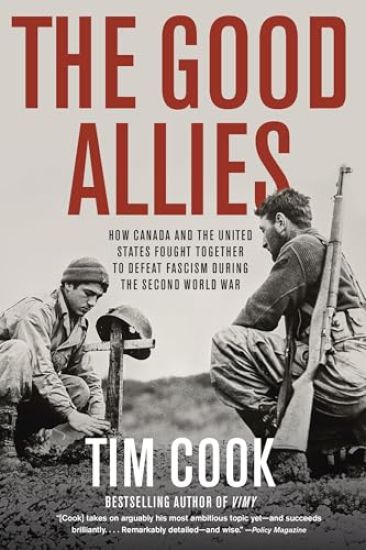
The Good Allies

The Good Allies

Tim Cook

Prentice Hall Press
2024
sidottu
From our country's most important war historian, a gripping account of the turbulent relationship between Canada and the US during the Second World War. The two nations entered the war amidst rivalry and mutual suspicion, but learned to fight together before emerging triumphant and bound by an alliance that has lasted to this day. When the Second World War broke out in 1939, it set in motion a deadly struggle between the Axis powers and the Allies, but also fraught negotiations between and among the Allies. On questions of diplomacy, economic policy, industrial might, military capabilities, and even national sovereignty, thousands of lives and the fate of the free world depended on back-room deals and desperate trade-offs between soldiers, diplomats, and leaders. In North America, Canada and the US strained to forge a new military alliance to guard their coasts and fend off German U-boats and the menace of a Japanese invasion. Wartime economies were entwined to produce a staggering contribution of weapons to keep Britain and other allies in the war. The defense of North America against enemy threats was essential before the US and Canada could send armies, navies, and air forces overseas. In his trademark style, Tim Cook employs eyewitness accounts to vividly lay bare the brutality of combat and the courage of North Americans under fire. Behind the fighting fronts, the charged and often secret communications between national leaders Churchill, Roosevelt, and King reveals how their personalities shaped the outcome of history's most destructive war, the fate of the British Empire, and the North American alliance that lives on to this day. The Good Allies is a masterful account of how Canadians and Americans made the transition from wary rivals to steadfast allies, and how Canada thrived in the shadow of the military and global superpower. In exploring this complex and crucial dimension of the Second World War and its legacy, Cook recounts two nations' story of cooperation, of sacrifice, and of bleeding together to save the world from the fascist threat.
The Good Allies: How Canada and the United States Fought Together to Defeat Fascism During the Second World War
" Cook] takes on arguably his most ambitious topic yet--and succeeds brilliantly.... Remarkably detailed...and wise." --Policy Magazine From our country's most important war historian, a gripping account of the turbulent relationship between Canada and the US during the Second World War. The two nations entered the war amidst rivalry and mutual suspicion, but learned to fight together before emerging triumphant and bound by an alliance that has lasted to this day. When the Second World War broke out in 1939, it set in motion a deadly struggle between the Axis powers and the Allies, but also fraught negotiations between and among the Allies. On questions of diplomacy, economic policy, industrial might, military capabilities, and even national sovereignty, thousands of lives and the fate of the free world depended on back-room deals and desperate trade-offs between soldiers, diplomats, and leaders. In North America, Canada and the US strained to forge a new military alliance to guard their coasts and fend off German U-boats and the menace of a Japanese invasion. Wartime economies were entwined to produce a staggering contribution of weapons to keep Britain and other allies in the war. The defence of North America against enemy threats was essential before the US and Canada could send armies, navies, and air forces overseas. In his trademark style, Tim Cook employs eyewitness accounts to vividly lay bare the brutality of combat and the courage of North Americans under fire. Behind the fighting fronts, the charged and often secret communications between national leaders Churchill, Roosevelt, and King reveal how their personalities shaped the outcome of history's most destructive war, the fate of the British Empire, and the North American alliance that lives on to this day. The Good Allies is a masterful account of how Canadians and Americans made the transition from wary rivals to steadfast allies, and how Canada thrived in the shadow of the military and global superpower. In exploring this complex and crucial dimension of the Second World War and its legacy, Cook recounts two nations' story of cooperation, of sacrifice, and of bleeding together to save the world from the fascist threat.
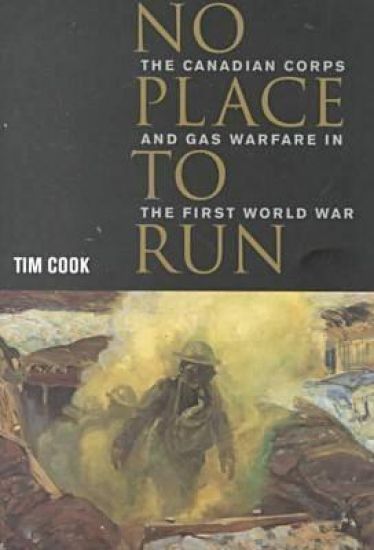
No Place to Run

No Place to Run

Tim Cook

University of British Columbia Press
1999
sidottu
Historians of the First World War have often dismissed the important role of poison gas in the battles of the Western Front. In No Place to Run, however, Tim Cook shows that the serious threat of gas did not disappear with the introduction of gas masks. By 1918, gas shells were used by all armies to deluge the battlefield, and those not instructed with a sound anti-gas doctrine left themselves exposed to this new chemical plague.Cook uses fascinating primary sources -- diaries, letters, reminiscences, published memoirs, and the official archival record -- to illustrate the horror of gas warfare for the average trench soldier. As the first chlorine clouds rolled across the fields during the 2nd Battle of Ypres, soldiers were forced to stuff urine-soaked handkerchiefs in their mouths in order to survive. As the gas war evolved, mustard gas plagued the soldiers at the front as it lay active in mud and snow for weeks on end. There was no escape from the pervasive nature of poison gas. Entering the dug-outs, it attacked men when they were least ready. In response, the Canadian Corps had to develop an anti-gas doctrine, a process that Cook describes in full.No Place to Run provides a challenging re-examination of the function of gas warfare in the First World War, including its important role in delivering victory in the campaign of 1918 and its curious postwar legacy. It will be of interest both to historians and military buffs.
No Place to Run

No Place to Run

Tim Cook

University of British Columbia Press
2000
pokkari
Historians of the First World War have often dismissed the important role of poison gas in the battles of the Western Front. In No Place to Run, however, Tim Cook shows that the serious threat of gas did not disappear with the introduction of gas masks. By 1918, gas shells were used by all armies to deluge the battlefield, and those not instructed with a sound anti-gas doctrine left themselves exposed to this new chemical plague.Cook uses fascinating primary sources -- diaries, letters, reminiscences, published memoirs, and the official archival record -- to illustrate the horror of gas warfare for the average trench soldier. As the first chlorine clouds rolled across the fields during the 2nd Battle of Ypres, soldiers were forced to stuff urine-soaked handkerchiefs in their mouths in order to survive. As the gas war evolved, mustard gas plagued the soldiers at the front as it lay active in mud and snow for weeks on end. There was no escape from the pervasive nature of poison gas. Entering the dug-outs, it attacked men when they were least ready. In response, the Canadian Corps had to develop an anti-gas doctrine, a process that Cook describes in full.No Place to Run provides a challenging re-examination of the function of gas warfare in the First World War, including its important role in delivering victory in the campaign of 1918 and its curious postwar legacy. It will be of interest both to historians and military buffs.
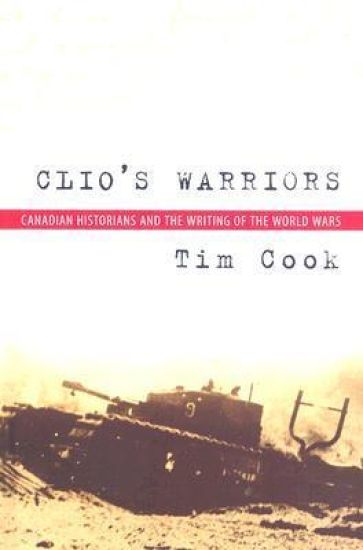
Clio's Warriors

Clio's Warriors

Tim Cook

University of British Columbia Press
2006
sidottu
Clio's Warriors examines how the Canadian world war experience has been constructed and reconstructed over time. Tim Cook elucidates the role of historians in codifying the sacrifice and struggle of a generation as he discusses historical memory and writing, the creation of archives, and the war of reputations that followed each of the world wars on the battlefield.Only recently have academic military historians pushed the discipline to explore the impact of war on society. Even so, the publications of official historians remain the central narrative of the national experience. In analyzing where the profession has come from and where it needs to go, Clio's Warriors plays a vital role in the ongoing challenge of writing critical history. It will be an essential addition to the library of all Canadian military historians and students of military history and historiography.
Clio's Warriors

Clio's Warriors

Tim Cook

University of British Columbia Press
2007
pokkari
Clio's Warriors examines how the Canadian world war experience has been constructed and reconstructed over time. Tim Cook elucidates the role of historians in codifying the sacrifice and struggle of a generation as he discusses historical memory and writing, the creation of archives, and the war of reputations that followed each of the world wars on the battlefield.Only recently have academic military historians pushed the discipline to explore the impact of war on society. Even so, the publications of official historians remain the central narrative of the national experience. In analyzing where the profession has come from and where it needs to go, Clio's Warriors plays a vital role in the ongoing challenge of writing critical history. It will be an essential addition to the library of all Canadian military historians and students of military history and historiography.
Vagrant Alcoholics

Vagrant Alcoholics

Tim Cook

TAYLOR FRANCIS LTD
2023
sidottu
In the 1970s the vagrant alcoholic was not a new problem, and for the previous two hundred years people had asked: What can be done to help them? Why not lock them up? Why don’t they get jobs? Tim Cook had worked for many years with homeless men and in this book, originally published in 1975, he describes the problems of vagrant alcoholics and the way in which one voluntary organization, the Alcoholics Recovery Project, based in South London, responded to these problems.The response had in essence been one of experimentation beginning with the first hostel in 1966, the development of non-residential shop fronts in 1970, and the employment of a team of recovered alcoholics in 1974. The Project sought to break down the mistrust surrounding the problem on all sides and to rediscover the potential of the so-called ‘hopeless’ skid row alcoholic. Tim Cook places the Project’s work in the wider context of social work and social responsibility, and shows that its methods had relevance for other agencies. He also examines the persistent failure of successive governments to take any positive action to tackle the problems of vagrant alcoholics.Throughout the book the views of the alcoholics themselves are integrated with the attitudes and experiences of the Project workers. The author offers an assessment of the Project’s work, and an outline of its limitations, stressing that no easy answer exists to this problem. But, he believed, the Project had made valuable progress towards a greater understanding of the vagrant alcoholic and his milieu.
Vagrant Alcoholics

Vagrant Alcoholics

Tim Cook

TAYLOR FRANCIS LTD
2025
nidottu
In the 1970s the vagrant alcoholic was not a new problem, and for the previous two hundred years people had asked: What can be done to help them? Why not lock them up? Why don’t they get jobs? Tim Cook had worked for many years with homeless men and in this book, originally published in 1975, he describes the problems of vagrant alcoholics and the way in which one voluntary organization, the Alcoholics Recovery Project, based in South London, responded to these problems.The response had in essence been one of experimentation beginning with the first hostel in 1966, the development of non-residential shop fronts in 1970, and the employment of a team of recovered alcoholics in 1974. The Project sought to break down the mistrust surrounding the problem on all sides and to rediscover the potential of the so-called ‘hopeless’ skid row alcoholic. Tim Cook places the Project’s work in the wider context of social work and social responsibility, and shows that its methods had relevance for other agencies. He also examines the persistent failure of successive governments to take any positive action to tackle the problems of vagrant alcoholics.Throughout the book the views of the alcoholics themselves are integrated with the attitudes and experiences of the Project workers. The author offers an assessment of the Project’s work, and an outline of its limitations, stressing that no easy answer exists to this problem. But, he believed, the Project had made valuable progress towards a greater understanding of the vagrant alcoholic and his milieu.
Kniga vinakhodiv

Kniga vinakhodiv

Tim Cook

knigolav
2025
sidottu
Vinakhodi majut zdatnist zminjuvati nashe zhittja. Na malenkikh chitachiv chekajut ponad 40 najviznachnishikh dosjagnen u nautsi j tekhnitsi za vsju istoriju ljudstva - vid unitaziv do biopaliva, vid mikroskopiv do tomografiv. Diznajtesja, jak, koli j chomu z'javilisja vinakhodi, jaki sogodni stali budennimi dlja vsikh! Gortajte storinki tsogo zakhoplivogo putivnika svitom tekhnologij i gadzhetiv, jaki rukhajut tsivilizatsiju upered, i poznajomtesja z jikhnimi vinakhidnikami - jak dobre znanimi, tak i malovidomimi.PerekladachKaterina Vasilevska