Kirjojen hintavertailu. Mukana 11 241 044 kirjaa ja 12 kauppaa.

Kirjahaku

Etsi kirjoja tekijän nimen, kirjan nimen tai ISBN:n perusteella.

12 kirjaa tekijältä Tim Cooper

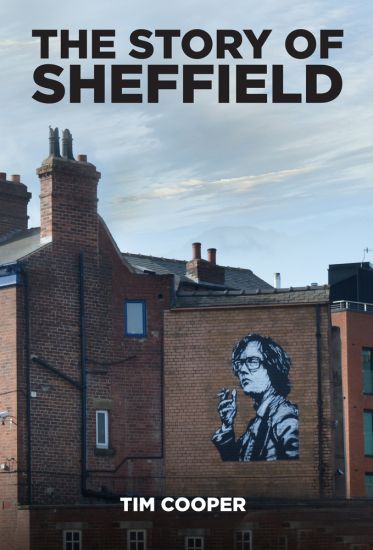
The Story of Sheffield

The Story of Sheffield

Tim Cooper

The History Press Ltd
2021
nidottu
Sheffield’s story is one of fierce independence and a revolutionary spirit, its industrial origins having their roots in the same forests as the legends of Robin Hood. From Huntsman’s crucible steel in the eighteenth century, to Brearley’s stainless steel in the twentieth, Sheffield forged the very fabric of the modern world.As the industrial age drew to a close the city’s reputation for rebelliousness spawned its popular reputation as capital of the ‘People’s Republic of South Yorkshire’. Yet in the wake of the Miners’ Strike and the Hillsborough Disaster, the early twenty-first century has seen Sheffield retain its unique character while reinventing itself as a centre of education, creativity and innovation.
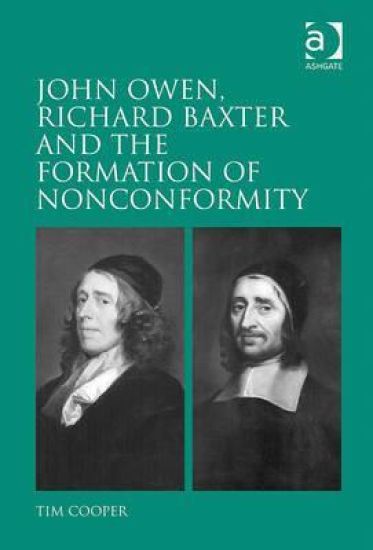
John Owen, Richard Baxter and the Formation of Nonconformity
John Owen (1616-1683) and Richard Baxter (1615-1691) were both pivotal figures in shaping the nonconformist landscape of Restoration England. Yet despite having much in common, they found themselves taking opposite sides in several important debates, and their relationship was marked by acute strain and mutual dislike. By comparing and contrasting the parallel careers of these two men, this book not only distils the essence of their differing theology, it also offers a broader understanding of the formation of English nonconformity. Placing these two figures in the context of earlier events, experience and differences, it argues that Restoration nonconformity was hampered by their strained personal relationship, which had its roots in their contrasting experiences of the English Civil War. This study thus contributes to historiography that explores the continuities across seventeenth-century England, rather than seeing a divide at 1660. It illustrates the way in which personality and experience shaped the development of wider movements.
The Last Generation of English Catholic Clergy
Traces the careers and fortunes of the last priests ordained before the Reformation. A central paradox of the English reformation is that the call to the Catholic priesthood was never more eagerly answered than on the very eve of religious upheaval. In this important new study, based on the records of the third largest diocese in the country, covering six counties of the midlands and north-west, Dr Cooper traces the careers of the pastoral clergy from their preparatory education, through ordination and job-hunting, to the writing of theirwills, often in ripe old age and having served a single parish through the entirety of the main period of reform. In this highly `clericalised' society, in which ten new priests were ordained each year for every arising vacancy, it was those priests without livings who were the main point of contact between the church and its people. This `clerical proletariat', and, indeed, the majority of parochial incumbents, emerge as conscientious servants of their native communities, distinguishable from their neighbours by virtue of their sacramental function rather than their social backgrounds and general concerns. Throughout, the book argues that the parish clergy, whose services were ingreater demand than ever before, were remarkably well integrated into the communities they served and that popular anticlericalism as an explanatory factor of the English reformation is difficult to sustain. Dr TIM COOPER has taught history at the universities of Sheffield, Manchester and Hull.
John Owen, Richard Baxter and the Formation of Nonconformity
John Owen (1616-1683) and Richard Baxter (1615-1691) were both pivotal figures in shaping the nonconformist landscape of Restoration England. Yet despite having much in common, they found themselves taking opposite sides in several important debates, and their relationship was marked by acute strain and mutual dislike. By comparing and contrasting the parallel careers of these two men, this book not only distils the essence of their differing theology, it also offers a broader understanding of the formation of English nonconformity. Placing these two figures in the context of earlier events, experience and differences, it argues that Restoration nonconformity was hampered by their strained personal relationship, which had its roots in their contrasting experiences of the English Civil War. This study thus contributes to historiography that explores the continuities across seventeenth-century England, rather than seeing a divide at 1660. It illustrates the way in which personality and experience shaped the development of wider movements.
The Stone In My Head

The Stone In My Head

Tim Cooper

Tim Cooper
2021
pokkari
This book is an account of what happened to me when my brain tumour was discovered in October 2018. The horror, despair, and journey through the diagnosis, the treatment options, the surgery, and the recovery process with its many challenges.I am one of the success stories, I have made a full recovery and have written this book about it.My message is one of hope and faith. You have to believe in yourself to get through all the pain and anxiety that you have to face.My motto throughout has been Onwards and Upwards.
The Stone In My Head

The Stone In My Head

Tim Cooper

Tim Cooper
2021
sidottu
This book is an account of what happened to me when my brain tumour was discovered in October 2018. The horror, despair and journey through the diagnosis, the treatment options, the surgery and the recovery process with its many challenges.I am one of the success stories, I have made a full recovery and have written this book about it.My message is one of hope and faith. You have to believe in yourself to get through all the pain and anxiety that you have to face.My motto throughout has been Onwards and Upwards.
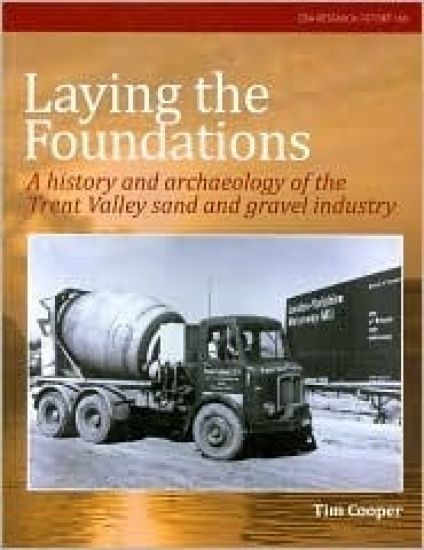
Laying the Foundations

Laying the Foundations

Tim Cooper

Council for British Archaeology
2008
nidottu
A pioneering regional study of one of the UK's key heavy industries in the 20th century - aggregates. Combining archaeological fieldwork with historical research and oral testimony, Tim Cooper traces the development of the industry through the 20th century, the machinery and processes used in quarrying, issues of supply and storeage, its place in the wider industry, and perhaps most prominently its significant impact on the Trent Valley landscape.