Kirjojen hintavertailu. Mukana 11 699 587 kirjaa ja 12 kauppaa.

Kirjahaku

Etsi kirjoja tekijän nimen, kirjan nimen tai ISBN:n perusteella.

15 kirjaa tekijältä Tim Hillier-Graves

MANFRED VON RICHTHOFEN

MANFRED VON RICHTHOFEN

Tim Hillier-Graves

PEN SWORD BOOKS LTD
2024
sidottu
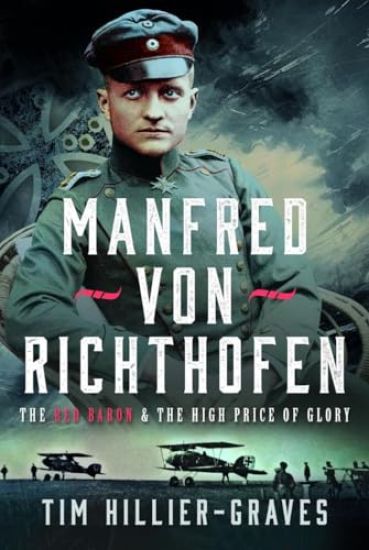
It is more than a hundred years since Manfred von Richthofen, the ‘Red Baron’, was killed in combat on the Western Front. Yet this gallant fighter pilot is probably as well known today as he was his lifetime. Beginning in 1916, when his lethal skills were first realised, his image proved a godsend to his country’s propaganda machine. There, far above the misery of life in the trenches, was a shooting star of unimaginable potency to help pacify a weary nation that was now beginning to believe that the war was no longer necessary or the losses justified. And so, an image of chivalry was conjured up and exploited with little regard of the cost of this to an increasingly war weary man. _Manfred von Richthofen: The Red Baron and the High Price of Glory_ draws on many sources, some previously untapped, including interviews with pilots he fought alongside and against, official documents held in collections around the world and the work of three noted Great War historians, two of whom began their work in the 1920s, all now dead but who left a rich legacy of research for us to explore. In addition, there are interviews with fifty or so pilots from the Second World War, who went through much that von Richthofen experienced above the Western Front and could speak with authority about the effects of continuous combat flying on aviators. This is the story of how a young cavalry officer eager to serve his country became a pilot and then, when success beckoned, had his life taken over by a very skilled group of publicists, writers, photographers and artists. Every element of his life was picked over, dissected and revealed to an ever-growing and intrusive audience. If he had simply been a celebrity – royalty, an actor or politician – this attention might have been accepted, but he was a front line pilot daily courting death, leading many other men in a constant life or death struggle. So here we have a man severely stressed by war, then stripped of his privacy and any opportunity to rest. Inevitably, some might say, he became another victim of a bloody war, but even in death the exploitation continued and was then re-awakened a decade or so later by the Nazi’s to help promote an even bloodier war.
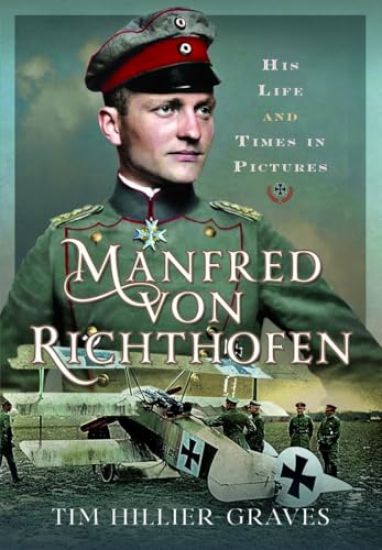
Manfred von Richthofen

Manfred von Richthofen

Tim Hillier-Graves

PEN SWORD BOOKS LTD
2024
sidottu
It is more than a hundred years since the First World War fighter ace Manfred von Richthofen was killed in combat on the Western Front. By then, due to a strange twist of fate, his name was becoming as well known in Britain, France and the USA as it was in Germany. Following the outbreak of war in 1914, von Richthofen initially served as a calvary reconnaissance officer. Such a role was soon diminished by the stagnation of trench warfare, and so von Richthofen volunteered for aircrew duties. From June to August 1915 he flew as an observer over the Eastern Front, before transferring to the Western Front. From there he progressed to pilot training. Von Richthofen’s first confirmed victory occurred on 17 September 1916, by which time he had transferred from two-seater reconnaissance aircraft to single-seater fighters. After achieving his sixteenth ‘kill’, the up and coming fighter ace was awarded the Pour le Mérite in January 1917, this being highest military honour in Germany at the time and informally known as ‘The Blue Max’. That same month, he assumed command of Jasta 11, by which time a legend surrounding his name was becoming firmly established. His life and deeds as a fighter pilot were so convincingly sold by a highly polished and quite ruthless propaganda machine that it created an image of knightly virtue and courage that has fame has lasted to this day and, indeed, shows no sign of lessening. And yet this phenomenon owes much to the fact that he was a highly successful killer of Allied airmen in a war of extreme violence where gallantry, if practised at all, was rarely done so. Kill or be killed became their mantra for survival. Beginning in late 1916, when his lethal skills were first realised, his carefully nurtured image proved a godsend to a war weary nation soon to face defeat and ignominy. Far above the misery of life in the trenches was created a shooting star of unimaginable potency which was then exploited with little regard of the personal cost to this increasingly war weary young man. This unique photographic record not only charts his life in great detail, but also places it in a much wider historical context, so giving it greater meaning and potency. He didn’t live or fight his battles in a small exclusive bubble, but in the full glare of military and public scrutiny both of which, although essential to the German cause, allowed him no rest or privacy as he struggled to survive. The Red Baron’s life was one of great endeavour and sacrifice which broke down national and political barriers so allowing us to consider the achievements of an undoubted hero and the period in which he lived. This fresh photographic assessment of von Richthofen’s life and times offers us a rare view of all that made him famous and the events that surrounded his rise to fame.
G T 3 The Unrealised Dream

G T 3 The Unrealised Dream

Tim Hillier-Graves

PEN SWORD BOOKS LTD
2025
sidottu
During the 1930s, with the end of steam locomotion being actively considered, many looked to develop engines powered by diesel and electricity. But for the coming of war in 1939, and the acute recession that followed, much more might have been accomplished. Nevertheless, the die had been cast and during the late 1940s and 1950s designers stepped up their efforts to find efficient and effective alternatives to steam. Amongst their number was John Hughes who, whilst working for English Electric designing turbine engines, saw how this power source might be used to drive locomotives. In part he was encouraged in these endeavours by William Stanier’s 1935 introduced Pacific ‘Turbomotive’ and wished to continue this experiment and exploit its potential more fully. For some the development of diesel and electric engines was the only logical course to take, but not Hughes who doggedly pursued his dream of seeing gas turbine engines dominating Britain’s railway network. Despite many setbacks, and lack of funds, he refused to give up and eventually saw his locomotive, GT3, built and then begin a prolonged period of trial running. But having finally achieved this ambition, the powers that be decided that the experiment had gone far enough and would go no further, much to Hughes’ anger and frustration. This is a ‘what might have been story’ which, although ultimately unsuccessful, tells us much about the nature of design engineering and the need for determined, radical thinkers who are prepared to push back scientific boundaries. In this case GT3 came close to being the first of a type of engine that might have changed the direction Britain’s railways took as steam came to an end. As such it is a near miss worthy of remembrance. To aid this work Hughes left a unique archive of documents, drawings and photos, in public and private hands, to help us understand the nature of his work and what drove him on despite the long odds he faced.
The Vought F4U Corsair in The War Against Japan

The Vought F4U Corsair in The War Against Japan

Tim Hillier-Graves

PEN SWORD BOOKS LTD
2025
sidottu
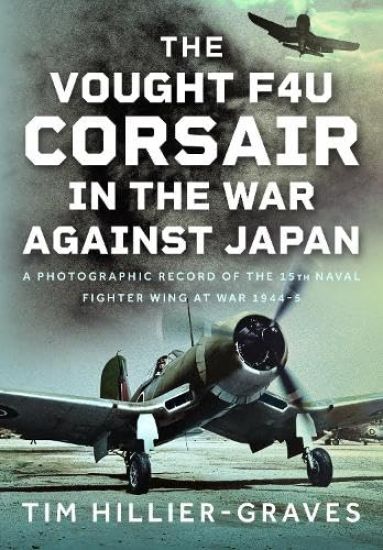
By mid-1944, the Allies, especially the United States, began preparing for a potential invasion of Japan. Churchill expected the Royal Navy to support the U.S. Navy in achieving aerial dominance. The Admiralty focused on strengthening its carrier forces, forming the 15th Naval Fighter Wing. However, a key question arose: which aircraft would the Wing use? The Supermarine Seafire lacked the necessary range and endurance for Pacific operations, while Hellcats were in short supply and prioritized for U.S. use. This left the Vought F4U Corsair as the best option. Although initially dismissed due to its poor safety record on carriers, the Corsair was transferred to the Royal Navy’s Fleet Air Arm, relieving American forces of the controversial aircraft. The 15th Naval Fighter Wing, made up of Nos. 1830, 1831, and 1833 squadrons, became the first to deploy the Corsair at sea. Despite early losses, British and Commonwealth pilots demonstrated its effectiveness, eventually convincing even the skeptical U.S. Navy of its capabilities. The Corsair proved to be one of the war’s most effective fighters. Led by Battle of Britain ace Dickie Cork until his death in 1944, the Wing achieved notable successes against Japanese forces aboard HMS Illustrious. Drawing on accounts from 20 veterans and extensive archives, this book highlights the Corsair’s transformation into a legendary naval fighter and the pilots’ indomitable spirit.
Gresley's Master Engineer, Bert Spencer

Gresley's Master Engineer, Bert Spencer

Tim Hillier-Graves

PEN SWORD BOOKS LTD
2023
sidottu
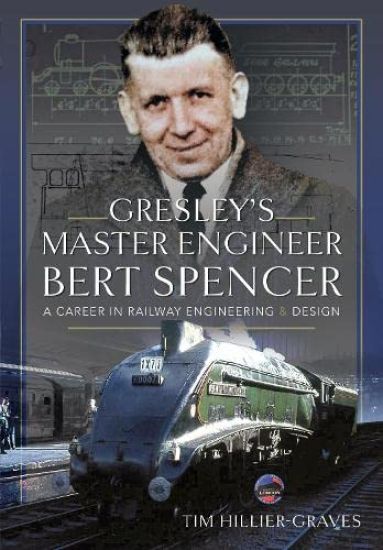
The great and the good rarely, if ever, accomplish all they wish to achieve without the able assistance of many skilled men and women. To have a very capable person beside you acting as guide, confidant and adviser is essential. Even better when it is someone with a depth of knowledge equal to, or even better than your own. If all these skills can be combined in one trusted, assistant so much the better. To a leader such a person may be valued beyond rubies', because they have the ability to take ideas, add something and help make them a reality. For Herbert Nigel Gresley, CME of the LNER, Bert Spencer was just such a man. As Gresley triumphed his faithful, introverted and highly talented assistant remained resolutely in the background playing an unsung yet key role in the development of Gresley's outstanding Pacifics and his many other memorable locomotives. For sixteen vibrant years Spencer sat beside his greatly admired leader witnessing and participating in all that happened adding much to an emerging legend that still resounds with us today. Here, for the first time, is Spencer's fascinating story, much of it in his own words. This was made possible by the thoughts and memories he recorded in letters to friends, papers he wrote for the Institution of Locomotive Engineers, official documents and much more. All this has been edited together to produce a unique and important personal narrative of his life and work.
George Jackson Churchward, 1857-1933

George Jackson Churchward, 1857-1933

Tim Hillier-Graves

PEN SWORD BOOKS LTD
2025
sidottu
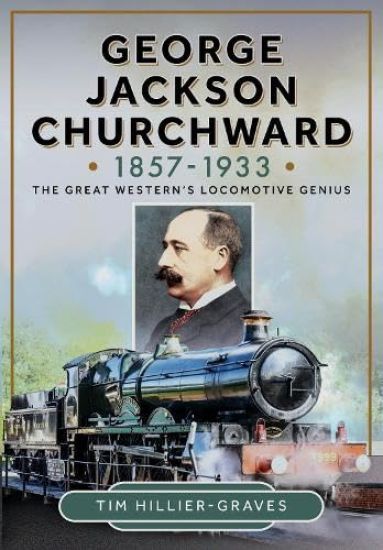
George Churchward is regarded by many, including the towering figures of Nigel Gresley, William Stanier and Andre Chapelon, as the most inventive, ingenious and successful steam locomotive designer there has ever been. When given the opportunity to comment these three exceptional engineers made their admiration for him and his many achievements a matter of historical fact. Now, a 100 or so years since Churchward retired from the GWR, his reputation is just as revered, as is the influence he had on the work of others. But, as with other notable figures, many details of his life and work have become mythologised or forgotten. So the time for an update and re-evaluation of his story is long overdue. In this richly illustrated book the author re-appraises Churchward’s life and work and assesses this pivotal period in railway history. In so doing he considers the true extent of his achievements and effect of his work on the great railway engineers that followed and the effect his leadership had on the GWR as a whole and the organisation he controlled at a time of immense social and political change.
Gresley's Silver Link

Gresley's Silver Link

Tim Hillier-Graves

PEN SWORD BOOKS LTD
2022
sidottu
Gresley's A4 Pacifics are arguably the most famous locomotives ever built, a status cemented by Mallard's record breaking run on the 3rd July 38. And yet only a year later the glamorous streaks' seemed likely to be cast into obscurity by the coming of another world war. So, for only four exhilarating years they were allowed to flourish as their creator had intended and in that time captured the imagination of railwaymen and public alike. With the help of previously unpublished material the author analyses the complex evolution of the A4s - a project that began in 1911 when Gresley was appointed as Locomotive Superintendent of the Great Northern Railway. It is a story with many strands to consider - war, peace and war again, engineering and art, politics and business, recession and social change, the growth of the media and consumerism, the struggle for professional reputations and a growing, deeply damaging international rivalry. All these elements are captured in the story of the A4s in the heady days before conflict ended their brief golden age and Gresley's life came to an end.
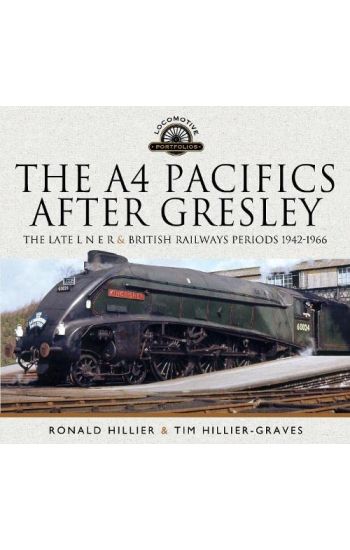
The A4 Pacifics After Gresley

The A4 Pacifics After Gresley

Tim Hillier-Graves

PEN SWORD BOOKS LTD
2023
sidottu
In their book Gresley's Silver Link' the authors analysed the evolution of the A4s Gresley's and their service up to Gresley's death in 1941\. This book takes this compelling story from the early years of the war up to their demise in the 1960s After four years of service pulling the LNER's most prestigious trains the A4s took on a more utilitarian role and for six years worked hard to support Britain's war effort. From this they emerged bowed, but unbeaten, although in an extremely jaded condition. Once restored they took up where they had left off in 1939 and did exceptional service for the rest of their days. With the help of previously unpublished material the authors analyse the second phase of the A4s careers, first as LNER engines, then, from 1948, under British Railways management. Without a diesel or electric fleet of engines to replace them they entered a second golden age of fast running in the 50s. Then in the Swinging Sixties' they faced, as some thought, a premature end as part of a much delayed modernisation programme. Until withdrawn from service they continued to astound their footplate crew and performed exceptionally well, even when maintenance standards had slipped and their condition had deteriorated. They were thoroughbreds and have become a fitting memorial to the master engineers who produced and sustained them for 30 years or more.
The Modified Bulleid Pacifics

The Modified Bulleid Pacifics

Tim Hillier-Graves

Pen Sword Transport
2019
sidottu
Oliver Bulleid's Pacifics were perhaps the most controversial steam locomotives ever built in Britain. They seem to been loved and loathed in equal measure and the debate over their strengths and weaknesses took on a new dimension when BR decided to modify them in the 1950s. It was argued that they were too costly to operate and maintain, by comparison to other types available. Their time out of service, due to breakdowns, was also increasing to an unacceptable level, and some of Bulleid's innovations were believed to be more hindrance than help. Rightly or wrongly BR were faced with a costly scrap and build programme or seek to make the engines more reliable. To Ron Jarvis, an engineer of note, fell the job of saving Bulleid's enigmatic locomotives in a bid to satisfy the demands of the service. And he displayed a master's touch in the programme that followed, saving the best of Bulleid's work and adopting other established design principles. What emerged was described by Bert Spencer, Gresley's talented assistant, as taking a swan and creating a soaring eagle'. This book explores all the elements of the lives of these Pacifics and their two designers. It draws on previously unpublished material to describe their gradual evolution, which didn't start or finish with the 1950s major rebuilding programme.
Peppercorn, His Life and Locomotives

Peppercorn, His Life and Locomotives

Tim Hillier-Graves

Pen Sword Transport
2021
sidottu
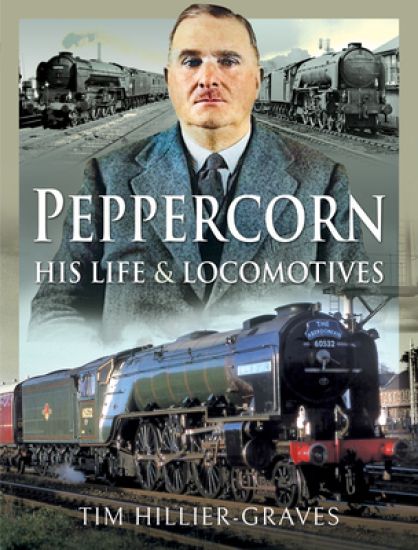
Arthur Peppercorn, a vicar's son from Herefordshire, was the last L N E R Chief Mechanical Engineer. He managed his department for a very short time before it was swept away in the wholesale changes that followed Nationalisation of British Railways in 1948.Although a disciple and follower of Sir Nigel Gresley, he was his own man and developed his talent for production engineering that fully complimented the design skills of his greatly respected leader. He then became a worthy deputy to Edward Thompson during a war that demanded great personal sacrifices from both men. When he finally became C M E in 1946 he used his wide talents and experience to lead in developing two successful pacific classes of locomotives, that many rate as being among the best locomotives of this type ever to appear in Britain. This book, which is the first detailed biography of Peppercorn, tells his fascinating story and describes the influences on his life and career, illustrating his many achievements along the way.
Gresley and his Locomotives

Gresley and his Locomotives

Tim Hillier-Graves

Pen Sword Transport
2019
sidottu
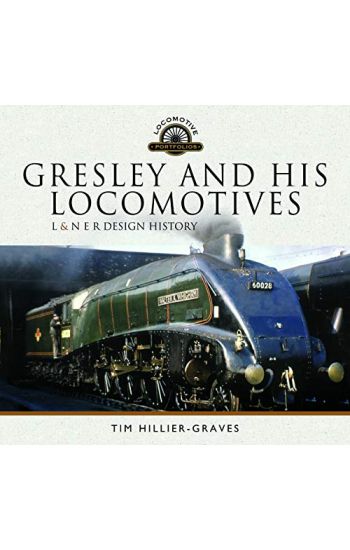
The story of Gresley and his locomotives is a well-trodden path. But our view of his achievements is a blinkered one because it fails to recognise all the other people who played a part in his work. As the leading American aviation engineer Paul S Baker wrote in 1945 the day of one-man engineering is long gone. You might as well print the organisation table of the engineering department when trying to assign credit for a particular design'. To Gresley must go great credit for many of the LNER's achievements, but those around him have faded into obscurity and are now largely forgotten even though their contributions were immense. To redress this balance, the author has explored the lives of Gresley and his team and sought to uncover a more expansive picture of these events. This in no way diminishes Gresley's accomplishments, which are immense by any standards, but builds a more authentic view of a dynamic period in railway history. The book draws upon many sources of information, some of it previously unpublished. This has helped present a fascinating picture of all that happened and all that was achieved, often in the most difficult of circumstances, by a very gifted team of engineers and their exceptional leader.
Locomotives of the Somerset & Dorset Joint Railway

Locomotives of the Somerset & Dorset Joint Railway

Tim Hillier-Graves

Pen Sword Transport
2021
sidottu
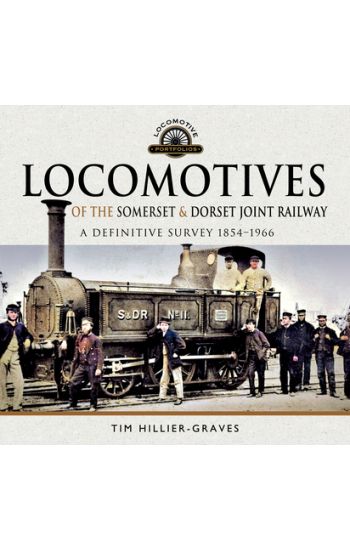
Although closed to traffic in 1966, with most of its infrastructure swiftly destroyed by British Railways, this unique railway line still lives in the minds of many, some too young to remember it in its heyday. For more then a hundred years it courted disaster and could on a number of occasions have succumbed to overpowering financial pressures, but it survived with the help of partnerships with larger, more secure companies, namely the Midland Railway and the London & South Western Railway. Later on, after the grouping in 1923, the line came under the control of the L M S and the Southern Railway. It was unfortunate that the line suffered in later years, from inter regional rivalry between the Western and Southern Regions of British Railways, which led to its eventual closure. The variety of companies involved in its running meant that during its lifetime the small pool of locomotives needed to service the line was supplemented by the best each partner could offer. So from the beginning to the end there were a myriad number of types of locomotive running over the Mendips providing a lively variety of motive power. This heavily illustrated book traces this unique and fascinating history and brings to life this singular, much missed and loved railway.
Heaven High, Ocean Deep

Heaven High, Ocean Deep

Tim Hillier-Graves

Casemate Publishers
2019
sidottu
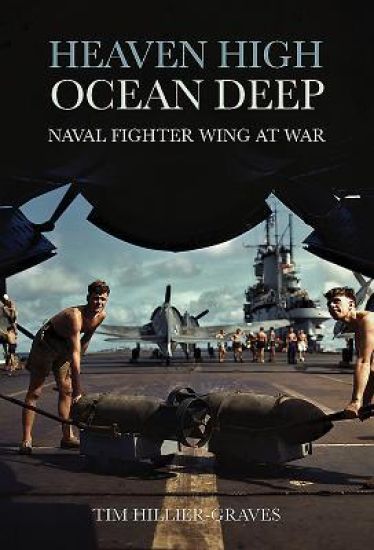
In 1944, with the invasion of Europe underway and Battles in the Atlantic and Mediterranean all but won, the Royal Navy`s strength could be focussed on the Far East and the Pacific where the Japanese were still a long way from defeat. Since the Battle of Midway, in June 1942, the United States had been slowly forcing the Japanese back, but it was a long, bloody process. The Allies needed to combine their forces more effectively if they were to bring the war to an end quickly. In response the Royal Navy massed its ships to add weight to the US Navy. With an attack force of four fleet carriers, and two more on the way, the RN`s role would be significant, but would take time to work up to the state of preparedness of their American cousins. And so a fleet was born for use in the Indian Ocean and, later, the Pacific.From April 1944 to August 1945 they would successfully fight many long, intensive battles. In this time each carrier would contribute greatly to victory, none more so than HMS Indomitable with her 5th Fighter Wing. They would be in thick of the fighting, achieve success and live perilously for a prolonged period, losing many men along the way. It was a war of attrition, which allowed little room for compassion or benevolence.The story told in this book is about the exceptional group of young men, from Britain, Canada, New Zealand, Holland and South Africa who joined the Fleet Air Arm as pilots. With their American-built Hellcats they were in the thick of the action, providing a hard, professional core to this fighting fleet that few would equal. Although its operational history is second to none, this was only achieved by the sacrifice and endurance of the men who flew many dangerous missions and daily lived with the spectre of a searing death. And so the book is about them, with war providing a back drop that broods and eviscerates in turn. How did these men come to be fighting as pilots with the Fleet Air Arm, how were they trained, how did they live, how did they prepare themselves to kill or be killed, what sustained them and what did they feel about their extremely dangerous experiences? Luckily some survived to record their thoughts and others left poignant memories for the curious to follow and explore. And here the author was lucky to meet or correspond with nearly all the survivors and be privileged to hear their stories. He follows the young pilots lives from selection, through training to operations. The 5th Wing went to sea in 1944 and were in continuous action, in the Indian and Pacific Oceans, from then until the last days of the war. They participated in strikes on Sumatra with the aim of destroying its highly important oil refineries, then they joined in the battles for Leyte and Okinawa, before moving with the British Fleet to begin the invasion Japan itself.
Widowmaker

Widowmaker

Tim Hillier-Graves

Casemate Publishers
2020
sidottu
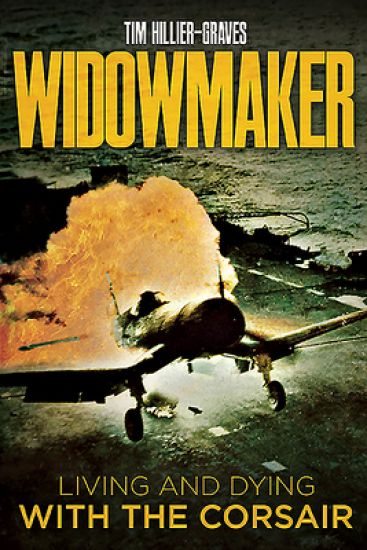
“Despite everything I felt very lucky to have flown Corsairs, they were the best you know even though it took me sometime to realise this when so many friends died flying them.” (Colin Facer, Corsair pilot, HMS Illustrious)The Vought-Sikorsky Corsair was one of the most potent fighters of the Second World War. It was also one of the most flawed. Conceived by Rex Beisel, Vought’s Chief Designer during 1938, the US Navy condemned it as being too dangerous for carrier operations and refused to certify it safe for use at sea. With the British Aero Industry unable to build fighters with sufficient range and potentcy for carrier use the Admirtalty sought alternatives. With the Lend Lease programme, created by President Roosevelt, in place they could acquire weapons from American factories. In practice, this meant standing in line behind the US Navy, Marines and Army for service, but it still opened up new opportunities to be exploited. So, with newly built Corsairs being stockpiled and the promise of an improved version on the way, the RN saw a opening worthy of development and exploited it. By the end of the war the Fleet Air Arm had acquired more than 2,000 Corsairs to equip its squadrons. But the risks identified by the USN were largely ignored by the Royal Navy and far too many men and aircraft were lost in accidents as a result. Yet in the hands of experienced carrier pilots its virtues were only too apparent and, in due course, they achieved great things. Eventually, the US Navy noted this “success” and certified the Corsair for use on their carriers too, but the aircraft never entirely lost its reputation as a “widow maker.”This book describes the Corsair’s development and tells the sad, but inspiring story of the young men who struggled and suffered to make the Corsair a going concern in the most vicious unforgiving war one can imagine. To do this the author met and corresponded with ninety or more veterans from America, Britain, New Zealand and Canada. Their recollections made this book possible and through their vivid memories we can experience what it felt like to be barely of age, a civilian called to arms and a fighter pilot.
The British Rail High Speed Train

The British Rail High Speed Train

Tim Hillier-Graves

PEN SWORD BOOKS LTD
2026
sidottu
After fifty years of service the lives of the HST 125s are now drawing to a close. Some remain to remind us of the extraordinary impact these trains had on British Rail’s operations over so many decades, but their number is dwindling fast. A long goodbye, but a goodbye nonetheless. With their days numbered, now would seem to be the time to consider the achievement of the design engineers who created them and the service they rendered across Britain’s rail network, aided by so many others. It is a story that might never have been told if BR’s plans for its Advanced Passenger Train had reached fruition more quickly. But delay upon delay meant that there was pressing need for a fast modern passenger less technically advanced substitute to fill the gap. The 125s were the result and very quickly they showed what they could do, and would continue to do wherever BR, or the privatised companies that followed in the 1990s, operated them. This book pays homage to these exceptional trains and all those who were involved in their design, construction and day to day operation.