Kirjojen hintavertailu. Mukana 11 651 101 kirjaa ja 12 kauppaa.

Kirjahaku

Etsi kirjoja tekijän nimen, kirjan nimen tai ISBN:n perusteella.

3 kirjaa tekijältä Tim Hopkins

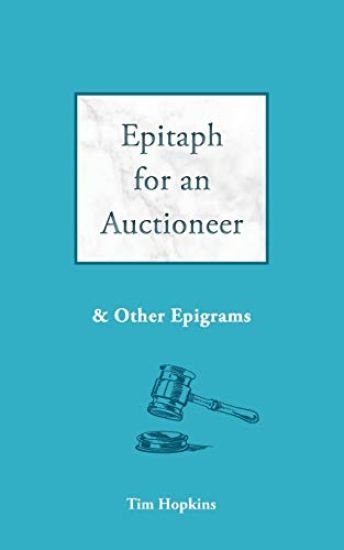
Epitaph for an Auctioneer

Epitaph for an Auctioneer

Tim Hopkins

Arena Books
2020
nidottu
There have always been fashions in poetry, and the current fashion is for free verse. Even the most cursory look at the latest poetry magazines will reveal the unyielding trend for non-formal, unrhymed verse. The leading poetry magazine, Poetry Review (the organ of the Poetry Society) features no rhymed verse. Even Milton pointed out how rhyme could act as a limitation in the writing of poetry – and there are no rhymes in Paradise Lost. However, there is a formal structure in that Milton writes in blank verse, not free verse: that is unrhymed iambic pentameters. This technique in a more flexible form has been used by T.S. Eliot. One unwanted side-effect of the free verse fashion is the falling out of favour of light, humorous and satirical verse. It can still be seen in literary competitions in The New Statesman, The Oldie and The Spectator, but it is not encouraged by book publishers. This is a pity, for a worthy tradition fostered by such eminent writers as Pope, Carroll, W.S. Gilbert and many others is somewhat endangered. Hence my set of epigrams goes against the fashion, though I hope not against the grain. It is difficult if not impossible to write comic, effective, light verse without rhyme and structure. Unashamedly, I have eschewed free verse, choosing to write in what might seem an outmoded style to some. But if the method is traditional, it is to be hoped that points made on social, psychological and political issues, will be pertinent enough to justify the approach.
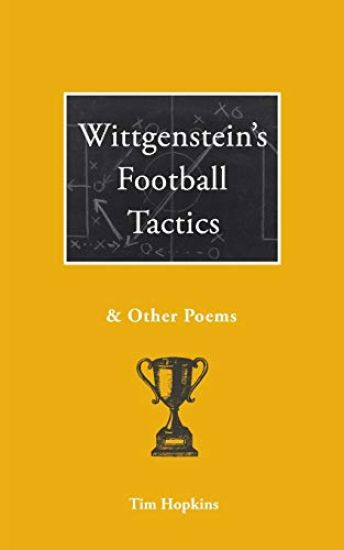
Wittgenstein's Football Tactics

Wittgenstein's Football Tactics

Tim Hopkins

Arena Books
2020
nidottu
Poetry anthologies, by definition, will feature a variety of styles, themes and approaches. The possible disadvantages are that we find old favourites time and time again, which are undoubtedly worth including. But we may come to seethem too often. It's also possible that the constant switches from older verses to newer ones, and from traditional verses to experimental, may leave the reader with a mild case of poetic indigestion. With a single-poet volume, like this one, the issue is a question of taste: the reader will very soon know if the poet is to their liking or not. This is particularly the case where a poet has a narrow outlook in terms of style and subject matter. Readers may be discomfited by a constant adherence to Political Correctness, or by an undisguised affiliation. The hope with this volume is that the poet's catholicity when it comes to technique and subject matter will avoid the problem mentioned above. A lack of certainty or dogmatism is healthy for a poet in that the imagination may work more freely, thus eschewing the limitations of a fixed view of the world. If the proof of the pudding is in the eating, then even a casual glance at the poems in this collection will reveal breadth rather than narrowness of outlook. There are very short poems, and some longer ones; there are serious verses as well as humorous ones; there are verses formal in structure alongside those without such constraints. But ultimately what counts is the pleasure afforded to readers. In this respect, it is to be hoped that this volume will succeed in pleasing those who turn its pages.
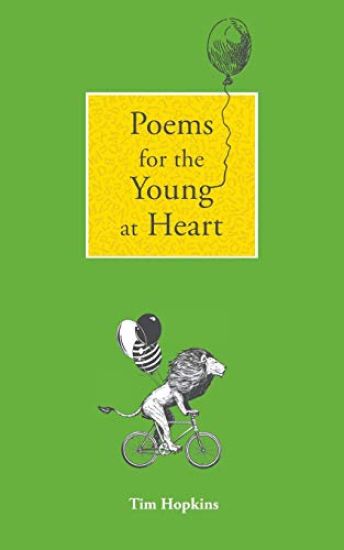
Poems for the Young at Heart

Poems for the Young at Heart

Tim Hopkins

Arena Books
2021
nidottu
We see a very special bond when a parent reads nursery rhymes to a child. In no small part is the closeness elicited by the child's delight in language. Even before babies are aware that words have meanings they respond to the rhymes and rhymes that characterise verses for the very young. Language has an aesthetic as well as a utilitarian function, and appreciation of the former quality is almost certainly innate. Although children will have stories read to them when they attend primary school, poetry is all too often conspicuous by its absence. This is a pity bearing in mind the evident pleasure afforded by nursery rhymes prior to school attendance. In the early and mid-20th century it was a commonplace for children to learn poems by heart and to recite them. These poems could often be recalled word for word in later life. Why this valuable activity is so rare in schools today is a mystery. Experience of teaching poetry in primary schools gives us a clear idea of the kind of poems children enjoy. In the first place, formal verses which rhyme are preferred to free verse. In terms of subjects, poems about children are understandably popular, as are poems about animals. Humour, too, is appreciated by those of primary school age. And this collection features poems on all the themes mentioned. It is hoped that children – and their parents and younger teachers – will find much to please in Poems for the Young at Heart.