Kirjojen hintavertailu. Mukana 11 342 296 kirjaa ja 12 kauppaa.

Kirjahaku

Etsi kirjoja tekijän nimen, kirjan nimen tai ISBN:n perusteella.

4 kirjaa tekijältä Tim McNeese

William Henry Jackson's Lens

William Henry Jackson's Lens

Tim McNeese

ROWMAN LITTLEFIELD
2023
sidottu
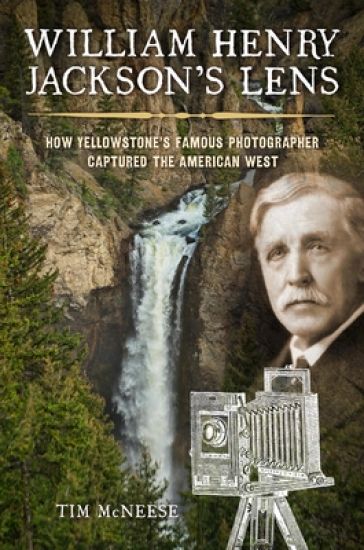
William Henry Jackson was an explorer, photographer, and artist. He is also one of those most often overlooked figures of the American West. His larger claim to fame involves his repeated forays into the western lands of nineteenth-century America as a photographer. Jackson’s life spanned multiple incarnations of the American West. In a sense, he played a singular role in revealing the West to eastern Americans. While others opened the frontier with the axe and the rifle, Jackson did so with his collection of cameras. He dispelled the geological myths through a lens no one could deny or match. His wet plate collodion prints not only helped to reframe the nation’s image of the West, but they also enticed businessmen, investors, scientists, and even tourists to venture into the western regions of the United States. Prior to Jackson’s widely circulated photographs, the American West was little understood and unmapped—mysterious lands that required a camera and a cameraman to reveal their secrets and, ultimately, provide the first photographic record of such exotic destinations as Yellowstone, Mesa Verde, and the Rocky Mountains. Jackson’s story was long and his life full, as he lived to the enviable age of 99. This biography presents the good, bad, and ugly of Jackson’s life, both personal and professional, through the use primary source materials, including Jackson’s autobiographies, letters, and government reports on the Hayden Surveys.
Time in the Wilderness

Time in the Wilderness

Tim McNeese

University of Nebraska Press
2021
sidottu
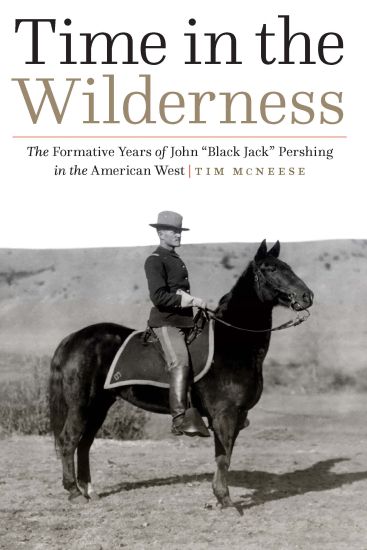
Nebraska Book Award, Biography Honor Most Americans familiar with General John J. “Black Jack” Pershing know him as the commander of American Expeditionary Forces in Europe during the latter days of World War I. But Pershing was in his late fifties by then. Pershing’s military career began in 1886, with his graduation from West Point and his first assignments in the American West as a horsebound cavalry officer during the final days of Apache resistance in the Southwest, where Arizona and New Mexico still represented a frontier of blue-clad soldiers, Native Americans, cowboys, rustlers, and miners. But the Southwest was just the beginning of Pershing’s West. He would see assignments over the years in the Dakotas, during the Ghost Dance uprising and the battle of Wounded Knee; a posting at Montana’s Fort Assiniboine; and, following his years in Asia, a return to the West with a posting at the Presidio in San Francisco and a prolonged assignment on the Mexican-American border in El Paso, which led to his command of the Punitive Expedition, tasked with riding deep into Northern Mexico to capture the pistolero Pancho Villa. During those thirty years from West Point to the Western Front, Pershing had a colorful and varied military career, including action during the Spanish-American War and lengthy service in the Philippines. Both were new versions of the American frontier abroad, even as the frontier days of the American West were closing. All of Pershing’s experiences in the American West prepared him for his ultimate assignment as the top American commander during the Great War. If the American frontier and, more broadly, the American West provided a cauldron in which Americans tested themselves during the nineteenth century, they did the same for John Pershing. His story was a historical Western.
Native American America: North America Before 1492
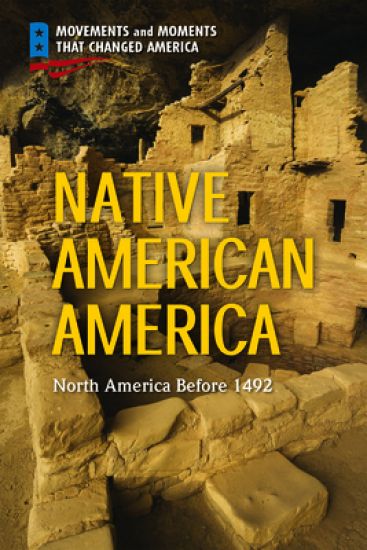
For thousands of years, before the arrival of Christopher Columbus and the Europeans, the vast American landscape was home to millions of Native Americans, whose ancestors still remain on the land today. They formed a wide variety of regional cultures, dotting the unspoiled environs stretching from the stark, red rock formations of the Southwest to the thick forestlands of the Northeast. Through descriptive and captivating text enhanced by detailed images and informative sidebars, readers will examine how each Indian culture group adapted to their unique surroundings and turned nature into home, as they built their houses, hunted for food, raised their children, and worshiped their gods.
Native American America: North America Before 1492
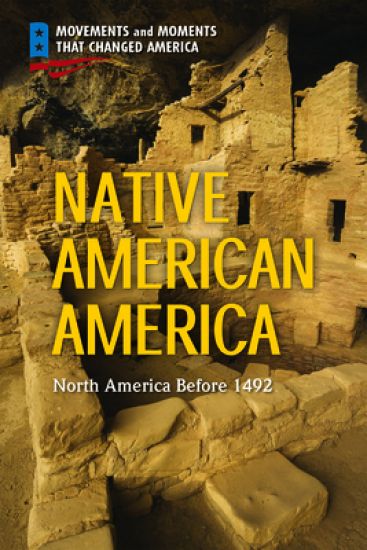
For thousands of years, before the arrival of Christopher Columbus and the Europeans, the vast American landscape was home to millions of Native Americans, whose ancestors still remain on the land today. They formed a wide variety of regional cultures, dotting the unspoiled environs stretching from the stark, red rock formations of the Southwest to the thick forestlands of the Northeast. Through descriptive and captivating text enhanced by detailed images and informative sidebars, readers will examine how each Indian culture group adapted to their unique surroundings and turned nature into home, as they built their houses, hunted for food, raised their children, and worshiped their gods.