Kirjojen hintavertailu. Mukana 11 244 527 kirjaa ja 12 kauppaa.

Kirjahaku

Etsi kirjoja tekijän nimen, kirjan nimen tai ISBN:n perusteella.

7 kirjaa tekijältä Tim Milnes

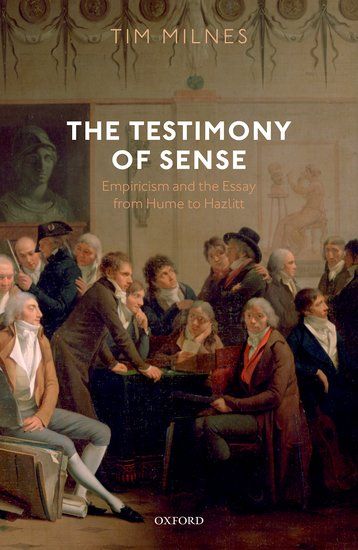
The Testimony of Sense

The Testimony of Sense

Tim Milnes

Oxford University Press
2019
sidottu
The Testimony of Sense attempts to answer a neglected but important question: what became of epistemology in the late eighteenth century, in the period between Hume's scepticism and Romantic idealism? It finds that two factors in particular reshaped the nature of 'empiricism': the socialisation of experience by Scottish Enlightenment thinkers and the impact upon philosophical discourse of the belletrism of periodical culture. The book aims to correct the still widely-held assumption that Hume effectively silenced epistemological inquiry in Britain for over half a century. Instead, it argues that Hume encouraged the abandonment of subject-centred reason in favour of models of rationality based upon the performance of trusting actions within society. Of particular interest here is the way in which, after Hume, fundamental ideas like the self, truth, and meaning are conceived less in terms of introspection, correspondence, and reference, and more in terms of community, coherence, and communication. By tracing the idea of intersubjectivity through the issues of trust, testimony, virtue and language, the study offers new perspectives on the relationships between philosophy and literature, empiricism and transcendentalism, and Enlightenment and Romanticism. As philosophy grew more conversational, the familiar essay became a powerful metaphor for new forms of communication. The book explores what is epistemologically at stake in the familiar essay genre as it develops through the writings of Joseph Addison, David Hume, Samuel Johnson, Charles Lamb, and William Hazlitt. It also offers readings of philosophical texts, such as Hume's Treatise, Thomas Reid's Inquiry, and Adam Smith's Theory of Moral Sentiments, as literary performances.
William Wordsworth - The Prelude

William Wordsworth - The Prelude

Tim Milnes

Red Globe Press
2009
sidottu
The Prelude is now seen as a central text in the Wordsworth corpus. This Guide identifies and gathers significant critical perspectives, interpretations and debates connected with the poem, contextualising and explaining criticism from the Victorian period right through to the present day.
William Wordsworth - The Prelude

William Wordsworth - The Prelude

Tim Milnes

Red Globe Press
2009
nidottu
The Prelude is now seen as a central text in the Wordsworth corpus. This Guide identifies and gathers significant critical perspectives, interpretations and debates connected with the poem, contextualising and explaining criticism from the Victorian period right through to the present day.
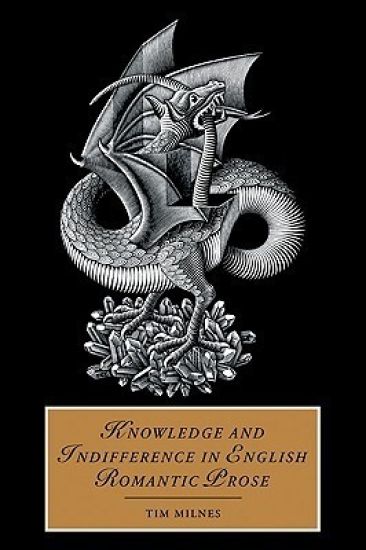
Knowledge and Indifference in English Romantic Prose

Knowledge and Indifference in English Romantic Prose

Tim Milnes

Cambridge University Press
2007
pokkari
This 2003 study sheds light on the way in which the English Romantics dealt with the basic problems of knowledge, particularly as they inherited them from the philosopher David Hume. Kant complained that the failure of philosophy in the eighteenth century to answer empirical scepticism had produced a culture of 'indifferentism'. Tim Milnes explores the way in which Romantic writers extended this epistemic indifference through their resistance to argumentation, and finds that it exists in a perpetual state of tension with a compulsion to know. This tension is most clearly evident in the prose writing of the period, in works such as Wordsworth's Preface to Lyrical Ballads, Hazlitt's Essay on the Principles of Human Action and Coleridge's Biographia Literaria. Milnes argues that it is in their oscillation between knowledge and indifference that the Romantics prefigure the ambivalent negotiations of modern post-analytic philosophy.
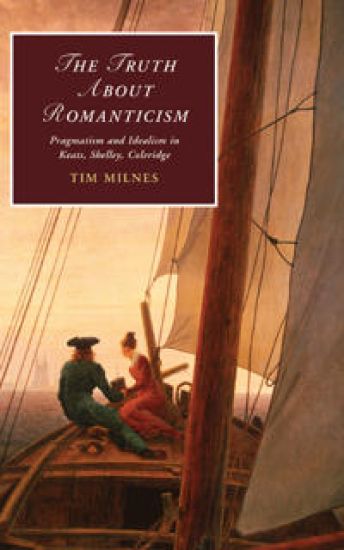
The Truth about Romanticism

The Truth about Romanticism

Tim Milnes

Cambridge University Press
2010
sidottu
How have our conceptions of truth been shaped by romantic literature? This question lies at the heart of this examination of the concept of truth both in romantic writing and in modern criticism. The romantic idea of truth has long been depicted as aesthetic, imaginative and ideal. Tim Milnes challenges this picture, demonstrating a pragmatic strain in the writing of Keats, Shelley and Coleridge in particular, that bears a close resemblance to the theories of modern pragmatist thinkers such as Donald Davidson and Jürgen Habermas. Romantic pragmatism, Milnes argues, was in turn influenced by recent developments within linguistic empiricism. This book will be of interest to readers of romantic literature, but also to philosophers, literary theorists, and intellectual historians.
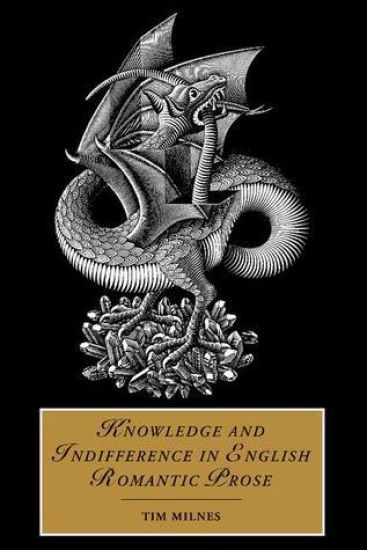
Knowledge and Indifference in English Romantic Prose

Knowledge and Indifference in English Romantic Prose

Tim Milnes

Cambridge University Press
2003
sidottu
This 2003 study sheds light on the way in which the English Romantics dealt with the basic problems of knowledge, particularly as they inherited them from the philosopher David Hume. Kant complained that the failure of philosophy in the eighteenth century to answer empirical scepticism had produced a culture of 'indifferentism'. Tim Milnes explores the way in which Romantic writers extended this epistemic indifference through their resistance to argumentation, and finds that it exists in a perpetual state of tension with a compulsion to know. This tension is most clearly evident in the prose writing of the period, in works such as Wordsworth's Preface to Lyrical Ballads, Hazlitt's Essay on the Principles of Human Action and Coleridge's Biographia Literaria. Milnes argues that it is in their oscillation between knowledge and indifference that the Romantics prefigure the ambivalent negotiations of modern post-analytic philosophy.
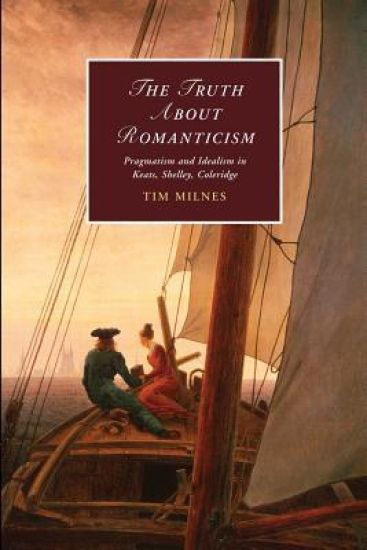
The Truth about Romanticism

The Truth about Romanticism

Tim Milnes

Cambridge University Press
2013
pokkari
How have our conceptions of truth been shaped by romantic literature? This question lies at the heart of this examination of the concept of truth both in romantic writing and in modern criticism. The romantic idea of truth has long been depicted as aesthetic, imaginative and ideal. Tim Milnes challenges this picture, demonstrating a pragmatic strain in the writing of Keats, Shelley and Coleridge in particular, that bears a close resemblance to the theories of modern pragmatist thinkers such as Donald Davidson and Jürgen Habermas. Romantic pragmatism, Milnes argues, was in turn influenced by recent developments within linguistic empiricism. This book will be of interest to readers of romantic literature, but also to philosophers, literary theorists, and intellectual historians.