Kirjojen hintavertailu. Mukana 12 296 638 kirjaa ja 12 kauppaa.

Kirjahaku

Etsi kirjoja tekijän nimen, kirjan nimen tai ISBN:n perusteella.

4 kirjaa tekijältä Tim O'Keefe

Epicurus on Freedom

Epicurus on Freedom

Tim O'Keefe

Cambridge University Press
2009
pokkari
In this 2005 book, Tim O'Keefe reconstructs the theory of freedom of the ancient Greek philosopher Epicurus (341–271/0 BCE). Epicurus' theory has attracted much interest, but our attempts to understand it have been hampered by reading it anachronistically as the discovery of the modern problem of free will and determinism. O'Keefe argues that the sort of freedom which Epicurus wanted to preserve is significantly different from the 'free will' which philosophers debate today, and that in its emphasis on rational action it has much closer affinities with Aristotle's thought than with current preoccupations. His original and provocative book will be of interest to a wide range of readers in Hellenistic philosophy.
Epicurus on Freedom

Epicurus on Freedom

Tim O'Keefe

Cambridge University Press
2005
sidottu
In this 2005 book, Tim O'Keefe reconstructs the theory of freedom of the ancient Greek philosopher Epicurus (341–271/0 BCE). Epicurus' theory has attracted much interest, but our attempts to understand it have been hampered by reading it anachronistically as the discovery of the modern problem of free will and determinism. O'Keefe argues that the sort of freedom which Epicurus wanted to preserve is significantly different from the 'free will' which philosophers debate today, and that in its emphasis on rational action it has much closer affinities with Aristotle's thought than with current preoccupations. His original and provocative book will be of interest to a wide range of readers in Hellenistic philosophy.
Epicureanism

Epicureanism

Tim O'Keefe

Acumen Publishing Ltd
2009
sidottu
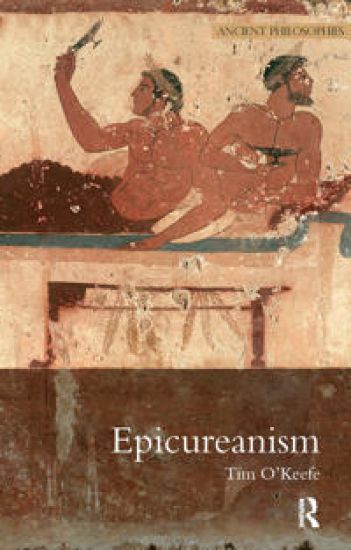
The Epicurean school of philosophy was one of the dominant philosophies of the Hellenistic period. Founded by Epicurus of Samos (century 341-270 BCE) it was characterized by an empiricist epistemology and a hedonistic ethics. This new introduction to Epicurus offers readers clear exposition of the central tenets of Epicurus' philosophy, with particular stress placed on those features that have enduring philosophical interest and where parallels can be drawn with debates in contemporary analytic philosophy. Part 1 of the book examines the fundamentals of Epicurus' metaphysics, including atoms and the void, emergent and sensible properties, cosmology, mechanistic biology, the nature and functioning of the mind, death, and freedom of action. Part 2 explores Epicurus' epistemology, including his arguments against scepticism and his ideas on sensations, preconceptions and feelings. The final part deals with Epicurus' ethics, exploring his arguments for hedonism, his distinctive conceptions of types of pleasure and desire, his belief in virtue, his notions of justice, friendship and his theology. O'Keefe provides extended exegesis of the arguments supporting Epicurus' positions, indicating their strengths and weaknesses, while showing the connections between the various parts of his philosophy and how Epicureanism hangs together as a whole.
Epicureanism

Epicureanism

Tim O'Keefe

Acumen Publishing Ltd
2009
nidottu
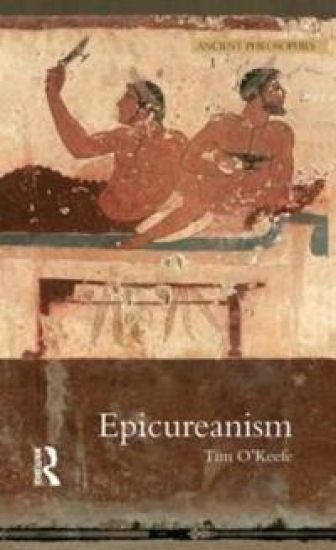
The Epicurean school of philosophy was one of the dominant philosophies of the Hellenistic period. Founded by Epicurus of Samos (century 341-270 BCE), it was characterized by an empiricist epistemology and a hedonistic ethics. This new introduction to Epicurus offers readers clear exposition of the central tenets of Epicurus' philosophy, with particular stress placed on those features that have enduring philosophical interest and where parallels can be drawn with debates in contemporary analytic philosophy. Part 1 of the book examines the fundamentals of Epicurus' metaphysics, including atoms and the void, emergent and sensible properties, cosmology, mechanistic biology, the nature and functioning of the mind, death, and freedom of action. Part 2 explores Epicurus' epistemology, including his arguments against scepticism and his ideas on sensations, preconceptions and feelings. The final part deals with Epicurus' ethics, exploring his arguments for hedonism, his distinctive conceptions of types of pleasure and desire, his belief in virtue, his notions of justice, friendship and his theology. O'Keefe provides extended exegesis of the arguments supporting Epicurus' positions, indicating their strengths and weaknesses, while showing the connections between the various parts of his philosophy and how Epicureanism hangs together as a whole.