Kirjojen hintavertailu. Mukana 11 244 527 kirjaa ja 12 kauppaa.

Kirjahaku

Etsi kirjoja tekijän nimen, kirjan nimen tai ISBN:n perusteella.

9 kirjaa tekijältä Tim Patrick

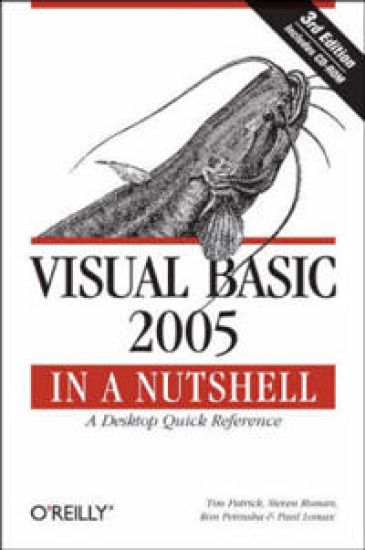
Visual Basic 2005 in a Nutshell

Visual Basic 2005 in a Nutshell

Tim Patrick

O'Reilly Media, Inc, USA
2006
nidottu
When Microsoft made Visual Basic into an object-oriented programming language, millions of VB developers resisted the change to the .NET platform. Now, after integrating feedback from their customers and creating Visual Basic 2005, Microsoft finally has the right carrot. Visual Basic 2005 offers the power of the .NET platform, yet restores the speed and convenience of Visual Basic. Accordingly, we've revised the classic in a Nutshell guide to the Visual Basic language to cover the Visual Basic 2005 version and all of its new features. Unlike other books on the subject, Visual Basic 2005 in a Nutshell, 3rd Edition doesn't assume you're a novice. It's a detailed, professional reference to the Visual Basic language-a reference that you can use to jog your memory about a particular language element or parameter. It'll also come in handy when you want to make sure that there isn't some "gotcha" you've overlooked with a particular language feature. The book is divided into three major parts: Part I introduces the main features and concepts behind Visual Basic programming; Part II thoroughly details all the functions, statements, directives, objects, and object members that make up the Visual Basic language; and Part III contains a series of helpful appendices. Some of the new features covered include Generics, a convenient new library called My Namespace, and the operators used to manipulate data in Visual Basic. No matter how much experience you have programming with Visual Basic, you want Visual Basic 2005 in a Nutshell, 3rd Edition close by, both as a standard reference guide and as a tool for troubleshooting and identifying programming problems.
Start-To-Finish Visual Basic 2015

Start-To-Finish Visual Basic 2015

Tim Patrick

Owani Press
2016
nidottu
Nobody learns a programming language just to brag about writing loops. Instead, languages exist so you can create great software. That's the purpose of Start-to-Finish Visual Basic 2015, to show you how to write a complete, useful, working application in Visual Basic and .NET. Each chapter introduces essential Visual Basic concepts, and shows you how to apply them by crafting a full business-level application. With this comprehensive book, you will: Understand how to design and implement .NET applications Learn the core features of the Visual Basic language Access and modify database content using ADO.NET Perform advanced development activities, including cryptography and localization Master cool VB features, such as Generics, XML Literals, and LINQ Get a head start on programming via the downloadable source code Whether you're new to programming, or want to add Visual Basic to your existing skillset, Start-to-Finish Visual Basic 2015 will guide you step-by-step through the learning process.
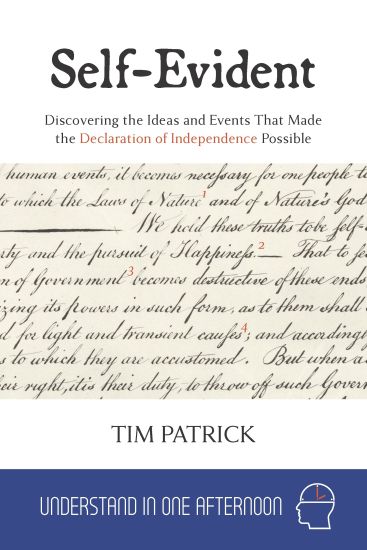
Self-Evident: Discovering the Ideas and Events That Made the Declaration of Independence Possible
America's Declaration of Independence is one of the most important statements on human freedom ever published. We laud Thomas Jefferson for penning the document's flowing prose, but most of its lofty themes did not spring anew from his mind. Instead, he relied on the powerful concepts evoked by the Enlightenment, ancient Greek and Latin writings, and what he termed the "harmonizing sentiments of the day." There is much less harmonizing in twenty-first century America. Although united in name, divisions abound, in part because we have forgotten the core messages written in our nation's birth certificate. Self-Evident returns the discussion to the foundational rights and Enlightenment beliefs of mankind's place in history. It does this by examining the primary sources and key events that united a nation. In a world with instant access to endless entertainments and divisive arguments, Self-Evident will guide you back to the ideas that extended liberty across the globe.
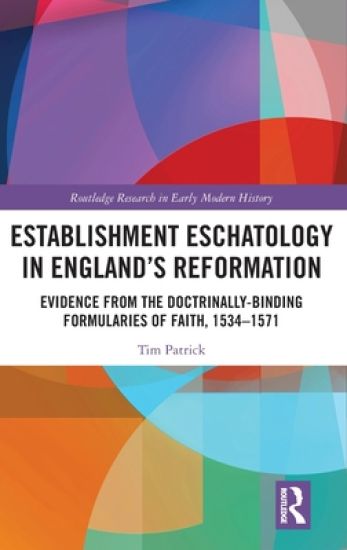
Establishment Eschatology in England’s Reformation
Exploring what the early English Protestants came to believe about the afterlife, and how they arrived at their positions, this much-needed book fills a gap in the scholarly literature. In surveying the authorised doctrinal works of the English church through the Reformation period, the progress of eschatological thinking is traced from the earliest days of change to the solidification of the formularies which remain binding across the worldwide Anglican Church today.Fresh observations are made on some well-known texts such as the Books of Common Prayer, Articles of Religion and official Tudor homilies, and these are complemented by commentary on surprisingly understudied documents of the period including primers, catechisms, and the paratexts of the early printed English Bibles. The result is a fascinating study of the English reformers’ navigation past both Roman Catholic and radical anabaptist beliefs, and it shows that their arrival at a relatively barren destination was due in part to a complete switch in theological priorities and in part to a fear of the implications of formally adopting some of the highly contested views.Establishment Eschatology will prove to be an important resource for students and scholars of England’s early modern religious and cultural history.
Establishment Eschatology in England’s Reformation
Exploring what the early English Protestants came to believe about the afterlife, and how they arrived at their positions, this much-needed book fills a gap in the scholarly literature. In surveying the authorised doctrinal works of the English church through the Reformation period, the progress of eschatological thinking is traced from the earliest days of change to the solidification of the formularies which remain binding across the worldwide Anglican Church today.Fresh observations are made on some well-known texts such as the Books of Common Prayer, Articles of Religion and official Tudor homilies, and these are complemented by commentary on surprisingly understudied documents of the period including primers, catechisms, and the paratexts of the early printed English Bibles. The result is a fascinating study of the English reformers’ navigation past both Roman Catholic and radical anabaptist beliefs, and it shows that their arrival at a relatively barren destination was due in part to a complete switch in theological priorities and in part to a fear of the implications of formally adopting some of the highly contested views.Establishment Eschatology will prove to be an important resource for students and scholars of England’s early modern religious and cultural history.