Kirjojen hintavertailu. Mukana 11 668 191 kirjaa ja 12 kauppaa.

Kirjahaku

Etsi kirjoja tekijän nimen, kirjan nimen tai ISBN:n perusteella.

27 kirjaa tekijältä Tim R. New

Forests and Insect Conservation in Australia

Forests and Insect Conservation in Australia

Tim R. New

Springer Nature Switzerland AG
2019
nidottu
Losses of forests and their insect inhabitants are a major global conservation concern, spanning tropical and temperate forest regions throughout the world. This broad overview of Australian forest insect conservation draws on studies from many places to demonstrate the diversity and vulnerability of forest insects and how their conservation may be pursued through combinations of increased understanding, forest protection and silvicultural management in both natural and plantation forests. The relatively recent history of severe human disturbance to Australian forests ensures that reasonably natural forest patches remain and serve as ‘models’ for many forest categories. They are also refuges for many forest biota extirpated from the wider landscapes as forests are lost, and merit strenuous protection from further changes, and wider efforts to promote connectivity between otherwise isolated remnant patches. In parallel, the recent attention to improving forest insect conservation inharmony with insect pest management continues to benefit from perspectives generated from better-documented faunas elsewhere. Lessons from the northern hemisphere, in particular, have led to revelations of the ecological importance and vulnerability of many insect taxa in forests, together with clear evidence that ‘conservation can work’ in concert with wider forest uses. A brief outline of the variety of Australian tropical and temperate forests and woodlands, and of the multitude of endemic and, often, highly localised insects that depend on them highlights needs for conservation (both of single focal species and wider forest-dependent radiations and assemblages). The ways in which insects contribute to sustained ecological integrity of these complex ecosystems provide numerous opportunities for practical conservation.
Insect Conservation and Australia’s Grasslands

Insect Conservation and Australia’s Grasslands

Tim R. New

Springer Nature Switzerland AG
2019
sidottu
Australia’s varied grasslands have suffered massive losses and changes since European settlement, and those changes continue under increasingly intensive human pressures for development and agricultural production. The values of native grasslands for conservation of endemic native biodiversity, both flora and fauna, have led to strong interests in the protection of remaining fragments, especially near urban centres, and documentation of the insects and other inhabitants of grasslands spanning tropical to cool temperate parts of the country. Attention to conservation of grassland insects in Australia is relatively recent, but it is increasingly apparent that grasslands harbour many localised and ecologically specialised endemic species. Their conservation necessarily advances from very incomplete documentation, and draws heavily on lessons from the far better-documented grasslands elsewhere, most notably in the northern hemisphere, and undertaken over far longer periods.From those cases, and the extensive background to grassland management to harmonise conservation with production and amenity values through honing use of processes such as grazing, mowing and fire, the needs and priorities for Australia can become clearer, together with needs for grassland restoration at a variety of scales. This book is a broad overview of conservation needs of grassland insects in Australia, drawing on the background provided elsewhere in the world on the responses to disturbances, and the ecological importance, of some key insect groups (notably Orthoptera, Hemiptera and Lepidoptera) to suggest how insect conservation in native, pastoral and urban grasslands may be advanced. The substantial references given for each chapter facilitate entry for non-entomologist grassland managers and stewards to appreciate the diversity and importance of Australia’s grassland insects, their vulnerabilities to changes, and the possibilities for conserving them and the wider ecological roles in which they participate.
Insect Conservation and Australia’s Grasslands

Insect Conservation and Australia’s Grasslands

Tim R. New

Springer Nature Switzerland AG
2020
nidottu
Australia’s varied grasslands have suffered massive losses and changes since European settlement, and those changes continue under increasingly intensive human pressures for development and agricultural production. The values of native grasslands for conservation of endemic native biodiversity, both flora and fauna, have led to strong interests in the protection of remaining fragments, especially near urban centres, and documentation of the insects and other inhabitants of grasslands spanning tropical to cool temperate parts of the country. Attention to conservation of grassland insects in Australia is relatively recent, but it is increasingly apparent that grasslands harbour many localised and ecologically specialised endemic species. Their conservation necessarily advances from very incomplete documentation, and draws heavily on lessons from the far better-documented grasslands elsewhere, most notably in the northern hemisphere, and undertaken over far longer periods.From those cases, and the extensive background to grassland management to harmonise conservation with production and amenity values through honing use of processes such as grazing, mowing and fire, the needs and priorities for Australia can become clearer, together with needs for grassland restoration at a variety of scales. This book is a broad overview of conservation needs of grassland insects in Australia, drawing on the background provided elsewhere in the world on the responses to disturbances, and the ecological importance, of some key insect groups (notably Orthoptera, Hemiptera and Lepidoptera) to suggest how insect conservation in native, pastoral and urban grasslands may be advanced. The substantial references given for each chapter facilitate entry for non-entomologist grassland managers and stewards to appreciate the diversity and importance of Australia’s grassland insects, their vulnerabilities to changes, and the possibilities for conserving them and the wider ecological roles in which they participate.
Insect conservation and Australia’s Inland Waters

Insect conservation and Australia’s Inland Waters

Tim R. New

Springer Nature Switzerland AG
2020
sidottu
The first broad overview of conservation needs of Australia’s largely endemic freshwater insects, drawing on examples and information from many parts of the world to illustrate and develop needs and practical prospects for conservation in inland water environments. The wide variety of those environments in Australia and their diverse insect inhabitants – many of them highly localised and ecologically specialised and vulnerable - and threats to them is illustrated. Case histories demonstrate the different aspects of practical conservation management that may be possible in different contexts, and numerous references facilitate understanding by non-specialist readers and non-entomologist conservation managers and practitioners.
Insect conservation and Australia’s Inland Waters

Insect conservation and Australia’s Inland Waters

Tim R. New

Springer Nature Switzerland AG
2021
nidottu
The first broad overview of conservation needs of Australia’s largely endemic freshwater insects, drawing on examples and information from many parts of the world to illustrate and develop needs and practical prospects for conservation in inland water environments. The wide variety of those environments in Australia and their diverse insect inhabitants – many of them highly localised and ecologically specialised and vulnerable - and threats to them is illustrated. Case histories demonstrate the different aspects of practical conservation management that may be possible in different contexts, and numerous references facilitate understanding by non-specialist readers and non-entomologist conservation managers and practitioners.
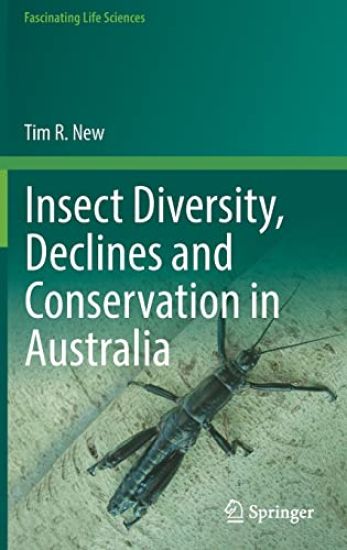
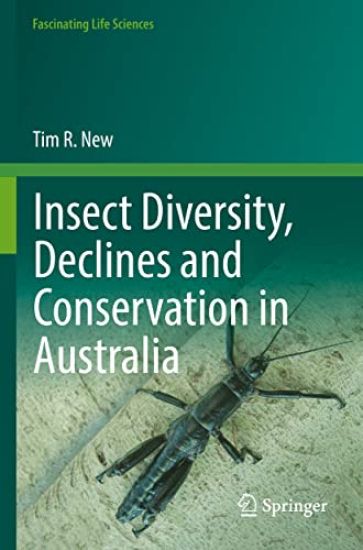
Insect Diversity, Declines and Conservation in Australia

Insect Diversity, Declines and Conservation in Australia

Tim R. New

Springer Nature Switzerland AG
2022
sidottu
Problems of insect enumeration and assessment of needs are addressed in the contexts of rapid and substantial losses and changes to all key Australian terrestrial and freshwater environments and promoting awarenesss of the importance of insects. Further definition of the insect fauna and its peculiarities can aid threat alleviation and practical management to protect and conserve this unique and largely endemic biodiversity. Written for the many environmental managers and naturalists who are not primarily entomologists, the ten chapters expand from considerations of insect decline and diversity to the unique features of the Australian fauna and its characterisation. Cases and examples from throughout the world illustrate the major needs, approaches and priorities to sustaining a poorly known, diverse and ecologically varied insect heritage of global significance.
Insect Diversity, Declines and Conservation in Australia

Insect Diversity, Declines and Conservation in Australia

Tim R. New

Springer Nature Switzerland AG
2023
nidottu
Problems of insect enumeration and assessment of needs are addressed in the contexts of rapid and substantial losses and changes to all key Australian terrestrial and freshwater environments and promoting awarenesss of the importance of insects. Further definition of the insect fauna and its peculiarities can aid threat alleviation and practical management to protect and conserve this unique and largely endemic biodiversity. Written for the many environmental managers and naturalists who are not primarily entomologists, the ten chapters expand from considerations of insect decline and diversity to the unique features of the Australian fauna and its characterisation. Cases and examples from throughout the world illustrate the major needs, approaches and priorities to sustaining a poorly known, diverse and ecologically varied insect heritage of global significance.
The Other Lepidoptera: Moth Conservation in Australia

The Other Lepidoptera: Moth Conservation in Australia

Tim R. New

Springer International Publishing AG
2023
sidottu
Conservation interest in moths, by far the predominant components of Lepidoptera, lags far behind that for butterflies, for which conservation practice provides many well-established lessons for extension to their near relatives. The needs of moths are at least as great, but their greater richness and variety, and far poorer documentation of diversity and biology over much of the world contribute to this lack of attention. Australia’s rich moth fauna, largely endemic and of global interest, illustrates many of the problems of developing wider interest and support for moth conservation. Numerous species (perhaps half the total fauna) are undescribed, and many are ecological specialists in restricted and vulnerable environments over small parts of the continent. Establishing their conservation status and needs whilst accepting that foundation knowledge is highly incomplete and much species-focused conservation is impracticable provides complex problems in setting priorities, based largely on wider diversity and effective advocacy. Most Australian vegetation systems, from grassland to forest and from sea-level to alpine zones, have been eroded in extent and quality since European settlement, resulting in massive habitat changes for native insects and to leave fragmented (and commonly degraded) remnants in which moths and others may persist. Recent surveys continue to increase recorded moth richness, reveal local faunal peculiarities, and indicate how assemblage changes may mirror wider environmental changes. This book is an overview of advances in documenting and interpreting moth diversity and ecology, to show how information from better-studied moth faunas can help in planning conservation of Australia’s moths through measures such as understanding the moths themselves by increased surveys and study, the factors influencing their diversity and wellbeing, and how such threats may be countered through increased coordinated conservation interest, commitment and management.
The Other Lepidoptera: Moth Conservation in Australia

The Other Lepidoptera: Moth Conservation in Australia

Tim R. New

Springer International Publishing AG
2024
nidottu
Conservation interest in moths, by far the predominant components of Lepidoptera, lags far behind that for butterflies, for which conservation practice provides many well-established lessons for extension to their near relatives. The needs of moths are at least as great, but their greater richness and variety, and far poorer documentation of diversity and biology over much of the world contribute to this lack of attention. Australia’s rich moth fauna, largely endemic and of global interest, illustrates many of the problems of developing wider interest and support for moth conservation. Numerous species (perhaps half the total fauna) are undescribed, and many are ecological specialists in restricted and vulnerable environments over small parts of the continent. Establishing their conservation status and needs whilst accepting that foundation knowledge is highly incomplete and much species-focused conservation is impracticable provides complex problems in setting priorities, based largely on wider diversity and effective advocacy. Most Australian vegetation systems, from grassland to forest and from sea-level to alpine zones, have been eroded in extent and quality since European settlement, resulting in massive habitat changes for native insects and to leave fragmented (and commonly degraded) remnants in which moths and others may persist. Recent surveys continue to increase recorded moth richness, reveal local faunal peculiarities, and indicate how assemblage changes may mirror wider environmental changes. This book is an overview of advances in documenting and interpreting moth diversity and ecology, to show how information from better-studied moth faunas can help in planning conservation of Australia’s moths through measures such as understanding the moths themselves by increased surveys and study, the factors influencing their diversity and wellbeing, and how such threats may be countered through increased coordinated conservation interest, commitment and management.
Insect Conservation in Australia: Why and How

Insect Conservation in Australia: Why and How

Tim R. New

Springer International Publishing AG
2024
sidottu
The fundamental ecological, cultural and economic roles of insects give them central importance in functioning of terrestrial and inland water ecosystems worldwide. Insect declines, from a variety of anthropogenic threats, erode these services and dictate the need for insect conservation, but the consequences of insect losses are poorly recognised. In Australia, insect conservation must proceed from a very uncertain and incomplete knowledge of insect identifications and diversity, and also from a generally poor public appreciation of their central ecological roles and relevance to human welfare and other biota. These impediments occupy much of this book, in which cases of insect conservation across the world are used to provide lessons for Australia, where a combination of large numbers of insect species and small numbers of entomologists and citizen participants necessitates clear appreciation of insect importance, and focussed conservation priorities. Low public sympathy and inadequate scientific information can hinder progress because uncertainty, imprecision and ignorance are difficult to explain to policymakers and funding agencies whose interest and support may be pivotal. Understanding and overcoming those impediments is a vital component of insect conservation. This book is intended as an introduction to the needs, rationale and practice of insect conservation in Australia for students in conservation biology, managers and other concerned people who are not specialists in entomology, to whom the daunting variety and complexity of insect life may deter involvement, and for whom an Appendix aid to recognising insect orders is included. The text is based on conservation needs of Australia’s insects and shows how progress necessitates effective communication, clear priorities, and plans for action within a realistic and practical framework of aims and needs for practical conservation. A suggested ‘Agenda’ for advancing insect conservation in Australia encompasses many of these needs and activities.
Insect Conservation: Developing a Practical Perspective

Insect Conservation: Developing a Practical Perspective

Tim R. New

Springer International Publishing AG
2025
sidottu
The variety of theoretical themes and practical components contributing to modern insect conservation continues to diversify, together with realisation that insects affect many aspects of human wellbeing. Some such topics develop rapidly to become integral features of insect management or recovery plans; others become dismissed as irrelevant or tangential to major conservation effort, even if they are fundamentally important for basic biological understanding. This book includes commentaries on a varied array of topics previously covered in short Editorials in the Journal of Insect Conservation, and which are revisited here to assess, expand and update their wider relevance, and to demonstrate progress in appreciation of insect significance and needs. Some topics have remained highly relevant, even when poorly understood, but the complexity of influences on insect life are appreciated most effectively by including many such considerations in conservation, and understanding their roles in both communication and conservation management. Australian examples throughout the book demonstrate the practical difficulties of conserving a diverse, poorly documented and inadequately resourced insect fauna with a rather short history of conservation concern. The fauna is also one for which conservation interest is growing and for which designs of conservation management plans and designation of priorities are urgently needed as wider strategies also develop. The seven major chapters deal with published Editorials, each reprinted and followed by updated commentary and references, collectively addressing relevance and importance of developments over the intervening decade or so. An introductory chapter aids perspective through a brief account of the fundamentals of insect conservation, and the final chapter helps to integrate the text to provide outlooks based on increased understanding of insect life. The book is intended for students and environmental managers, as well as a more general readership seeking information on how insect conservation ‘works’ and how to address a number of contemporary issues.
Insects, Fire and Conservation

Insects, Fire and Conservation

Tim R. New

Springer International Publishing AG
2014
sidottu
A global synthesis of the impacts of wildfires and controlled burning on insects, bringing together much hitherto scattered information to provide a guide to improved conservation management practice. The great variety of responses by insect species and assemblages demonstrates the often subtle balance between fire being a severe threat and a vital management component. Examples from many parts of the world and from diverse biotopes and production systems display the increasingly detailed appreciation of fire impacts on insects in terrestrial and freshwater environments and the ways in which prescribed burning may be tailored to reduce harmful ecological impacts and incorporated into protocols for threatened species and wider insect conservation benefits.
Insect Conservation and Urban Environments

Insect Conservation and Urban Environments

Tim R. New

Springer International Publishing AG
2015
sidottu
Includes chapters on assessing changes among assemblages and in individual species, the variety of general threats (notably habitat changes and impacts of alien species) and more particularly urban threats. The first global overview and synthesis of the impacts of urbanisation on insects and their relatives and the needs and theoretical and practical background to conserving them in urban environments. Insect dependence on open spaces in built-up areas suggests a wide range of management options for conservation, from individual site (including novel habitats such as green roofs) to landscape-level connectivity. These measures, all discussed with specific examples, involve all sectors of humanity, from government agencies to individual householders and ‘citizen scientist’ groups. Each chapter includes pertinent and recent.
Insect Conservation and Urban Environments

Insect Conservation and Urban Environments

Tim R. New

Springer International Publishing AG
2016
nidottu
Includes chapters on assessing changes among assemblages and in individual species, the variety of general threats (notably habitat changes and impacts of alien species) and more particularly urban threats. The first global overview and synthesis of the impacts of urbanisation on insects and their relatives and the needs and theoretical and practical background to conserving them in urban environments. Insect dependence on open spaces in built-up areas suggests a wide range of management options for conservation, from individual site (including novel habitats such as green roofs) to landscape-level connectivity. These measures, all discussed with specific examples, involve all sectors of humanity, from government agencies to individual householders and ‘citizen scientist’ groups. Each chapter includes pertinent and recent.
Insects, Fire and Conservation

Insects, Fire and Conservation

Tim R. New

Springer International Publishing AG
2016
nidottu
A global synthesis of the impacts of wildfires and controlled burning on insects, bringing together much hitherto scattered information to provide a guide to improved conservation management practice. The great variety of responses by insect species and assemblages demonstrates the often subtle balance between fire being a severe threat and a vital management component. Examples from many parts of the world and from diverse biotopes and production systems display the increasingly detailed appreciation of fire impacts on insects in terrestrial and freshwater environments and the ways in which prescribed burning may be tailored to reduce harmful ecological impacts and incorporated into protocols for threatened species and wider insect conservation benefits.
Alien Species and Insect Conservation

Alien Species and Insect Conservation

Tim R. New

Springer International Publishing AG
2016
sidottu
This overview of the roles of alien species in insect conservation brings together information, evidence and examples from many parts of the world to illustrate their impacts (often severe, but in many cases poorly understood and unpredictable) as one of the primary drivers of species declines, ecological changes and biotic homogenisation. Both accidental and deliberate movements of species are involved, with alien invasive plants and insects the major groups of concern for their influences on native insects and their environments. Risk assessments, stimulated largely through fears of non-target impacts of classical biological control agents introduced for pest management, have provided valuable lessons for wider conservation biology. They emphasise the needs for effective biosecurity, risk avoidance and minimisation, and evaluation and management of alien invasive species as both major components of many insect species conservation programmes and harbingers of change in invaded communities. The spread of highly adaptable ecological generalist invasive species, which are commonly difficult to detect or monitor, can be linked to declines and losses of numerous localised ecologically specialised insects and disruptions to intricate ecological interactions and functions, and create novel interactions with far-reaching consequences for the receiving environments. Understanding invasion processes and predicting impacts of alien species on susceptible native insects is an important theme in practical insect conservation.
Mutualisms and Insect Conservation

Mutualisms and Insect Conservation

Tim R. New

Springer International Publishing AG
2017
sidottu
Documenting and understanding intricate ecological interactions involving insects is a central need in conservation, and the specialised and specific nature of many such associations is displayed in this book. Their importance is exemplified in a broad global overview of a major category of interactions, mutualisms, in which the interdependence of species is essential for their mutual wellbeing. The subtleties that sustain many mutualistic relationships are still poorly understood by ecologists and conservation managers alike. Examples from many parts of the world and ecological regimes demonstrate the variety of mutualisms between insect taxa, and between insects and plants, in particular, and their significance in planning and undertaking insect conservation – of both individual species and the wider contexts on which they depend. Several taxonomic groups, notably ants, lycaenid butterflies and sucking bugs, help to demonstrate the evolution and flexibility of mutualistic interactions, whilst fundamental processes such as pollination emphasise the central roles of, often, highly specific partnerships. This compilation brings together a wide range of relevant cases and contexts, with implications for practical insect conservation and increasing awareness of the roles of co-adaptations of behaviour and ecology as adjuncts to designing optimal conservation plans. The three major themes deal with the meanings and mechanisms of mutualisms, the classic mutualisms that involve insect partners, and the environmental and conservation lessons that flow from these and have potential to facilitate and improve insect conservation practice. The broader ecological perspective advances the transition from primary focus on single species toward consequently enhancing wider ecological contexts in which insect diversity can thrive.
Alien Species and Insect Conservation

Alien Species and Insect Conservation

Tim R. New

Springer International Publishing AG
2018
nidottu
This overview of the roles of alien species in insect conservation brings together information, evidence and examples from many parts of the world to illustrate their impacts (often severe, but in many cases poorly understood and unpredictable) as one of the primary drivers of species declines, ecological changes and biotic homogenisation. Both accidental and deliberate movements of species are involved, with alien invasive plants and insects the major groups of concern for their influences on native insects and their environments. Risk assessments, stimulated largely through fears of non-target impacts of classical biological control agents introduced for pest management, have provided valuable lessons for wider conservation biology. They emphasise the needs for effective biosecurity, risk avoidance and minimisation, and evaluation and management of alien invasive species as both major components of many insect species conservation programmes and harbingers of change in invaded communities. The spread of highly adaptable ecological generalist invasive species, which are commonly difficult to detect or monitor, can be linked to declines and losses of numerous localised ecologically specialised insects and disruptions to intricate ecological interactions and functions, and create novel interactions with far-reaching consequences for the receiving environments. Understanding invasion processes and predicting impacts of alien species on susceptible native insects is an important theme in practical insect conservation.
Mutualisms and Insect Conservation

Mutualisms and Insect Conservation

Tim R. New

Springer International Publishing AG
2018
nidottu
Documenting and understanding intricate ecological interactions involving insects is a central need in conservation, and the specialised and specific nature of many such associations is displayed in this book. Their importance is exemplified in a broad global overview of a major category of interactions, mutualisms, in which the interdependence of species is essential for their mutual wellbeing. The subtleties that sustain many mutualistic relationships are still poorly understood by ecologists and conservation managers alike. Examples from many parts of the world and ecological regimes demonstrate the variety of mutualisms between insect taxa, and between insects and plants, in particular, and their significance in planning and undertaking insect conservation – of both individual species and the wider contexts on which they depend. Several taxonomic groups, notably ants, lycaenid butterflies and sucking bugs, help to demonstrate the evolution and flexibility of mutualistic interactions, whilst fundamental processes such as pollination emphasise the central roles of, often, highly specific partnerships. This compilation brings together a wide range of relevant cases and contexts, with implications for practical insect conservation and increasing awareness of the roles of co-adaptations of behaviour and ecology as adjuncts to designing optimal conservation plans. The three major themes deal with the meanings and mechanisms of mutualisms, the classic mutualisms that involve insect partners, and the environmental and conservation lessons that flow from these and have potential to facilitate and improve insect conservation practice. The broader ecological perspective advances the transition from primary focus on single species toward consequently enhancing wider ecological contexts in which insect diversity can thrive.
Forests and Insect Conservation in Australia

Forests and Insect Conservation in Australia

Tim R. New

Springer International Publishing AG
2018
sidottu
Losses of forests and their insect inhabitants are a major global conservation concern, spanning tropical and temperate forest regions throughout the world. This broad overview of Australian forest insect conservation draws on studies from many places to demonstrate the diversity and vulnerability of forest insects and how their conservation may be pursued through combinations of increased understanding, forest protection and silvicultural management in both natural and plantation forests. The relatively recent history of severe human disturbance to Australian forests ensures that reasonably natural forest patches remain and serve as ‘models’ for many forest categories. They are also refuges for many forest biota extirpated from the wider landscapes as forests are lost, and merit strenuous protection from further changes, and wider efforts to promote connectivity between otherwise isolated remnant patches. In parallel, the recent attention to improving forest insect conservation inharmony with insect pest management continues to benefit from perspectives generated from better-documented faunas elsewhere. Lessons from the northern hemisphere, in particular, have led to revelations of the ecological importance and vulnerability of many insect taxa in forests, together with clear evidence that ‘conservation can work’ in concert with wider forest uses. A brief outline of the variety of Australian tropical and temperate forests and woodlands, and of the multitude of endemic and, often, highly localised insects that depend on them highlights needs for conservation (both of single focal species and wider forest-dependent radiations and assemblages). The ways in which insects contribute to sustained ecological integrity of these complex ecosystems provide numerous opportunities for practical conservation.