Kirjojen hintavertailu. Mukana 11 717 486 kirjaa ja 12 kauppaa.

Kirjahaku

Etsi kirjoja tekijän nimen, kirjan nimen tai ISBN:n perusteella.

9 kirjaa tekijältä Tim Wright

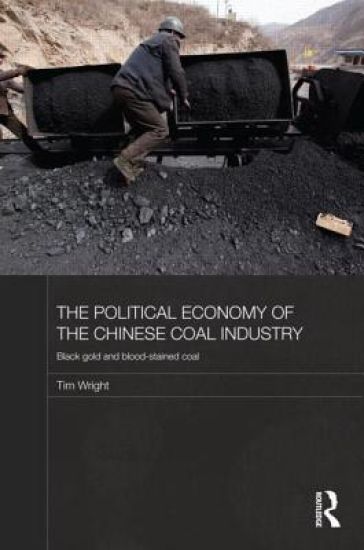
The Political Economy of the Chinese Coal Industry
Coal mining is one of China’s largest industries, and provides an excellent case study through which to consider the broader issues of China’s transition from socialism to capitalism, focussing on the shift to a market economy, the rise of rural industry and the situation of China’s working class. Coal was one of the pillars of the planned economy but, the author argues, its shift to market-based operations has been protracted and difficult, particularly in moving from the artificially low prices of the planned economy to market prescribed prices - a change that had a major impact on the industry’s financial performance. The book goes on to considers the growth of small rural coal mines as part of the Township and Village Enterprises (TVEs) programme; these small mines have brought prosperity to areas where small manufacturing enterprises are not competitive, but at the same time have been the cause of many social and environmental problems. It also examines the situation of coal miners - arguably one the most vulnerable segments of the Chinese working class - under socialism and under capitalism, paying particular attention to the issue of work safety and coal mine disasters. The book provides a comprehensive and coherent treatment of these issues from the establishment of the People’s Republic up to 2010.
The Political Economy of the Chinese Coal Industry
Coal mining is one of China’s largest industries, and provides an excellent case study through which to consider the broader issues of China’s transition from socialism to capitalism, focussing on the shift to a market economy, the rise of rural industry and the situation of China’s working class. Coal was one of the pillars of the planned economy but, the author argues, its shift to market-based operations has been protracted and difficult, particularly in moving from the artificially low prices of the planned economy to market prescribed prices - a change that had a major impact on the industry’s financial performance. The book goes on to considers the growth of small rural coal mines as part of the Township and Village Enterprises (TVEs) programme; these small mines have brought prosperity to areas where small manufacturing enterprises are not competitive, but at the same time have been the cause of many social and environmental problems. It also examines the situation of coal miners - arguably one the most vulnerable segments of the Chinese working class - under socialism and under capitalism, paying particular attention to the issue of work safety and coal mine disasters. The book provides a comprehensive and coherent treatment of these issues from the establishment of the People’s Republic up to 2010.
Coal Mining in China's Economy and Society 1895-1937

Coal Mining in China's Economy and Society 1895-1937

Tim Wright

Cambridge University Press
2009
pokkari
This book provides an important contribution to the economic history of modern China. It examines the history of the coal mining industry - one of China's largest and most important - from the beginnings of modernisation around 1895 to the start of the Sino-Japanese War in 1937. It addresses questions of both economic and socio-political history and contributes to our knowledge of many aspects of early twentieth-century Chinese history. It examines the slow growth of the modern sector of the Chinese economy and considers the effects of foreign investment and ownership, the supply of capital, the technology of production, the availability of local entrepreneurship and compares the evolution of the Chinese coal industry with development elsewhere. This book will be of interest to those concerned with the problems of industrial growth in general as well as to specialists on modern China.
Coal Mining in China's Economy and Society, 1895-1937

Coal Mining in China's Economy and Society, 1895-1937

Tim Wright

Cambridge University Press
1985
sidottu
This book provides an important contribution to the economic history of modern China. It examines the history of the coal-mining industry - one of China's largest and most important - from the beginnings of modernisation around 1895 to the start of the Sino-Japanese War in 1937. It addresses questions of both economic and socio-political history and contributes to our knowledge of many aspects of early twentieth-century Chinese history. It examines the slow growth of the modem sector of the Chinese economy and considers the effects of foreign investment and ownership, the supply of capital, the technology of production, the availability of local entrepreneurship, and compares the evolution of the Chinese coal industry with development elsewhere. Other chapters look at the experience of different regions of China, and give a detailed picture of the life and activities of the mine workers.
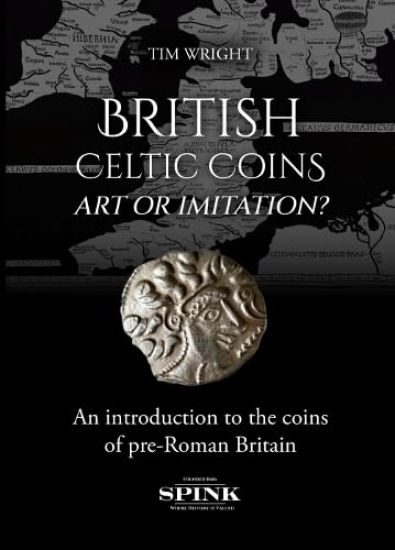
British Celtic Coins: Art or Imitation?
The peoples of pre-Roman Britain remain an enigma. Our perceptions are shaped by two narratives, that of contemporary Roman colonists and more recent Celtic nationalists, who vilify and glorify them in equal measure. The more we learn, the less we know with certainty: should they be described as ‘Celtic peoples’, were they organised into the ‘tribes’ that later formed Roman administrative districts (civitas) and, beyond a few famous names like Cunobelinus (Shakespeare’s Cymbeline), were they led by ‘kings’ or ‘chieftains’? The coins from this period are no less controversial. Britain was a late adopter of coinage, initially importing coins from the Gallo-Belgic continent and then copying their Macedonian-inspired prototypes. Britain also produced them for longer than the continent, latterly incorporating themes and imagery from Rome. These bookends of external influence have led some to dismiss the coins of pre-Roman Britain (and indeed ‘Celtic’ coins generally) as inferior. The most compelling counter to this is the coins themselves, explored through the theme of Art or Imitation? What we find is extraordinary variety and originality, that makes a powerful case for their collection and study.
Suns

Suns

Tim Wright

Puncher and Wattmann
2019
nidottu
This first full-length volume draws from poems written over roughly ten years: prose sequences, sonnets or thereabouts, parody-homages, a metro poem, psychical collaborations, and drawn from small-print chapbooks. Combining a condensed lyricism, collage, and durational procedures, the collection works its way through days and the everyday...
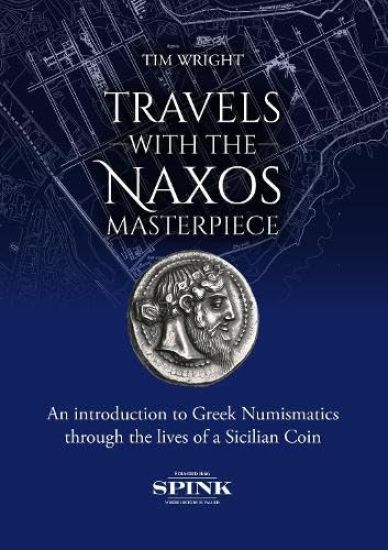
Travels With the Naxos Masterpiece
The Naxos coin is a strong contender to be a numismatic masterpiece. Attributed to the Aetna Master, it is admired for its innovative composition and stunning execution, which marked the transition between archaic and classical styles. It is thought to have been issued in c. 460 BCE to celebrate the Naxians return from exile, just over half a century before the destruction of what had been the first Greek settlement in Sicily. Struck from a single die-pair, desirability and rarity combine to achieve some of the highest hammers when one comes to auction. The Naxos coin only started to be documented from the eighteenth century, and it was only in the mid-nineteenth century that large numbers were found near the site of the city. From there, this most prized of ancient coins travelled across Europe and then America to become part of the world’s great public and private collections. Inevitably, its status and value made it vulnerable to those tempted to break the laws designed to protect cultural heritage. Travels with the Naxos Masterpiece explores the ‘lives’ of these magnificent coins, from their ancient origins in Greek Sicily, through discovery and collection, to sale in the modern market. They continue to be defined by the impact that they have on all who have the privilege to encounter them.