Kirjojen hintavertailu. Mukana 11 699 587 kirjaa ja 12 kauppaa.

Kirjahaku

Etsi kirjoja tekijän nimen, kirjan nimen tai ISBN:n perusteella.

5 kirjaa tekijältä Tim Youngs

Travel Writing: A Very Short Introduction

Travel Writing: A Very Short Introduction

Tim Youngs

Oxford University Press
2024
nidottu
The history of travel writing goes back thousands of years. Long practised in several different cultures and languages around the world, it is as varied as the people who journey and their reasons for doing so. Pilgrims and atheists, agents of imperialism and revolutionaries, aristocrats and fugitive slaves, tourists and refugees, and scientists and artists, are all among its many types of author. Its different forms include the diary, letters, reports, guidebooks, journalism, poetry and blogs.. This Very Short Introduction examines the meanings and uses of travel writing from its appearance on clay tablets to the digital age. It shows how the genre not only describes places and the journeys to them, but also communicates the cultural and personal values of its authors, reinforcing and challenging their sense of identity and of the foreign. Tim Youngs discusses questions of the genre's definition and its literary forms, the representation of self and other, the effect of modes of transport on authors' experiences and their stories of travel, and attitudes towards the environment. Throughout he demonstrates how travel writing is a diverse genre that offers a full range of perspectives, often alert to its own processes and viewpoints, and one that casts a critical eye on its authors' home countries as well as on their destinations. ABOUT THE SERIES: The Very Short Introductions series from Oxford University Press contains hundreds of titles in almost every subject area. These pocket-sized books are the perfect way to get ahead in a new subject quickly. Our expert authors combine facts, analysis, perspective, new ideas, and enthusiasm to make interesting and challenging topics highly readable.
The Cambridge Introduction to Travel Writing

The Cambridge Introduction to Travel Writing

Tim Youngs

Cambridge University Press
2013
pokkari
Critics have long struggled to find a suitable category for travelogues. From its ancient origins to the present day, the travel narrative has borrowed elements from various genres - from epic poetry to literary reportage - in order to evoke distant cultures and exotic locales, and sometimes those closer to hand. Tim Youngs argues in this lucid and detailed Introduction that travel writing redefines the myriad genres it comprises and is best understood on its own terms. To this end, Youngs surveys some of the most celebrated travel literature from the medieval period until the present, exploring themes such as the quest motif, the traveler's inner journey, postcolonial travel and issues of gender and sexuality. The text culminates in a chapter on twenty-first-century travel writing and offers predictions about future trends in the genre, making this Introduction an ideal guide for today's students, teachers and travel writing enthusiasts.
The Cambridge Introduction to Travel Writing

The Cambridge Introduction to Travel Writing

Tim Youngs

Cambridge University Press
2013
sidottu
Critics have long struggled to find a suitable category for travelogues. From its ancient origins to the present day, the travel narrative has borrowed elements from various genres - from epic poetry to literary reportage - in order to evoke distant cultures and exotic locales, and sometimes those closer to hand. Tim Youngs argues in this lucid and detailed Introduction that travel writing redefines the myriad genres it comprises and is best understood on its own terms. To this end, Youngs surveys some of the most celebrated travel literature from the medieval period until the present, exploring themes such as the quest motif, the traveler's inner journey, postcolonial travel and issues of gender and sexuality. The text culminates in a chapter on twenty-first-century travel writing and offers predictions about future trends in the genre, making this Introduction an ideal guide for today's students, teachers and travel writing enthusiasts.
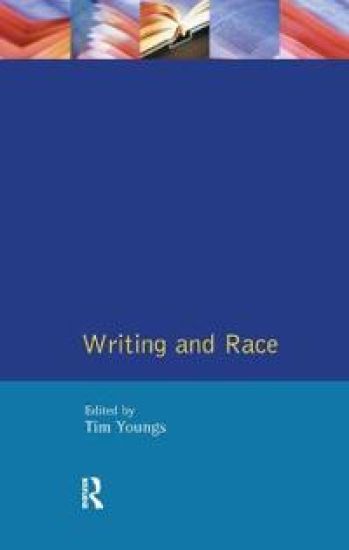
Writing and Race

Writing and Race

Tim Youngs

Routledge
2017
sidottu
Writing and Race brings together specially commissioned essays by new and established authors from a range of disciplines. Texts are drawn from subjects and genres that include philosophy, politics, anthropology, sexuality, travel, fiction and autobiography. Through a time-span from Ancient Greece to the present day, and a geographical coverage from Australia and Europe to the Caribbean and the United States, the collection investigates the importance of place, moment, cultural formation and subject identity in racial representation. A substantial introduction establishes the connections between the essays and lucidly summarizes recent thinking on race, explaining in particular the relevance of debates about ethnography.Accessible and stimulating, Writing and Race is a multidisciplinary collection that will be of interest to students, researchers, and lecturers who study or are interested in race. The essays represent a variety of critical approaches, thus allowing the reader to compare and contrast the benefits of each approach. Extracts of some of the texts that are discussed are included along with an extensive bibliography to encourage further study.
Beastly Journeys

Beastly Journeys

Tim Youngs

Liverpool University Press
2013
sidottu
An Open Access edition of this book is available on the Liverpool University Press website and the OAPEN library.Bats, beetles, wolves, butterflies, bulls, panthers, apes, leopards and spiders are among the countless creatures that crowd the pages of literature of the late nineteenth century. Whether in Gothic novels, science fiction, fantasy, fairy tales, journalism, political discourse, realism or naturalism, the line between the human and the animal becomes blurred. Beastly Journeys examines these bestial transformations across a range of well-known and less familiar texts and shows how they are provoked not only by the mutations of Darwinism but by social and economic shifts that have been lost in retellings and readings of them. The physical alterations described by George Gissing, George MacDonald, Arthur Machen, Arthur Morrison, W.T. Stead, Bram Stoker, H.G. Wells, Oscar Wilde, and many of their contemporaries, are responses to changes in the social body as Britain underwent a series of social and economic crises. Metaphors of travel – social, spatial, temporal, mythical and psychological – keep these stories on the move, confusing literary genres along with the indeterminacy of physical shape that they relate. Beastly Journeys will appeal to anyone interested in the relationship between nineteenth-century literature and its contexts and especially to those interested in the fin de siècle and in metaphors of travel, animals and shape-changing.