Kirjojen hintavertailu. Mukana 11 342 296 kirjaa ja 12 kauppaa.

Kirjahaku

Etsi kirjoja tekijän nimen, kirjan nimen tai ISBN:n perusteella.

3 kirjaa tekijältä Timothy Alborn

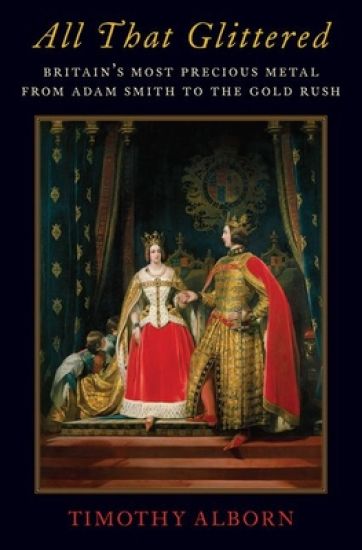
All That Glittered

All That Glittered

Timothy Alborn

Oxford University Press Inc
2019
sidottu
During the century after 1750, Great Britain absorbed much of the world's supply of gold into its pockets, cupboards, and coffers when it became the only major country to adopt the gold standard as the sole basis of its currency. Over the same period, the nation's emergence was marked by a powerful combination of Protestantism, commerce, and military might, alongside preservation of its older social hierarchy. In this rich and broad-ranging work, Timothy Alborn argues for a close connection between gold and Britain's national identity. Beginning with Adam Smith's Wealth of Nations, which validated Britain's position as an economic powerhouse, and running through the mid-nineteenth century gold rushes in California and Australia, Alborn draws on contemporary descriptions of gold's value to highlight its role in financial, political, and cultural realms. He begins by narrating British interests in gold mining globally to enable the smooth operation of the gold standard. In addition to explaining the metal's function in finance, he explores its uses in war expenditure, foreign trade, religious observance, and ornamentation at home and abroad. Britons criticized foreign cultures for their wasteful and inappropriate uses of gold, even as it became a prominent symbol of status in more traditional features of British society, including its royal family, aristocracy, and military. Although Britain had been ambivalent in its embrace of gold, ultimately it enabled the nation to become the world's most modern economy and to extend its imperial reach around the globe. All That Glittered tells the story of gold as both a marker of value and a valuable commodity, while providing a new window onto Britain's ascendance after the 1750s.
Misers

Misers

Timothy Alborn

TAYLOR FRANCIS LTD
2022
sidottu
This volume uses the extreme case of misers to examine interlocking categories that undergirded the emergence of modern British society, including new perspectives on charity, morality, and marriage; new representations of passion and sympathy; and new modes of saving, spending, and investment.Misers surveys this class of people—as invented and interpreted in sermons, poems, novels, and plays; analyzed by economists and philosophers; and profiled in obituaries and biographies—to explore how British attitudes about saving money shifted between 1700 and 1860. As opposed to the century before, the nineteenth century witnessed a new appreciation for misers, as economists credited them with adding to the nation's stock of capital and novelists newly imagined their capacity to empathize with fellow human beings. These characters shared the spotlight with real people who posthumously donned that label, populating into a cottage industry of miser biographies by the 1850s. By the time A Christmas Carol appeared in 1843, many Victorians had come to embrace misers as links that connected one generation’s extreme saving with the next generation’s virtuous spending.With a broad chronological period, this volume is useful for students and scholars interested in representation of misers in eighteenth- and nineteenth-century Britain.
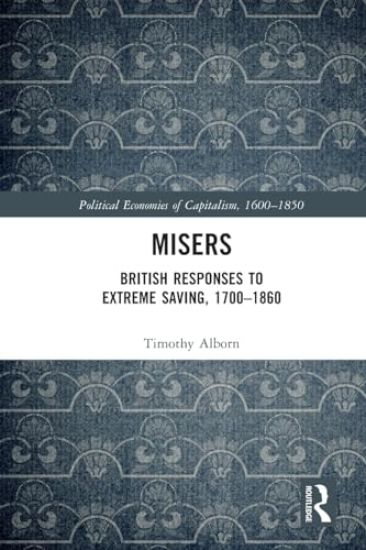
Misers

Misers

Timothy Alborn

TAYLOR FRANCIS LTD
2024
nidottu
This volume uses the extreme case of misers to examine interlocking categories that undergirded the emergence of modern British society, including new perspectives on charity, morality, and marriage; new representations of passion and sympathy; and new modes of saving, spending, and investment.Misers surveys this class of people—as invented and interpreted in sermons, poems, novels, and plays; analyzed by economists and philosophers; and profiled in obituaries and biographies—to explore how British attitudes about saving money shifted between 1700 and 1860. As opposed to the century before, the nineteenth century witnessed a new appreciation for misers, as economists credited them with adding to the nation's stock of capital and novelists newly imagined their capacity to empathize with fellow human beings. These characters shared the spotlight with real people who posthumously donned that label, populating into a cottage industry of miser biographies by the 1850s. By the time A Christmas Carol appeared in 1843, many Victorians had come to embrace misers as links that connected one generation’s extreme saving with the next generation’s virtuous spending.With a broad chronological period, this volume is useful for students and scholars interested in representation of misers in eighteenth- and nineteenth-century Britain.