France is in crisis. In this provocative account, Timothy Smith argues that the French economic and social model is collapsing inward on itself, the result of good intentions, bad policies, and vested interests who employ the rhetoric of ‘solidarity’ to prevent change. French social policy is not redistributive; indeed, Smith argues, the majority of ‘social’ spending serves to strengthen existing inequalities. He shows how politicians, intellectuals and labor leaders have invoked the specter of ‘globalization’ to explain homegrown problems and delay reform. Professor Smith makes frequent comparisons with the USA, UK, Canada, Scandinavia, Germany and the Netherlands and argues that change need not follow the inegalitarian US or British paths but instead can lead to a more equal society. Written in a lively style, this is an unusual blend of history, policy analysis, economics and political commentary and will be indispensable reading for anyone seeking to understand France’s current malaise.
France is in crisis. In this provocative account, Timothy Smith argues that the French economic and social model is collapsing inward on itself, the result of good intentions, bad policies, and vested interests who employ the rhetoric of ‘solidarity’ to prevent change. French social policy is not redistributive; indeed, Smith argues, the majority of ‘social’ spending serves to strengthen existing inequalities. He shows how politicians, intellectuals and labor leaders have invoked the specter of ‘globalization’ to explain homegrown problems and delay reform. Professor Smith makes frequent comparisons with the USA, UK, Canada, Scandinavia, Germany and the Netherlands and argues that change need not follow the inegalitarian US or British paths but instead can lead to a more equal society. Written in a lively style, this is an unusual blend of history, policy analysis, economics and political commentary and will be indispensable reading for anyone seeking to understand France’s current malaise.
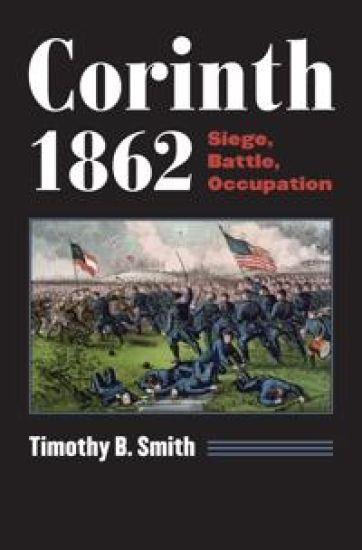
Winner of the Fletcher Pratt Award and McLemore PrizeIn the spring of 1862, there was no more important place in the western Confederacy-perhaps in all the South-than the tiny town of Corinth, Mississippi.Major General Henry W. Halleck, commander of Union forces in the Western Theater, reported to Washington that ""Richmond and Corinth are now the great strategical points of war, and our success at these points should be insured at all hazards."" In the same vein, Confederate General P. G. T. Beauregard declared to Richmond that ""If defeated at Corinth, we lose the Mississippi Valley and probably our cause."" Those were odd sentiments concerning a town scarcely a decade old. By this time, however, it sat at the junction of the South's two most important rail lines and had become a major strategic locale. Despite its significance, Corinth has received comparatively little attention from Civil War historians and has been largely overshadowed by events at Shiloh, Antietam, and Perryville. Timothy Smith's panoramic and vividly detailed new look at Corinth corrects that neglect, focusing on the nearly year-long campaign that opened the way to Vicksburg and presaged the Confederacy's defeat in the West.Combining big-picture strategic and operational analysis with ground-level views, Smith covers the spring siege, the vicious attacks and counterattacks of the October battle, and the subsequent occupation. He has drawn extensively on hundreds of eyewitness accounts to capture the sights, sounds, and smells of battle and highlight the command decisions of Halleck, Beauregard, Ulysses S. Grant, Sterling Price, William S. Rosecrans, and Earl Van Dorn.This is also the first in-depth examination of Corinth following the creation of a new National Park Service center located at the site. Weaving together an immensely compelling tale that places the reader in the midst of war's maelstrom, it substantially revises and enlarges our understanding of Corinth and its crucial importance in the Civil War.
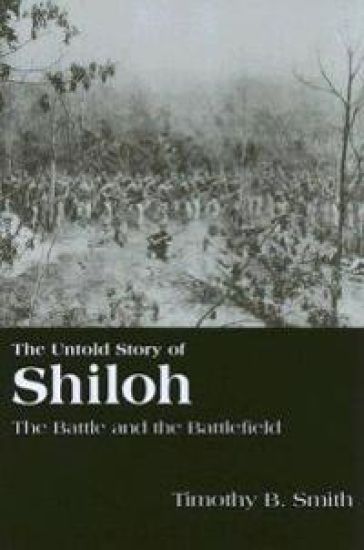
Winner of the Richard B. Harwell Award, Tennessee History Book Award and the Doughlas Southall Freeman AwardA critical moment in the Civil War, the Battle of Shiloh has been the subject of many books. However, none has told the story of Shiloh as Timothy Smith does in this volume, the first comprehensive history of the two-day battle in April 1862-a battle so fluid and confusing that its true nature has eluded a clear narrative telling until now.Unfolding over April 6th and 7th, the Battle of Shiloh produced the most sprawling and bloody field of combat since the Napoleonic wars, with an outcome that set the Confederacy on the road to defeat. Contrary to previous histories, Smith tells us, the battle was not won or lost on the first day, but rather in the decision-making of the night that followed and in the next day's fighting. Devoting unprecedented attention to the details of that second day, his book shows how the Union's triumph was far less assured, and much harder to achieve, than has been acknowledged. Smith also employs a new organization strategy to clarify the action. By breaking his analysis of both days' fighting into separate phases and sectors, he makes it much easier to grasp what was happening in each combat zone, why it unfolded as it did, and how it related to the broader tactical and operational context of the entire battle.The battlefield's diverse and challenging terrain also comes in for new scrutiny. Through detailed attention to the terrain's major features-most still visible at the Shiloh National Military Park-Smith is able to track their specific and considerable influence on the actions, and their consequences, over those forty-eight hours. The experience of the soldiers finally finds its place here too, as Smith lets us hear, as never before, the voices of the common man, whether combatant or local civilian, caught up in a historic battle for their lives, their land, their honor, and their homes.""We must this day conquer or perish,"" Confederate General Albert Sidney Johnston declared on the morning of April 6, 1862. His words proved prophetic, and might serve as an epitaph for the larger war, as we see fully for the first time in this unparalleled and surely definitive history of the Battle of Shiloh.
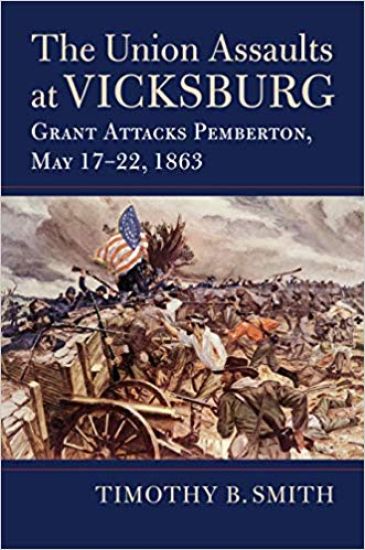
It was the third week of May 1863, and after seven months and six attempts, Ulysses S. Grant was finally at the doorstep of Vicksburg. What followed was a series of attacks and maneuvers against the last major section of the Mississippi River controlled by the Confederacy - and one of the most important operations of the Civil War. Grant intended to end the campaign quickly by assault, but the stalwart defense of Vicksburg's garrison changed his plans. The Union Assaults at Vicksburg is the first comprehensive account of this quick attempt to capture Vicksburg, which proved critical to the Union's ultimate success and Grant's eventual solidification as one of the most significant military commanders in American history.Establishing a day-to-day - and occasionally minute-to-minute - timeline for this crucial week, military historian Timothy B. Smith invites readers to follow the Vicksburg assaults as they unfold. His finely detailed account reaches from the offices of statesmen and politicians to the field of battle, with exacting analysis and insight that ranges from the highest level of planning and command to the combat experience of the common soldier. As closely observed and vividly described as each assault is, Smith's book also puts the sum of these battles into the larger context of the Vicksburg campaign, as well as the entire war. His deeply informed, in-depth work thus provides the first full view of a key but little-studied turning point in the fortunes of the Union army in the West, Ulysses S. Grant, and the United States of America.
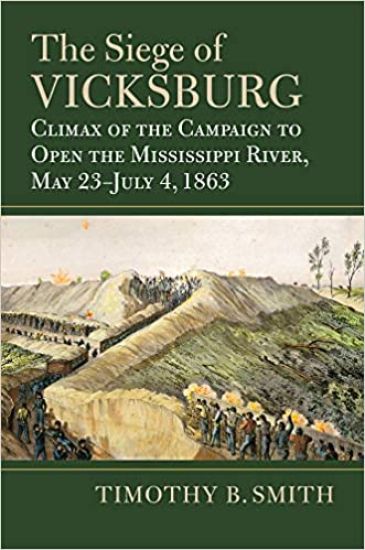
In The Siege of Vicksburg: Climax of the Campaign to Open the Mississippi River, May 23-July 4, 1863, noted Civil War scholar Timothy B. Smith offers the first comprehensive account of the siege that split the Confederacy in two. While the siege is often given a chapter or two in larger campaign studies and portrayed as a foregone conclusion, The Siege of Vicksburg offers a new perspective and thus a fuller understanding of the larger Vicksburg Campaign. Smith takes full advantage of all the resources, both Union and Confederate-from official reports to soldiers' diaries and letters to newspaper accounts-to offer in vivid detail a compelling narrative of the operations. The siege was unlike anything Grant's Army of the Tennessee had attempted to this point and Smith helps the reader understand the complexity of the strategy and tactics, the brilliance of the engineers' work, the grueling nature of the day-by-day participation, and the effect on all involved, from townspeople to the soldiers manning the fortifications.The Siege of Vicksburg portrays a high-stakes moment in the course of the Civil War because both sides understood what was at stake: the fate of the Mississippi River, the trans-Mississippi region, and perhaps the Confederacy itself. Smith's detailed command-level analysis extends from army to corps, brigades, and regiments and offers fresh insights on where each side held an advantage. One key advantage was that the Federals had vast confidence in their commander while the Confederates showed no such assurance, whether it was Pemberton inside Vicksburg or Johnston outside. Smith offers an equally appealing and richly drawn look at the combat experiences of the soldiers in the trenches. He also tackles the many controversies surrounding the siege, including detailed accounts and analyses of Johnston's efforts to lift the siege, and answers the questions of why Vicksburg fell and what were the ultimate consequences of Grant's victory.
Winner: Albert Castel Book AwardWinner: Tennessee History Book AwardWinner: Emerging Civil War Book AwardWinner: Douglas Southall Freeman History AwardWhen General Ulysses S. Grant targeted Forts Henry and Donelson, he penetrated the Confederacy at one of its most vulnerable points, setting in motion events that would elevate his own status, demoralize the Confederate leadership and citizenry, and, significantly, tear the western Confederacy asunder. More to the point, the two battles of early 1862 opened the Tennessee River campaign that would prove critical to the ultimate Union victory in the Mississippi Valley. In Grant Invades Tennessee, award-winning Civil War historian Timothy B. Smith gives readers a battlefield view of the fight for Forts Henry and Donelson, as well as a critical wide-angle perspective on their broader meaning in the conduct and outcome of the war. The first comprehensive tactical treatment of these decisive battles, this book completes the trilogy of the Tennessee River campaign that Smith began in Shiloh and Corinth 1862, marking a milestone in Civil War history.Whether detailing command-level decisions or using eye-witness anecdotes to describe events on the ground, walking readers through maps or pulling back for an assessment of strategy, this finely written work is equally sure on matters of combat and context. Beginning with Grant’s decision to bypass the Confederates’ better-defended sites on the Mississippi, Smith takes readers step-by-step through the battles: the employment of a flotilla of riverine war ships along with infantry and land-based artillery in subduing Fort Henry; the lesser effectiveness of this strategy against Donelson’s much stronger defense, weaponry, and fighting forces; the surprise counteroffensive by the Confederates and the role of their commanders’ incompetence and cowardice in foiling its success. Though casualties at the two forts fell far short of bloodier Civil War battles to come, the importance of these Union victories transcend battlefield statistics. Grant Invades Tennessee allows us, for the first time, to clearly see how and why.
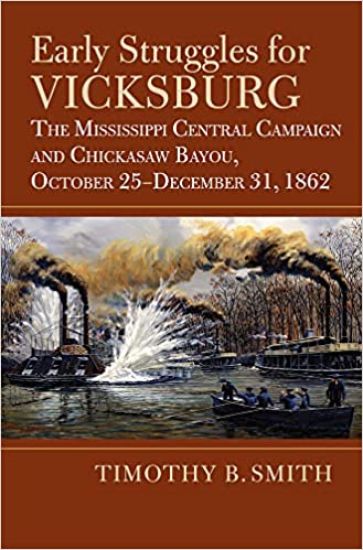
In Early Struggles for Vicksburg, Tim Smith covers the first phase of the Vicksburg campaign (October 1862-July 1863), involving perhaps the most wide-ranging and complex series of efforts seen in the entire campaign. The operations that took place from late October to the end of December 1862 covered six states, consisted of four intertwined minicampaigns, and saw the involvement of everything from cavalry raids to naval operations in addition to pitched land battles in Ulysses S. Grant’s first attempts to reach Vicksburg.This fall-winter campaign that marked the first of the major efforts to reach Vicksburg was the epitome of the by-the-book concepts of military theory of the day. But the first major Union attempts to capture Vicksburg late in 1862 were also disjointed, unorganized, and spread out across a wide spectrum. The Confederates were thus able to parry each threat, although Grant, in his newly assumed position as commander of the Department of the Tennessee, learned from his mistakes and revised his methods in later operations, leading eventually to the fall of Vicksburg. It was war done the way academics would want it done, but Grant figured out quickly that the books did not always have the answers, and he adapted his approach thereafter. Smith comprehensively weaves the Mississippi Central, Chickasaw Bayou, Van Dorn Raid, and Forrest Raid operations into a chronological narrative while illustrating the combination of various branches and services such as army movements, naval operations, and cavalry raids. Early Struggles for Vicksburg is accordingly the first comprehensive academic book ever to examine the Mississippi Central/Chickasaw Bayou campaign and is built upon hundreds of soldier-level sources. Massive in research and scope, this book covers everything from the top politicians and generals down to the individual soldiers, as well as civilians and slaves making their way to freedom, while providing analysis of contemporary military theory to explain why the operations took the form they did.
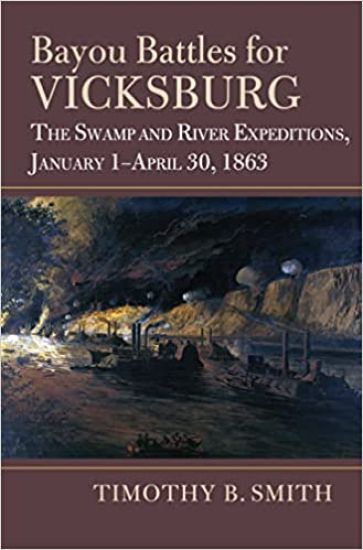
The dawn of 1863 brought a new phase of the Union’s Mississippi Valley operations against Vicksburg. For the first four months, Union attempts to reach high and dry ground east of the Mississippi River were be plagued by high water everywhere, and the resulting bayou and river expeditions would test everyone involved, including the defending Confederates.In Bayou Battles for Vicksburg, the latest volume in his five-volume history of the Vicksburg Campaign of the US Civil War, Timothy B. Smith offers the first book-length examination of Ulysses S. Grant’s winter waterborne attempts to capture the Confederate stronghold of Vicksburg, Mississippi.The accepted strategy up to this point in the war was aligned with the principles of the Swiss theorist Antoine-Henri Jomini, whose work was taught at West Point, where commanders on both sides of the conflict had been educated. But Jomini emphasized secure supply lines and a slow, steady, unified approach to a target such as Vicksburg, and never had much to say about creeks, rivers, and bayous in a subtropical swamp environment. Grant threw out conventional wisdom with a bold, and ultimately successful, plan to avoid a direct approach and rather divide his forces to accomplish multiple goals and to confuse the enemy by cutting levies, flooding whole sections of watersheds, and bypassing strongholds by digging canals far around them.Bayou Battles for Vicksburg details each of the Union attempts to reach high ground east of the Mississippi River and includes fresh research on the Yazoo Pass and Steele’s Bayou expeditions, Grant’s canal, and the Lake Providence effort. Smith weaves several simultaneous Union initiatives together into a chronological narrative that provides great detail on the Union’s successful final attempt to get to good ground east of the Mississippi.
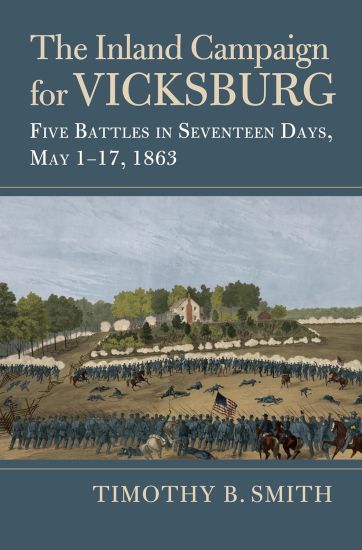
In this fifth and final volume of his renowned series detailing the campaign for Vicksburg, Tim Smith sheds much-needed light to this often-misunderstood episode of the Union’s efforts to take Vicksburg. In the entire nine-month-long campaign, there was no more tension and drama than in these seventeen days when Grant’s Army of the Tennessee marched through the wilds of Mississippi, claiming victory after victory, tearing the heart out of the State of Mississippi and the Confederacy. By the end of the swift assault, Grant arrived victorious at the exact place he had worked to gain for months: the high ground east of Vicksburg where he had access to both the city and an open and unchallenged supply route via the Yazoo River to the north. He could finally begin the process of capturing Vicksburg.Civil War historians have long disagreed about how to understand this moment of the Vicksburg Campaign as they analyze Union supply lines, the swiftness of the campaign, and other salient details of Grant’s success. Amid this debate, Tim Smith has written the first standalone investigation of the Inland Campaign, which boasts new insights, keen attention to primary sources, and a broad, clear-eyed look at Grant's brilliance as he led the Army of the Tennessee toward Vicksburg.Completing the Vicksburg series, this book lies between Smith’s Bayou Battles for Vicksburg (January 1 - April 30, 1863) and The Union Assaults at Vicksburg (May 17-22, 1863).
It was the third week of May 1863, and after seven months and six attempts, Ulysses S. Grant was finally at the doorstep of Vicksburg. What followed was a series of attacks and maneuvers against the last major section of the Mississippi River controlled by the Confederacy—and one of the most important operations of the Civil War. Grant intended to end the campaign quickly by assault, but the stalwart defense of Vicksburg’s garrison changed his plans. The Union Assaults at Vicksburg is the first comprehensive account of this quick attempt to capture Vicksburg, which proved critical to the Union’s ultimate success and Grant’s eventual solidification as one of the most significant military commanders in American history. Establishing a day-to-day—and occasionally minute-to-minute—timeline for this crucial week, military historian Timothy B. Smith invites readers to follow the Vicksburg assaults as they unfold. His finely detailed account reaches from the offices of statesmen and politicians to the field of battle, with exacting analysis and insight that ranges from the highest level of planning and command to the combat experience of the common soldier. As closely observed and vividly described as each assault is, Smith’s book also puts the sum of these battles into the larger context of the Vicksburg campaign, as well as the entire war. His deeply informed, in-depth work thus provides the first full view of a key but little-studied turning point in the fortunes of the Union army in the West, Ulysses S. Grant, and the United States of America.
Winner: Laney Prize In this fifth and final volume of his renowned series detailing the campaign for Vicksburg, Tim Smith sheds much-needed light to this often-misunderstood episode of the Union’s efforts to take Vicksburg. In the entire nine-month-long campaign, there was no more tension and drama than in these seventeen days when Grant’s Army of the Tennessee marched through the wilds of Mississippi, claiming victory after victory, tearing the heart out of the State of Mississippi and the Confederacy. By the end of the swift assault, Grant arrived victorious at the exact place he had worked to gain for months: the high ground east of Vicksburg where he had access to both the city and an open and unchallenged supply route via the Yazoo River to the north. He could finally begin the process of capturing Vicksburg. Civil War historians have long disagreed about how to understand this moment of the Vicksburg Campaign as they analyze Union supply lines, the swiftness of the campaign, and other salient details of Grant’s success. Amid this debate, Tim Smith has written the first standalone investigation of the Inland Campaign, which boasts new insights, keen attention to primary sources, and a broad, clear-eyed look at Grant's brilliance as he led the Army of the Tennessee toward Vicksburg. Completing the Vicksburg series, this book lies between Smith’s Bayou Battles for Vicksburg (January 1–April 30, 1863) and The Union Assaults at Vicksburg (May 17–22, 1863). “Tim Smith unquestionably provides us with the best researched and most closely detailed account yet published of a complex series of events.”—Civil War Books and Authors
Killed in action at the bloody Battle of Shiloh, Confederate general Albert Sidney Johnston stands as the highest-ranking American military officer to die in combat. His unexpected demise had cascading negative consequences for the South's war effort, as his absence created a void in adequate leadership in the years that followed. In The Iron Dice of Battle, noted Civil War historian Timothy B. Smith reexamines Johnston's life and death, offering remarkable insights into this often-contradictory figure.As a commander, Johnston frequently faced larger and better-armed Union forces, dramatically shaping his battlefield decisions and convincing him that victory could only be attained by taking strategic risks while fighting. The final wager came while leading his army at Shiloh in April 1862. During a desperate gambit to turn the tide of battle, Johnston charged to the front of the Confederate line to direct his troops and fell mortally wounded after sustaining enemy fire.The first work to survey the general's career in detail in nearly sixty years, The Iron Dice of Battle builds on recent scholarship to provide a new and incisive assessment of Johnston's life, his Confederate command, and the effect his death had on the course of the Civil War in the West.
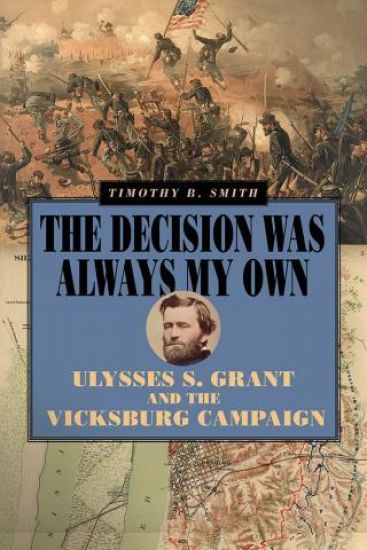
The Vicksburg Campaign, argues Timothy B. Smith, is the showcase of Ulysses S. Grant’s military genius. From October 1862 to July 1863, for nearly nine months, Grant tried repeatedly to capture the Confederate river city. He maneuvered and adapted numerous times, reacting to events and enemy movements with great skill and finesse as the lengthy campaign played out on a huge chessboard, dwarfing operations in the east. Grant’s final, daring move allowed him to land an army in Mississippi and fight his way to the gates of Vicksburg. He captured the Confederate garrison and city on July 4, 1863, opening the Mississippi River for the Union.Showing how and why Grant became such a successful general, Smith presents a fast-paced reexamination of the commander and the campaign. His fresh analysis of Grant’s decision-making process during the Vicksburg siege and battle details the process of campaigning on military, political, administrative, and personal levels. The narrative is organized around Grant’s eight key decisions: to begin operations against Vicksburg, to place himself in charge of the campaign, to begin active operations around the city, to sweep toward Vicksburg from the south, to march east of Vicksburg and cut the railroad before attacking, to assault Vicksburg twice in an attempt to end the campaign quickly, to lay siege after the assaults had failed, and to parole the surrendered Confederate garrison rather than send the Southern soldiers to prison camps.The successful military campaign also required Grant to master political efforts, including handling Lincoln’s impatience and dealing with the troublesome political general John A. McClernand. Further, he had to juggle administrative work with military decision making. Grant was more than a military genius, however; he was also a husband and father, and Smith shows how Grant’s family was a part of everything he did.Grant’s nontraditional choices went against the accepted theories of war, supply, and operations as well as against the chief thinkers of the day, such as Henry Halleck, Grant’s superior. Yet Grant pulled off the victory in compelling fashion. In the first in-depth examination in decades, Smith shows how Grant’s decisions created and won the Civil War’s most brilliant, complex, decisive, and lengthy campaign.
Showing how and why Grant became such a successful general, Smith presents a reexamination of the commander and the campaign. His fresh analysis of Grant's decision-making process during the Vicksburg siege and battle details the process of campaigning on military, political, administrative, and personal levels.
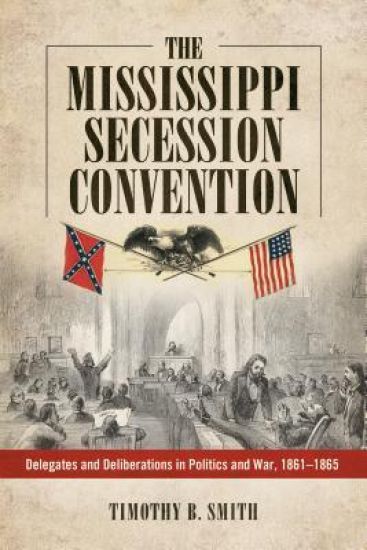
The Mississippi Secession Convention is the first full treatment of any secession convention to date. Studying the Mississippi convention of 1861 offers insight into how and why southern states seceded and the effects of such a breech. Based largely on primary sources, this book provides a unique insight into the broader secession movement.There was more to the secession convention than the mere act of leaving the Union, which was done only three days into the deliberations. The rest of the three-week January 1861 meeting as well as an additional week in March saw the delegates debate and pass a number of important ordinances that for a time governed the state. As seen through the eyes of the delegates themselves, with rich research into each member, this book provides a compelling overview of the entire proceeding.The effects of the convention gain the most analysis in this study, including the political processes that, after the momentous vote, morphed into unlikely alliances. Those on opposite ends of the secession question quickly formed new political allegiances in a predominantly Confederate-minded convention. These new political factions formed largely over the issues of central versus local authority, which quickly played into Confederate versus state issues during the Civil War. In addition, author Timothy B. Smith considers the lasting consequences of defeat, looking into the effect secession and war had on the delegates themselves and, by extension, their state, Mississippi.
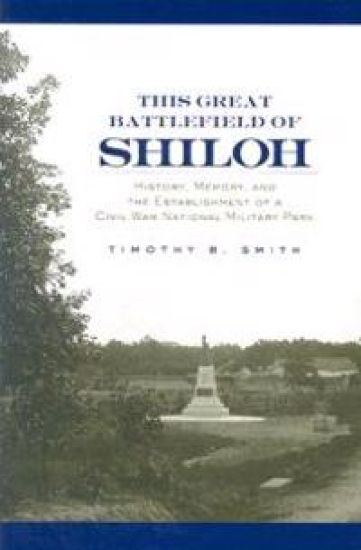
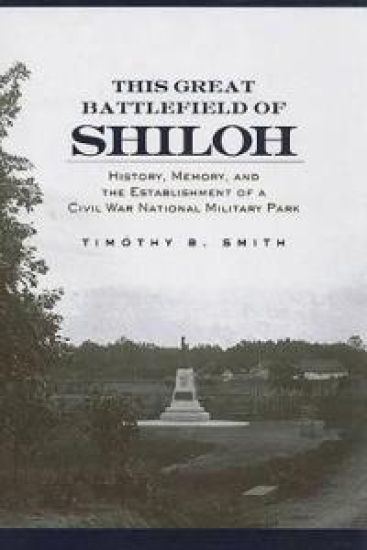
This Great Battlefield of Shiloh tells the story of the efforts of Shiloh veterans to push the Federal government into establishing a park to honor both the living participants in the battle and those who died there. In a larger sense, these veterans, who accomplished their goal in 1894, also contributed to the contemporaneous reconciliation of the North and the South by focusing on the honor, courage, and bravery of Civil War soldiers instead of continuing divisive debates on slavery and race. This book represents an important addition to the growing body of work on the history of national remembrance.
Around the turn of the last century, feelings of patriotism, nationalism, and sectional reconciliation swept the United States and led to a nationwide memorialization of American military history in general and the Civil War in particular. The 1894 establishment of the Shiloh National Military Park, for example, grew out of an effort by veterans themselves to preserve and protect the site of one of the Civil War’s most important engagements.Returning to the Pittsburg Landing battlefield, Shiloh veterans organized themselves to push the Federal government into establishing a park to honor both the living participants in the battle and those who died there. In a larger sense, these veterans also contributed to the contemporaneous reconciliation of the North and the South by focusing on the honor, courage, and bravery of Civil War soldiers instead of continuing divisive debates on slavery and race.This Great Battlefield of Shiloh tells the story of their efforts from the end of the battle to the park’s incorporation within the National Park Service in 1933. The War Department appointed a park commission made up of veterans of the battle. This commission surveyed and mapped the field, purchased land, opened roads, marked troop positions, and established the historical interpretation of the early April 1862 battle. Many aged veterans literally gave the remainder of their lives in the effort to plan, build, and maintain Shiloh National Military Park for all veterans. By studying the establishment and administration of parks such as the one at Shiloh, the modern scholar can learn much about the mindsets of both veterans and their civilian contemporaries regarding the Civil War. This book represents an important addition to the growing body of work on the history of national remembrance.