Kirjojen hintavertailu. Mukana 11 342 296 kirjaa ja 12 kauppaa.

Kirjahaku

Etsi kirjoja tekijän nimen, kirjan nimen tai ISBN:n perusteella.

4 kirjaa tekijältä Timothy Bowman

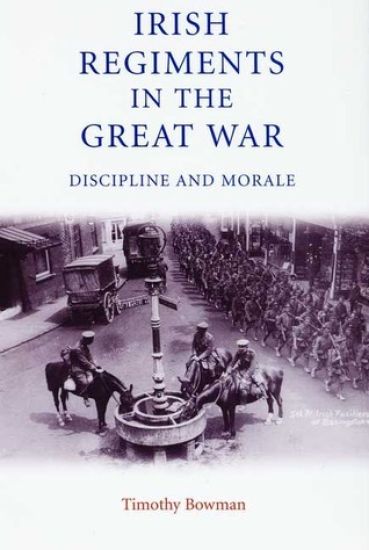
The Irish Regiments in the Great War

The Irish Regiments in the Great War

Timothy Bowman

Manchester University Press
2004
nidottu
The British army was almost unique among the European armies of the Great War in that it did not suffer from a serious breakdown of discipline or collapse of morale. It did, however, inevitably suffer from disciplinary problems. While attention has hitherto focused on the 312 notorious ‘shot at dawn’ cases, many thousands of British soldiers were tried by court martial during the Great War.This book provides the first comprehensive study of discipline and morale in the British Army during the Great War by using a case study of the Irish regular and Special Reserve batallions. In doing so, Timothy Bowman demonstrates that breaches of discipline did occur in the Irish regiments but in most cases these were of a minor nature. Controversially, he suggests that where executions did take place, they were militarily necessary and served the purpose of restoring discipline in failing units. Bowman also shows that there was very little support for the emerging Sinn Fein movement within the Irish regiments.This book will be essential reading for military and Irish historians and their students, and will interest any general reader concerned with how units maintain discipline and morale under the most trying conditions.
Carson's Army

Carson's Army

Timothy Bowman

Manchester University Press
2007
sidottu
The Ulster Volunteer Force (UVF) was established in January 1913, as a militant expression of Ulster Unionist opposition to the Third Home Rule Bill. Academic historians have tended to overlook Ulster Loyalism. This book provides the first comprehensive study of the UVF in this period, considering in detail the composition of the officer corps, the marked regional recruiting differences, the ideologies involved, the arming and equipping of the UVF and the contingency plans made by UVF Headquarters in the event of Home Rule being imposed on Ulster. Using previously neglected sources, it demonstrates that the UVF was better armed and less well-trained, with the involvement of fewer British army officers than previous historians have allowed, and suggests that the UVF was quite capable of seizing control of Ulster and installing the Ulster Provisional Government in the event of Home Rule being implemented in 1914.This book will be essential reading for military and Irish historians and their students, and will interest any general reader interested in modern paramilitary forces.
Carson's Army

Carson's Army

Timothy Bowman

Manchester University Press
2012
nidottu
The Ulster Volunteer Force (UVF) was established in January 1913, as a militant expression of Ulster Unionist opposition to the Third Home Rule Bill. Academic historians have tended to overlook Ulster Loyalism. This book provides the first comprehensive study of the UVF in this period considering in detail the composition of the officer corps, the marked regional recruiting differences, the ideologies involved, the arming and equipping of the UVF and the contingency plans made by UVF Headquarters in the event of Home Rule being imposed on Ulster. Using previously neglected sources, it demonstrates that the UVF was better armed and worse trained, with the involvement of fewer British army officers than previous historians have allowed, and suggests that the UVF was quite capable of seizing control of Ulster and installing the Ulster Provisional Government in the event of Home Rule being implemented in 1914.This book will be essential reading for military and Irish historians and their students, and will interest any general reader interested in modern paramilitary forces.
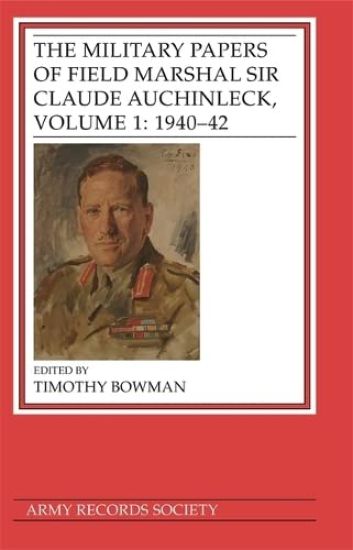
The Military Papers of Field Marshal Sir Claude Auchinleck, Volume 1: 1940-42
Key documents relating to Auchinleck's career up to the First Battle of El Alamein in July 1942, including his time as Commander-in-Chief of the Indian Army and of the Middle East Theatre. The outbreak of war in 1939 saw the then Lieutenant General Claude Auchinleck recalled to England to take command of the newly formed 4 Corps. Between April and June 1940 he commanded British troops in the ill-fated Norway campaign. He then returned to the UK to take command of 5 Corps in Southern Command during the invasion threat of 1940. In January 1941 Auchinleck returned to India and started some much needed reforms of what was still, very much, a 'colonial army' before becoming C in C Middle East in June 1941. In the Middle East, Auchinleck faced many challenges in commanding a multi-national force, largely composed of 'citizen soldiers' and his problems were complicated by the demands of Winston Churchill, an anxious Prime Minister who desperately wanted to show his allies and the British public a major victory. Auchinleck is open to the charges that he did not fully understand armoured warfare and that he appointed a number of the wrong men to key posts. However, he did manage to fight Axis forces to a standstill at the First Battle of El Alamein in July 1942 before being replaced by the team of Field Marshal Sir Harold Alexander and General Bernard Montgomery. This volume is based on the Auchinleck papers held in the John Rylands Library at the University of Manchester and aims to bring these important records to a much wider audience.