Kirjojen hintavertailu. Mukana 11 717 486 kirjaa ja 12 kauppaa.

Kirjahaku

Etsi kirjoja tekijän nimen, kirjan nimen tai ISBN:n perusteella.

9 kirjaa tekijältä Timothy Brennan

Wars of Position

Wars of Position

Timothy Brennan

Columbia University Press
2006
sidottu
Taking stock of contemporary social, cultural, and political currents, Timothy Brennan explores key turning points in the recent history of American intellectual life. He contends that a certain social-democratic vision of politics has been banished from public discussion, leading to an unlikely convergence of the political right and the academic left and a deadening of critical opposition. Brennan challenges the conventional view that affiliations based on political belief, claims upon the state, or the public interest have been rendered obsolete by the march of events in the years before and after Reagan. Instead, he lays out a new path for a future infused with a sense of intellectual and political possibility. In highlighting the shift in America's intellectual culture, Brennan makes the case for seeing belief as an identity. As much as race or ethnicity, political belief, Brennan argues, is itself an identity-one that remains unrecognized and without legal protections while possessing its own distinctive culture. Brennan also champions the idea of cosmopolitanism and critiques those theorists who relegate the left to the status of postcolonial "other." Wars of Position documents how alternative views were chased from the public stage by strategic acts of censorship, including within supposedly dissident wings of the humanities. He explores how the humanities entered the cultural and political mainstream and settled into an awkward secular religion of the "middle way." In a series of interrelated chapters, Brennan considers narratives of the fall of the Berlin Wall and the Clinton impeachment; reexamines Salman Rushdie's pre-fatwa writing to illuminate its radical social leanings; presents a startling new interpretation of Edward Said; looks at the fatal reception of Antonio Gramsci within postcolonial history and criticism; and offers a stinging critique of Hardt and Negri's Empire and the influence of Italian radicalism on contemporary cultural theory. Throughout the work, Brennan also draws on and critiques the ideas and influence of Heidegger, Lyotard, Kristeva, and other influential theorists.
Wars of Position

Wars of Position

Timothy Brennan

Columbia University Press
2007
pokkari
Taking stock of contemporary social, cultural, and political currents, Timothy Brennan explores key turning points in the recent history of American intellectual life. He contends that a certain social-democratic vision of politics has been banished from public discussion, leading to an unlikely convergence of the political right and the academic left and a deadening of critical opposition. Brennan challenges the conventional view that affiliations based on political belief, claims upon the state, or the public interest have been rendered obsolete by the march of events in the years before and after Reagan. Instead, he lays out a new path for a future infused with a sense of intellectual and political possibility. In highlighting the shift in America's intellectual culture, Brennan makes the case for seeing belief as an identity. As much as race or ethnicity, political belief, Brennan argues, is itself an identity-one that remains unrecognized and without legal protections while possessing its own distinctive culture. Brennan also champions the idea of cosmopolitanism and critiques those theorists who relegate the left to the status of postcolonial "other." Wars of Position documents how alternative views were chased from the public stage by strategic acts of censorship, including within supposedly dissident wings of the humanities. He explores how the humanities entered the cultural and political mainstream and settled into an awkward secular religion of the "middle way." In a series of interrelated chapters, Brennan considers narratives of the fall of the Berlin Wall and the Clinton impeachment; reexamines Salman Rushdie's pre-fatwa writing to illuminate its radical social leanings; presents a startling new interpretation of Edward Said; looks at the fatal reception of Antonio Gramsci within postcolonial history and criticism; and offers a stinging critique of Hardt and Negri's Empire and the influence of Italian radicalism on contemporary cultural theory. Throughout the work, Brennan also draws on and critiques the ideas and influence of Heidegger, Lyotard, Kristeva, and other influential theorists.
At Home in the World

At Home in the World

Timothy Brennan

Harvard University Press
1997
nidottu
From every quarter we hear of a new global culture, postcolonial, hybrid, announcing the death of nationalism, the arrival of cosmopolitanism. But under the drumbeat attending this trend, Timothy Brennan detects another, altogether different sound. Polemical, passionate, certain to provoke, his book exposes the drama being played out under the guise of globalism. A bracing critique of the critical self-indulgence that calls itself cosmopolitanism, it also takes note of the many countervailing forces acting against globalism in its facile, homogenizing sense.The developments Brennan traces occur in many places--editorial pages, policy journals, corporate training manuals, and, primarily, in the arts. His subject takes him from George Orwell to Julia Kristeva, from Subcommandante Marcos to Julio Cortázar, from Ernst Bloch to contemporary apologists for transnational capitalism and "liberation management," from "third world" writing to the Nobel Prize, with little of critical theory or cultural studies left untouched in between. Brennan gives extended treatment to two exemplary figures: the Trinidadian writer C. L. R. James, whose work suggests an alternative approach to cultural studies; and the Cuban writer Alejo Carpentier, whose appreciation of Cuban popular music cuts through the usual distinctions between mass and elite culture.A critical call to arms, At Home in the World summons intellectuals and scholars to reinvigorate critical cultural studies. In stripping the false and heedless from the new cosmopolitanism, Brennan revitalizes the idea.
Borrowed Light

Borrowed Light

Timothy Brennan

Stanford University Press
2014
sidottu
A critical revaluation of the humanist tradition, Borrowed Light makes the case that the 20th century is the "anticolonial century." The sparks of concerted resistance to colonial oppression were ignited in the gathering of intellectual malcontents from all over the world in interwar Europe. Many of this era's principal figures were formed by the experience of revolution on Europe's semi-developed Eastern periphery, making their ideas especially pertinent to current ideas about autonomy and sovereignty. Moreover, the debates most prominent then—human vs. inhuman, religions of the book vs. oral cultures, the authoritarian state vs. the representative state and, above all, scientific rationality vs. humanist reason—remain central today. Timothy Brennan returns to the scientific Enlightenment of the 17th century and its legacies. In readings of the showdown between Spinoza and Vico, Hegel's critique of liberalism, and Nietzsche's antipathy towards the colonies and social democracy, Brennan identifies the divergent lines of the first anticolonial theory—a literary and philosophical project with strong ties to what we now call Marxism. Along the way, he assesses prospects for a renewal of the study of imperial culture.
Borrowed Light

Borrowed Light

Timothy Brennan

Stanford University Press
2014
pokkari
A critical revaluation of the humanist tradition, Borrowed Light makes the case that the 20th century is the "anticolonial century." The sparks of concerted resistance to colonial oppression were ignited in the gathering of intellectual malcontents from all over the world in interwar Europe. Many of this era's principal figures were formed by the experience of revolution on Europe's semi-developed Eastern periphery, making their ideas especially pertinent to current ideas about autonomy and sovereignty. Moreover, the debates most prominent then—human vs. inhuman, religions of the book vs. oral cultures, the authoritarian state vs. the representative state and, above all, scientific rationality vs. humanist reason—remain central today. Timothy Brennan returns to the scientific Enlightenment of the 17th century and its legacies. In readings of the showdown between Spinoza and Vico, Hegel's critique of liberalism, and Nietzsche's antipathy towards the colonies and social democracy, Brennan identifies the divergent lines of the first anticolonial theory—a literary and philosophical project with strong ties to what we now call Marxism. Along the way, he assesses prospects for a renewal of the study of imperial culture.
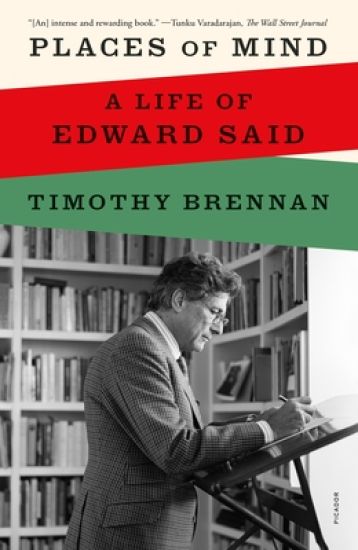
Places of Mind

Places of Mind

Timothy Brennan

Picador Paper
2022
nidottu
A New York Times Book Review Editors' ChoiceThe first comprehensive biography of the most influential, controversial, and celebrated Palestinian intellectual of the twentieth century. Both controversial and beloved, Edward Said was the pioneer of postcolonial studies, a tireless champion for his native Palestine, and an erudite literary critic whose books, namely Orientalism, continue to impact students and thinkers today. In Places of Mind, Timothy Brennan--who studied under Said and remained a friend until Said's death in 2003--provides the first complete biography of his thesis adviser, who emerges as a self-doubting, tender, eloquent advocate of literature's dramatic effects on politics and civic life. Charting the intertwined routes of Said's intellectual development, Places of Mind reveals him to be a brilliant iconoclast: a cajoler and strategist, a New York intellectual with a foot in Beirut, an orchestra impresario in Weimar and Ramallah, a raconteur on national television, a Palestinian negotiator at the State Department, and an actor in films in which he played himself. Brennan traces the Arab influences on Said's thinking along with the tutelage by Lebanese statesmen, offbeat modernist auteurs, and New York literati as Said grew into a scholar whose writings changed the face of university life forever. With both intimidating intellect and charm, Said melded these teachings into a groundbreaking and influential countertradition of radical humanism set against the backdrop of techno-scientific dominance and religious war. With unparalleled clarity, he gave the humanities a new authority in the age of Reaganism, one that continues today. Drawing on the testimony of family, friends, students, and antagonists alike, and aided by FBI files and Said's unpublished writings, drafts of novels, and personal letters, Places of Mind synthesizes Said's intellectual breadth and influence into an unprecedented, intimate, and compelling portrait of one of the great minds of the twentieth century.
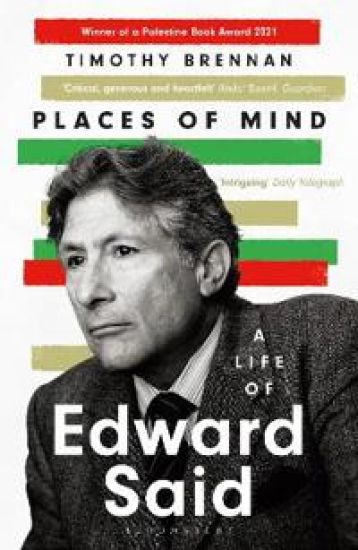
Places of Mind

Places of Mind

Timothy Brennan

BLOOMSBURY PUBLISHING PLC
2022
nidottu
'An intimate portrait ... Critical, generous and heartfelt' Ahdaf Soueif, Guardian'An intriguing account of an alluring but evasive character’ Daily TelegraphDrawing on extensive archival sources and hundreds of interviews, Timothy Brennan’s Places of Mind is the first comprehensive biography of Said, one of the most controversial and celebrated intellectuals of the 20th century. In Brennan’s masterful work, Said, the pioneer of post-colonial studies, a tireless champion for his native Palestine, and an erudite literary critic, emerges as a self-doubting, tender, and eloquent advocate of literature’s dramatic effects on politics and civic life. Places of Mind charts the intertwined routes of Said’s intellectual development, revealing him as a study in opposites: a cajoler and strategist, a New York intellectual with a foot in Beirut, an orchestra impresario in Weimar and Ramallah, a raconteur on national television, a Palestinian negotiator at the State Department, and an actor in films in which he played himself. Brennan traces the Arab influences of Said’s thinking along with his tutelage under Lebanese statesmen, off-beat modernist auteurs, and New York literati, as Said grew into a scholar whose influential writings changed the face of university life forever. With both intimidating brilliance and charm, Said turned these resources into a groundbreaking counter-tradition of radical humanism, set against the backdrop of techno-scientific dominance and religious war. With unparalleled clarity, Said gave the humanities a new authority in the age of Reaganism that continues today.Drawing on the testimonies of family, friends, students, and antagonists alike, and aided by FBI files, unpublished writing, and Said’s drafts of novels and personal letters, Places of Mind captures Said’s intellectual breadth and influence in an unprecedented, intimate, and compelling portrait of one of the great minds of the twentieth century.
Secular Devotion

Secular Devotion

Timothy Brennan

Verso Books
2008
nidottu
Popular music in the Americas, from jazz, Cuban and Latin salsa to disco and rap, is overwhelmingly neo-African. Created in the midst of war and military invasion, and filtered through a Western worldview, these musical forms are completely modern in their sensibilities: they are in fact the very sound of modern life. But the African religious philosophy at their core involved a longing for earlier eras-ones that pre-dated the technological discipline of labor forced on captive populations by the European occupiers. In this groundbreaking new book, Timothy Brennan shows how the popular music of the Americas-the music of entertainment, nightlife, and leisure-is involved in a devotion to an African religious worldview that survived the ravages of slavery and found its way into the rituals of everyday listening. In doing so he explores the challenge posed by Afro-Latin music to a world music system dominated by a few wealthy countries and the processes by which Afro-Latin music has been absorbed into the imperial imagination.