Kirjojen hintavertailu. Mukana 11 699 587 kirjaa ja 12 kauppaa.

Kirjahaku

Etsi kirjoja tekijän nimen, kirjan nimen tai ISBN:n perusteella.

4 kirjaa tekijältä Timothy C. Baker

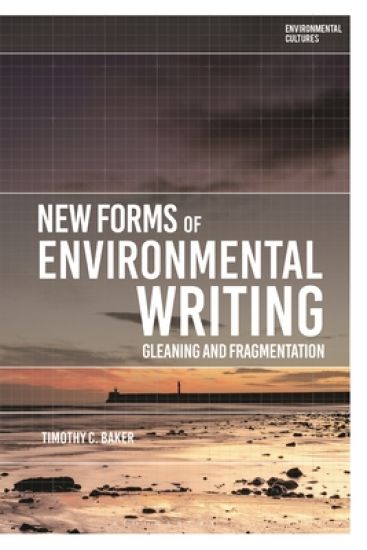
New Forms of Environmental Writing

New Forms of Environmental Writing

Timothy C. Baker

BLOOMSBURY PUBLISHING PLC
2022
sidottu
Surveying a wide range of contemporary poetry, fiction, and memoir by women writers, this book explores our most pressing environmental concerns and shows how these texts find innovative new ways to respond to our environmental crisis.Arguing for the centrality of individual encounter and fragmentary form in 21st-century literature, as well as themes of attention, care, and loss, Baker highlights the ways that fragmentary texts can be seen as a mode of resistance. These texts provide new ways to consider the role of individual agency and enmeshment in a more-than-human world.The author proposes a new model of 'gleaning' to encompass ideas of collection, assemblage, and relinquishment and draws on theoretical perspectives such as ecofeminism, new materialism and posthumanism. Examining works by writers including Sara Baume, Ali Smith, Elizabeth-Jane Burnett, Bhanu Kapil and Kathleen Jamie, Baker provides important new insights into understanding our planetary predicament.
New Forms of Environmental Writing

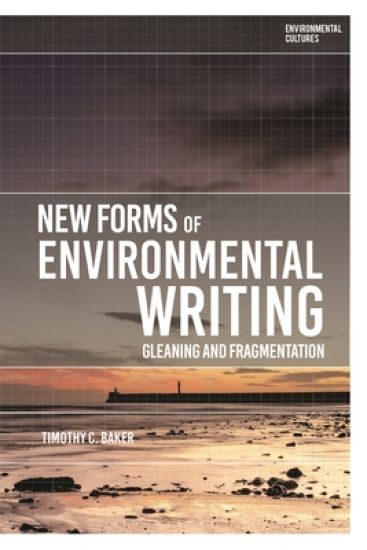
New Forms of Environmental Writing

Timothy C. Baker

BLOOMSBURY PUBLISHING PLC
2023
nidottu
Surveying a wide range of contemporary poetry, fiction, and memoir by women writers, this book explores our most pressing environmental concerns and shows how these texts find innovative new ways to respond to our environmental crisis.Arguing for the centrality of individual encounter and fragmentary form in 21st-century literature, as well as themes of attention, care, and loss, Baker highlights the ways that fragmentary texts can be seen as a mode of resistance. These texts provide new ways to consider the role of individual agency and enmeshment in a more-than-human world.The author proposes a new model of 'gleaning' to encompass ideas of collection, assemblage, and relinquishment and draws on theoretical perspectives such as ecofeminism, new materialism and posthumanism. Examining works by writers including Sara Baume, Ali Smith, Elizabeth-Jane Burnett, Bhanu Kapil and Kathleen Jamie, Baker provides important new insights into understanding our planetary predicament.
Reading My Mother Back

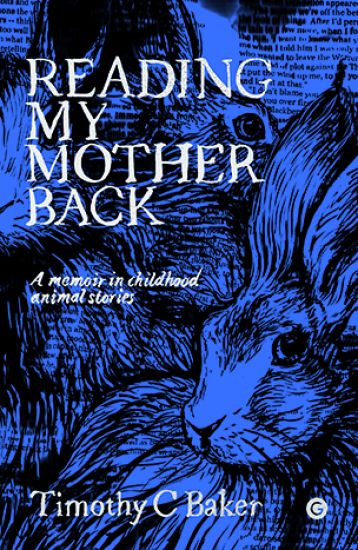
Reading My Mother Back

Timothy C. Baker

GOLDSMITHS, UNIVERSITY OF LONDON
2022
sidottu
An innovative memoir connecting ideas of grief, memory, and animals to illustrate the importance of storytelling. When his mother died, Timothy C. Baker discovered that there was almost no record of her existence, and no stories that were his to tell: the only way to bring her back was through reading. Reading My Mother Back is a genre-bending memoir that explores a life marked by trauma, illness, religion, and abuse through a focus on the books Baker and his mother shared. The book combines accounts of rereading childhood classics with true and apocryphal stories of a quiet life, marked by great sorrow and great joy. The book is about grief and memory and how our childhood reading shapes the way we see the world; it's about loneliness and the search for belonging; it's about how ordinary lives are transfigured by storytelling. Moving from accounts of American evangelical communities to kidney failure, from literary criticism to psychoanalysis, and from guilt to love, Baker shows how literature provides a framework for understanding our experiences, and offers a way of connecting with everything we have lost. The book illustrates how children's animal stories bring us into a love of the world, and how acts of rereading become a way not of assuaging grief, but of bringing the past and present together. Reading My Mother Back offers a bold and personal view of why the stories we read and share matter so much. And there are bunnies.
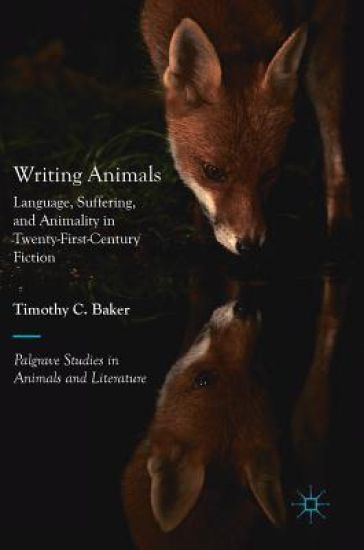
Writing Animals

Writing Animals

Timothy C. Baker

Springer Nature Switzerland AG
2019
sidottu
This book surveys a broad range of contemporary texts to show how representations of human-animal relations challenge the anthropocentric nature of fiction. By looking at the relation between language and suffering in twenty-first-century fiction and drawing on a wide range of theoretical approaches, Baker suggests new opportunities for exploring the centrality of nonhuman animals in recent fiction: writing animal lives leads to new narrative structures and forms of expression. These novels destabilise assumptions about the nature of pain and vulnerability, the burden of literary inheritance, the challenge of writing the Anthropocene, and the relation between text and image. Including both well-known authors and emerging talents, from J.M. Coetzee and Karen Joy Fowler to Sarah Hall, Alexis Wright, and Max Porter, and texts from experimental fiction to work for children, Writing Animals offers an original perspective on both contemporary fiction and the field of literary animal studies.