Kirjojen hintavertailu. Mukana 11 244 527 kirjaa ja 12 kauppaa.

Kirjahaku

Etsi kirjoja tekijän nimen, kirjan nimen tai ISBN:n perusteella.

4 kirjaa tekijältä Timothy C. Shiell

Campus Hate Speech on Trial

Campus Hate Speech on Trial

Timothy C. Shiell

University Press of Kansas
2009
sidottu
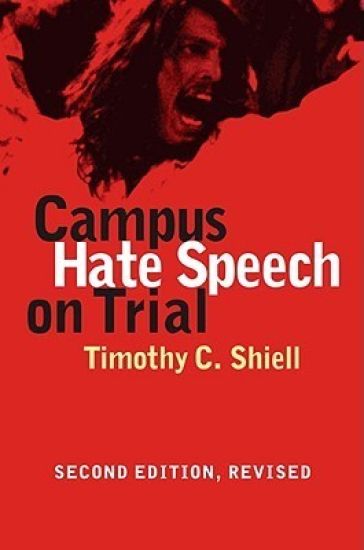
Ten years after publication of the first edition of Timothy Shiell's path breaking study, restrictions on faculty and student speech on college campuses continue to be hotly contested in the mainstream media, on the internet, in the journals of academic disciplines, in courtrooms, classrooms, and chat rooms. This revised edition adds substantial new material that updates cases and conflicts during the past decade, expands the original's coverage of the relevant literature, and dramatically reinforces Shiell's original argument. In the first edition Shiell noted that, despite commitments to free speech and the open exchange of ideas, American colleges and universities had increasingly ignored such principles by implementing numerous hate speech codes designed to protect students from racial, sexual, and other forms of harassment. Taking their cue from Title VII of the Civil Rights Act, which guarantees the right to a non hostile workplace environment, those regulations had posed seemingly unresolvable conflicts between the ideals of free speech and equal protection. Shiell explored both sides of the fiery debate over campus hate speech codes to bring out their philosophical and legal underpinnings, clarifying classic free speech arguments as well as the ideas of harm and hostile environment, and analyzing numerous case histories. Pointing out that Title VII wasn't meant to apply to academia, Shiell also encouraged readers to consider the role of the courts in eliminating prejudice in this setting and presented a strong argument for the form the codes themselves should ideally take. The new edition adds substantial new material on developments concerning the Deterrence Argument, the hostile environment approach, new judicial decisions, and the International Argument. It also updates the comprehensive bibliography and list of legal decisions, significantly increasing the value of both for scholars and policymakers alike. Shiell eloquently makes the case that campus speech codes - no matter how well grounded in history, law, or philosophy - have tended to be overbroad, arbitrarily enforced, and used selectively to protect only certain groups at the expense of others. For that reason especially, his book will continue to challenge academics and general readers to reconsider how we deal with this important issue.
Campus Hate Speech on Trial

Campus Hate Speech on Trial

Timothy C. Shiell

University Press of Kansas
2009
nidottu
Ten years after publication of the first edition of Timothy Shiell's path breaking study, restrictions on faculty and student speech on college campuses continue to be hotly contested in the mainstream media, on the internet, in the journals of academic disciplines, in courtrooms, classrooms, and chat rooms. This revised edition adds substantial new material that updates cases and conflicts during the past decade, expands the original's coverage of the relevant literature, and dramatically reinforces Shiell's original argument. In the first edition Shiell noted that, despite commitments to free speech and the open exchange of ideas, American colleges and universities had increasingly ignored such principles by implementing numerous hate speech codes designed to protect students from racial, sexual, and other forms of harassment. Taking their cue from Title VII of the Civil Rights Act, which guarantees the right to a non hostile workplace environment, those regulations had posed seemingly unresolvable conflicts between the ideals of free speech and equal protection. Shiell explored both sides of the fiery debate over campus hate speech codes to bring out their philosophical and legal underpinnings, clarifying classic free speech arguments as well as the ideas of harm and hostile environment, and analyzing numerous case histories. Pointing out that Title VII wasn't meant to apply to academia, Shiell also encouraged readers to consider the role of the courts in eliminating prejudice in this setting and presented a strong argument for the form the codes themselves should ideally take. The new edition adds substantial new material on developments concerning the Deterrence Argument, the hostile environment approach, new judicial decisions, and the International Argument. It also updates the comprehensive bibliography and list of legal decisions, significantly increasing the value of both for scholars and policymakers alike. Shiell eloquently makes the case that campus speech codes - no matter how well grounded in history, law, or philosophy - have tended to be overbroad, arbitrarily enforced, and used selectively to protect only certain groups at the expense of others. For that reason especially, his book will continue to challenge academics and general readers to reconsider how we deal with this important issue.
African Americans and the First Amendment

African Americans and the First Amendment

Timothy C. Shiell

State University of New York Press
2020
pokkari
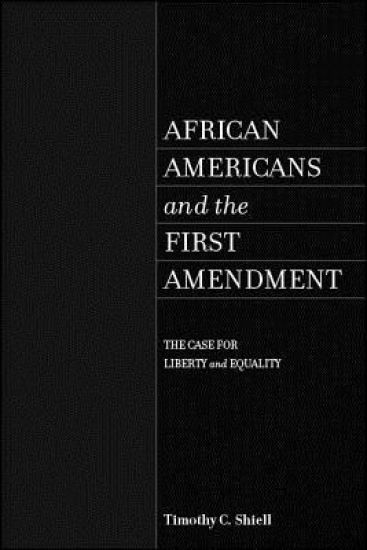
The first detailed examination of African Americans and First Amendment rights, from the colonial era to the present.2020 CHOICE Outstanding Academic Title African Americans and the First Amendment is the first book to explore in detail the relationship between African Americans and our "first freedoms," especially freedom of speech. Timothy C. Shiell utilizes an interdisciplinary approach to demonstrate that a strong commitment to civil liberty and to racial equality are mutually supportive, as they share an opposition to orthodoxy and a commitment to greater inclusion and participation. This crucial connection is evidenced throughout US history, from the days of colonial and antebellum slavery to Jim Crow: in the landmark US Supreme Court decision in 1937 freeing the black communist Angelo Herndon; in the struggles and victories of the civil rights movement, from the late 1930s to the late '60s; and in the historical and modern debates over hate speech restrictions. Liberty and equality can conflict in individual cases, Shiell argues, but there is no fundamental conflict between them. Robust First Amendment values protect and encourage demands for racial equality while weak First Amendment values, in contrast, lead to censorship and a chilling of demands for racial equality.
African Americans and the First Amendment

African Americans and the First Amendment

Timothy C. Shiell

State University of New York Press
2019
sidottu
The first detailed examination of African Americans and First Amendment rights, from the colonial era to the present. 2020 CHOICE Outstanding Academic Title African Americans and the First Amendment is the first book to explore in detail the relationship between African Americans and our "first freedoms," especially freedom of speech. Timothy C. Shiell utilizes an interdisciplinary approach to demonstrate that a strong commitment to civil liberty and to racial equality are mutually supportive, as they share an opposition to orthodoxy and a commitment to greater inclusion and participation. This crucial connection is evidenced throughout US history, from the days of colonial and antebellum slavery to Jim Crow: in the landmark US Supreme Court decision in 1937 freeing the black communist Angelo Herndon; in the struggles and victories of the civil rights movement, from the late 1930s to the late '60s; and in the historical and modern debates over hate speech restrictions. Liberty and equality can conflict in individual cases, Shiell argues, but there is no fundamental conflict between them. Robust First Amendment values protect and encourage demands for racial equality while weak First Amendment values, in contrast, lead to censorship and a chilling of demands for racial equality.