Kirjojen hintavertailu. Mukana 11 244 527 kirjaa ja 12 kauppaa.

Kirjahaku

Etsi kirjoja tekijän nimen, kirjan nimen tai ISBN:n perusteella.

11 kirjaa tekijältä Timothy Cheek

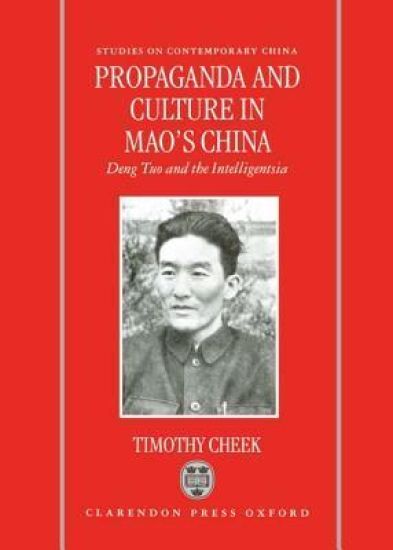
Propaganda and Culture in Mao's China

Propaganda and Culture in Mao's China

Timothy Cheek

Clarendon Press
1997
sidottu
The key role of intellectuals in Mao's China has confounded Western scholars. Were they potential dissidents or actual servants of Chinese communism? The Chinese Communist Party could not have taken over China or governed it without a coalition of forces that included the intellectuals who articulated its goals and administered its complex bureaucracy. Deng Tuo (1912-66) - founding editor of People's Daily, accomplished traditional scholar, and critical commentator on political issues - has served as an example of this confusion. His life illustrates an experience of intellectual service in Mao's China that contributes to our understanding of the rise, successes, and major crises of Chinese Marxism in the twentieth century. It also introduces us to the world that produced the current generation of intellectual leaders in China. This biography is a social history of intellectuals as agents in China's socialist revolution. It places Deng Tuo's writings and ideas in rich context of his social experience as a member of the Communist bureaucracy and as an elite artist and aesthete. The tension between service to politics and service to culture was ultimately disastorous for Deng and for China's revolution: his ghost haunts the halls of power in Beijing today.
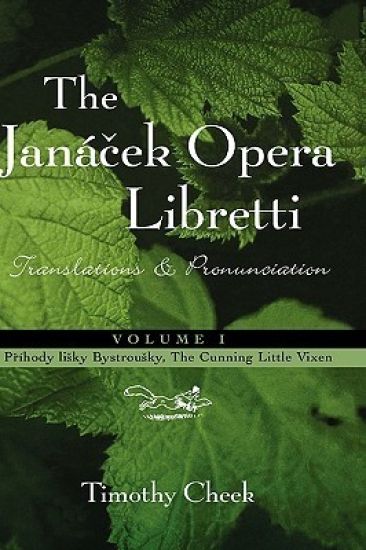
Pr'hody lisky Bystrousky, The Cunning Little Vixen
Responding to the ever-increasing popularity and international performances of operas by the Czech composer Leo? Janácek, this volume, the first in the Janácek Opera Libretti Series, is the full translation of The Cunning Little Vixen in English alongside the original Czech. This work meets the needs of English-speaking singers, conductors, coaches, and stage directors and conveniently provides idiomatic and word-for-word translations, including translations of stage and musical directions. In addition, the International Phonetic Alphabet (IPA) is used to indicate Czech pronunciation, following the clearly-presented method given in the author's book Singing in Czech: A Guide to Czech Lyric Diction and Vocal Repertoire, with a foreword by Sir Charles Mackerras. Cheek also provides practical notes about Janácek's style, both in general terms and specific issues relating to this opera along with a plot summary with translations and vocal ranges of characters and the pronunciation of their names. This entire volume is organized in a clear, readable format, resulting in a book that will help to make productions of The Cunning Little Vixen in the original Czech much easier a task than ever before.
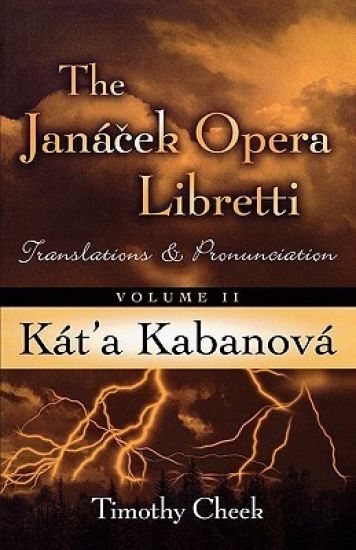
Kat'a Kabanova

Kat'a Kabanova

Timothy Cheek

Scarecrow Press
2004
nidottu
Responding to the ever-increasing popularity and international performances of operas by the Czech composer Leo? Janácek, this volume is the second in a series to meet the needs of English-speaking singers, conductors, coaches, and stage directors. Every word of Kát'a Kabanová is translated into English, and idiomatic translations are provided, including translations of stage and musical directions. In addition, the International Phonetic Alphabet (IPA) is used to indicate pronunciation, following the clearly-presented method given in the author's book Singing in Czech: A Guide to Czech Lyric Diction and Vocal Repertoire (Scarecrow Press, 2001). Included are practical notes about Janácek's style, both in general terms and specific issues relating to this opera. A plot summary is provided along with translations of characters, ranges, and the pronunciation of their names. The entire volume is organized in a clear, readable format, resulting in a book that will help to make productions of Kát'a Kabanová in the original Czech much easier a task than ever before.
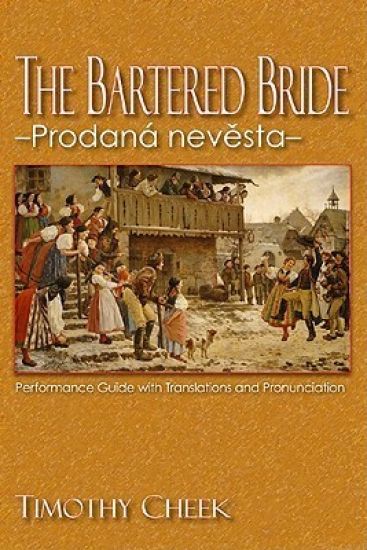
The Bartered Bride - Prodana nevesta

The Bartered Bride - Prodana nevesta

Timothy Cheek

Scarecrow Press
2009
nidottu
Bedrich Smetana's comic opera Prodaná nevesta/The Bartered Bride is cherished as the Czech national opera and is the most popular Czech opera in the world. As performances in English-speaking countries have moved from German to English back to the original Czech, The Bartered Bride - Prodaná nevesta: Performance Guide with Translations and Pronunciation fills the need for an accessible, detailed guide to singing the work in Czech, as well as being valuable for those wishing to make or improve on an English singing translation. Timothy Cheek provides idiomatic and word-for-word translations of the complete libretto for The Bartered Bride, including the International Phonetic Alphabet for Czech pronunciation, as well as translations of stage and musical directions. In addition, he offers an extensive performance history, a synopsis of the opera, general musical comments, a discussion of the roles, notes on the dances and choreographers, and an overview of Czech pronunciation and inflection. Appendixes list the Czech editions and English singing translations of the opera, as well as recordings on LP, CD, DVD, and film. With a sampling of historical and recent photos from opera productions, this guide is indispensable for singers and coaches, conductors and stage directors, and amateurs and professionals.
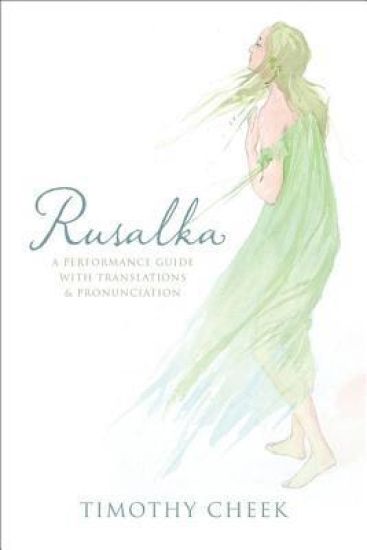
Rusalka

Rusalka

Timothy Cheek

Scarecrow Press
2012
sidottu
Known worldwide as a composer of symphonies and chamber music, Czech composer Antonín Dvorák declared toward the end of his life that his main love was writing operas. Written in 1900 at the height of Dvorák’s creative powers, his fairy tale opera Rusalka is a masterpiece firmly established in the international repertory—from 2010 to 2012 alone, over 200 performances of 27 productions of the opera played in 21 European cities alone! Worldwide, music schools and summer programs have mounted the work, as well, reflecting not only the power of Dvorák’s music but the lyricism and depth of Jaroslav Kvapil’s Czech libretto, one of the greatest of all opera libretti, regardless of language. This book serves as an aid to anyone seeking to perform and gain a deeper understanding of this multi-layered opera, which so trenchantly asks what it means to be human, to love, and to be loved in return. In the first part, Czech music scholar Timothy Cheek offers a thorough review of Czech lyric diction and inflection, describes the characters and their vocal requirements, and supplies a synopsis of the plot, an elucidation of the layers of meaning in Kvapil’s libretto, a section on musical style and dance elements, and a fascinating explanation of why such a remarkable work took so long to be embraced by Western audiences. In the second half, Cheek gives word-for-word and idiomatic English translations of the Czech libretto, including stage directions, along with the International Phonetic Alphabet for pronunciation. Rounding out the book are illustrations from the Prague National Theatre, New York Metropolitan Opera, and elsewhere, as well as an appendix listing recordings and videos. Rusalka: A Performance Guide with Translations and Pronunciation is written for singers, pianists, vocal coaches, conductors, stage directors, translators, and opera enthusiasts—anyone who wishes to perform the work, or who is simply moved and intrigued by this stunning opera.
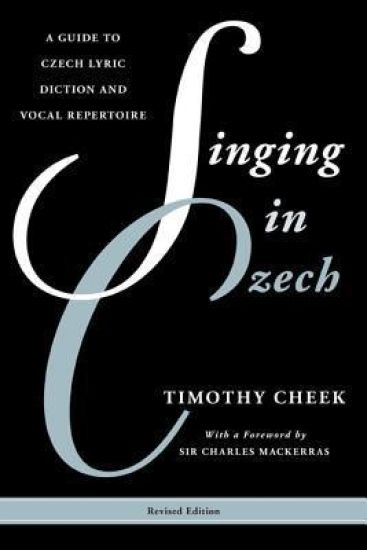
Singing in Czech

Singing in Czech

Timothy Cheek

Rowman Littlefield Publishers
2014
nidottu
Timothy Cheek’s revised edition of Singing in Czech: A Guide to Czech Lyric Diction and Vocal Repertoire, with its accompanying audio accessible online, builds on the original pioneering work of 2001 that set “a new and very welcome high standard for teaching lyric diction,” according to Notes: The Journal of the Music Library Association. It offers users updated information, important clarifications, and expanded repertoire in a more accessible, easier to use format. Singing in Czech is divided into two parts. Using IPA, the first part takes the reader systematically through each sound of the Czech language, enhanced by recordings of native Czech opera singers. Chapters cover the Czech vowels, consonants, rules of assimilation, approaches to singing double consonants, stress and length, Moravian dialect, and an introduction to singing in Slovak. Fine points of formal pronunciation have been clarified in this revised edition. In the second part, Cheek offers a thorough overview of Czech art song, expanded from the first edition. Texts to major song literature and opera excerpts by Smetana, Dvorák, Janácek, Martinu, and Haas, with timings, editions, word-for-word translations, idiomatic translations, and IPA transcriptions follow. In this revision, Cheek has included additional cycles by Dvorák and Martinu, and two new chapters on Czech female composers Vítezslava Kaprálová and Sylvie Bodorová. This revised edition of Singing in Czech is useful for all those who are interested and engaged in the performance of the rich Czech vocal repertoire.
Reimagining Lyric Diction Courses: Leading Change in the Classroom and Beyond
Drawing on 30 years of teaching experience, author Timothy Cheek demonstrates how a university lyric diction class—traditionally specialized and Eurocentric—can become transformative, through engaging students with other languages and cultures, and promoting diversity, equity, inclusivity, and antiracism. Raising new possibilities for traditional lyric diction pedagogy, this book explores how to provide students with experiences that speed their growth, help them to see the big picture, spark their curiosity, clarify and expand their digital resources and skills, and set them on a path of international collaboration. Arguing against compartmentalization in voice curricula, and exploring opportunities for creativity, the author provides a guide to new approaches that will aid schools’ decisions about diction curricula in the challenging but promising era of 21st-century pedagogy. Voice faculty, diction instructors, curriculum committees, graduate students in related fields, and music school administrators should all find this book insightful and thought-provoking as it goes to the heart of issues critical to the long-term development of today’s voice students.
Reimagining Lyric Diction Courses: Leading Change in the Classroom and Beyond
Drawing on 30 years of teaching experience, author Timothy Cheek demonstrates how a university lyric diction class—traditionally specialized and Eurocentric—can become transformative, through engaging students with other languages and cultures, and promoting diversity, equity, inclusivity, and antiracism. Raising new possibilities for traditional lyric diction pedagogy, this book explores how to provide students with experiences that speed their growth, help them to see the big picture, spark their curiosity, clarify and expand their digital resources and skills, and set them on a path of international collaboration. Arguing against compartmentalization in voice curricula, and exploring opportunities for creativity, the author provides a guide to new approaches that will aid schools’ decisions about diction curricula in the challenging but promising era of 21st-century pedagogy. Voice faculty, diction instructors, curriculum committees, graduate students in related fields, and music school administrators should all find this book insightful and thought-provoking as it goes to the heart of issues critical to the long-term development of today’s voice students.
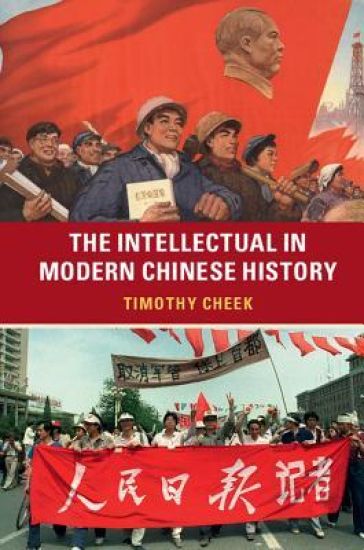
The Intellectual in Modern Chinese History

The Intellectual in Modern Chinese History

Timothy Cheek

Cambridge University Press
2016
sidottu
This vivid narrative history of Chinese intellectuals and public life provides a guide to making sense of China today. Timothy Cheek presents a map and a method for understanding the intellectual in the long twentieth century, from China's defeat in the Sino-Japanese war in 1895 to the 'Prosperous China' since the 2008 Beijing Olympics. Cheek surveys the changing terrain of intellectual life over this transformative century in Chinese history to enable readers to understand a particular figure, idea or debate. The map provides coordinates to track different times, different social worlds and key concepts. The historical method focuses on context and communities during six periods to make sense of ideas, institutions and individual thinkers across the century. Together they provide a memorable account of the scenes and protagonists, and arguments and ideas, of intellectuals and public life in modern China.
The Intellectual in Modern Chinese History

The Intellectual in Modern Chinese History

Timothy Cheek

Cambridge University Press
2016
pokkari
This vivid narrative history of Chinese intellectuals and public life provides a guide to making sense of China today. Timothy Cheek presents a map and a method for understanding the intellectual in the long twentieth century, from China's defeat in the Sino-Japanese war in 1895 to the 'Prosperous China' since the 2008 Beijing Olympics. Cheek surveys the changing terrain of intellectual life over this transformative century in Chinese history to enable readers to understand a particular figure, idea or debate. The map provides coordinates to track different times, different social worlds and key concepts. The historical method focuses on context and communities during six periods to make sense of ideas, institutions and individual thinkers across the century. Together they provide a memorable account of the scenes and protagonists, and arguments and ideas, of intellectuals and public life in modern China.
Jenufa

Jenufa

Timothy Cheek

Rowman Littlefield
2016
sidottu
Czech composer Leoš Janácek’s most famous opera, Jenufa is a harrowing tale of forbidden love, abandonment, hypocrisy, desperation, and tragic infanticide. As today’s second most frequently performed Czech opera (following Dvorák’s Rusalka), Jenufa holds a prominent place in international opera repertoire and continues to draw the attention of new audiences. Drawing on both scholarly studies and production experience, Timothy Cheek presents an original English-language translation of the original Czech libretto. As with the first two books in the Janácek Opera Libretti series (Príhody lišky Bystroušky, The Cunning Little Vixen and Kát’a Kabanová), this volume consists of two parts. Part One gives background on the opera, a discussion about the various voice types and roles, Janácek’s style and Czech performance traditions, Czech folk costumes, and a summary of Czech pronunciation and inflection. Part Two provides the original Czech libretto, word-for-word English translations, idiomatic English translations, IPA for pronunciation of the Czech, translations of the stage directions, and notes about certain words in Czech dialect. As a valuable resource not only for performers and directors, but also historians and opera lovers, this book brings new accessibility to a beloved and timeless opera.