Kirjojen hintavertailu. Mukana 11 244 527 kirjaa ja 12 kauppaa.

Kirjahaku

Etsi kirjoja tekijän nimen, kirjan nimen tai ISBN:n perusteella.

8 kirjaa tekijältä Timothy Corrigan

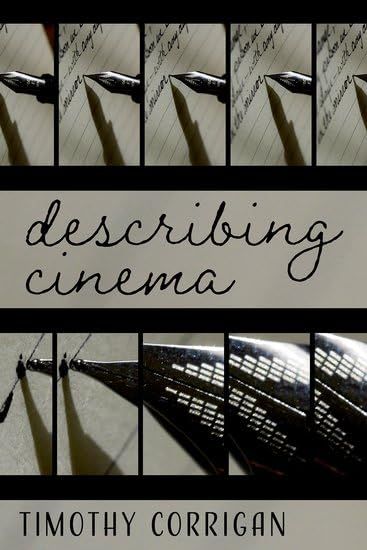
Describing Cinema

Describing Cinema

Timothy Corrigan

OXFORD UNIVERSITY PRESS INC
2024
nidottu
In Describing Cinema, award-winning film scholar Timothy Corrigan explores the art and poetics of writing about film. Part theory, part rhetoric, and part pedagogy, the text examines and demonstrates acts of describing scenes, shots, and sequences in films as the most common and most underestimated way viewers respond to movies. Describing Cinema represents a global range of movies from Hollywood to Morocco to Rome, made from the 1940s to the present. As Corrigan shows, energetic and careful descriptions can serve as exceptionally rich ways to demonstrate and celebrate the activities, varieties, and challenges of a central generative movement in the viewing and interpretation of films. At its best, the act of describing films never simply denotes actions, images, sounds, or styles but rather produces the orchestration of one or more of those dimensions as an often creative and intersubjective movement between images, viewers, and a rhetorical language. Providing an invaluable exploration of the challenges and rewards film scholars face in describing movies, Corrigan insists that writing about film becomes thinking about film.
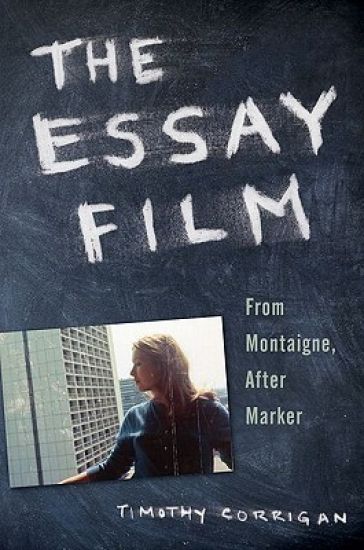
The Essay Film

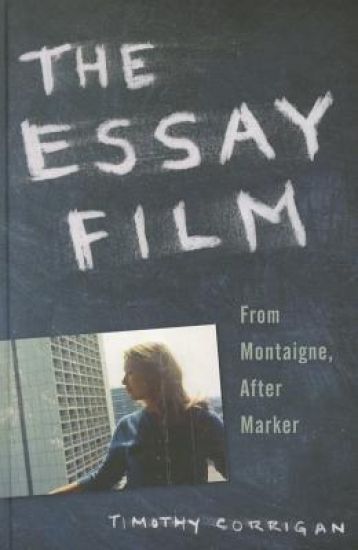
The Essay Film

Timothy Corrigan

Oxford University Press Inc
2011
sidottu
Even though essay films have been a key practice since the 1950s, there is scant analysis about this form in English. Part of this is likely due to the inherent difficulty of definition. The films, which foreground subjectivity and adopt an explicit, personal approach to their subject matter, can look and feel very different from one another. Their coherence as a group, however, comes into focus when contextualized as part of the larger tradition from which they draw. By looking to the literary and philosophical lineage of the essay form, Corrigan brings new clarity to a practice that, arguably, is one of the most common and successful in contemporary film culture. The Essay Film situates its investigation in the literary tradition of essayists such as Montaigne, Barthes, and Huxley before moving to an expansive discussion of filmmakers such as Derek Jarman, Allan Clark, Werner Herzog, Harun Farocki, Chantal Akerman, Chris Marker, Errol Morris, Nanni Moretti, Agnès Varda, Ross McElwee, Abbas Kiarostami, Raoul Ruiz, Lynne Sachs, and Trinh T. Minh-ha.
The Essay Film

The Essay Film

Timothy Corrigan

Oxford University Press Inc
2011
nidottu
Even though essay films have been a key practice since the 1950s, there is scant analysis about this form in English. Part of this is likely due to the inherent difficulty of definition. The films, which foreground subjectivity and adopt an explicit, personal approach to their subject matter, can look and feel very different from one another. Their coherence as a group, however, comes into focus when contextualized as part of the larger tradition from which they draw. By looking to the literary and philosophical lineage of the essay form, Corrigan brings new clarity to a practice that, arguably, is one of the most common and successful in contemporary film culture. The Essay Film situates its investigation in the literary tradition of essayists such as Montaigne, Barthes, and Huxley before moving to an expansive discussion of filmmakers such as Derek Jarman, Allan Clark, Werner Herzog, Harun Farocki, Chantal Akerman, Chris Marker, Errol Morris, Nanni Moretti, Agnès Varda, Ross McElwee, Abbas Kiarostami, Raoul Ruiz, Lynne Sachs, and Trinh T. Minh-ha.
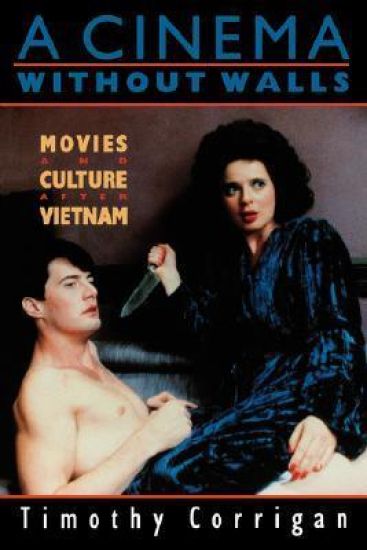
A Cinema Without Walls

A Cinema Without Walls

Timothy Corrigan

Rutgers University Press
1991
nidottu
One of the sharpest and most productive analyses of our contemporaneity and the place of cinema within it and of our new historical relations as spectators to the imaginary universe on the movie screen. This is a study that will be of intense interest to film theorists and historians, cultural critics, mass media analysts, and anyone concerned with the complicated place of culture in our world today.""--Dana Polan, English and Film Studies, University of Pittsburgh How have modern advertising techniques, the widespread use of VCRs, conglomerate takeovers of studios and film archives, cable TV, and media coverage of the Vietnam war changed the ways we watch movies? And how, in turn, have those different habits and patterns of viewing changed the ways in which films address their viewers? Drawing on a wide variety of American and European films and on many theoretical models, Timothy Corrigan investigates what he calls ""a cinema without walls,"" taking a close look at particular films in order to see how we watch them differently in the post-Vietnam era. He examines cult audiences, narrative structure, genre films (road movies, in particular), and contemporary politics as they engage new models of film making and viewing. He thus provides a rare, serious attempt to deal with contemporary movies. Corrigan discusses filmmakers from a variety of backgrounds and cultures, including Martin Scorsese, Raoul Ruiz, Michael Cimino, Alexander Kluge, Francis Ford Coppola, Stephen Frears, and Wim Wenders. He offers detailed analyses of films such as Platoon; Full Metal Jacket; 9-1/2 Weeks; The Singing Detective; Choose Me; After Hours; Badlands; The King of Comedy; Paris, Texas; and My Beautiful Laundrette. Orchestrating this diversity, Corrigan provides a critical basis for making sense of contemporary film culture and its major achievements.
Coleridge, Language and Criticism

Coleridge, Language and Criticism

Timothy Corrigan

University of Georgia Press
2008
pokkari
Long celebrated as a great aesthetic idealist and champion of the imagination, Coleridge is now beginning to be understood as a literary critic with many other dimensions, with exciting and far-reaching insights into language, and with detailed notions about the psychological, historical, and linguistic demands of the literary experience.In this study, Timothy Corrigan sees Coleridge's criticism as "the product of an actively self-conscious reader, of a precise user of language, and, most of all, of a historical man involved with the demands of his day." Specifically he studies the relationship between the language of Coleridge's criticism and his interests in politics, psychology, science, and theology.Corrigan concludes that Coleridge's work is not a closed and strictly defined system but an extraordinarily diverse one that responds sympathetically to new angles of research. His study is first and foremost an investigation of Coleridge's criticism based on Coleridge's own ideas about language and reading. While taking its particular direction from a variety of contemporary literary theories, the book is most concerned with how Coleridge's critical prose and theoretical positions anticipate these in an exceptionally complex way.
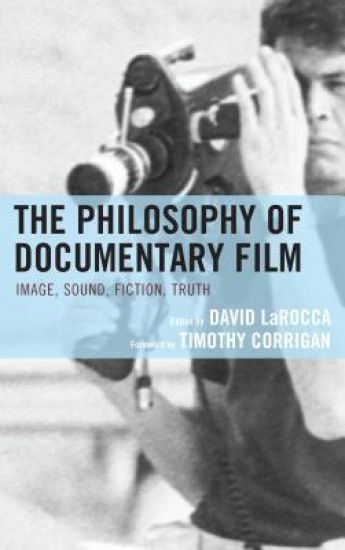
The Philosophy of Documentary Film

The Philosophy of Documentary Film

Timothy Corrigan

Lexington Books
2016
sidottu
The spirit that founded the volume and guided its development is radically inter- and transdisciplinary. Dispatches have arrived from anthropology, communications, English, film studies (including theory, history, criticism), literary studies (including theory, history, criticism), media and screen studies, cognitive cultural studies, narratology, philosophy, poetics, politics, and political theory; and as a special aspect of the volume, theorist-filmmakers make their thoughts known as well. Consequently, the critical reflections gathered here are decidedly pluralistic and heterogeneous, inviting—not bracketing or partitioning—the dynamism and diversity of the arts, humanities, social sciences, and even natural sciences (in so far as we are biological beings who are trying to track our cognitive and perceptual understanding of a nonbiological thing—namely, film, whether celluloid-based or in digital form); these disciplines, so habitually cordoned off from one another, are brought together into a shared conversation about a common object and domain of investigation. This book will be of interest to theorists and practitioners of nonfiction film; to emerging and established scholars contributing to the secondary literature; and to those who are intrigued by the kinds of questions and claims that seem native to nonfiction film, and who may wish to explore some critical responses to them written in engaging language.
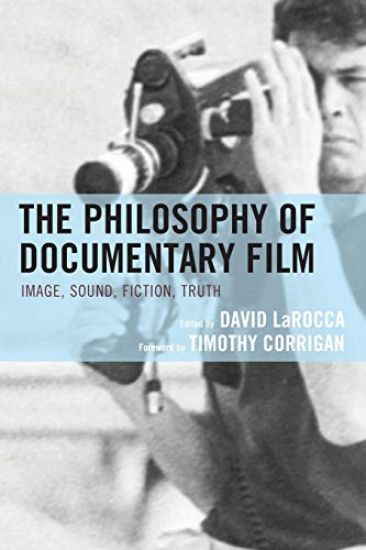
The Philosophy of Documentary Film

The Philosophy of Documentary Film

Timothy Corrigan

Lexington Books
2019
nidottu
The spirit that founded the volume and guided its development is radically inter- and transdisciplinary. Dispatches have arrived from anthropology, communications, English, film studies (including theory, history, criticism), literary studies (including theory, history, criticism), media and screen studies, cognitive cultural studies, narratology, philosophy, poetics, politics, and political theory; and as a special aspect of the volume, theorist-filmmakers make their thoughts known as well. Consequently, the critical reflections gathered here are decidedly pluralistic and heterogeneous, inviting—not bracketing or partitioning—the dynamism and diversity of the arts, humanities, social sciences, and even natural sciences (in so far as we are biological beings who are trying to track our cognitive and perceptual understanding of a nonbiological thing—namely, film, whether celluloid-based or in digital form); these disciplines, so habitually cordoned off from one another, are brought together into a shared conversation about a common object and domain of investigation.This book will be of interest to theorists and practitioners of nonfiction film; to emerging and established scholars contributing to the secondary literature; and to those who are intrigued by the kinds of questions and claims that seem native to nonfiction film, and who may wish to explore some critical responses to them written in engaging language.