Kirjojen hintavertailu. Mukana 11 244 527 kirjaa ja 12 kauppaa.

Kirjahaku

Etsi kirjoja tekijän nimen, kirjan nimen tai ISBN:n perusteella.

7 kirjaa tekijältä Timothy H. Parsons

The Second British Empire

The Second British Empire

Timothy H. Parsons

Rowman Littlefield Publishers
2014
sidottu
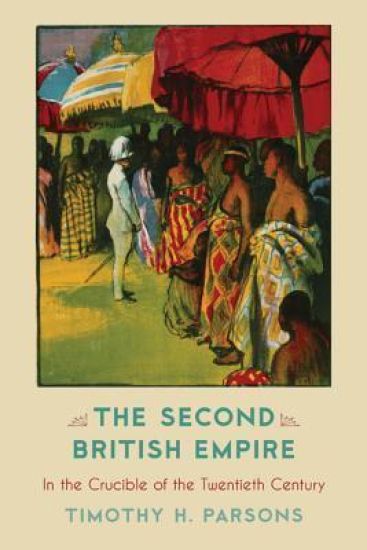
At its peak, the British Empire spanned the world and linked diverse populations in a vast network of exchange that spread people, wealth, commodities, cultures, and ideas around the globe. By the turn of the twentieth century, this empire, which made Britain one of the premier global superpowers, appeared invincible and eternal. This compelling book reveals, however, that it was actually remarkably fragile. Reconciling the humanitarian ideals of liberal British democracy with the inherent authoritarianism of imperial rule required the men and women who ran the empire to portray their non-Western subjects as backward and in need of the civilizing benefits of British rule. However, their lack of administrative manpower and financial resources meant that they had to recruit cooperative local allies to actually govern their colonies. Noted historian Timothy H. Parsons provides vivid detail of the experiences of subject peoples to explain how this became increasingly difficult and finally impossible after World War II as Africans, Asians, Arabs, and West Indians rejected the imperial notion that they were inferior and refused to be ruled by foreigners. Yet he also shows that the transformation of the British colonies into nation-states was not just a transfer of political power. The new postcolonial societies blended British political, economic, and social institutions with local norms and values in the new nations, while mass migration to Britain from the non-Western parts of the Commonwealth created a much more diverse and plural metropolitan society. This book tells the dramatic story of how the British Empire and its demise accelerated and strengthened globalization by creating webs of commerce, migration, and cultural exchange that linked Britons and their former subjects in new ways and produced blended transnational cultures that were British in origin but no longer British in character or style.
The Second British Empire

The Second British Empire

Timothy H. Parsons

Rowman Littlefield Publishers
2018
nidottu
At its peak, the British Empire spanned the world and linked diverse populations in a vast network of exchange that spread people, wealth, commodities, cultures, and ideas around the globe. By the turn of the twentieth century, this empire, which made Britain one of the premier global superpowers, appeared invincible and eternal. This compelling book reveals, however, that it was actually remarkably fragile. Reconciling the humanitarian ideals of liberal British democracy with the inherent authoritarianism of imperial rule required the men and women who ran the empire to portray their non-Western subjects as backward and in need of the civilizing benefits of British rule. However, their lack of administrative manpower and financial resources meant that they had to recruit cooperative local allies to actually govern their colonies. Noted historian Timothy H. Parsons provides vivid detail of the experiences of subject peoples to explain how this became increasingly difficult and finally impossible after World War II as Africans, Asians, Arabs, and West Indians rejected the imperial notion that they were inferior and refused to be ruled by foreigners. Yet he also shows that the transformation of the British colonies into nation-states was not just a transfer of political power. The new postcolonial societies blended British political, economic, and social institutions with local norms and values in the new nations, while mass migration to Britain from the non-Western parts of the Commonwealth created a much more diverse and plural metropolitan society. This book tells the dramatic story of how the British Empire and its demise accelerated and strengthened globalization by creating webs of commerce, migration, and cultural exchange that linked Britons and their former subjects in new ways and produced blended transnational cultures that were British in origin but no longer British in character or style.
Race, Resistance, and the Boy Scout Movement in British Colonial Africa
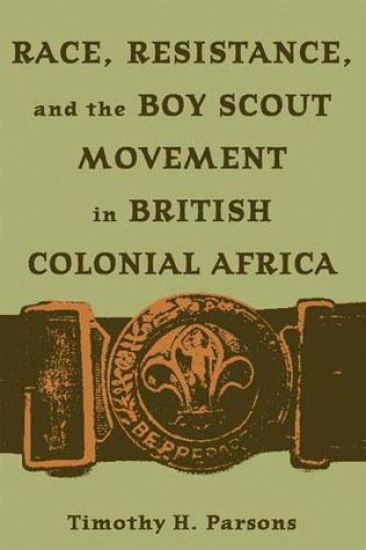
Conceived by General Sir Robert Baden-Powell as a way to reduce class tensions in Edwardian Britain, scouting evolved into an international youth movement. It offered a vision of romantic outdoor life as a cure for disruption caused by industrialization and urbanization. Scouting's global spread was due to its success in attaching itself to institutions of authority. As a result, scouting has become embroiled in controversies in the civil rights struggle in the American South, in nationalist resistance movements in India, and in the contemporary American debate over gay rights. In Race, Resistance, and the Boy Scout Movement in British Colonial Africa, Timothy Parsons uses scouting as an analytical tool to explore the tensions in colonial society. Introduced by British officials to strengthen their rule, the movement targeted the students, juvenile delinquents, and urban migrants who threatened the social stability of the regime. Yet Africans themselves used scouting to claim the rights of full imperial citizenship. They invoked the Fourth Scout Law, which declared that a scout was a brother to every other scout, to challenge racial discrimination. Parsons shows that African scouting was both an instrument of colonial authority and a subversive challenge to the legitimacy of the British Empire. His study of African scouting demonstrates the implications and far-reaching consequences of colonial authority in all its guises.
Race, Resistance, and the Boy Scout Movement in British Colonial Africa
Conceived by General Sir Robert Baden-Powell as a way to reduce class tensions in Edwardian Britain, scouting evolved into an international youth movement. It offered a vision of romantic outdoor life as a cure for disruption caused by industrialization and urbanization. Scouting's global spread was due to its success in attaching itself to institutions of authority. As a result, scouting has become embroiled in controversies in the civil rights struggle in the American South, in nationalist resistance movements in India, and in the contemporary American debate over gay rights. In Race, Resistance, and the Boy Scout Movement in British Colonial Africa, Timothy Parsons uses scouting as an analytical tool to explore the tensions in colonial society. Introduced by British officials to strengthen their rule, the movement targeted the students, juvenile delinquents, and urban migrants who threatened the social stability of the regime. Yet Africans themselves used scouting to claim the rights of full imperial citizenship. They invoked the Fourth Scout Law, which declared that a scout was a brother to every other scout, to challenge racial discrimination. Parsons shows that African scouting was both an instrument of colonial authority and a subversive challenge to the legitimacy of the British Empire. His study of African scouting demonstrates the implications and far-reaching consequences of colonial authority in all its guises.
The British Imperial Century, 1815–1914

The British Imperial Century, 1815–1914

Timothy H. Parsons

Rowman Littlefield
2019
sidottu
The British Imperial Century provides a concise but comprehensive overview of the formation and administration of the empire from its origins in the early nineteenth century, to its climax at mid-century, to its denouement on the eve of the First World War. Considering the impact of British imperial rule and influence on subject peoples, Timothy H. Parsons explores the themes of cross-cultural social and environmental interaction from a world history perspective. He traces the transition from informal to formal empire, which broadened and intensified Britain's relations with Asia, Africa, and the western hemisphere. The establishment of extensive colonies and protectorates in Africa, the occupation of Egypt, the declaration of the Raj in India, and increased economic and political intervention in Latin America and in the Chinese and Ottoman empires brought ever-larger numbers of non-European peoples and cultures under either the influence or direct authority of the British Crown. By considering British imperialism through the lens of world history, Parsons moves beyond questions of Britain's motives in acquiring more territory to ask how it was able to acquire such an empire. As a global network of exchanges, the British Empire linked disparate regions in series of distinct but overlapping exchanges. This new “second” British Empire was also extremely fragile. Lacking the ability hold these possessions by force alone, empire builders needed to win the cooperation of at least a segment of the subject population. By co-opting and adapting the values and customs of their subjects imperial rulers strengthened their authority and legitimacy, but in doing so produced a hybrid culture that was largely British in style but not entirely British in substance. An ambitious and thoughtful contribution, The British Imperial Century will be invaluable for courses on world history and European history and as a supplement for courses on African, Asian, British, and Middle Eastern history.
The British Imperial Century, 1815–1914

The British Imperial Century, 1815–1914

Timothy H. Parsons

Rowman Littlefield
2019
nidottu
The British Imperial Century provides a concise but comprehensive overview of the formation and administration of the empire from its origins in the early nineteenth century, to its climax at mid-century, to its denouement on the eve of the First World War. Considering the impact of British imperial rule and influence on subject peoples, Timothy H. Parsons explores the themes of cross-cultural social and environmental interaction from a world history perspective. He traces the transition from informal to formal empire, which broadened and intensified Britain's relations with Asia, Africa, and the western hemisphere. The establishment of extensive colonies and protectorates in Africa, the occupation of Egypt, the declaration of the Raj in India, and increased economic and political intervention in Latin America and in the Chinese and Ottoman empires brought ever-larger numbers of non-European peoples and cultures under either the influence or direct authority of the British Crown. By considering British imperialism through the lens of world history, Parsons moves beyond questions of Britain's motives in acquiring more territory to ask how it was able to acquire such an empire. As a global network of exchanges, the British Empire linked disparate regions in series of distinct but overlapping exchanges. This new “second” British Empire was also extremely fragile. Lacking the ability hold these possessions by force alone, empire builders needed to win the cooperation of at least a segment of the subject population. By co-opting and adapting the values and customs of their subjects imperial rulers strengthened their authority and legitimacy, but in doing so produced a hybrid culture that was largely British in style but not entirely British in substance. An ambitious and thoughtful contribution, The British Imperial Century will be invaluable for courses on world history and European history and as a supplement for courses on African, Asian, British, and Middle Eastern history.