Kirjojen hintavertailu. Mukana 12 016 292 kirjaa ja 12 kauppaa.

Kirjahaku

Etsi kirjoja tekijän nimen, kirjan nimen tai ISBN:n perusteella.

8 kirjaa tekijältä Timothy Hampton

Literature and Nation in the Sixteenth Century

Literature and Nation in the Sixteenth Century

Timothy Hampton

Cornell University Press
2000
sidottu
Assessing the relationship between the emergence of modern French literary culture and the ideological debates that marked Renaissance France, Timothy Hampton explores the role of literary form in shaping national identity.The foundational texts of modern French literature were produced during a period of unprecedented struggle over the meaning of community. In the face of religious heresy, political threats from abroad, and new forms of cultural diversity, Renaissance French culture confronted, in new and urgent ways, the question of what it means to be "French." Hampton shows how conflicts between different concepts of community were mediated symbolically through the genesis of new literary forms. Hampton's analysis of works by Rabelais, Montaigne, Du Bellay, and Marguerite de Navarre, as well as writings by lesser-known poets, pamphleteers, and political philosophers, shows that the vulnerability of France and the instability of French identity were pervasive cultural themes during this period.Contemporary scholarship on nation-building in early modern Europe has emphasized the importance of centralized power and the rise of absolute monarchy. Hampton offers a counterargument, demonstrating that both community and national identity in Renaissance France were defined through a dialogic relationship to that which was not French—to the foreigner, the stranger, the intruder from abroad. He provides both a methodological challenge to traditional cultural history and a new consideration of the role of literature in the definition of the nation.
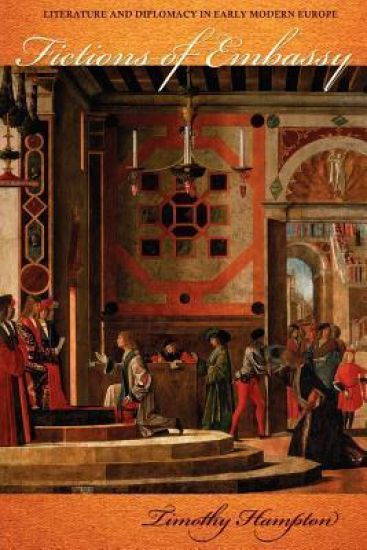
Fictions of Embassy

Fictions of Embassy

Timothy Hampton

Cornell University Press
2009
sidottu
Historians of early modern Europe have long stressed how new practices of diplomacy that emerged during the period transformed European politics. Fictions of Embassy is the first book to examine the cultural implications of the rise of modern diplomacy. Ranging across two and a half centuries and half a dozen languages, Timothy Hampton opens a new perspective on the intersection of literature and politics at the dawn of modernity. Hampton argues that literary texts-tragedies, epics, essays-use scenes of diplomatic negotiation to explore the relationship between politics and aesthetics, between the world of political rhetoric and the dynamics of literary form. The diplomatic encounter is a scene of cultural exchange and linguistic negotiation. Literary depictions of diplomacy offer occasions for reflection on the definition of genre, on the power of representation, on the limits of rhetoric, on the nature of fiction making itself. Conversely, discussions of diplomacy by jurists, political philosophers, and ambassadors deploy the tools of literary tradition to articulate new theories of political action. Hampton addresses these topics through a discussion of the major diplomatic writers between 1450 and 1700-Machiavelli, Grotius, Gentili, Guicciardini-and through detailed readings of literary works that address the same topics-works by Shakespeare, More, Rabelais, Montaigne, Tasso, Corneille, Racine, and Camoens. He demonstrates that the issues raised by diplomatic theorists helped shape the emergence of new literary forms, and that literature provides a lens through which we can learn to read the languages of diplomacy.
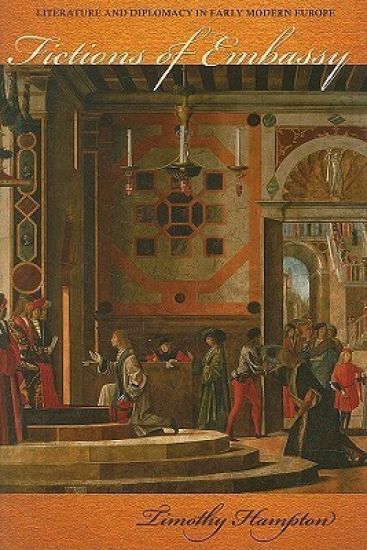
Fictions of Embassy

Fictions of Embassy

Timothy Hampton

CORNELL UNIVERSITY PRESS
2011
muu
Historians of early modern Europe have long stressed how new practices of diplomacy that emerged during the period transformed European politics. Fictions of Embassy is the first book to examine the cultural implications of the rise of modern...
Fictions of Embassy

Fictions of Embassy

Timothy Hampton

CORNELL UNIVERSITY PRESS
2011
muu
He demonstrates that the issues raised by diplomatic theorists helped shape the emergence of new literary forms, and that literature provides a lens through which we can learn to read the languages of diplomacy.
Fictions of Embassy

Fictions of Embassy

Timothy Hampton

Cornell University Press
2013
pokkari
Historians of early modern Europe have long stressed how new practices of diplomacy that emerged during the period transformed European politics. Fictions of Embassy is the first book to examine the cultural implications of the rise of modern diplomacy. Ranging across two and a half centuries and half a dozen languages, Timothy Hampton opens a new perspective on the intersection of literature and politics at the dawn of modernity. Hampton argues that literary texts-tragedies, epics, essays-use scenes of diplomatic negotiation to explore the relationship between politics and aesthetics, between the world of political rhetoric and the dynamics of literary form. The diplomatic encounter is a scene of cultural exchange and linguistic negotiation. Literary depictions of diplomacy offer occasions for reflection on the definition of genre, on the power of representation, on the limits of rhetoric, on the nature of fiction making itself. Conversely, discussions of diplomacy by jurists, political philosophers, and ambassadors deploy the tools of literary tradition to articulate new theories of political action. Hampton addresses these topics through a discussion of the major diplomatic writers between 1450 and 1700-Machiavelli, Grotius, Gentili, Guicciardini-and through detailed readings of literary works that address the same topics-works by Shakespeare, More, Rabelais, Montaigne, Tasso, Corneille, Racine, and Camoens. He demonstrates that the issues raised by diplomatic theorists helped shape the emergence of new literary forms, and that literature provides a lens through which we can learn to read the languages of diplomacy.
Bob Dylan – How the Songs Work

Bob Dylan – How the Songs Work

Timothy Hampton

Zone Books
2020
nidottu
A career-spanning account of the artistry and politics of Bob Dylan's songwritingBob Dylan's reception of the 2016 Nobel Prize for Literature has elevated him beyond the world of popular music, establishing him as a major modern artist. However, until now, no study of his career has focused on the details and nuances of the songs, showing how they work as artistic statements designed to create meaning and elicit emotion. Bob Dylan:How the Songs Work (originally published as Bob Dylan's Poetics) is the first comprehensive book on both the poetics and politics of Dylan's compositions. It studies Dylan, not as a pop hero, but as an artist, as a maker of songs. Focusing on the interplay of music and lyric, it traces Dylan's innovative use of musical form, his complex manipulation of poetic diction, and his dialogues with other artists, from Woody Guthrie to Arthur Rimbaud. Moving from Dylan's earliest experiments with the blues, through his mastery of rock and country, up to his densely allusive recent recordings, Timothy Hampton offers a detailed account of Dylan's achievement. Locating Dylan in the long history of artistic modernism, the book studies the relationship between form, genre, and the political and social themes that crisscross Dylan's work. Bob Dylan:How the Songs Work offers both a nuanced engagement with the work of a major artist and a meditation on the contribution of song at times of political and social change.
Cheerfulness – A Literary and Cultural History
A cultural and literary history of the forgotten emotion of cheerfulness A book for our times. Cheerfulness: A Literary and Cultural History tells a new story about the cultural imagination of the West. Hampton shows how cheerfulness--a momentary uptick in emotional energy, a temporary lightening of spirit--functions as a theme in the work of major artists from Shakespeare to Louis Armstrong. The book studies both the philosophical construal of cheerfulness--as a theme in Protestant theology, a focus of medical writings, a topic in Enlightenment psychology, and a category of modern aesthetics--as well as its role as a structuring element in stories and poems. Hampton moves lightly across the work of such crucial figures as Montaigne, Hume, Jane Austen, Emerson, Dickens, and Nietzsche, to trace a new history of the emotional life of European and American culture. In a conclusion, on cheerfulness in pandemic days, Hampton stresses the importance of lightness of mind under the pressure of catastrophe. Hampton offers an original argument on a topic never before systematically studied, casting new light on the history of literature, on the intersections of culture and psychology, and on the history of emotions.