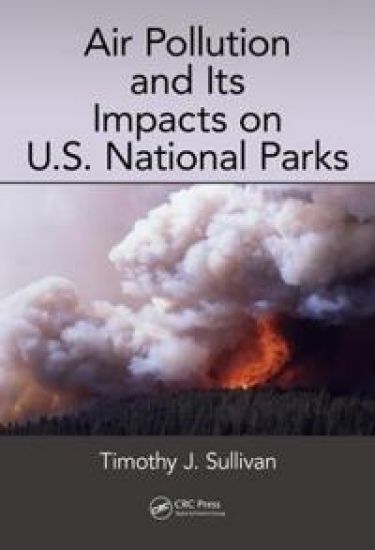
A variety of air pollutants are emitted into the atmosphere from human-caused and natural emissions sources throughout the United States and elsewhere. These contaminants impact sensitive natural resources in wilderness, including the national parks. The system of national parks in the United States is among our greatest assets. This book provides a compilation and synthesis of current scientific understanding regarding the causes and effects of these pollutants within national park lands. It describes pollutant emissions, deposition, and exposures; it identifies the critical (tipping point) loads of pollutant deposition at which adverse impacts are manifested.
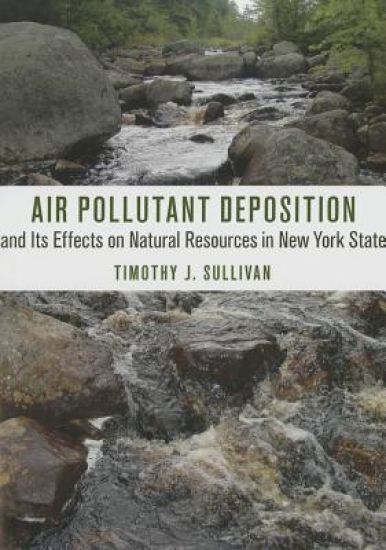
Ecosystem effects from air pollution in the Adirondacks, Catskills, and elsewhere in New York have been substantial. Efforts to characterize and quantify these impacts, and to examine more recent recovery, have focused largely on surface waters, soils, and forests. Lakes, streams, and soils have acidified. Estuaries have become more eutrophic. Nutrient cycles have been disrupted. Mercury has bioaccumulated to toxic levels. Plant species composition has changed. Some surface waters show signs of partial chemical recovery in response to emissions control programs, but available data suggest that soil chemistry may continue to deteriorate under expected future emissions and deposition. Resource managers, policymakers, and scientists now need to know the extent to which current and projected future emissions reductions will lead to ecosystem recovery. In this book, Timothy J. Sullivan provides a comprehensive synthesis of past, current, and potential future conditions regarding atmospheric sulfur, nitrogen oxides, ammonium, and mercury deposition; surface water chemistry; soil chemistry; forests; and aquatic biota in New York, providing much needed information to help set emissions reduction goals, evaluate incremental improvements, conduct cost/benefit analyses, and prioritize research needs. He draws upon a wealth of research conducted over the past thirty years that has categorized, quantified, and advanced understanding of ecosystem processes related to atmospheric deposition of strong acids, nutrients, and mercury and associated ecosystem effects. An important component of this volume is the new interest in the management and mitigation of ecosystem damage from air pollution stress, which builds on the "critical loads" approach pioneered in Europe and now gaining interest in the United States. This book will inform scientists, resource managers, and policy analysts regarding the state of scientific knowledge on these complex topics and their policy relevance and will help to guide public policy assessment work in New York, the Northeast, and nationally.
In the last decade, disputes between developers and local commu nities over proposed construction projects have led to increasing litiga tion. Environmental legislation, in particular, has greatly enhanced the rights and powers of organized groups that desire to participate in local development decisions. These powers have allowed citizen groups to block undesired and socially unacceptable projects, such as highways through urban areas and sprawling suburban developments. At the same time, these powers have produced a collective inability to construct many needed projects that produce adverse local impacts. Prisons, airports, hos pitals, waste treatment plants, and energy facilities all face years of liti gation before a final decision. At times, prolonged litigation has pro duced especially high costs to all participants. Despite these new powers, citizen action has often been limited to participation in public hearings or adjudicatory proceedings. Typically, this occurs so late in the decision process that citizen input has very little affect in shaping a project's design. Those who dislike some element of a project often have little choice other than to oppose the entire project through litigation.
A variety of air pollutants are emitted into the atmosphere from human-caused and natural emissions sources throughout the United States and elsewhere. These contaminants impact sensitive natural resources in wilderness, including the national parks. The system of national parks in the United States is among our greatest assets. This book provides a compilation and synthesis of current scientific understanding regarding the causes and effects of these pollutants within national park lands. It describes pollutant emissions, deposition, and exposures; it identifies the critical (tipping point) loads of pollutant deposition at which adverse impacts are manifested.
Ecosystem effects from air pollution in the Adirondacks, Catskills, and elsewhere in New York have been substantial. Efforts to characterize and quantify these impacts, and to examine more recent recovery, have focused largely on surface waters, soils, and forests. Lakes, streams, and soils have acidified. Estuaries have become more eutrophic. Nutrient cycles have been disrupted. Mercury has bioaccumulated to toxic levels. Plant species composition has changed. Some surface waters show signs of partial chemical recovery in response to emissions control programs, but available data suggest that soil chemistry may continue to deteriorate under expected future emissions and deposition. Resource managers, policymakers, and scientists now need to know the extent to which current and projected future emissions reductions will lead to ecosystem recovery. In this book, Timothy J. Sullivan provides a comprehensive synthesis of past, current, and potential future conditions regarding atmospheric sulfur, nitrogen oxides, ammonium, and mercury deposition; surface water chemistry; soil chemistry; forests; and aquatic biota in New York, providing much needed information to help set emissions reduction goals, evaluate incremental improvements, conduct cost/benefit analyses, and prioritize research needs. He draws upon a wealth of research conducted over the past thirty years that has categorized, quantified, and advanced understanding of ecosystem processes related to atmospheric deposition of strong acids, nutrients, and mercury and associated ecosystem effects. An important component of this volume is the new interest in the management and mitigation of ecosystem damage from air pollution stress, which builds on the "critical loads" approach pioneered in Europe and now gaining interest in the United States. This book will inform scientists, resource managers, and policy analysts regarding the state of scientific knowledge on these complex topics and their policy relevance and will help to guide public policy assessment work in New York, the Northeast, and nationally.