Kirjojen hintavertailu. Mukana 11 244 527 kirjaa ja 12 kauppaa.

Kirjahaku

Etsi kirjoja tekijän nimen, kirjan nimen tai ISBN:n perusteella.

16 kirjaa tekijältä Timothy Larsen

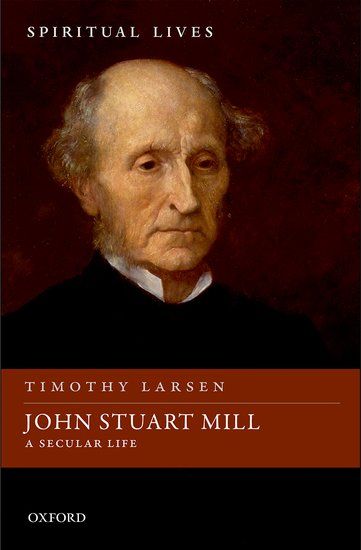
John Stuart Mill

John Stuart Mill

Timothy Larsen

Oxford University Press
2018
sidottu
John Stuart Mill observed in his Autobiography that he was a rare case in nineteenth-century Britain because he had not lost his religion but never had any. He was a freethinker from beginning to end. What is not often realized, however, is that Mill's life was nevertheless impinged upon by religion at every turn. This is true both of the close relationships that shaped him and of his own, internal thoughts. Mill was a religious sceptic, but not the kind of person which that term usually conjures up. The unexpected presence and prominence of spirituality is not only there in Mill's late, startling essay, 'Theism', in which he makes the case for hope in God and in Christ. It is everywhere--in his immediate family, his best friends, and his vision for the future. It is even there in such a seemingly unlikely place as his Logic, which repeatedly addresses religious themes. John Stuart Mill: A Secular Life is a biography which follows one of Britain's most well-respected intellectuals through all of the key moments in his life from falling in love to sitting in Parliament and beyond. It also explores his classic works including, On Liberty, Principles of Political Economy, Utilitarianism, and The Subjection of Women. In this well-researched study which offers original findings and insights, Timothy Larsen presents the Mill you never knew. The Mill that even some of his closest disciples never knew. This is John Stuart Mill, the Saint of Rationalism--a secular life and a spiritual life.
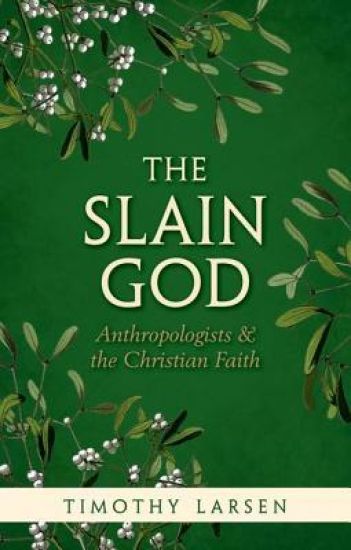
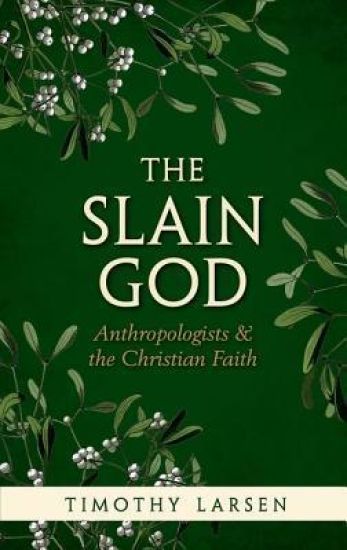
The Slain God

The Slain God

Timothy Larsen

Oxford University Press
2016
nidottu
Throughout its entire history, the discipline of anthropology has been perceived as undermining, or even discrediting, Christian faith. Many of its most prominent theorists have been agnostics who assumed that ethnographic findings and theories had discredited religious beliefs. E. B. Tylor, the founder of the discipline in Britain, lost his faith through studying anthropology. James Frazer saw the material that he presented in his highly influential work, The Golden Bough, as demonstrating that Christian thought was based on the erroneous thought patterns of 'savages.' On the other hand, some of the most eminent anthropologists have been Christians, including E. E. Evans-Pritchard, Mary Douglas, Victor Turner, and Edith Turner. Moreover, they openly presented articulate reasons for how their religious convictions cohered with their professional work. Despite being a major site of friction between faith and modern thought, the relationship between anthropology and Christianity has never before been the subject of a book-length study. In this groundbreaking work, Timothy Larsen examines the point where doubt and faith collide with anthropological theory and evidence.
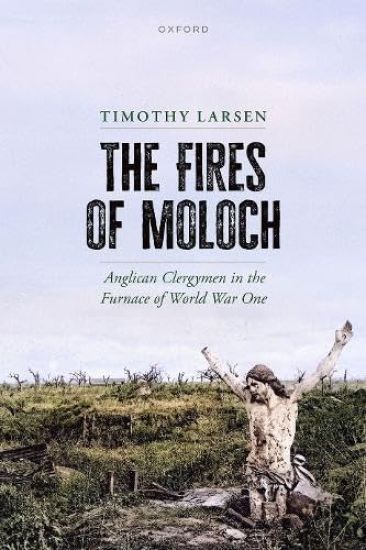
The Fires of Moloch

The Fires of Moloch

Timothy Larsen

Oxford University Press
2025
sidottu
The First World War is the bloodiest war in British history. As casualties mounted during one of its great, seemingly futile battles, the Passchendaele offensive of 1917, seventeen Anglican priests serving as temporary military chaplains wrote chapters for the book, The Church in the Furnace. In it, they urged the Church of England to make fundamental changes in the light of the war. They were impatient and hard-hitting. They gained a reputation as radicals. The Furnace seventeen experienced more than enough of the war. Some were wounded, others gassed. One of them was recognized as a war hero but suffered from shell shock for the rest of his life. Some won the Military Cross, the Distinguished Service Order, or other honours. One of them was the most famous padre of them all, the war poet G. A. Studdert Kennedy, who was widely known by his nickname, Woodbine Willie. The others included the Irish novelist, James O. Hannay (who wrote under the penname, George A. Birmingham), the Oxford theologian, Kenneth E. Kirk, and Eric Milner-White, whose response to the war included creating the Festival of Nine Lessons and Carols for Christmas Eve, King's College, Cambridge. Though they had been scathing about the Church hierarchy during the war, most of them lived to be consecrated a bishop. They strove to make sense of the turbulent events through which they lived, a span of years that included two world wars. Some of their brothers died in the First World War, and some of their sons in the Second World War. They spoke out on issues such as birth control, the League of Nations, Prayer Book revision, church reunion, and pacifism. They sought to do something with their lives after the war that would make retrospectively meaningful all the meaningless losses that had occurred during the war. The Fires of Moloch is a group biography of a generation which went through the fire--a generation which went from the Victorian age to the atomic age, but which was forever haunted by the trenches and battlefields of France and Flanders, 1914-18.
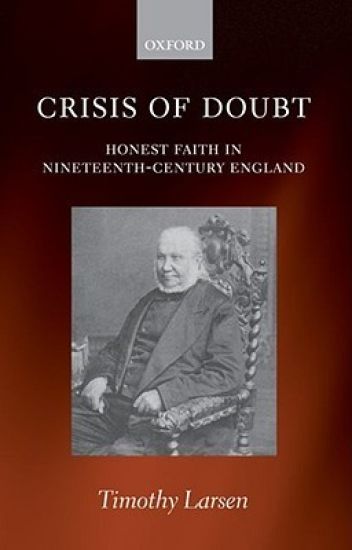
Crisis of Doubt

Crisis of Doubt

Timothy Larsen

Oxford University Press
2006
sidottu
The Victorian crisis of faith has dominated discussions of religion and the Victorians. Stories are frequently told of prominent Victorians such as George Eliot losing their faith. This crisis is presented as demonstrating the intellectual weakness of Christianity as it was assaulted by new lines of thought such as Darwinism and biblical criticism. This study serves as a corrective to that narrative. It focuses on freethinking and Secularist leaders who came to faith. As sceptics, they had imbibed all the latest ideas that seemed to undermine faith; nevertheless, they went on to experience a crisis of doubt, and then to defend in their writings and lectures the intellectual cogency of Christianity. The Victorian crisis of doubt was surprisingly large. Telling this story serves to restore its true proportion and to reveal the intellectual strength of faith in the nineteenth century.
Crisis of Doubt

Crisis of Doubt

Timothy Larsen

Oxford University Press
2008
nidottu
The Victorian crisis of faith has dominated discussions of religion and the Victorians. Stories are frequently told of prominent Victorians such as George Eliot losing their faith. This crisis is presented as demonstrating the intellectual weakness of Christianity as it was assaulted by new lines of thought such as Darwinism and biblical criticism. This study serves as a corrective to that narrative. It focuses on freethinking and Secularist leaders who came to faith. As sceptics, they had imbibed all the latest ideas that seemed to undermine faith; nevertheless, they went on to experience a crisis of doubt, and then to defend in their writings and lectures the intellectual cogency of Christianity. The Victorian crisis of doubt was surprisingly large. Telling this story serves to restore its true proportion and to reveal the intellectual strength of faith in the nineteenth century.
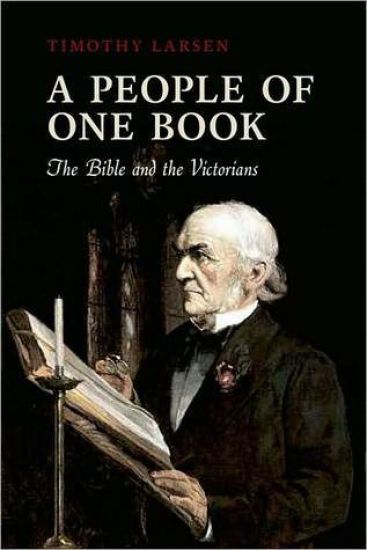
A People of One Book

A People of One Book

Timothy Larsen

Oxford University Press
2011
sidottu
Although the Victorians were awash in texts, the Bible was such a pervasive and dominant presence that they may fittingly be thought of as 'a people of one book'. They habitually read the Bible, quoted it, adopted its phraseology as their own, thought in its categories, and viewed their own lives and experiences through a scriptural lens. This astonishingly deep, relentless, and resonant engagement with the Bible was true across the religious spectrum from Catholics to Unitarians and beyond. The scripture-saturated culture of nineteenth-century England is displayed by Timothy Larsen in a series of lively case studies of representative figures ranging from the Quaker prison reformer Elizabeth Fry to the liberal Anglican pioneer of nursing Florence Nightingale to the Baptist preacher C. H. Spurgeon to the Jewish author Grace Aguilar. Even the agnostic man of science T. H. Huxley and the atheist leaders Charles Bradlaugh and Annie Besant were thoroughly and profoundly preoccupied with the Bible. Serving as a tour of the diversity and variety of nineteenth-century views, Larsen's study presents the distinctive beliefs and practices of all the major Victorian religious and sceptical traditions from Anglo-Catholics to the Salvation Army to Spiritualism, while simultaneously drawing out their common, shared culture as a people of one book.
The Slain God

The Slain God

Timothy Larsen

Oxford University Press
2014
sidottu
Throughout its entire history, the discipline of anthropology has been perceived as undermining, or even discrediting, Christian faith. Many of its most prominent theorists have been agnostics who assumed that ethnographic findings and theories had exposed religious beliefs to be untenable. E. B. Tylor, the founder of the discipline in Britain, lost his faith through studying anthropology. James Frazer saw the material that he presented in his highly influential work, The Golden Bough, as demonstrating that Christian thought was based on the erroneous thought patterns of 'savages.' On the other hand, some of the most eminent anthropologists have been Christians, including E. E. Evans-Pritchard, Mary Douglas, Victor Turner, and Edith Turner. Moreover, they openly presented articulate reasons for how their religious convictions cohered with their professional work. Despite being a major site of friction between faith and modern thought, the relationship between anthropology and Christianity has never before been the subject of a book-length study. In this groundbreaking work, Timothy Larsen examines the point where doubt and faith collide with anthropological theory and evidence.
A People of One Book

A People of One Book

Timothy Larsen

Oxford University Press
2012
nidottu
Although the Victorians were awash in texts, the Bible was such a pervasive and dominant presence that they may fittingly be thought of as 'a people of one book'. They habitually read the Bible, quoted it, adopted its phraseology as their own, thought in its categories, and viewed their own lives and experiences through a scriptural lens. This astonishingly deep, relentless, and resonant engagement with the Bible was true across the religious spectrum from Catholics to Unitarians and beyond. The scripture-saturated culture of nineteenth-century England is displayed by Timothy Larsen in a series of lively case studies of representative figures ranging from the Quaker prison reformer Elizabeth Fry to the liberal Anglican pioneer of nursing Florence Nightingale to the Baptist preacher C. H. Spurgeon to the Jewish author Grace Aguilar. Even the agnostic man of science T. H. Huxley and the atheist leaders Charles Bradlaugh and Annie Besant were thoroughly and profoundly preoccupied with the Bible. Serving as a tour of the diversity and variety of nineteenth-century views, Larsen's study presents the distinctive beliefs and practices of all the major Victorian religious and sceptical traditions from Anglo-Catholics to the Salvation Army to Spiritualism, while simultaneously drawing out their common, shared culture as a people of one book.
Twelve Classic Christmas Stories

Twelve Classic Christmas Stories

Timothy Larsen

Moody Publishers
2024
sidottu
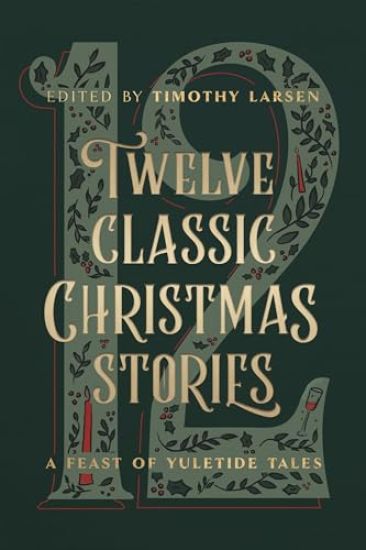
A feast of great literature--12 Classic Christmas Stories all in one volume Celebrate this magical season with some of the greatest literary figures in history. The wisdom and warmth of Christmas are wrapped in the stories of beloved and gifted authors such as Charles Dickens, Louisa May Alcott, O. Henry, G. K. Chesterton, Willa Cather, Conan Doyle, Washington Irving, George MacDonald, Lucy Maud Montgomery, Anthony Trollope, and other classic storytellers.Not only will you be immersed in the Christmas spirit, but you will draw from the insight of historian Dr. Timothy Larsen who introduces each tale, sharing with readers the history, background, and inspiration behind the literature.This collection invites us to contemplate and savor all that is good and true about God's redemptive story and our call to be Christ-like. The stories call us to generosity, reconciliation, and sacrifice. They encourage us to live with joy and gratitude. Hope and wonder abound as gather your family around the fire and read aloud the Twelve Classic Christmas Stories.Increasing our love for great tales and for Christmas, this beautiful hardcover book is the perfect gift.
Every Leaf, Line, and Letter – Evangelicals and the Bible from the 1730s to the Present
"I was filled with a pining desire to see Christ's own words in the Bible. . . . I got along to the window where my Bible was and I opened it and . . . every leaf, line, and letter smiled in my face." —The Spiritual Travels of Nathan Cole, 1765 From its earliest days, Christians in the movement known as evangelicalism have had "a particular regard for the Bible," to borrow a phrase from David Bebbington, the historian who framed its most influential definition. But this "biblicism" has taken many different forms from the 1730s to the 2020s. How has the eternal Word of God been received across various races, age groups, genders, nations, and eras? This collection of historical studies focuses on evangelicals' defining uses—and abuses—of Scripture, from Great Britain to the Global South, from the high pulpit to the Sunday School classroom, from private devotions to public causes. Contributors: David Bebbington, University of StirlingKristina Benham, Baylor UniversityCatherine Brekus, Harvard Divinity SchoolMalcolm Foley, Truett SeminaryBruce Hindmarsh, Regent College, VancouverThomas S. Kidd, Baylor UniversityTimothy Larsen, Wheaton CollegeK. Elise Leal, Whitworth UniversityJohn Maiden, The Open University, UKMark A. Noll, University of Notre DameMary Riso, Gordon CollegeBrian Stanley, University of EdinburghJonathan Yeager, University of Tennessee at Chattanooga
George MacDonald in the Age of Miracles – Incarnation, Doubt, and Reenchantment
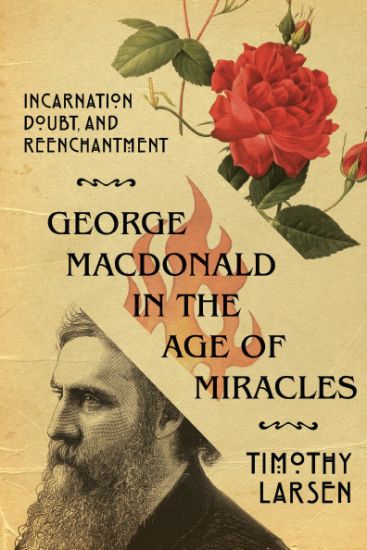
The Bible is full of miracles. Yet how do we make sense of them today? And where might we see miracles in our own lives? In this installment of the Hansen Lectureship series, historian and theologian Timothy Larsen considers the legacy of George MacDonald, the Victorian Scottish author and minister who is best known for his pioneering fantasy literature, which influenced authors such as C. S. Lewis, J. R. R. Tolkien, G. K. Chesterton, and Madeleine L'Engle. Larsen explores how, throughout his life and writings, MacDonald sought to counteract skepticism, unbelief, naturalism, and materialism and to herald instead the reality of the miraculous, the supernatural, the wondrous, and the realm of the spirit. Based on the annual lecture series hosted at Wheaton College's Marion E. Wade Center, volumes in the Hansen Lectureship Series reflect on the imaginative work and lasting influence of seven British authors: Owen Barfield, G. K. Chesterton, C. S. Lewis, George MacDonald, Dorothy L. Sayers, J. R. R. Tolkien, and Charles Williams.
Christabel Pankhurst: Fundamentalism and Feminism in Coalition
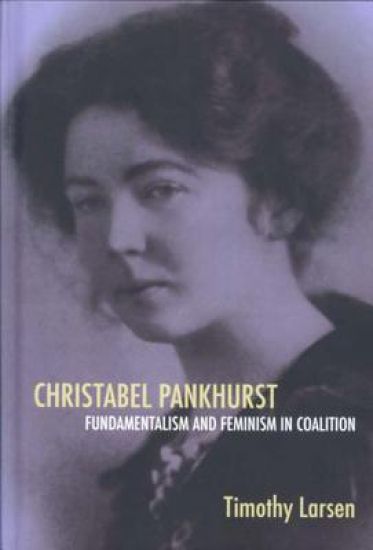
Christabel Pankhurst, one of the leading champions of women's suffrage in Britain, entered the evangelical world after the first world war as a preacher of the second coming. Larsen shows that the two causes, far from being automatically antagonistic, could be complementary. Christabel Pankhurst was arguably the most influential member of her famous family in the struggle to win the vote for women in the years before the First World War. Paradoxically, she has also been the most neglected subsequentlyby historians. Part of the reason for this may be that, in the years after women's suffrage had been achieved in 1918, she turned her energies to Christian fundamentalism and carved out a new career as a writer of best-selling evangelical books and as a high-profile speaker on the fundamentalist preaching circuit, particularly in the United States. In this important work Tim Larsen provides the first full account of this part of Christabel Pankhurst's life. He thus offers both a highly original contribution to Christabel Pankhurst's biography and also a fascinating commentary on the relationship between fundamentalism and feminism. His book will be essential reading for anyone interested in the Pankhursts, in the history of the women's movement, or in fundamentalism in Britain and North America. TIMOTHY LARSEN is Associate Professor of Theology, Wheaton College, USA.
Friends of Religious Equality

Friends of Religious Equality

Timothy Larsen

Wipf Stock Publishers
2008
nidottu
During the middle decades of the nineteenth century the English Nonconformist community developed a coherent political philosophy of its own, of which a central tenet was the principle of religious equality (in contrast to the stereotype of Evangelical Dissenters). The Dissenting community fought for the civil rights of Roman Catholics, non-Christians, and even atheists, on an issue of principle that had its flowering in the enthusiastic and undivided suppot that Nonconformity gave to the campaign for Jewish emancipation. This study examines the political efforts and ideas of English Nonconformists during the period, covering the whole range of national issues raised, from state education to the Crimean War. It offers a case study of a theologically conservative group defending religious pluralism in the civic sphere, showing the that concept of religious equality was a grand vision at the center of the political philosophy of the Dissenters.
Contested Christianity

Contested Christianity

Timothy Larsen

Baylor University Press
2004
nidottu
This volume explores the cultural, political and intellectual forces that helped shape and define nineteenth-century British Christianity. Larsen challenges many of the standard assumptions about Victorian era Christians in their attempts to embody their theological commitments. In contrast to other studies of the period, Larsen highlights the way in which Dissenters and other free church evangelicals employed the full range of theological resources available to them to take stands that the wider culture was still resisting--e.g., evangelical Nonconformists enfranchising women, siding with the black population of Jamaica in opposition to their own colonial governor, championing the rights of Jews, Roman Catholics, and atheists. All of these stances belie the stereotypes of Victorian evangelicals currently in existence (even among Victorian scholars) and properly shift the focus to Dissent, to plebeian culture, to social contexts, and to the cultural and political consequences of theological commitment. This study brings freshness and verve to the study of religion and the Victorians, bearing fruit in a range of significant, and often counter-intuitive, findings and connections.
Biographical Dictionary of Evangelicals

Biographical Dictionary of Evangelicals

Timothy Larsen

Inter-Varsity Press
2015
nidottu
An exciting new dictionary containing biographies of more than 400 prominent evangelicals and evangelical forebears, from John Wyclif to John Wimber via John Wesley. Historical scholarship combines with human interest in this invaluable reference work, written by an international team.
Friends of Religious Equality

Friends of Religious Equality

Timothy Larsen

Paternoster Press
2007
nidottu
In the nineteenth century the dissenting Christian community fought for the civil rights of Roman Catholics nonChristians and even atheists on an issue of principle which had its flowering in the enthusiastic and undivided support which nonconformity gave to the campaign for Jewish emancipation. This book offers a case study of a theologically conservative group defending religious pluralism in the civic sphere showing that the concept of religious equality was a grand vision at the center of the political philosophy of the dissenters.