Kirjojen hintavertailu. Mukana 11 717 486 kirjaa ja 12 kauppaa.

Kirjahaku

Etsi kirjoja tekijän nimen, kirjan nimen tai ISBN:n perusteella.

6 kirjaa tekijältä Timothy M. Mosteller

Relativism in Contemporary American Philosophy

Relativism in Contemporary American Philosophy

Timothy M. Mosteller

Continuum International Publishing Group Ltd.
2008
nidottu
Relativism about knowledge or truth has always provoked the ire of philosophers. Ever since Protagoras declared in antiquity that "man is the measure of all things", relativism has been repeatedly attacked. Recently, however, Alasdair MacIntyre has observed that "relativism . is one of those doctrines that have by now been refuted a number of times too often." Along with MacIntyre, Hilary Putnam and Richard Rorty have also argued that while relativism may be problematic, there are valuable insights in it that philosophers need to take notice of. This book sorts out exactly what those relativistic insights are, and where they are to be found within the works of these three leading late-twentieth-century American philosophers. Timothy Mosteller begins with a review of the major traditional definitions of relativism and the classical arguments against it. He then examines twentieth-century accounts and defenses of relativism and points out that each account faces problems similar to those of the traditional versions. The book continues with substantial treatments of the views of MacIntyre, Putnam and Rorty on relativism, with each thinker robustly engaging the opinions of the others.Mosteller concludes the book by developing an alternative approach to relativism about knowledge, which recognizes that while there may be no single 'global' criterion for all knowledge claims, there can be 'local' standards for settling particular disputes in such a way as to avoid the traditional hazards of relativism.
Relativism in Contemporary American Philosophy

Relativism in Contemporary American Philosophy

Timothy M. Mosteller

Continuum International Publishing Group Ltd.
2006
sidottu
Relativism about knowledge or truth has always provoked the ire of philosophers. Ever since Protagoras declared in antiquity that 'man is the measure of all things', relativism has been repeatedly attacked. Recently, however, Alasdair MacIntyre has observed that 'relativism...is one of those doctrines that have by now been refuted a number of times too often'. Along with MacIntyre, Hilary Putnam and Richard Rorty have also argued that while relativism may be problematic, there are valuable insights in it that philosophers need to take notice of. This book sorts out exactly what those relativistic insights are, and where they are to be found within the works of these three leading late-twentieth-century philosophers. Timothy Mosteller begins with a review of the major traditional definitions of relativism and the classical arguments against it. He then examines twentieth-century accounts and defences of relativism and points out that each account faces problems similar to those of the traditional versions. The continues with substantial treatments of the views of macIntyre, Putnam and Rorty on relativism, with each thinker robustly engaging the opinions of the others.Mosteller concludes the book by developing an alternative approach to relativismabout knowledge, which recognizes that while there may be no single 'global' criterion for all knowledge claims, there can be 'local' standards for settling particular disputes in such a way as to avoid the traditional hazards of relativism. Timothy M. Mosteller (Ph.D University of Miami) teaches philosophy at the University of San Diego, California.
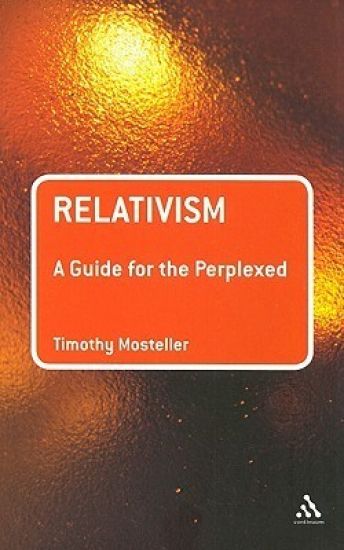
Relativism: A Guide for the Perplexed

Relativism: A Guide for the Perplexed

Timothy M. Mosteller

Continuum International Publishing Group Ltd.
2008
sidottu
Relativism is a philosophical topic that has many dimensions and can mean many things. It is the view that one thing owes existence, truth, goodness or beauty to something else and is central to an understanding of any of the four traditional divisions of philosophy: ontology, epistemology, ethics and aesthetics. Relativism: A Guide for the Perplexed offers a concise, yet fully comprehensive introduction to relativism and how it applies to the different parts of the basic, foundational areas of philosophy and, indeed, to every area of human enquiry. Timothy Mosteller begins with a discussion of relativism in popular culture. He then goes on to provide a concise overview of the topic across the discipline of philosophy, examining it in detail in its primary forms: ontological relativism, epistemological relativism, moral relativism and aesthetic relativism. The book concludes with a summary of the role of relativism in three other key academic disciplines: science, politics, and religion. Geared towards the specific requirements of students who need to reach a sound understanding of relativism, the book serves as an ideal companion to study of this most influential and challenging of philosophical concepts.
Relativism: A Guide for the Perplexed

Relativism: A Guide for the Perplexed

Timothy M. Mosteller

Continuum International Publishing Group Ltd.
2008
nidottu
This is a student's guide to the historical context and key themes in relativism across the discipline of philosophy.Relativism is a philosophical topic that has many dimensions and can mean many things. It is the view that one thing owes existence, truth, goodness or beauty to something else and is central to an understanding of any of the four traditional divisions of philosophy: ontology, epistemology, ethics and aesthetics."Relativism: A Guide for the Perplexed" offers a concise, yet fully comprehensive introduction to relativism and how it applies to the different parts of the basic, foundational areas of philosophy and, indeed, to every area of human enquiry. Timothy Mosteller begins with a discussion of relativism in popular culture. He then goes on to provide a concise overview of the topic across the discipline of philosophy, examining it in detail in its primary forms: ontological relativism, epistemological relativism, moral relativism and aesthetic relativism. The book concludes with a summary of the role of relativism in three other key academic disciplines: science, politics, and religion. Geared towards the specific requirements of students who need to reach a sound understanding of relativism, the book serves as an ideal companion to study of this most influential and challenging of philosophical concepts."Continuum's Guides for the Perplexed" are clear, concise and accessible introductions to thinkers, writers and subjects that students and readers can find especially challenging - or indeed downright bewildering. Concentrating specifically on what it is that makes the subject difficult to grasp, these books explain and explore key themes and ideas, guiding the reader towards a thorough understanding of demanding material.
Theories of Truth: An Introduction

Theories of Truth: An Introduction

Timothy M. Mosteller

Bloomsbury Academic USA
2014
nidottu
From the Pre-Socratics to the 21st century, Theories of Truth: An Introduction provides a clear, introductory account of the major theories of truth. Starting with a defense of the importance of truth in reflection, this introduction guides readers through correspondence, coherence, deflationist and pragmatic theories to the connection between truth and rationality. Without assuming prior knowledge, it thematically introduces the key theories and explains the challenges and objections that exist as well as the links that can be made with other areas of human inquiry. Informative and critical, each chapter covers a single theory and presents a robust coverage of the debates, accessible descriptions of technicalities and an accurate account of the history. For undergraduates looking to understand the place, development and importance of truth in either epistemology specifically or philosophy in general, Theories of Truth: An Introduction offers a straightforward understanding of truth, clarifying both the history of the theories and the current debates about them.
Theories of Truth: An Introduction

Theories of Truth: An Introduction

Timothy M. Mosteller

Bloomsbury Academic USA
2014
sidottu
From the Pre-Socratics to the 21st century, Theories of Truth: An Introduction provides a clear, introductory account of the major theories of truth. Starting with a defense of the importance of truth in reflection, this introduction guides readers through correspondence, coherence, deflationist and pragmatic theories to the connection between truth and rationality. Without assuming prior knowledge, it thematically introduces the key theories and explains the challenges and objections that exist as well as the links that can be made with other areas of human inquiry. Informative and critical, each chapter covers a single theory and presents a robust coverage of the debates, accessible descriptions of technicalities and an accurate account of the history. For undergraduates looking to understand the place, development and importance of truth in either epistemology specifically or philosophy in general, Theories of Truth: An Introduction offers a straightforward understanding of truth, clarifying both the history of the theories and the current debates about them.