Kirjahaku
Etsi kirjoja tekijän nimen, kirjan nimen tai ISBN:n perusteella.
26 kirjaa tekijältä Timothy Morton
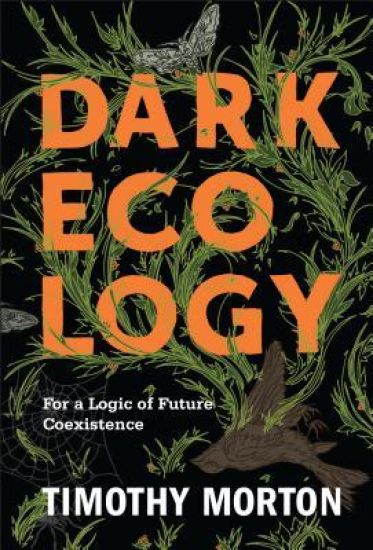
Timothy Morton argues that ecological awareness in the present Anthropocene era takes the form of a strange loop or Mobius strip, twisted to have only one side. Deckard travels this oedipal path in Blade Runner (1982) when he learns that he might be the enemy he has been ordered to pursue. Ecological awareness takes this shape because ecological phenomena have a loop form that is also fundamental to the structure of how things are. The logistics of agricultural society resulted in global warming and hardwired dangerous ideas about life-forms into the human mind. Dark ecology puts us in an uncanny position of radical self-knowledge, illuminating our place in the biosphere and our belonging to a species in a sense that is far less obvious than we like to think. Morton explores the logical foundations of the ecological crisis, which is suffused with the melancholy and negativity of coexistence yet evolving, as we explore its loop form, into something playful, anarchic, and comedic. His work is a skilled fusion of humanities and scientific scholarship, incorporating the theories and findings of philosophy, anthropology, literature, ecology, biology, and physics. Morton hopes to reestablish our ties to nonhuman beings and to help us rediscover the playfulness and joy that can brighten the dark, strange loop we traverse.
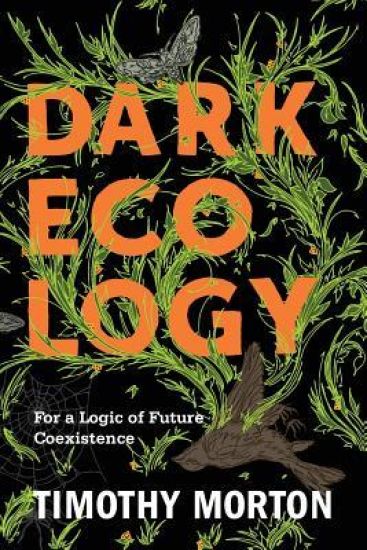
Timothy Morton argues that ecological awareness in the present Anthropocene era takes the form of a strange loop or Möbius strip, twisted to have only one side. Deckard travels this oedipal path in Blade Runner (1982) when he learns that he might be the enemy he has been ordered to pursue. Ecological awareness takes this shape because ecological phenomena have a loop form that is also fundamental to the structure of how things are.The logistics of agricultural society resulted in global warming and hardwired dangerous ideas about life-forms into the human mind. Dark ecology puts us in an uncanny position of radical self-knowledge, illuminating our place in the biosphere and our belonging to a species in a sense that is far less obvious than we like to think. Morton explores the logical foundations of the ecological crisis, which is suffused with the melancholy and negativity of coexistence yet evolving, as we explore its loop form, into something playful, anarchic, and comedic. His work is a skilled fusion of humanities and scientific scholarship, incorporating the theories and findings of philosophy, anthropology, literature, ecology, biology, and physics. Morton hopes to reestablish our ties to nonhuman beings and to help us rediscover the playfulness and joy that can brighten the dark, strange loop we traverse.
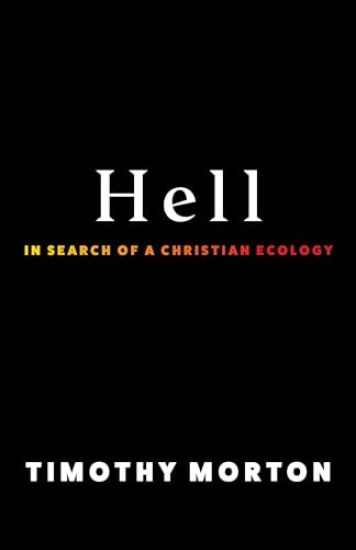
Hell on earth is real. The toxic fusion of big oil, Evangelical Christianity, and white supremacy has ignited a worldwide inferno, more phantasmagoric than anything William Blake could dream up and more cataclysmic than we can fathom. Escaping global warming hell, this revelatory book shows, requires a radical, mystical marriage of Christianity and biology that awakens a future beyond white male savagery.Timothy Morton argues that there is an unexpected yet profound relationship between religion and ecology that can guide a planet-scale response to the climate crisis. Spiritual and mystical feelings have a deep resonance with ecological thinking, and together they provide the resources environmentalism desperately needs in this time of climate emergency. Morton finds solutions in a radical revaluation of Christianity, furnishing ecological politics with a language of mercy and forgiveness that draws from Christian traditions without bringing along their baggage. They call for a global environmental movement that fuses ecology and mysticism and puts race and gender front and center. This nonviolent resistance can stage an all-out assault on the ultimate Satanic mill: the concept of master and slave, manifesting today in white supremacy, patriarchy, and environmental destruction. Passionate, erudite, and playful, Hell takes readers on a full-color journey into the contemporary underworld—and offers a surprising vision of salvation.
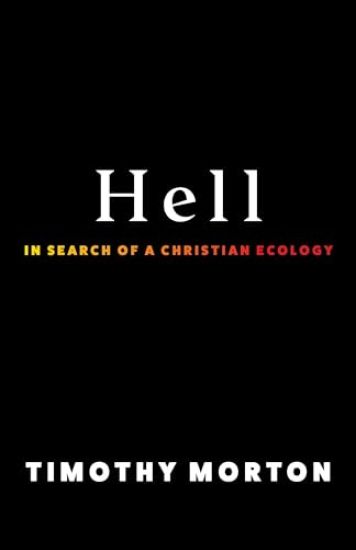
Hell on earth is real. The toxic fusion of big oil, Evangelical Christianity, and white supremacy has ignited a worldwide inferno, more phantasmagoric than anything William Blake could dream up and more cataclysmic than we can fathom. Escaping global warming hell, this revelatory book shows, requires a radical, mystical marriage of Christianity and biology that awakens a future beyond white male savagery.Timothy Morton argues that there is an unexpected yet profound relationship between religion and ecology that can guide a planet-scale response to the climate crisis. Spiritual and mystical feelings have a deep resonance with ecological thinking, and together they provide the resources environmentalism desperately needs in this time of climate emergency. Morton finds solutions in a radical revaluation of Christianity, furnishing ecological politics with a language of mercy and forgiveness that draws from Christian traditions without bringing along their baggage. They call for a global environmental movement that fuses ecology and mysticism and puts race and gender front and center. This nonviolent resistance can stage an all-out assault on the ultimate Satanic mill: the concept of master and slave, manifesting today in white supremacy, patriarchy, and environmental destruction. Passionate, erudite, and playful, Hell takes readers on a full-color journey into the contemporary underworld—and offers a surprising vision of salvation.
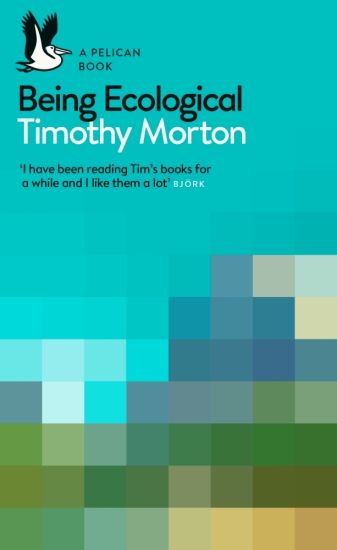
'To read Being Ecological is to be caught up in a brilliant display of intellectual pyrotechnics' P.D.Smith, GuardianWhy is everything we think we know about ecology wrong?Is there really any difference between 'humans' and 'nature'?Does this mean we even have a future?Don't care about ecology? This book is for you. Timothy Morton, who has been called 'Our most popular guide to the new epoch' (Guardian), sets out to show us that whether we know it or not, we already have the capacity and the will to change the way we understand the place of humans in the world, and our very understanding of the term 'ecology'. A cross-disciplinarian who has collaborated with everyone from Björk to Hans Ulrich Obrist, Morton is also a member of the object-oriented philosophy movement, a group of forward-looking thinkers who are grappling with modern-day notions of subjectivity and objectivity, while also offering fascinating new understandings of Heidegger and Kant. Calling the volume a book containing 'no ecological facts', Morton confronts the 'information dump' fatigue of the digital age, and offers an invigorated approach to creating a liveable future.
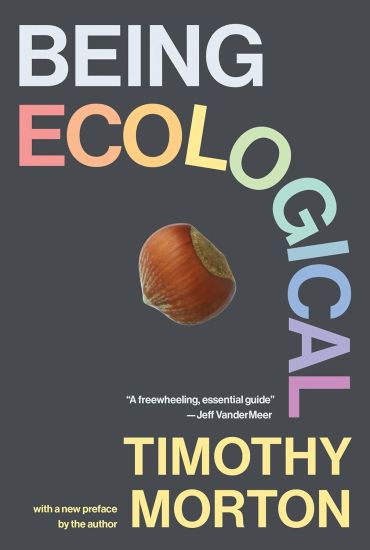
From "our most popular guide to the new epoch" (Guardian), a new edition of the book about ecology without information dumping, guilt inducing, or preaching to the choir. Ecology books can be confusing information dumps that are out of date by the time they hit you. Slapping you upside the head to make you feel bad. Grabbing you by the lapels while yelling disturbing facts. Handwringing in agony about "What are we going to do?" This book has none of that. Being Ecological, reissued with a new preface, doesn't preach to the eco-choir. It's for you--even, Timothy Morton explains, if you're not in the choir, even if you have no idea what choirs are. You might already be ecological. After establishing the approach of the book (no facts allowed ), Morton draws on Kant and Heidegger to help us understand living in an age of mass extinction caused by climate change. They discuss what sorts of actions count as ecological--starting a revolution? going to the garden center to smell the plants? And finally, they explore a variety of current styles of being ecological--a range of overlapping orientations rather than preformatted self-labeling. Caught up in the us-versus-them (or you-versus-everything else) urgency of ecological crisis, Morton suggests, it's easy to forget that you are a symbiotic being entangled with other symbiotic beings. Isn't that being ecological?
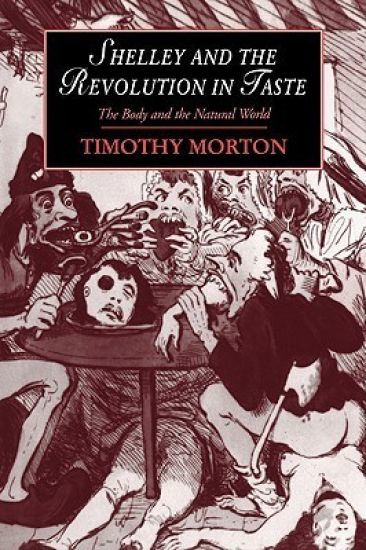
This book brings together the themes of diet, consumption, the body, and human relationships with the natural world, in a highly original study of Shelley. A campaigning vegetarian and proto-ecological thinker, Shelley may seem to us curiously modern, but Morton offers an illuminatingly broad context for Shelley's views in eighteenth-century social and political thought concerning the relationships between humanity and nature. The book is at once grounded in the revolutionary history of the period 1790–1820, and informed by current theoretical issues and anthropological and sociological approaches to literature. Morton provides challenging new readings of much-debated poems, plays, and novels by both Percy and Mary Shelley, as well as the first sustained interpretation of Shelley's prose on diet. With its stimulating literary-historical reassessment of questions about nature and culture, this study will provoke fresh discussion about Shelley, Romanticism, and modernity.
This book brings together the themes of diet, consumption, the body, and human relationships with the natural world, in a highly original study of Shelley. A campaigning vegetarian and proto-ecological thinker, Shelley may seem to us curiously modern, but Morton offers an illuminatingly broad context for Shelley’s views in eighteenth-century social and political thought concerning the relationships between humanity and nature. The book is at once grounded in the revolutionary history of the period 1790–1820, and informed by current theoretical issues and anthropological and sociological approaches to literature. Morton provides challenging new readings of much-debated poems, plays, and novels by both Percy and Mary Shelley, as well as the first sustained interpretation of Shelley’s prose on diet. With its stimulating literary-historical reassessment of questions about nature and culture, this study will provoke fresh discussion about Shelley, Romanticism, and modernity.
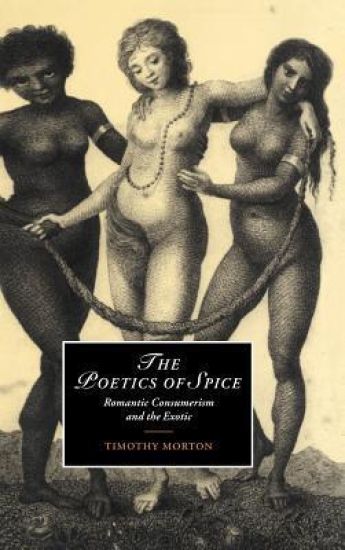
This 2000 book considers the literary and cultural significance of spice, and the spice trade, in Romantic literature, shedding new light on the impact of consumerism and capitalist ideology on writers of the period. Timothy Morton demonstrates how the emerging consumer culture was characterized by an ornate, figuratively rich mode of representation which he describes as 'the poetics of spice'. This is the focal point for a probing analysis that addresses a host of related themes - exoticism, orientalism, colonialism, the slave trade, race and gender issues, and, above all, capitalism. Employing a mixture of Marxist, deconstructive and psychoanalytic theory, Morton explores how capitalist ideology was inscribed in the very materials of consumption. The book takes a wide historical perspective, surveying a range of literary, political, medical, travel, trade and philosophical texts, and includes readings of Milton, Coleridge, Keats, Shelley, Leigh Hunt, Charlotte Smith and Southey among many others.
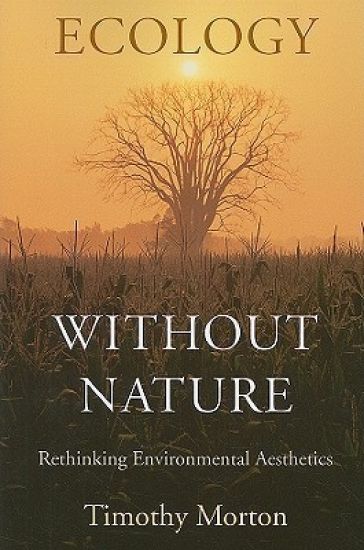
In Ecology without Nature, Timothy Morton argues that the chief stumbling block to environmental thinking is the image of nature itself. Ecological writers propose a new worldview, but their very zeal to preserve the natural world leads them away from the "nature" they revere. The problem is a symptom of the ecological catastrophe in which we are living. Morton sets out a seeming paradox: to have a properly ecological view, we must relinquish the idea of nature once and for all.Ecology without Nature investigates our ecological assumptions in a way that is provocative and deeply engaging. Ranging widely in eighteenth-century through contemporary philosophy, culture, and history, he explores the value of art in imagining environmental projects for the future. Morton develops a fresh vocabulary for reading "environmentality" in artistic form as well as content, and traces the contexts of ecological constructs through the history of capitalism. From John Clare to John Cage, from Kierkegaard to Kristeva, from The Lord of the Rings to electronic life forms, Ecology without Nature widens our view of ecological criticism, and deepens our understanding of ecology itself. Instead of trying to use an idea of nature to heal what society has damaged, Morton sets out a radical new form of ecological criticism: "dark ecology."
In this passionate, lucid, and surprising book, Timothy Morton argues that all forms of life are connected in a vast, entangling mesh. This interconnectedness penetrates all dimensions of life. No being, construct, or object can exist independently from the ecological entanglement, Morton contends, nor does “Nature” exist as an entity separate from the uglier or more synthetic elements of life. Realizing this interconnectedness is what Morton calls the ecological thought. In three concise chapters, Morton investigates the profound philosophical, political, and aesthetic implications of the fact that all life forms are interconnected. As a work of environmental philosophy and theory, The Ecological Thought explores an emerging awareness of ecological reality in an age of global warming. Using Darwin and contemporary discoveries in life sciences as root texts, Morton describes a mesh of deeply interconnected life forms—intimate, strange, and lacking fixed identity.A “prequel” to his Ecology without Nature: Rethinking Environmental Aesthetics (Harvard, 2007), The Ecological Thought is an engaged and accessible work that will challenge the thinking of readers in disciplines ranging from critical theory to Romanticism to cultural geography.
Having set global warming in irreversible motion, we are facing the possibility of ecological catastrophe. But the environmental emergency is also a crisis for our philosophical habits of thought, confronting us with a problem that seems to defy not only our control but also our understanding. Global warming is perhaps the most dramatic example of what Timothy Morton calls “hyperobjects”-entities of such vast temporal and spatial dimensions that they defeat traditional ideas about what a thing is in the first place. In this book, Morton explains what hyperobjects are and their impact on how we think, how we coexist with one another and with nonhumans, and how we experience our politics, ethics, and art. Moving fluidly between philosophy, science, literature, visual and conceptual art, and popular culture, the book argues that hyperobjects show that the end of the world has already occurred in the sense that concepts such as world, nature, and even environment are no longer a meaningful horizon against which human events take place. Instead of inhabiting a world, we find ourselves inside a number of hyperobjects, such as climate, nuclear weapons, evolution, or relativity. Such objects put unbearable strains on our normal ways of reasoning. Insisting that we have to reinvent how we think to even begin to comprehend the world we now live in, Hyperobjects takes the first steps, outlining a genuinely postmodern ecological approach to thought and action.
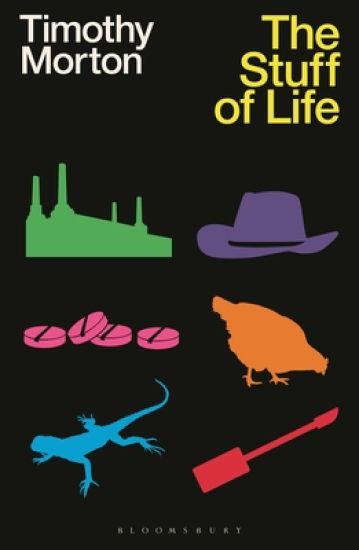
'An old teapot, used daily, can tell me more of my past than anything I recorded of it.' Sylvia Townsend WarnerThere are many ways of telling the story of a life and how we've got to where we are. The questions of why and how we think the way we do continues to preoccupy philosophers. In The Stuff of Life, Timothy Morton chooses the objects that have shaped and punctuated their life to tell the story of who they are and why they might think the way they do. These objects are 'things' in the richest sense. They are beings, non-human beings, that have a presence and a force of their own. From the looming expanse of Battersea Power Station to a packet of anti-depressants and a cowboy suit, Morton explores why 'stuff' matters and the life of these things have so powerfully impinged upon their own. Their realization, through a concealer stick, that they identify as non-binary reveals the strange and wonderful ways that objects can form our worlds.Part memoir, part philosophical exploration of the meaning of a life lived alongside and through other things, Morton asks us to think about the stuff, things, objects and buildings that have formed our realities and who we are and might be.
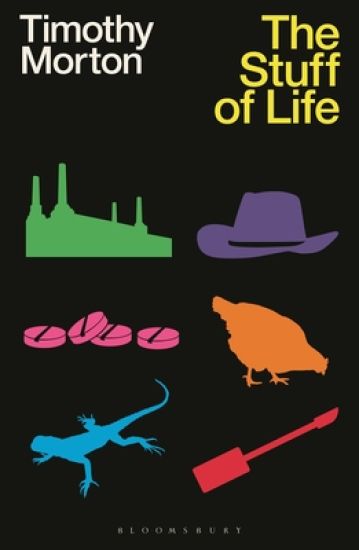
'An old teapot, used daily, can tell me more of my past than anything I recorded of it.' Sylvia Townsend WarnerThere are many ways of telling the story of a life and how we've got to where we are. The questions of why and how we think the way we do continues to preoccupy philosophers. In The Stuff of Life, Timothy Morton chooses the objects that have shaped and punctuated their life to tell the story of who they are and why they might think the way they do. These objects are 'things' in the richest sense. They are beings, non-human beings, that have a presence and a force of their own. From the looming expanse of Battersea Power Station to a packet of anti-depressants and a cowboy suit, Morton explores why 'stuff' matters and the life of these things have so powerfully impinged upon their own. Their realization, through a concealer stick, that they identify as non-binary reveals the strange and wonderful ways that objects can form our worlds.Part memoir, part philosophical exploration of the meaning of a life lived alongside and through other things, Morton asks us to think about the stuff, things, objects and buildings that have formed our realities and who we are and might be.
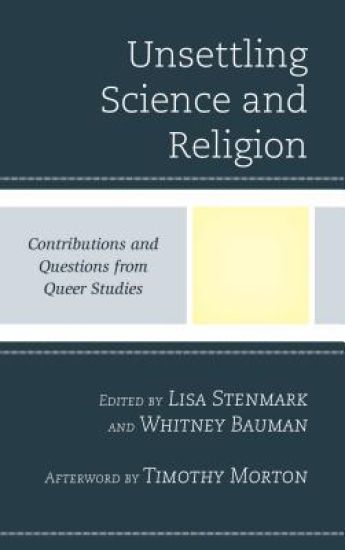
This book borrows from the intellectual labor of queer theory in order to unsettle—or “queer”—the discourses of “religion” and “science,” and, by extension, the “science and religion discourse.” Drawing intellectual and social cues from works by influential theorists such as Michel Foucault, Judith Butler, and Eve Sedgwick, chapters in this volume converge on at least three common features of queer theory. First, queer theory challenges givens that on occasion still undergird religiously and scientifically informed ways of thinking. Second, it takes embodiment seriously. Third, this engagement inevitably generates new pathways for thinking about how religious and scientific “truths” matter. These three features ultimately lend support to critical investigations into the meanings of “science” and “religion,” and the relationships between the two.
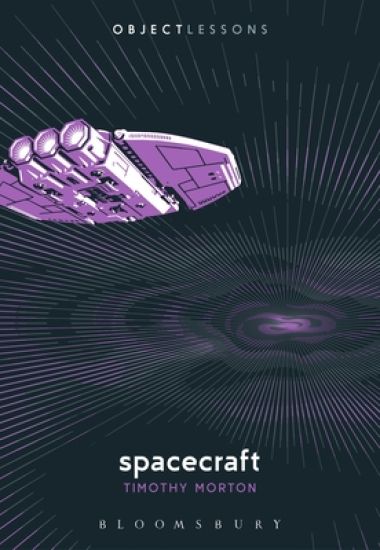
Science fiction is filled with spacecraft. On Earth, actual rockets explode over Texas while others make their way to Mars. But what are spacecraft, and just what can they teach us about imagination, ecology, democracy, and the nature of objects? Why do certain spacecraft stand out in popular culture?If ever there were a spacecraft that could be detached from its context, sold as toys, turned into Disney rides, parodied, and flit around in everyone’s head—the Millennium Falcon would be it. Springing from this infamous Star Wars vehicle, Spacecraft takes readers on an intergalactic journey through science fiction and speculative philosophy, revealing real-world political and ecological lessons along the way. In this book Timothy Morton shows how spacecraft are never mere flights of fancy.
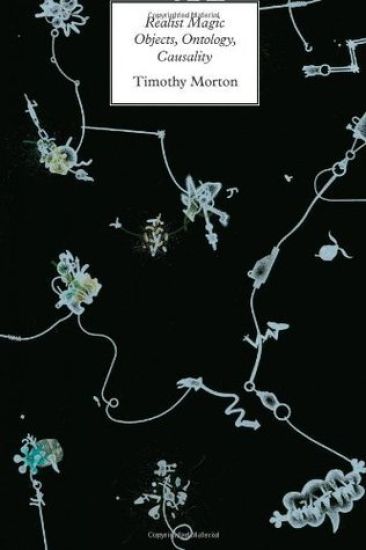
Object-oriented ontology offers a startlingly fresh way to think about causality that takes into account developments in physics since 1900. Causality, argues OOO, is aesthetic. In this book, Timothy Morton explores what it means to say that a thing has come into being, that it is persisting, and that it has ended. Drawing from examples in physics, biology, ecology, art, literature and music, Morton demonstrates the counterintuitive yet elegant explanatory power of OOO for thinking causality.
En este libro, Timothy Morton explora lo que significa para las cosas advenir a la existencia, persistir y dejar de existir. Tomando ejemplos de la f sica, la biolog a, la ecolog a, el arte, la literatura y la m sica, Morton expone el contraintuitivo, pero elegante, poder explicativo de la OOO para pensar c mo opera la causalidad.