Kirjojen hintavertailu. Mukana 11 342 296 kirjaa ja 12 kauppaa.

Kirjahaku

Etsi kirjoja tekijän nimen, kirjan nimen tai ISBN:n perusteella.

11 kirjaa tekijältä Timothy Mowl

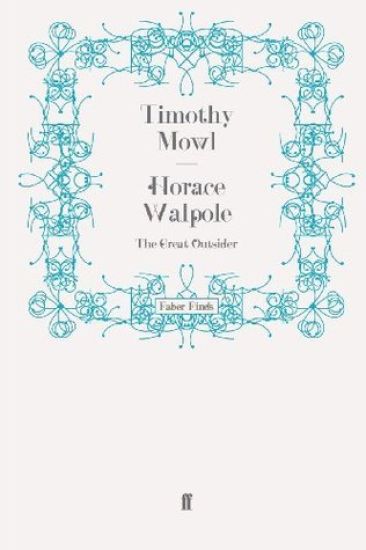
Horace Walpole

Horace Walpole

Timothy Mowl

Faber Faber
2010
pokkari
Horace Walpole, famous for his novel The Castle of Otranto and his gothick castle-villa, Strawberry Hill, has been oddly shielded by his previous admirers. The most famous of these was W. S. Lewis, a rich American scholar, who collected virtually all of Walpole's surviving letters and papers and edited them in forty-eight impressive volumes. He was however a conventional man of his times and could not bring himself to acknowledge Walpole's homosexuality and its implications. R. W. Ketton-Cremer, who wrote what was otherwise a very good biography of Walpole, was similarly evasive. Timothy Mowl's study of Horace Walpole is the first to give a complete and convincing picture of the whole man. It is the first to show that, despite his aristocratic connections (he was the youngest son of Sir Robert Walpole, Britain's first Prime Minister) Horace Walpole was a sexual and social outsider whose talents as a publicist were used to serve his own agenda. Also revealed for the first time is Walpole's passionate affair with the 9th Earl of Lincoln. The ending of that relationship, and Walpole's subsequent resentment of Lincoln's relatives, affected his judgment, friendships and emotions for the rest of his life.This book provides an honest and radical reassessment of one of the most influential men of taste of the eighteenth-century, and is reissued to coincide with a major Victoria and Albert Museum exhibition dedicated to Horace Walpole and Strawberry Hill.'This is a lively, provocative and hugely entertaining book. Whatever one makes of Dr Mowl's interpretation of Walpole's career, it is always intelligently argued, and presented with a polemical vigour and sense of style which are worthy of his subject's own.' John Adamson, Sunday Review'. . . he is lively and convincing on the gradual accretions to Strawberry Hill, and often shrewd on the character of his subject . . .' Pat Rogers, Times Literary Supplement'In general, Mowl writes delightfully, and there are witticisms that Horry (Horace Walpole) himself would relish.' Bevis Hillier, The Spectator'In this vivid and entertaining biography, Horace Walpole is properly outed.' Duncan Sprott, Gay Times'. . .he presents the most credible picture of the man and his achievement to date.' Martin Postle, Apollo'This wicked, enjoyable book should provoke wide debate.' David Watkin, Evening Standard

Stylistic Cold Wars

Stylistic Cold Wars

Timothy Mowl

Faber Faber
2011
nidottu
'That Prussian pedant', 'Herr Professor Doktor': these were two of the jibes John Betjeman levelled at Nikolaus Pevsner, who, it must be said, received them with great restraint. Betjeman and Pevsner were polar opposites, the one giving voice to an alluring threnody for the destruction of our historic landmarks, the other articulating the case for international modernism. Their different outlooks are most obviously manifested in the Shell County Guides, edited by Betjeman, and the magisterial Buildings of England series, which within the confines of impeccable scholarship, represents Pevsner's credo. The former is imbued with a most agreeable dilettantism that is strikingly successful in capturing ambience, the latter brilliantly and in compelling detail anatomizes individual buildings. Betjeman and Pevsner personified two opposing sensibilities and in this most engaging book Timothy Mowl shows how the two rivals became, behind a polite facade, irreconcilable foes who fought for the supremacy of their alternative visions until the same fatal illness struck them down.'This entertaining analysis of Betjeman's dislike of what he believed Pevsner stood for is a subtle and unique contribution to twentieth-century English social and cultural history. Mowl has written an absolutely gripping story, full of irony and surprise, about two men who were so similar yet so totally different.' David Watkin
William Beckford

William Beckford

Timothy Mowl

Faber Faber
2013
pokkari
William Beckford had two lives: one real and sensational, the other an elegant forgery he invented in retirement after the young Disraeli mischievously sent him a homoerotic epic based loosely on Beckford's own career. Biographers have been bemused by Beckford's faked letters and dream encounters with celebrities, but his real life was far more significant: he is the pivotal Romantic between Horace Walpole and Byron. Beckford was reared in exotic isolation in a Palladian palace where he grew up obsessed with dark grottoes, towers and images of the living dead. Rushed into marriage by an apprehensive mother, he indulged his actual passions (both legal and paedophile) until a Tory administration staged a sex scandal that exiled him. In his absence his novel, Vathek was treacherously pirated. Returned to England, Beckford flung his wealth into the creation of Fonthill Abbey, which, by its shadowy vistas and glamorous camp furnishings, paved the way for the wildest excesses of Victorian taste.
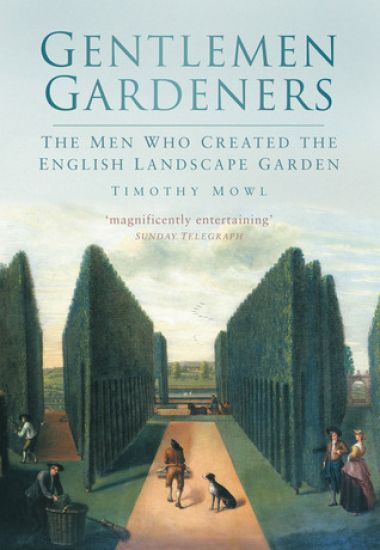
Gentlemen Gardeners

Gentlemen Gardeners

Timothy Mowl

The History Press Ltd
2010
nidottu
The English love affair with the landscape garden reached its height in the eighteenth century, when the creation of some of our greatest gardens set a stylistic lead which Continental Europe was eager to follow. In this informed and entertaining book, Timothy Mowl reveals how this development in garden style came about through an interaction between the garden owners, who had a vision of what these gardens might become, and the professionals who had the expertise to realise this vision. Technologies and discoveries were exchanged, and theories were absorbed, popularised and then discarded, in a fascinating sequence of action and reaction. It was a mould-breaking, revolutionary period in garden history. Mowl takes the reader on a fascinating journey to the magnificent gardens at Chiswick, Stowe, Castle Howard, Painshill, Stourhead and an astonishing host of lesser Edens, and casts a fresh and illuminating perspective on the great age of the English Arcadia (1620-1820).
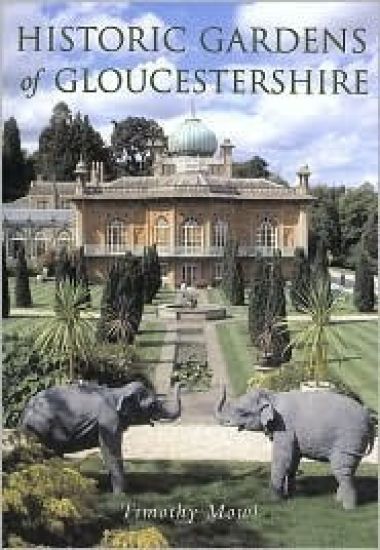
Historic Gardens of Gloucestershire

Historic Gardens of Gloucestershire

Timothy Mowl

The History Press Ltd
2002
nidottu
Timothy Mowl describes the creation of designed landscapes and gardens in Gloucestershire from medieval times to the present day, taking in: the formal gardens of the late seventeenth century; Georgian Arcadia; the Gardenesque of the Regency; Victorian Arboreta; the Arts and Crafts garden and the twentieth-century garden.
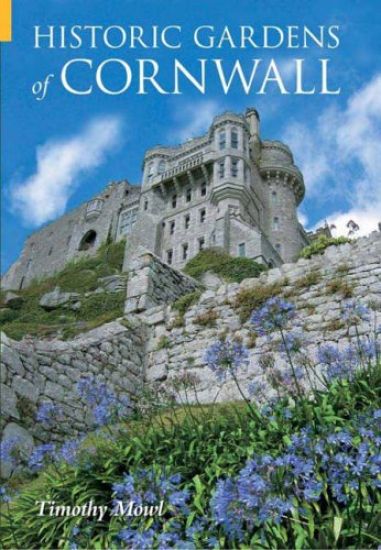
Historic Gardens of Cornwall

Historic Gardens of Cornwall

Timothy Mowl

The History Press Ltd
2005
nidottu
This is the fourth volume in Timothy Mowl's ground-breaking county series on historic English gardens, now sponsored by the Leverhulme Trust. Cornwall is particularly strong on nineteenth- and twentieth-century gardens, in which the mild climate allows many exotic species to flourish. The 'Lost' Gardens of Heligan and the Eden Project have made the county a particular favourite among garden-lovers. As in Dr Mowl's previous volumes there is nothing bland about either his selection of important gardens or his comments about them, which are as incisive as they are informed
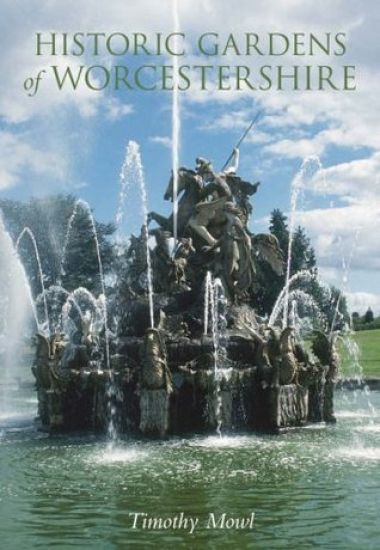
Historic Gardens of Worcestershire

Historic Gardens of Worcestershire

Timothy Mowl

The History Press Ltd
2006
nidottu
Worcestershire is particularly rich in great gardens from the last 250 years, such as: Madresfield Court, the inspiration for Evelyn Waugh's "Brideshead Revisited" and the restored early eighteenth-century Hanbury Hall, both near Malvern in the south of the county; Hagley Hall of the mid-eighteenth century and William Shenstone's Arcadian masterpiece The Leasowes, both near Halesowen in the north; Croome Park by Capability Brown and the Victorian extravaganza of Witley Hall with its magnificent restored fountains.
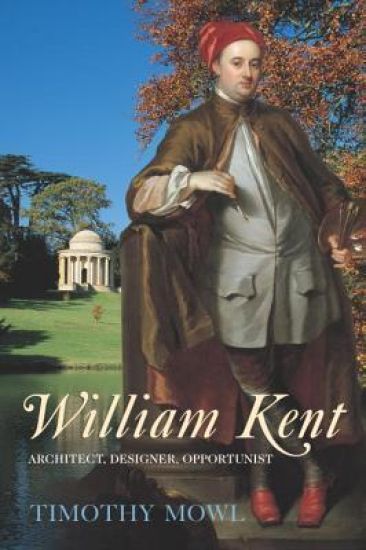
William Kent

William Kent

Timothy Mowl

Pimlico
2011
pokkari
William Kent (1685-1748) was great without a hint of gravitas, a con man who became one of the artistic geniuses of his age. He was a high camp Yorkshire bachelor, brought back by Lord Burlington from an artistic apprenticeship in Rome where he had painted for a cardinal and won prizes from a pope. In London he charmed the surly old Hanoverian King George I, redecorated Kensington Palace for him with a clumsy bravura, and survived the subsequent critical storm - just. England was in stylistic chaos after rejecting its lawful Stuart rulers and Burlington was imposing a chaste and dreary Palladianism on a philistine island people. Kent saw his chance and never looked back.Queen Caroline, the real ruler, used him to project in sensational garden buildings by the Thames at Richmond her vision of a new scientific Britain. Sir Robert Walpole paid him to turn Houghton Hall in Norfolk into an imperial palace, outshining anything the German monarchs could raise. Another prime minister, the virtuous Henry Pelham, built with Kent a revolutionary suburban bolt-hole in Surrey. Between them they invented the Gothic Revival out at Esher, but have never been given the credit.Late in life, while raising an alabaster temple to Jupiter at Holkham Hall, also in Norfolk, and the sexiest interiors in London on Berkeley Square, Kent was discovering his true genius, laying out casually at Esher, Stowe in Buckinghamshire and Rousham near Oxford, the Arcadian image of the 'English Garden' that would take the continent, even France, by storm as England's only original contribution to European culture.
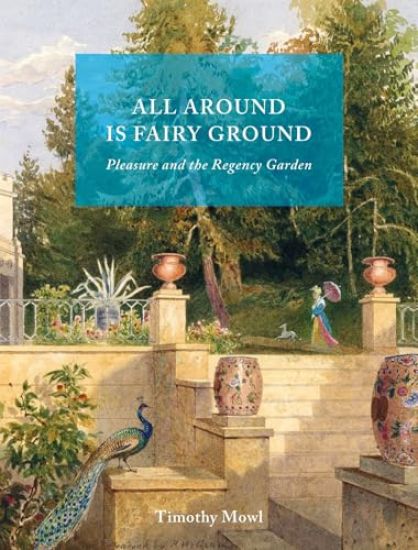
All Around Is Fairy Ground

All Around Is Fairy Ground

Timothy Mowl

REAKTION BOOKS
2026
sidottu
Regency gardens dazzled with colour, invention and theatricality: trellises heavy with roses and jasmine, shrubberies designed for intrigue and lawns enlivened with pools, grottoes and fanciful ornaments. Yet behind this world of perfume and spectacle lay a striking social shift. In a domain long defined by men, women began to play an active role, influencing Humphry Repton and other designers to realize their visions of pleasure grounds. These gardens became stages for al fresco entertainments, displays of taste and private encounters alike. This book offers the first sustained account of ornamental gardening in Regency Britain, revealing a vivid, feminine-inflected landscape where horticulture, fashion and sociability intertwined – and where artistry still resonates two centuries later.