Kirjojen hintavertailu. Mukana 11 342 296 kirjaa ja 12 kauppaa.

Kirjahaku

Etsi kirjoja tekijän nimen, kirjan nimen tai ISBN:n perusteella.

6 kirjaa tekijältä Timothy R. Mahoney

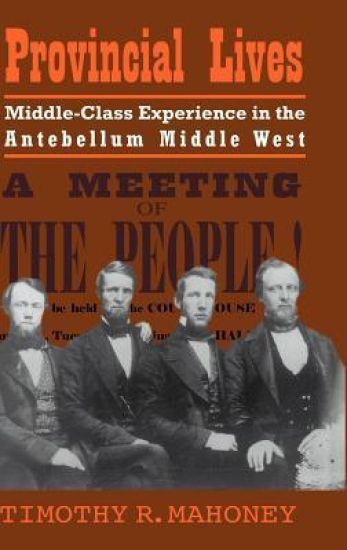
Provincial Lives

Provincial Lives

Timothy R. Mahoney

Cambridge University Press
2006
pokkari
Provincial Lives, first published in 1999, tells the story of the development of a regional middle class in the antebellum Middle West. It traces the efforts of waves of Americans to transmit their social structures, behavior, and values to the West and construct a distinctive regional middle-class culture on the urban frontier. Intertwining local, regional, and national history, as well as social, immigration, gender and urban history, the author examines how a succession of settlers from 'good' society - farmers and entrepreneurs, followed by capitalists, professionals, and 'genteel' men and women from the urban East - interacted with, accommodated, and compromised with those already there to construct a middle-class society and culture. Provincial Lives explores social change through the lived experience of the actors themselves as they employed their understandings of self, gender, class, and culture to construct social order and contribute to the development of a western urban middle class while still remaining members of a national society and playing a role in shaping the emergence of middle-class culture across the United States.

River Towns in the Great West

River Towns in the Great West

Timothy R. Mahoney

Cambridge University Press
1990
sidottu
This book analyzes, with unprecedented breadth and coverage, the development, maturation, growth, and sudden decline of a distinctive, regional urban economic system that developed along the upper Mississippi River north of St. Louis during the middle third of the nineteenth century. Between 1820 and the Civil War the upper Mississippi River valley was at the center of national and international attention. At the edge of the northern frontier, this area, known as ‘The Great West,’ was the destination of hundreds of thousands of immigrants from the East and from northern Europe. To many, its rich lands, temperate climate, and vast rivers offered an opportunity to establish a better life, as well as a chance to enter, if desired, the mainstream of American life. Drawing from a variety of methods used in historical geography, economic history, systems analysis, and social and urban history, Timothy Mahoney analyzes how early settlement patterns were affected by experience, climate, and geography and how they, in turn, shaped the initial patterns of economic, urban, and transportation development.
River Towns in the Great West

River Towns in the Great West

Timothy R. Mahoney

Cambridge University Press
2003
pokkari
This book analyzes, with unprecedented breadth and coverage, the development, maturation, growth, and sudden decline of a distinctive, regional urban economic system that developed along the upper Mississippi River north of St. Louis during the middle third of the nineteenth century. Between 1820 and the Civil War the upper Mississippi River valley was at the center of national and international attention. At the edge of the northern frontier, this area, known as ‘The Great West,’ was the destination of hundreds of thousands of immigrants from the East and from northern Europe. To many, its rich lands, temperate climate, and vast rivers offered an opportunity to establish a better life, as well as a chance to enter, if desired, the mainstream of American life. Drawing from a variety of methods used in historical geography, economic history, systems analysis, and social and urban history, Timothy Mahoney analyzes how early settlement patterns were affected by experience, climate, and geography and how they, in turn, shaped the initial patterns of economic, urban, and transportation development.
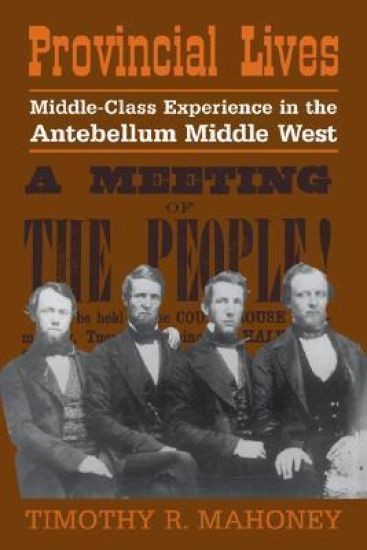
Provincial Lives

Provincial Lives

Timothy R. Mahoney

Cambridge University Press
1999
sidottu
Provincial Lives tells the story of the development of a regional middle class in the antebellum Middle West. It traces the efforts of waves of Americans to transmit their social structures, behavior, and values to the West and construct a distinctive regional middle-class culture on the urban frontier. Intertwining local, regional, and national history, as well as social, immigration, gender and urban history, the author examines how a succession of settlers from ‘good’ society - farmers and entrepreneurs, followed by capitalists, professionals, and ‘genteel’ men and women from the urban East - interacted with, accommodated, and compromised with those already there to construct a middle-class society and culture. Provincial Lives explores social change through the lived experience of the actors themselves as they employed their understandings of self, gender, class and culture to construct social order and contribute to the development of a western urban middle class while still remaining members of a national society and playing a role in shaping the emergence of middle-class culture across the United States.
Secret Partners

Secret Partners

Timothy R. Mahoney

Minnesota Historical Society Press,U.S.
2013
nidottu
Among the most dangerous criminals of the public enemies era was a man who has long hidden in historys shadows: Tom Brown. In the early 1930s, while he was police chief of St. Paul, Minnesota, Brown became a secret partner of the infamous Barker gang. He profited from their violent crimes, he protected the gang from raids by the nascent FBIand while he did all this, the gangsters gunned down cops and citizens in his hometown. Big Tom Brown, 6'5" and 275 pounds, continued to enforce St. Pauls corrupt OConnor system, allowing criminals to stay in the city as long as they paid off the cops and committed no crimes within fifty miles. But in the early 1930s, the system broke down: no longer supported by cash skimmed from illegal booze, gangsters turned to robbing banks, and the Barker gang kidnapped two of the prominent citizens who had been complicit in the liquor trade. Brown was the insider who kept the criminals safebut for highly political reasons, he was never convicted of his crimes.
From Hometown to Battlefield in the Civil War Era

From Hometown to Battlefield in the Civil War Era

Timothy R. Mahoney

Cambridge University Press
2016
sidottu
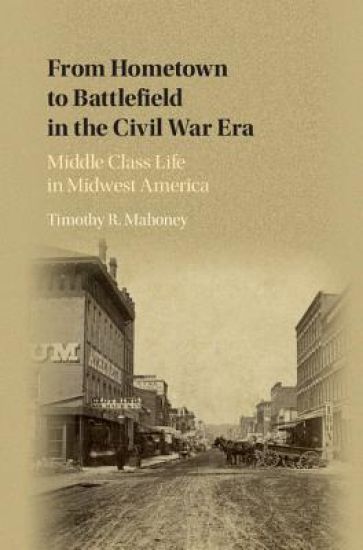
Mahoney examines how members of the middle class from small cities across the great West were transformed by boom and bust, years of recession, and civil war. He argues that in their encounters with national economic forces, the national crisis in politics, and the Civil War, middle class people were cut adrift from the social identity that they had established in the 'face to face' communities of the 'hometowns' of the urban West. By grounding them in their hometown ethos, and understanding how the Panic of 1857 and the subsequent recession undermined their lives, the author provides important insights into how they encountered, responded to, and were changed by their experiences in the Civil War. Providing a rare view of social history through the framework of the Civil War, the author documents, in both breadth and depth, the dramatic change and development of modern life in nineteenth-century America.