Kirjojen hintavertailu. Mukana 11 244 527 kirjaa ja 12 kauppaa.

Kirjahaku

Etsi kirjoja tekijän nimen, kirjan nimen tai ISBN:n perusteella.

8 kirjaa tekijältä Timothy R. Pauketat

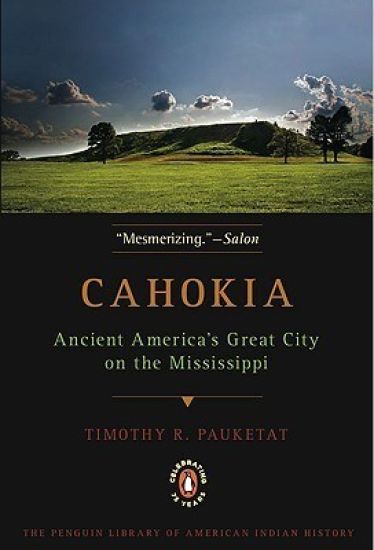
Cahokia

Cahokia

Timothy R. Pauketat

Penguin Books India
2010
pokkari
The fascinating story of a lost city and an unprecedented American civilization While Mayan and Aztec civilizations are widely known and documented, relatively few people are familiar with the largest prehistoric Native American city north of Mexico-a site that expert Timothy Pauketat brings vividly to life in this groundbreaking book. Almost a thousand years ago, a city flourished along the Mississippi River near what is now St. Louis. Built around a sprawling central plaza and known as Cahokia, the site has drawn the attention of generations of archaeologists, whose work produced evidence of complex celestial timepieces, feasts big enough to feed thousands, and disturbing signs of human sacrifice. Drawing on these fascinating finds, Cahokia presents a lively and astonishing narrative of prehistoric America.
Gods of Thunder

Gods of Thunder

Timothy R. Pauketat

OXFORD UNIVERSITY PRESS INC
2023
sidottu
A sweeping account of Medieval North America when Indigenous peoples confronted climate change. Few Americans today are aware of one of the most consequential periods in North American history--the Medieval Warm Period of seven to twelve centuries ago (AD 800-1300 CE)--which resulted in the warmest temperatures in the northern hemisphere since the "Roman Warm Period," a half millennium earlier. Reconstructing these climatic events and the cultural transformations they wrought, Timothy Pauketat guides readers down ancient American paths walked by Indigenous people a millennium ago, some trod by Spanish conquistadors just a few centuries later. The book follows the footsteps of priests, pilgrims, traders, and farmers who took great journeys, made remarkable pilgrimages, and migrated long distances to new lands. Along the way, readers will discover a new history of a continent that, like today, was being shaped by climate change--or controlled by ancient gods of wind and water. Through such elemental powers, the history of Medieval America was a physical narrative, a long-term natural and cultural experience in which Native people were entwined long before Christopher Columbus arrived or Hernán Cortés conquered the Aztecs. Spanning most of the North American continent, Gods of Thunder focuses on remarkable parallels between pre-contact American civilizations separated by a thousand miles or more. Key archaeological sites are featured in every chapter, leading us down an evidentiary trail toward the book's conclusion that a great religious movement swept Mesoamerica, the Southwest, and the Mississippi valley, sometimes because of worsening living conditions and sometimes by improved agricultural yields thanks to global warming a thousand years ago. The author also includes a guide to visiting the archaeological sites discussed in the book.
An Archaeology of the Cosmos

An Archaeology of the Cosmos

Timothy R. Pauketat

Routledge
2012
sidottu
An Archaeology of the Cosmos seeks answers to two fundamental questions of humanity and human history. The first question concerns that which some use as a defining element of humanity: religious beliefs. Why do so many people believe in supreme beings and holy spirits? The second question concerns changes in those beliefs. What causes beliefs to change?Using archaeological evidence gathered from ancient America, especially case material from the Great Plains and the pre-Columbian American Indian city of Cahokia, Timothy Pauketat explores the logical consequences of these two fundamental questions. Religious beliefs are not more resilient than other aspects of culture and society, and people are not the only causes of historical change.An Archaeology of the Cosmos examines the intimate association of agency and religion by studying how relationships between people, places, and things were bundled together and positioned in ways that constituted the fields of human experience. This rethinking theories of agency and religion provides readers with challenging and thought provoking conclusions that will lead them to reassess the way they approach the past.
An Archaeology of the Cosmos

An Archaeology of the Cosmos

Timothy R. Pauketat

Routledge
2012
nidottu
An Archaeology of the Cosmos seeks answers to two fundamental questions of humanity and human history. The first question concerns that which some use as a defining element of humanity: religious beliefs. Why do so many people believe in supreme beings and holy spirits? The second question concerns changes in those beliefs. What causes beliefs to change?Using archaeological evidence gathered from ancient America, especially case material from the Great Plains and the pre-Columbian American Indian city of Cahokia, Timothy Pauketat explores the logical consequences of these two fundamental questions. Religious beliefs are not more resilient than other aspects of culture and society, and people are not the only causes of historical change.An Archaeology of the Cosmos examines the intimate association of agency and religion by studying how relationships between people, places, and things were bundled together and positioned in ways that constituted the fields of human experience. This rethinking theories of agency and religion provides readers with challenging and thought provoking conclusions that will lead them to reassess the way they approach the past.
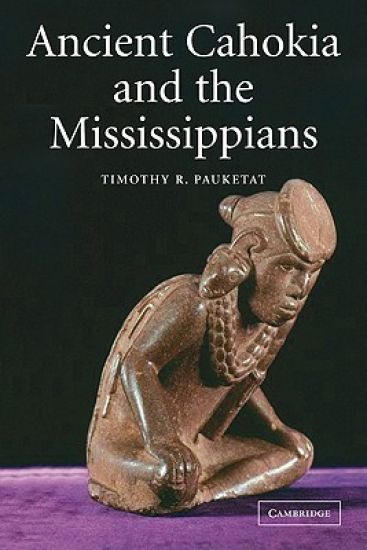
Ancient Cahokia and the Mississippians

Ancient Cahokia and the Mississippians

Timothy R. Pauketat

Cambridge University Press
2004
pokkari
The ancient capital of Cahokia and a series of lesser population centers developed in the Mississippi valley in North America between the eighth and fifteenth centuries AD, leaving behind an extraordinarily rich archaeological record. Cahokia's gigantic pyramids, finely crafted artifacts, and dense population mark it as the founding city of the Mississippian civilization, formerly known as the 'mound' builders. As Cahokian ideas and objects were widely sought, a cultural and religious ripple effect spread across the mid-continent and into the South. In its wake, population migrations and social upheavals transformed social life along the ancient Mississippi River. In this important new survey, Timothy Pauketat outlines the development of Mississippian civilization, presenting a wealth of archaeological evidence and advancing our understanding of the American Indians whose influence extended into the founding moments of the United States and lives on today in American archaeology.
Ancient Cahokia and the Mississippians

Ancient Cahokia and the Mississippians

Timothy R. Pauketat

Cambridge University Press
2004
sidottu
The ancient capital of Cahokia and a series of lesser population centers developed in the Mississippi valley in North America between the eighth and fifteenth centuries AD, leaving behind an extraordinarily rich archaeological record. Cahokia’s gigantic pyramids, finely crafted artifacts, and dense population mark it as the founding city of the Mississippian civilization, formerly known as the ‘mound’ builders. As Cahokian ideas and objects were widely sought, a cultural and religious ripple effect spread across the mid-continent and into the South. In its wake, population migrations and social upheavals transformed social life along the ancient Mississippi River. In this important new survey, Timothy Pauketat outlines the development of Mississippian civilization, presenting a wealth of archaeological evidence and advancing our understanding of the American Indians whose influence extended into the founding moments of the United States and lives on today in American archaeology.
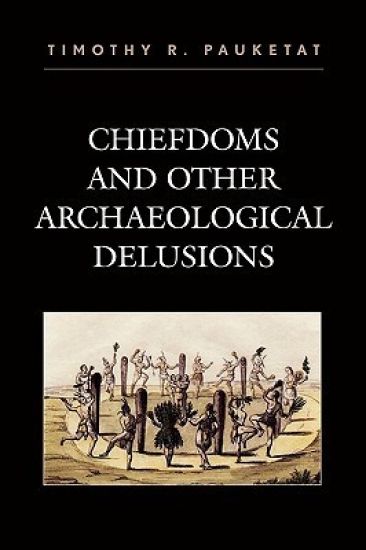
Chiefdoms and Other Archaeological Delusions

Chiefdoms and Other Archaeological Delusions

Timothy R. Pauketat

AltaMira Press,U.S.
2007
nidottu
In recent decades anthropology, especially ethnography, has supplied the prevailing models of how human beings have constructed, and been constructed by, their social arrangements. In turn, archaeologists have all too often relied on these models to reconstruct the lives of ancient peoples. In lively, engaging, and informed prose, Timothy Pauketat debunks much of this social-evolutionary theorizing about human development, as he ponders the evidence of 'chiefdoms' left behind by the Mississippian culture of the American southern heartland. This book challenges all students of history and prehistory to reexamine the actual evidence that archaeology has made available, and to do so with an open mind.
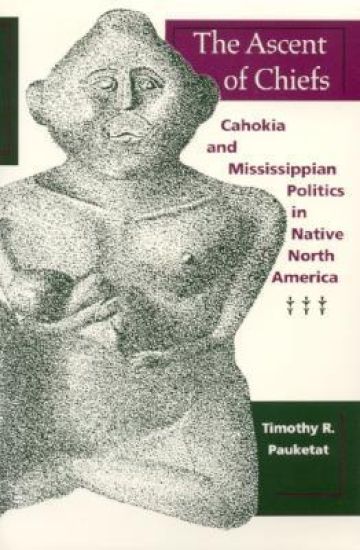
The Ascent of Chiefs

The Ascent of Chiefs

Timothy R. Pauketat

The University of Alabama Press
1994
nidottu
This volume provides a theoretical explanation of how pre-historic Cahokia became a stratified society, and ultimately, the pinnacle of Native American cultural achievement north of Mexico. Pauketat claims that political consolidation in this region of the Mississippi happened around AD 1000.