Kirjojen hintavertailu. Mukana 11 244 527 kirjaa ja 12 kauppaa.

Kirjahaku

Etsi kirjoja tekijän nimen, kirjan nimen tai ISBN:n perusteella.

9 kirjaa tekijältä Timothy W. Ryback

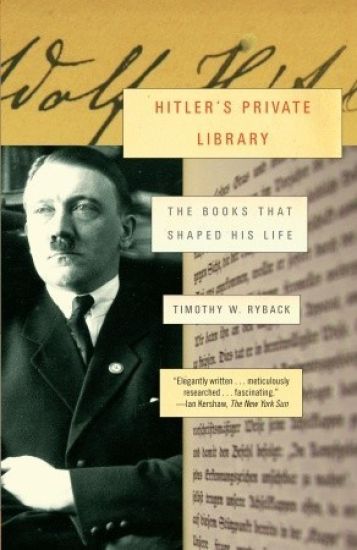
Hitler's Private Library

Hitler's Private Library

Timothy W. Ryback

Vintage
2010
pokkari
He was, of course, a man better known for burning books than collecting them and yet by the time he died, aged 56, Adolf Hitler owned an estimated 16,000 volumes - the works of historians, philosophers, poets, playwrights and novelists. This title provides a view of Hitler's evolution and offers insights into his emotional and intellectual world.
Hitler's Private Library: The Books That Shaped His Life
A Washington Post Notable Book With a new chapter on eugenicist Madison Grant's The Passing of the Great Race In this brilliant and original exploration of some of the formative influences in Adolf Hitler's life, Timothy Ryback examines the books that shaped the man and his thinking. Hitler was better known for burning books than collecting them but, as Ryback vividly shows us, books were Hitler's constant companions throughout his life. They accompanied him from his years as a frontline corporal during the First World War to his final days before his suicide in Berlin. With remarkable attention to detail, Ryback examines the surviving volumes from Hitler's private book collection, revealing the ideas and obsessions that occupied Hitler in his most private hours and the consequences they had for our world. A feat of scholarly detective work, and a captivating biographical portrait, Hitler's Private Library is one of the most intimate and chilling works on Hitler yet written.
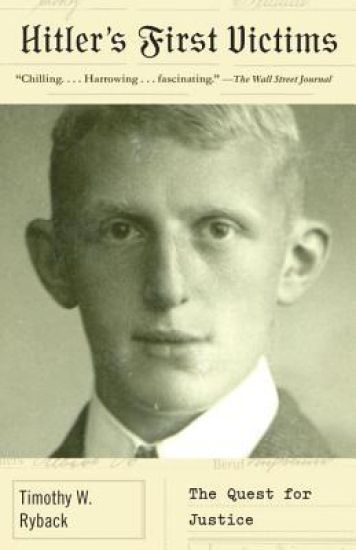
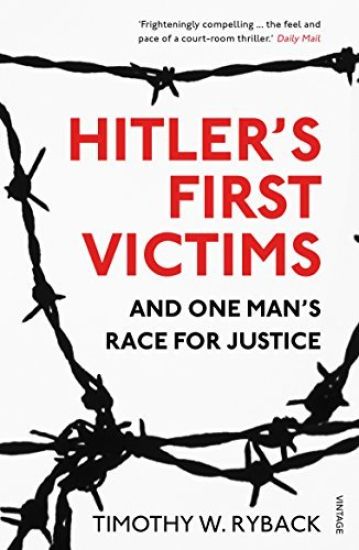
Hitler's First Victims: The Quest for Justice
The remarkable story of Josef Hartinger, the German prosecutor who risked everything to bring to justice the first killers of the Holocaust and whose efforts would play a key role in the Nuremberg tribunal. At 9 am on April 13, 1933, deputy prosecutor Josef Hartinger received a telephone call summoning him to the newly established concentration camp of Dachau. Four prisoners had been shot. The SS guards claimed that the men had been trying to escape. But what Hartinger found when he arrived convinced him that something was terribly wrong. All four victims were Jews. Before Germany was engulfed by Nazi dictatorship, it was a constitutional republic. And just before Dachau became a site of Nazi genocide, it was a legal state detention center for political prisoners. In 1933, that began to change. In Hitler's First Victims, Timothy W. Ryback evokes a society on the brink--one in which civil liberties are sacrificed to national security, in which citizens increasingly turn a blind eye to injustice, in which the bedrock of judicial accountability chillingly dissolves into the martial caprice of the Third Reich. This is an astonishing portrait of Hitler's first moments in power, and the true story of one man's race to expose the Nazis as murderers on the eve of the Holocaust.
Takeover

Takeover

Timothy W. Ryback

HEADLINE PUBLISHING GROUP
2024
sidottu
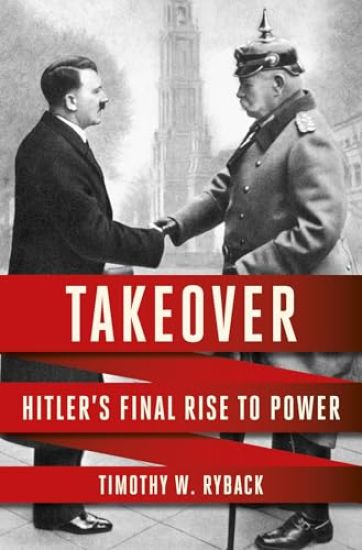
From the internationally acclaimed author of Hitler's Private Library, a dramatic recounting of the six critical months before Adolf Hitler assumed power, when the Nazi leader teetered between triumph and ruin.In the summer of 1932, the Weimar Republic was on the verge of collapse. One in three Germans was unemployed. Violence was rampant. Hitler's National Socialists surged at the polls. Paul von Hindenburg, an aging war hero and avowed monarchist, was a reluctant president bound by oath to uphold the constitution. The November elections offered Hitler the prospect of a Reichstag majority and a path to political power. But instead, the Nazis lost two million votes. As membership hemorrhaged and financial backers withdrew, the Nazi Party threatened to fracture. Hitler talked of suicide. The New York Times declared he was finished. Yet somehow, in a few brief weeks, he was chancellor of Germany.In fascinating detail and with previously un-accessed archival materials, Timothy W. Ryback tells the remarkable story of Hitler's dismantling of democracy through the democratic process. He provides a fresh perspective and insights into Hitler's personal and professional lives in these months, in all their complexity and uncertainty-backroom deals, unlikely alliances, stunning betrayals, an ill-timed tax audit, and a fateful weekend that changed our world forever. Above all, Ryback makes clear why a wearied Hindenburg, who disdained the "Bohemian corporal," ultimately decided to appoint Hitler chancellor in January 1933.Within weeks, Germany was no longer a democracy.
Takeover

Takeover

Timothy W. Ryback

HEADLINE PUBLISHING GROUP
2025
pokkari
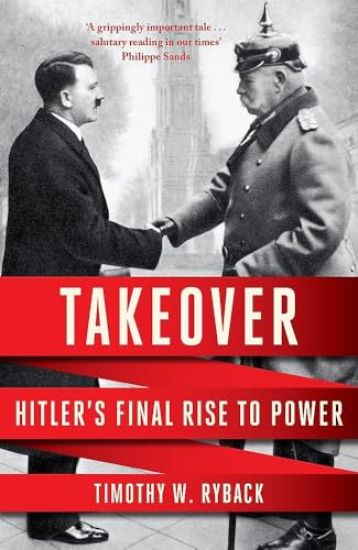
From the internationally acclaimed author of Hitler's Private Library, a dramatic recounting of the six critical months before Adolf Hitler assumed power, when the Nazi leader teetered between triumph and ruin.In the summer of 1932, the Weimar Republic was on the verge of collapse. One in three Germans was unemployed. Violence was rampant. Hitler's National Socialists surged at the polls. Paul von Hindenburg, an aging war hero and avowed monarchist, was a reluctant president bound by oath to uphold the constitution. The November elections offered Hitler the prospect of a Reichstag majority and a path to political power. But instead, the Nazis lost two million votes. As membership hemorrhaged and financial backers withdrew, the Nazi Party threatened to fracture. Hitler talked of suicide. The New York Times declared he was finished. Yet somehow, in a few brief weeks, he was chancellor of Germany.In fascinating detail and with previously un-accessed archival materials, Timothy W. Ryback tells the remarkable story of Hitler's dismantling of democracy through the democratic process. He provides a fresh perspective and insights into Hitler's personal and professional lives in these months, in all their complexity and uncertainty-backroom deals, unlikely alliances, stunning betrayals, an ill-timed tax audit, and a fateful weekend that changed our world forever. Above all, Ryback makes clear why a wearied Hindenburg, who disdained the "Bohemian corporal," ultimately decided to appoint Hitler chancellor in January 1933.Within weeks, Germany was no longer a democracy.