Kirjojen hintavertailu. Mukana 11 627 425 kirjaa ja 12 kauppaa.

Kirjahaku

Etsi kirjoja tekijän nimen, kirjan nimen tai ISBN:n perusteella.

11 kirjaa tekijältä Tinsley E. Yarbrough

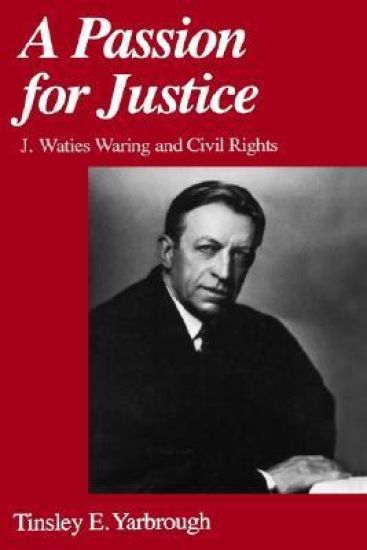
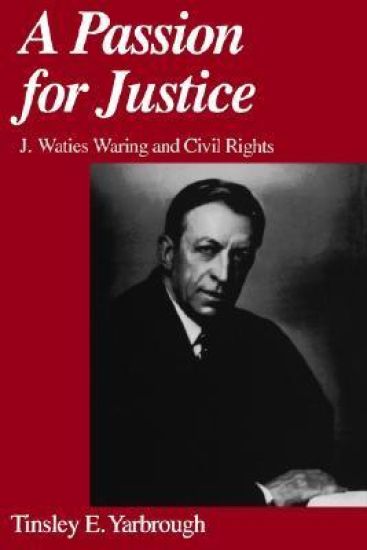
A Passion for Justice

A Passion for Justice

Tinsley E. Yarbrough

Oxford University Press Inc
1988
sidottu
This book tells the story of a brave man in troubled times. Judge J. Waties Waring, a member of the old South Carolina family, served on the United States district court in Charleston, South Carolina from 1942 to 1952. Little in his background and early judicial tenure suggested one willing to risk community standing in the cause of racial justice. During the last half of his judicial tenure, however, Waring issued a number of significant and controversial civil rights decisions, most notably rulings rejecting South Carolina's efforts to maintain all-white democratic primaries. Moreover when his fellow jurists on a three-judge court upheld South Carolina's segregated school system, he vigorously dissented, becoming the first modern judge to contend that segregated facilities are inherently unequal.
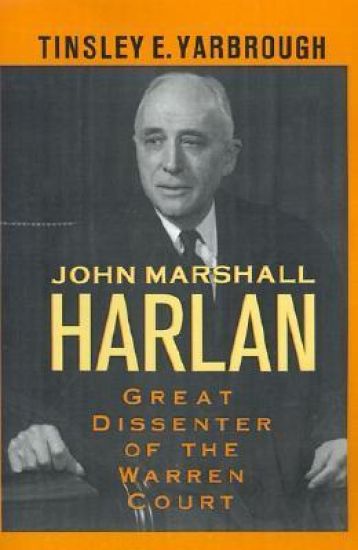
John Marshall Harlan

John Marshall Harlan

Tinsley E. Yarbrough

Oxford University Press Inc
1992
sidottu
Describes the life and times of the Republican judge who opposed the liberal expansion of civil liberties advocated by the Warren Court, from his privileged childhood to his days at Princeton and Oxford, to his stormy legal career
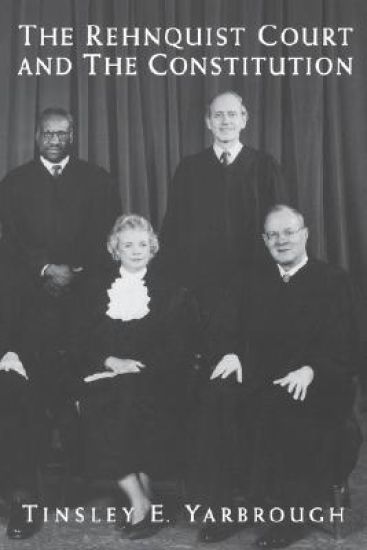
The Rehnquist Court and the Constitution

The Rehnquist Court and the Constitution

Tinsley E. Yarbrough

Oxford University Press Inc
2000
sidottu
In The Rehnquist Court and the Constitution, Tinsley Yarbrough provides a comprehensive look at today's Supreme Court Justices and their record--a study all the more valuable for the Court's mixed decisions and hard-to-categorize course. An accomplished biographer, Yarbrough offers incisive portraits of the nine who now sit on the high bench, and tellingly reviews their nomination hearings. He also explores the workings of the Court, ranging from the selection and role of the clerks to the work load (including the end-of-term "June crunch") and assignment of opinions. But the heart of the book is a systematic exploration of the Court's record in such fields as government power, economic regulation, and criminal justice. In decision after decision, the author discusses the various justices' opinions, arguments, and legal theories; he also offers his own analysis (including a sharp critique of the decision to allow the Paula Jones lawsuit to move forward). Like many writers on the Rehnquist Court, Yarbrough finds a general continuity with the past, shaded by a conservative outlook (especially in matters of criminal justice and affirmative action), but he identifies a significant departure in its rulings on economic regulation. Since 1937, he writes, the Supreme Court had generally adopted an expansive view of federal power over economic matters; the Rehnquist Court has reversed that trend. The Rehnquist Court has not launched an all-out assault on the Warren Court's precedents, as many conservatives hoped, but as Yarbrough shows it has embarked on important new departures. Thoughtful, wide-ranging, intelligently written, this book will stand as the finest study of the Rehnquist Court for years to come.
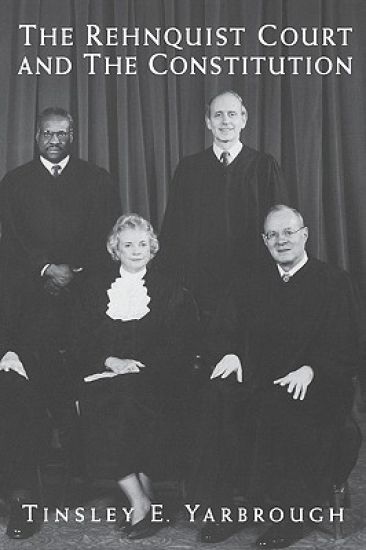
The Rehnquist Court and the Constitution

The Rehnquist Court and the Constitution

Tinsley E. Yarbrough

Oxford University Press Inc
2001
nidottu
In The Rehnquist Court and the Constitution, Tinsley Yarbrough provides a comprehensive look at today's Supreme Court Justices and their record--a study all the more valuable for the Court's mixed decisions and hard-to-categorize course. An accomplished biographer, Yarbrough offers incisive portraits of the nine who now sit on the high bench, and tellingly reviews their nomination hearings. He also explores the workings of the Court, ranging from the selection and role of the clerks to the work load (including the end-of-term "June crunch") and assignment of opinions. But the heart of the book is a systematic exploration of the Court's record in such fields as government power, economic regulation, and criminal justice. In decision after decision, the author discusses the various justices' opinions, arguments, and legal theories; he also offers his own analysis (including a sharp critique of the decision to allow the Paula Jones lawsuit to move forward). Like many writers on the Rehnquist Court, Yarbrough finds a general continuity with the past, shaded by a conservative outlook (especially in matters of criminal justice and affirmative action), but he identifies a significant departure in its rulings on economic regulation. Since 1937, he writes, the Supreme Court had generally adopted an expansive view of federal power over economic matters; the Rehnquist Court has reversed that trend. The Rehnquist Court has not launched an all-out assault on the Warren Court's precedents, as many conservatives hoped, but as Yarbrough shows it has embarked on important new departures. Thoughtful, wide-ranging, intelligently written, this book will stand as the finest study of the Rehnquist Court for years to come.
A Passion for Justice

A Passion for Justice

Tinsley E. Yarbrough

Oxford University Press Inc
2001
nidottu
An eighth-generation Charlestonian with a prestigious address, impeccable social credentials, and years of intimate association with segregationist politicians, U.S. District Court Judge Julius Waties Waring shocked family, friends, and an entire state in 1945 when, at age sixty-five, he divorced his wife of more than thirty years and embarked upon a far-reaching challenge to the most fundamental racial values of his native region. The first jurist in modern times to declare segregated schooling "inequality per se," Waring also ordered the equalization of teachers' salaries and outlawed South Carolina's white primary. Off the bench, he and his second wife--a twice-divorced, politically liberal Northerner who was even more outspoken in her political views than Waring himself--castigated Dixiecrats and southern liberals alike for their defense of segregation, condemned the "sickness" of white southern society, urged a complete breakdown of state-enforced bars to racial intermingling, and entertained blacks in their home, becoming pariahs in South Carolina and controversial figures nationally. Tinsley Yarbrough examines the life and career of this fascinating but neglected jurist, assessing the controversy he generated, his place in the early history of the modern civil rights movement, and the forces motivating his repudiation of his past.
David Hackett Souter

David Hackett Souter

Tinsley E. Yarbrough

Oxford University Press Inc
2005
sidottu
When the first President Bush chose David Hackett Souter for the Supreme Court in 1990, the slender New Englander with the shy demeanor and ambiguous past was quickly dubbed a "stealth candidate". Determined to avoid a repeat of the firestorm surrounding President Reagan's nomination of the controversial Robert Bork, Bush opted for Souter, who had, remarkably, produced only one law review article in his legal career. Souter, an obscure but well-respected New Hampshire conservative, seemed unlikely to arouse the kind of passionate opposition that defined the Bork confirmation process. And, indeed, Souter was accepted onto the Court with little fuss. Today, fifteen years into his tenure, Souter remains as enigmatic and unpredictable as ever, a mystery even to avid Court watchers. Who is David Hackett Souter and what will be his legacy on the Supreme Court? Sifting through Souter's opinions, papers of the Justice's contemporaries and other relevant records and interviews, esteemed Supreme Court biographer Tinsley Yarbrough here gives us the real David Souter, crafting a fascinating account of one of the heretofore most elusive Justices in the history of the Court. Though Souter's record on legal issues was generally conservative before his arrival on the Court, his mixed views caused some concern among both the left and the right during the appointment process. His reclusive lifestyle and frugality added to his mystique, making him even more difficult to peg. His penchant for solitude and his seemingly narrow circle of close friends convinced some that the middle-aged bachelor was out of touch with the sort of "real world" problems the nation's highest court regularly confronts. Court watchers soon realized--to their delight or dismay--that President Bush's "stealth" justice was a traditional New England Republican deeply tied to the party's historic roots in the union and civil rights--in stark contrast to most Reagan-Bush I appointees. On the bench, Souter has embraced a flexible, evolving, and highly pragmatic judicial style that embraces a high regard for precedent--even liberal decisions of the Warren and Burger Courts with which he may have personally disagreed. Even more significantly, Souter has become a regular and very effective critic of the set of rulings via which his ostensible political brethren--Chief Justice William Rehnquist, Antonin Scalia and Clarence Thomas--have abandoned precedent to assert their conservative vision. Ultimately, Yarbrough contends, Souter has become the principal Rehnquist Court opponent of the originalist, text-bound jurisprudence that many of the more conservative Justices profess to champion.
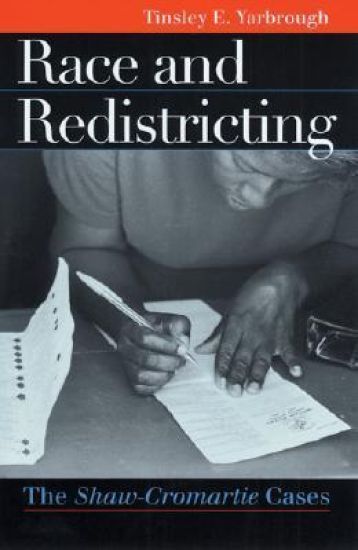
Race and Redistricting

Race and Redistricting

Tinsley E. Yarbrough

University Press of Kansas
2002
sidottu
In 1993-2001, three cases in North Carolina went before the Supreme Court to decide how far a state could establish voting districts along racial lines. This text explores how the Court addressed the constitutionality of redistricting within the contexts of civil rights and partisan politics.
Race and Redistricting

Race and Redistricting

Tinsley E. Yarbrough

University Press of Kansas
2002
nidottu
In 1993-2001, three cases in North Carolina went before the Supreme Court to decide how far a state could establish voting districts along racial lines. This text explores how the Court addressed the constitutionality of redistricting within the contexts of civil rights and partisan politics.
Mr. Justice Black and His Critics

Mr. Justice Black and His Critics

Tinsley E. Yarbrough

Duke University Press
1988
sidottu
Many jurists give lip service to the idea that judicial interpretation of constitutional provisions should be based on the intent of the framers. Few, if any, have been as faithful to that conception as Hugo Black. As U.S. senator from Alabama, Black was a vigorous critic of the Supreme Court's use of the Constitution as a weapon against the Roosevelt New Deal. Once on the court he played a leading role in overturning those decisions and in attempting to establish for freedom of speech and other guarantees the interpretation he (and others) believe was warranted by the language and intent of the framers.Late in his career, however, Black's commitment to literalism and intent led him to assume apparently conservative positions in civil liberties cases. In an era characterized by growing acceptance of the belief that judges should adapt the Constitution to changing social and ethical perceptions, many came to regard Black's position as unrealistic and irrelevant.Tinsley E. Yarbrough analyzes Black's judicial and constitutional philosophy, as well as his approach to specific cases, through the eyes of Black's critics (such as Justices Frankfurter and Harlan) and through an assessment of scholarly opinion of his jurisprudence. The result is a stimulating and provocative addition to the study of Justice Black and the Supreme Court.
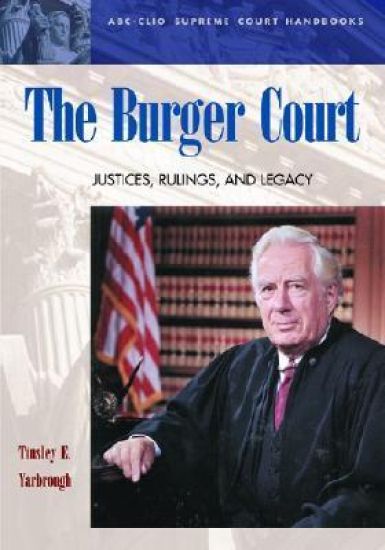
The Burger Court

The Burger Court

Tinsley E. Yarbrough

ABC-CLIO
2000
sidottu
A valuable analysis of the political environment, judicial records, and implications of rulings during the era of the Burger Court.The Burger Court delivered significant decisions in cases involving the separation of powers, equal protection, free speech, and civil liberties. The Burger Court guaranteed in Roe v. Wade a woman's right to an abortion, demonstrating that this court definitely had a mind of its own. This handbook is as suitable for the preparation of term papers and debates as it is for ready reference and more involved research.Includes extensive reference materials such as further reading and bibliographical sections directing users to primary sources and Court documentsCovers key people such as Archibald Cox and Gerald Ford, laws such as the Equal Rights Amendment and the Voting Rights Act, and events such as the Iranian Hostage Crisis and the Watergate Scandal