Kirjojen hintavertailu. Mukana 11 244 527 kirjaa ja 12 kauppaa.

Kirjahaku

Etsi kirjoja tekijän nimen, kirjan nimen tai ISBN:n perusteella.

20 kirjaa tekijältä Tirthankar Roy

The Economic History of India, 1857-2010
From the end of the eighteenth century, two distinct global processes began to transform livelihoods and living conditions in the South Asia region. These were the rise of British colonial rule and globalization, that is, the integration of the region in the emerging world markets for goods, capital, and labour services. Two hundred years later, India was the home to many of the world's poorest people as well as one of the fastest growing market economies in the world. Does a study of the past help to explain the paradox of growth amidst poverty? The Economic History of India: 1857-2010 claims that the roots of this paradox go back to India's colonial past, when internal factors like geography and external forces like globalization and imperial rule created prosperity in some areas and poverty in others. Looking at the recent scholarship in this area, this revised edition covers new subjects like environment and princely states. The author sets out the key questions that a study of long-run economic change in India should begin with and shows how historians have answered these questions and where the gaps remain.
Water and Development

Water and Development

Tirthankar Roy

OXFORD UNIVERSITY PRESS INC
2025
sidottu
From the early twentieth century, a big part of the world--the arid tropics--began extracting, storing, and recycling vast quantities of water to sustain population growth and economic development. These regions worked on water to deal with seasonality, or the rotation between extreme aridity for a part of the year and a concentrated period of rain. The idea of storing water in the wet season to use it in the dry season was not a new one in this geography. Indeed, it was an intrinsic part of ancient culture, statecraft, and technology. Most ancient projects, however, were local and small in scale. The capability of water extraction on a scale large enough to transform whole regions and create new cities improved in the early twentieth century. The process gave rise to a sharp break in the long-term population and economic growth pattern from the mid-twentieth century. The world knows that rapid economic growth must take a toll on the environment. The tropics were no exception. However, the economic emergence of the arid tropics reinforces the message differently from how climate activists imagine. The geography of the arid tropics makes transforming landscapes to extract and recycle large quantities of water damaging to the environment and disputatious. The book is about that troubled history of economic emergence.
Natural Disasters and Indian History
This short and exploratory study is the first to engage with a social and economic history of natural disasters in India. Based on the study of a number of events that occurred in colonial India between 1770 and 1935, the author argues that the impact of natural disasters requires a graded sense of time. The book draws on three themes-market, politics, and knowledge, roughly corresponding to three time scales-the short, the medium, and the long run, respectively. These frame the case studies of famines, earthquakes, and storms covered in the book. These studies illustrate that disasters become devastating events by impairing the capacity of the state and civil society; they create gainers and losers; and they destroy cooperation. Yet, as the author points out, disasters have also enabled new understandings of nature, state, and society, on the basis of which useful new knowledge could grow.
Company of Kinsmen

Company of Kinsmen

Tirthankar Roy

Oxford University Press
2018
nidottu
This book chronicles how the concept of organizing people to serve economic ends emerged in early modern and colonial India. It examines rules of cooperation, why people decided to join forces, how disputes were settled, and how cooperative communities became increasingly unstable in more modern times. It focuses on five dimensions: actor, agent, time, purpose, and region. The leading actors are peasants, labourers, artisans, merchants/bankers, and the states. The rules of cooperation that formed inside communities of merchants and others were respected by the states. However, these rules would eventually become unstable due to the integration of India within a global-industrial economy and the introduction of a new rule of law in the old guise of 'custom'. As a result, the endogamous guild, a kind of collective that used marriage rules to secure cooperative ties, became weaker, to be supplanted by other forms of organization. Collectives controlled property, managed resources, supplied training, and conducted negotiations. The regional angle is important because regions differed on the composition of enterprise, and globalization and colonialism unfolded unevenly across space. The book presents an economic history of institutional change in South Asia.
Monsoon Economies

Monsoon Economies

Tirthankar Roy

MIT PRESS LTD
2022
nidottu
How interventions to mitigate climate-caused poverty and inequality in India came at a cost to environmental sustainability. In the monsoon regions of South Asia, the rainy season sustains life but brings with it the threat of floods, followed by a long stretch of the year when little gainful work is possible and the threat of famine looms. Beginning in the late nineteenth century, a series of interventions by Indian governments and other actors mitigated these conditions, enabling agricultural growth, encouraging urbanization, and bringing about a permanent decrease in death rates. But these actions--largely efforts to ensure wider access to water--came at a cost to environmental sustainability. In Monsoon Economies, Tirthankar Roy explores the interaction between the environment and the economy in the emergence of modern India. Roy argues that the tropical monsoon climate makes economic and population growth contingent on water security. But in a water-scarce world, the means used to increase water security not only created environmental stresses but also made political conflict more likely. Roy investigates famine relief, the framing of a seasonal "water famine," and the concept of public trust in water; the political movements that challenged socially sanctioned forms of deprivation; water as a public good; water quality in cities; the shift from impounding river water in dams and reservoirs to exploring groundwater; the seasonality of a monsoon economy; and economic lessons from India for a world facing environmental degradation.
The Crafts and Capitalism

The Crafts and Capitalism

Tirthankar Roy

Routledge India
2020
sidottu
This book presents a comprehensive history of handloom weaving industry in India to challenge and revise the view that competition from machine-produced textiles destroyed the country’s handicrafts as claimed by historians until recently. It shows that skill-intensive handmade textiles survived the competition on a large scale, and that handmade goods and high-quality manual labour played a positive role in the making of modern India. Rich in archival material, The Crafts and Capitalism explores themes such as the historiography of craft technologies; statistical work on nineteenth-century cotton cloth production trends; narratives of merchants, the social leaders, the factory-owners; tools and techniques; and, shift from handloom to power loom. The book argues that changes in the handloom industry were central to the consolidation of new forms of capitalism in India. An important intervention in Indian economic history, this book will be useful to scholars and researchers of Indian history, economic history, colonial history, modern history, political history, labour history and political economy. It will also interest nongovernmental organizations, textile historians, and design specialists.
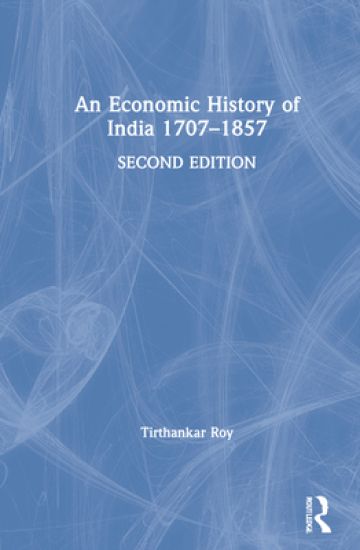
An Economic History of India 1707–1857
This new edition of An Economic History of Early Modern India extends the timespan of the analysis to incorporate further research. This allows for a more detailed discussion of the rise of the British Empire in South Asia and gives a fuller context for the historiography.In the years between the death of the emperor Aurangzeb (1707) and the Great Rebellion (1857), the Mughal Empire and the states that rose from its ashes declined in wealth and power, and a British Empire emerged in South Asia. This book asks three key questions about the transition. Why did it happen? What did it mean? How did it shape economic change? The book shows that during these years, a merchant-friendly regime among warlord-ruled states emerged and state structure transformed to allow taxes and military capacity to be held by one central power, the British East India Company. The author demonstrates that the fall of warlord-ruled states and the empowerment of the merchant, in consequence, shaped the course of Indian and world economic history.Reconstructing South Asia’s transition, starting with the Mughal Empire’s collapse and ending with the great rebellion of 1857, this book is the first systematic account of the economic history of early modern India. It is an essential reference for students and scholars of Economics and South Asian History.
Rethinking Economic Change in India

Rethinking Economic Change in India

Tirthankar Roy

Routledge
2005
sidottu
As author of the hugely influential The Economic History of India 1857-1947, Tirthankar Roy has established himself as the leading contemporary economic historian of India. Here, Roy turns his attention to labour and livelihood and the nature of economic change in the Subcontinent. This book covers:economic history of modern India rural labour labour-intensive industrialization women and industrialization.Challenging the prevailing wisdom on Indian economic growth - that it is bound up with Marxian, postcolonial class analysis - Roy formulates a new view. Commercialization, surplus labour and uncertainty are seen as equally important and the end result reconciles the increasingly opposed view of economists and historians.
Rethinking Economic Change in India

Rethinking Economic Change in India

Tirthankar Roy

Routledge
2007
nidottu
As author of the hugely influential The Economic History of India 1857-1947, Tirthankar Roy has established himself as the leading contemporary economic historian of India. Here, Roy turns his attention to labour and livelihood and the nature of economic change in the Subcontinent. This book covers:economic history of modern India rural labour labour-intensive industrialization women and industrialization.Challenging the prevailing wisdom on Indian economic growth - that it is bound up with Marxian, postcolonial class analysis - Roy formulates a new view. Commercialization, surplus labour and uncertainty are seen as equally important and the end result reconciles the increasingly opposed view of economists and historians.
Traditional Industry in the Economy of Colonial India

Traditional Industry in the Economy of Colonial India

Tirthankar Roy

Cambridge University Press
1999
sidottu
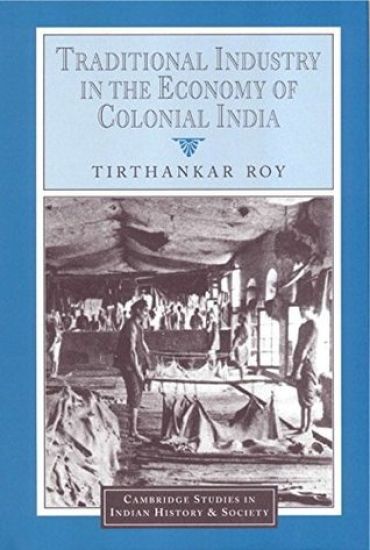
The majority of workers in South Asia are employed in industries that rely on manual labour and craft skills. Some of these industries have existed for centuries and survived great changes in consumption and technology over the last 150 years. In earlier studies, historians of the region focused on mechanized rather than craft industries, arguing that traditional manufacturing was destroyed or devitalized during the colonial period, and that 'modern' industry is substantially different. Exploring material from research into five traditional industries, Tirthankar Roy's book contests these notions, demonstrating that while traditional industry did evolve during the Industrial Revolution, these transformations had a positive rather than destructive effect on manufacturing generally. In fact, the book suggests, the major industries in post-independence India were shaped by such transformations. Tirthankar Roy's book offers penetrating insights into India's economic and social history.
Origins of Colonialism

Origins of Colonialism

Tirthankar Roy

Cambridge University Press
2025
sidottu
Historians explain the eighteenth-century origin of European colonialism in Asia either with the profile of the merchants or an argument about uneven power. This Element suggests that the environment was an important factor, too. With India (1600-1800) as the primary example, it says that the tropical monsoon climatic condition, extreme seasonality, and low land yield made the land-tax-based empires weak from within. The seaboard supplied a more benign environment. Sometime in the eighteenth century, a transformation began as the seaside traded more, generated complementary services, and encouraged the in-migration of capital and skills to supply these services. The birth of a new state from this base depended, however, on building connections inland, which was still a dangerous and uncertain enterprise. European merchants were an enabling force in doing this. But we cannot understand the process without close attention to geography.
Origins of Colonialism

Origins of Colonialism

Tirthankar Roy

Cambridge University Press
2025
pokkari
Historians explain the eighteenth-century origin of European colonialism in Asia either with the profile of the merchants or an argument about uneven power. This Element suggests that the environment was an important factor, too. With India (1600-1800) as the primary example, it says that the tropical monsoon climatic condition, extreme seasonality, and low land yield made the land-tax-based empires weak from within. The seaboard supplied a more benign environment. Sometime in the eighteenth century, a transformation began as the seaside traded more, generated complementary services, and encouraged the in-migration of capital and skills to supply these services. The birth of a new state from this base depended, however, on building connections inland, which was still a dangerous and uncertain enterprise. European merchants were an enabling force in doing this. But we cannot understand the process without close attention to geography.
An Economic History of India 1707–1857

An Economic History of India 1707–1857

Tirthankar Roy

Taylor Francis Ltd
2021
sidottu
This new edition of An Economic History of Early Modern India extends the timespan of the analysis to incorporate further research. This allows for a more detailed discussion of the rise of the British Empire in South Asia and gives a fuller context for the historiography.In the years between the death of the emperor Aurangzeb (1707) and the Great Rebellion (1857), the Mughal Empire and the states that rose from its ashes declined in wealth and power, and a British Empire emerged in South Asia. This book asks three key questions about the transition. Why did it happen? What did it mean? How did it shape economic change? The book shows that during these years, a merchant-friendly regime among warlord-ruled states emerged and state structure transformed to allow taxes and military capacity to be held by one central power, the British East India Company. The author demonstrates that the fall of warlord-ruled states and the empowerment of the merchant, in consequence, shaped the course of Indian and world economic history.Reconstructing South Asia’s transition, starting with the Mughal Empire’s collapse and ending with the great rebellion of 1857, this book is the first systematic account of the economic history of early modern India. It is an essential reference for students and scholars of Economics and South Asian History.
The Crafts and Capitalism

The Crafts and Capitalism

Tirthankar Roy

TAYLOR FRANCIS LTD
2021
nidottu
This book presents a comprehensive history of handloom weaving industry in India to challenge and revise the view that competition from machine-produced textiles destroyed the country’s handicrafts as claimed by historians until recently. It shows that skill-intensive handmade textiles survived the competition on a large scale, and that handmade goods and high-quality manual labour played a positive role in the making of modern India. Rich in archival material, The Crafts and Capitalism explores themes such as the historiography of craft technologies; statistical work on nineteenth-century cotton cloth production trends; narratives of merchants, the social leaders, the factory-owners; tools and techniques; and, shift from handloom to power loom. The book argues that changes in the handloom industry were central to the consolidation of new forms of capitalism in India. An important intervention in Indian economic history, this book will be useful to scholars and researchers of Indian history, economic history, colonial history, modern history, political history, labour history and political economy. It will also interest nongovernmental organizations, textile historians, and design specialists.
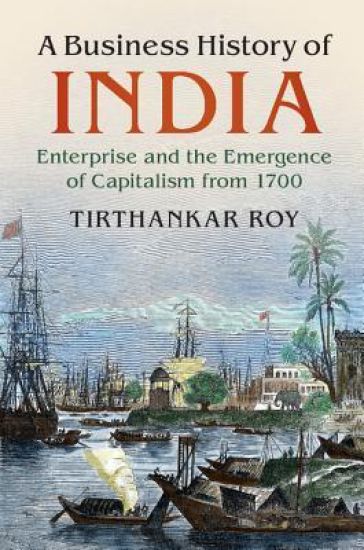
A Business History of India

A Business History of India

Tirthankar Roy

Cambridge University Press
2018
sidottu
In recent decades, private investment has led to an economic resurgence in India. But this is not the first time the region has witnessed impressive business growth. There have been many similar stories over the past 300 years. India's economic history shows that capital was relatively expensive. How, then, did capitalism flourish in the region? How did companies and entrepreneurs deal with the shortage of key resources? Has there been a common pattern in responses to these issues over the centuries? Through detailed case studies of firms, entrepreneurs, and business commodities, Tirthankar Roy answers these questions. Roy bridges the approaches of business and economic history, illustrating the development of a distinctive regional capitalism. On each occasion of growth, connections with the global economy helped firms and entrepreneurs better manage risks. Making these deep connections between India's economic past and present shows why history matters in its remaking of capitalism today.
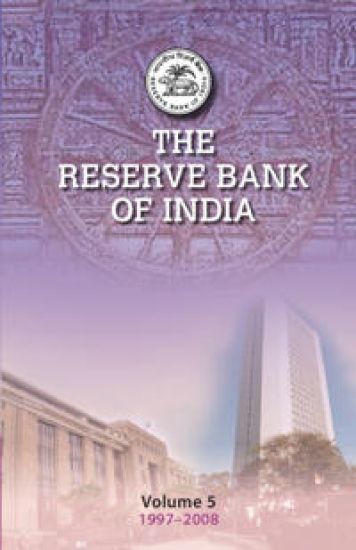
The Reserve Bank of India: Volume 5

The Reserve Bank of India: Volume 5

Tirthankar Roy

Cambridge University Press
2023
sidottu
The fifth volume on the history of the Reserve Bank of India covers the years from 1997–98 to 2007–08. During this period, it introduced key institutional and financial market reforms in a rapidly changing economic environment and facilitated faster integration of the Indian economy. The Bank rationalised and introduced innovative instruments of monetary control; strengthened regulatory and supervisory processes for both banking and non-banking sectors; adjusted its approach to achieve and sustain financial stability; focussed on building financial market institutions and infrastructure; and spurred legal and other amendments in the larger public interest as also for achieving flexibility with stability in the economy. It also worked to improve the rural credit system, financial inclusion and customer protection. This volume is a narrative history of the Bank and also a rich resource for understanding how an emerging market central bank manages change and shapes the economy to face future challenges.
A Business History of India

A Business History of India

Tirthankar Roy

Cambridge University Press
2018
pokkari
In recent decades, private investment has led to an economic resurgence in India. But this is not the first time the region has witnessed impressive business growth. There have been many similar stories over the past 300 years. India's economic history shows that capital was relatively expensive. How, then, did capitalism flourish in the region? How did companies and entrepreneurs deal with the shortage of key resources? Has there been a common pattern in responses to these issues over the centuries? Through detailed case studies of firms, entrepreneurs, and business commodities, Tirthankar Roy answers these questions. Roy bridges the approaches of business and economic history, illustrating the development of a distinctive regional capitalism. On each occasion of growth, connections with the global economy helped firms and entrepreneurs better manage risks. Making these deep connections between India's economic past and present shows why history matters in its remaking of capitalism today.
How British Rule Changed India’s Economy

How British Rule Changed India’s Economy

Tirthankar Roy

Springer Nature Switzerland AG
2019
sidottu
This Palgrave Pivot revisits the topic of how British colonialism moulded work and life in India and what kind of legacy it left behind. Did British rule lead to India’s impoverishment, economic disruption and famine? Under British rule, evidence suggests there were beneficial improvements, with an eventual rise in life expectancy and an increase in wealth for some sectors of the population and economy, notably for much business and industry. Yet many poor people suffered badly, with agricultural stagnation and an underfunded government who were too small to effect general improvements. In this book Roy explains the paradoxical combination of wealth and poverty, looking at both sides of nineteenth century capitalism. Between 1850 and 1930, India was engaged in a globalization process not unlike the one it has seen since the 1990s. The difference between these two times is that much of the region was under British colonial rule during the first episode, while it was an independent nation state during the second. Roy's narrative has a contemporary relevance for emerging economies, where again globalization has unleashed extraordinary levels of capitalistic energy while leaving many livelihoods poor, stagnant, and discontented.
The Economy of South Asia

The Economy of South Asia

Tirthankar Roy

Springer International Publishing AG
2017
sidottu
This book explores the historical roots of rapid economic growth in South Asia, with reference to politics, markets, resources, and the world economy. Roy posits that, after an initial slow period of growth between 1950 and the 1980s, the region has been growing rapidly and fast catching up with the world on average levels of living. Why did this turnaround happen? Does it matter? Is it sustainable? The author answers these questions by drawing connections, comparisons, and parallels between the five large countries in the region: India, Pakistan, Bangladesh, Sri Lanka and Nepal. It shows why, despite differences in political experience between these countries, similarities in resources and markets could produce similar trajectories. Home to a fifth of the world’s population, South Asia’s transformation has the power to change the world. Most accounts of the process focus on individual nations, but by breaking out of that mould, Roy takes on the region as a whole, and delivers a radical new interpretation of why the economy of South Asia is changing so fast.
The Economy of South Asia

The Economy of South Asia

Tirthankar Roy

Springer International Publishing AG
2018
nidottu
This book explores the historical roots of rapid economic growth in South Asia, with reference to politics, markets, resources, and the world economy. Roy posits that, after an initial slow period of growth between 1950 and the 1980s, the region has been growing rapidly and fast catching up with the world on average levels of living. Why did this turnaround happen? Does it matter? Is it sustainable? The author answers these questions by drawing connections, comparisons, and parallels between the five large countries in the region: India, Pakistan, Bangladesh, Sri Lanka and Nepal. It shows why, despite differences in political experience between these countries, similarities in resources and markets could produce similar trajectories. Home to a fifth of the world’s population, South Asia’s transformation has the power to change the world. Most accounts of the process focus on individual nations, but by breaking out of that mould, Roy takes on the region as a whole, and delivers a radical new interpretation of why the economy of South Asia is changing so fast.