Kirjojen hintavertailu. Mukana 12 016 292 kirjaa ja 12 kauppaa.

Kirjahaku

Etsi kirjoja tekijän nimen, kirjan nimen tai ISBN:n perusteella.

25 kirjaa tekijältä Tison Pugh

Queer Movie Medievalisms

Queer Movie Medievalisms

Tison Pugh

Routledge
2020
nidottu
How is history even possible, since it involves recapturing a past already lost? It is through this urge to understand, feel and experience, that films based on medieval history are made. They attempt to re-create the past, but can only do so through a queer re-visioning that inevitably replicates modernity. In these mediations between past and present, history becomes misty, and so, too, do constructions of gender and sexuality leading to the impossibility of heterosexuality, or of any sexuality, predicated upon cinematic medievalism. Queer Movie Medievalisms is the first book of its kind to grapple with the ways in which mediations between past and present, as registered on the silver screen, queerly undercut assumptions about sexuality throughout time. It will be of great interest to scholars of Gender and Sexuality, Cultural and Media Studies, Film Studies and Medieval History.
Innocence, Heterosexuality, and the Queerness of Children's Literature
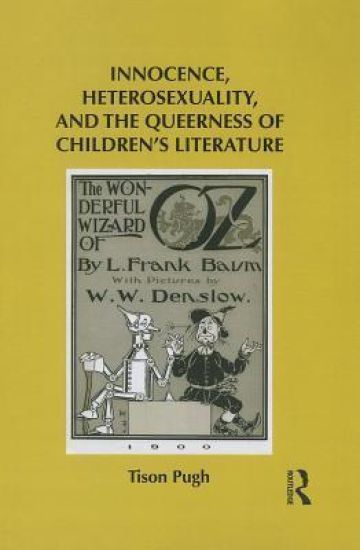
Innocence, Heterosexuality, and the Queerness of Children’s Literature examines distinguished classics of children’s literature both old and new—including L. Frank Baum’s Oz books, Laura Ingalls Wilder’s Little House series, J. K. Rowling’s Harry Potter novels, Lemony Snicket’s A Series of Unfortunate Events, and Stephenie Meyer’s Twilight series—to explore the queer tensions between innocence and heterosexuality within their pages. Pugh argues that children cannot retain their innocence of sexuality while learning about normative heterosexuality, yet this inherent paradox runs throughout many classic narratives of literature for young readers. Children’s literature typically endorses heterosexuality through its invisible presence as the de facto sexual identity of countless protagonists and their families, yet heterosexuality’s ubiquity is counterbalanced by its occlusion when authors shield their readers from forthright considerations of one of humanity’s most basic and primal instincts. The book demonstrates that tensions between innocence and sexuality render much of children’s literature queer, especially when these texts disavow sexuality through celebrations of innocence. In this original study, Pugh develops interpretations of sexuality that few critics have yet ventured, paving the way for future scholarly engagement with larger questions about the ideological role of children's literature and representations of children's sexuality.Tison Pugh is Associate Professor in the Department of English at the University of Central Florida. He is the author of Queering Medieval Genres and Sexuality and Its Queer Discontents in Middle English Literature and has published on children’s literature in such journals as Children’s Literature, The Lion and the Unicorn, and Marvels and Tales.
Bad Chaucer

Bad Chaucer

Tison Pugh

THE UNIVERSITY OF MICHIGAN PRESS
2024
sidottu
Acclaimed for centuries as the “Father of English Literature,” Geoffrey Chaucer enjoys widespread and effusive praise for his classic Canterbury Tales—and rightfully so. Still, even the greatest of authors cannot claim perfection, and so Bad Chaucer: The Great Poet’s Greatest Mistakes in the Canterbury Tales analyzes his various missteps, missed opportunities, and other blunders in this peerless masterpiece. From a vexing catalog of trees in the Knight’s Tale to the flirtations with blasphemy in the Parson’s Tale, this volume progresses through the Canterbury Tales story by story, tale by tale, pondering the most egregious failing of each in turn. Viewed collectively, Chaucer’s troubles stem from clashing genres that disrupt interpretive clarity, themeless themes that undermine any message a tale might convey, mischaracterized characters who act without clear motivation, purposeful and otherwise pleasureful badness that show Chaucer’s appreciation for the humor of bad literature, and outmoded perspectives that threaten to alienate modern readers. Badness is not always to be lamented but often celebrated, even cherished, for badness infuses artistic creations with the vitality that springs from varied responses, spirited engagements, and the inherent volatility of enjoying literature. On the whole, Bad Chaucer: The Great Poet’s Greatest Mistakes in the Canterbury Tales swerves literary criticism in a new direction by examining the provocative question, for too long overlooked, of what this great author got wrong.
Queer Movie Medievalisms

Queer Movie Medievalisms

Tison Pugh

Ashgate Publishing Limited
2009
sidottu
How is history even possible, since it involves recapturing a past already lost? It is through this urge to understand, feel and experience, that films based on medieval history are made. They attempt to re-create the past, but can only do so through a queer re-visioning that inevitably replicates modernity. In these mediations between past and present, history becomes misty, and so, too, do constructions of gender and sexuality leading to the impossibility of heterosexuality, or of any sexuality, predicated upon cinematic medievalism. Queer Movie Medievalisms is the first book of its kind to grapple with the ways in which mediations between past and present, as registered on the silver screen, queerly undercut assumptions about sexuality throughout time. It will be of great interest to scholars of Gender and Sexuality, Cultural and Media Studies, Film Studies and Medieval History.
Queer Chivalry

Queer Chivalry

Tison Pugh

Louisiana State University Press
2013
sidottu
For the U.S. South, the myth of chivalric masculinity dominates the cultural and historical landscape. Visions of white southern men as archetypes of honor and gentility run throughout regional narratives with little regard for the actions and, at times, the atrocities committed by such men. In Queer Chivalry, Tison Pugh exposes the inherent contradictions in these depictions of cavalier manhood, investigating the foundations of southern gallantry as a reincarnated and reauthorized version of medieval masculinity. Pugh argues that the idea of masculinity - particularly as seen in works by prominent southern authors from Mark Twain to Ellen Gilchrist - constitutes a cultural myth that queerly demarcates accepted norms of manliness, often by displaying the impossibility of its achievement. Beginning with Twain's famous critique of ""the Sir Walter disease"" that pilloried the South, Pugh focuses on authors who questioned the code of chivalry by creating protagonists whose quests for personal knighthood prove quixotic. Through detailed readings of major works - including Twain's A Connecticut Yankee in King Arthur's Court, Flannery O'Connor's short fiction, John Kennedy Toole's A Confederacy of Dunces, Robert Penn Warren's A Place to Come To, Walker Percy's novels, and Gilchrist's The Annunciation - Pugh demonstrates that the hypermasculinity of white-knight ideals only draws attention to the ambiguous gender of the literary southern male.Employing insights from gender and psychoanalytic theory, Queer Chivalry contributes to recent critical discussions of the cloaked anxieties about gender and sexuality in southern literature. Ultimately, Pugh uncovers queer limits in the cavalier mythos, showing how facts and fictions contributed to the ideological formulation of the South.
Precious Perversions

Precious Perversions

Tison Pugh

Louisiana State University Press
2016
sidottu
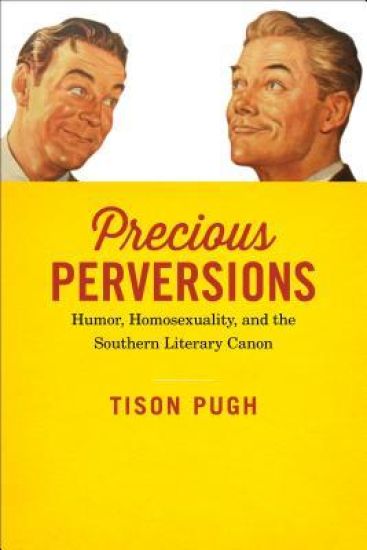
Southern literature has long been heralded for its tragic sentiments, in its somber and necessary acknowledgments of the region's tormented past, as it has concomitantly asserted an overarchingly heteronormative vision of Southern life. Yet a pantheon of great authors, ranging from Tennessee Williams, Carson McCullers, and Truman Capote to the present-day voices of Florence King, Dorothy Allison, and David Sedaris, collectively attest both to the vibrancy of queer experience and to the prevalence of humor found in this rich regional canon. In Precious Perversions: Humor, Homosexuality, and the Southern Literary Canon, Tison Pugh challenges the premises that elevate William Faulkner and diminish Rita Mae Brown, that esteem Walker Percy yet marginalize David Sedaris, by arguing for the inclusion of gay comic authors as defining voices in the field. By redefining the tenets of Southern literature, Pugh reveals its long-overlooked or discounted aspects of gay humor. Noting, for example, that Tennessee Williams is revered as a dramatist who probes the heart of the human condition rather than for his submerged camp humor, and that Truman Capote's comic cinema and literature never eclipsed his more serious works, Pugh establishes a history of mainstream and academic critique that has consistently ignored queer humor. Likewise, Florence King and Rita Mae Brown wrote defining narratives of Southern lesbian experience in, respectively, Confessions of a Failed Southern Lady and Rubyfruit Jungle, yet they are almost entirely neglected in accounts of the literary South. More recently, the author shows, the critical reception of Dorothy Allison's Bastard Out of Carolina testifies to an overarching interest in the traumatic aspects of her poetry and fiction rather than in her humor and its cathartic power. Pugh also asserts that David Sedaris, as a writer of the post-Southern South, who appears to fall beyond the parameters of regional literature for many readers, creates a new, humorous vision of the South that recognises both its pained history and its grudging accession to modernity. Drawing from works of key queer, Southern writers, Pugh sets forth a new vision of Southern literature- one illuminated by the humor of gay voices no longer at the margins.
Southerners Acting Southern

Southerners Acting Southern

Tison Pugh

LOUISIANA STATE UNIVERSITY PRESS
2025
sidottu
What is the difference between a star born in the South and a "southern star"? In Southerners Acting Southern, Tison Pugh answers this intriguing question, pondering the ways in which some performers from the South metamorphose into southern stars by accentuating their geographic and cultural roots as key aspects of their star personas. Many celebrities, particularly actors, seek to transcend their hometown roots in favor of achieving an "all-American" appeal, but some stars born in the South build their national and international fan base by emphasizing the southern aspects of their biography and by leaning into regional clichés and stereotypes that percolate throughout the U.S. cultural imaginary. In turn, some southern stars trot out the region's hoariest tropes of fading belles, gullible country rubes, and the succors of southern hospitality only to reveal the shallowness of these stereotypes and of their celebrity personas as well. Covering more than one hundred years of cultural history, Southerners Acting Southern allows readers to gauge the South's often-reluctant progress into modernity, including discussions on the intersection of race and celebrity for the region's Black stars and its increasing, if hesitant, embrace of queer ones. Chapters feature a wide-ranging selection of southern celebrities, including Louis Armstrong, Truman Capote, Elvis Presley, Tennessee Williams, Andy Griffith, Tina Turner, Dolly Parton, Tom Petty, Gloria Estefan, Oprah Winfrey, Reese Witherspoon, Jenna Bush Hager, Ellen DeGeneres, Tyler Perry, Matthew McConaughey, Aziz Ansari, and Miley Cyrus. Southerners Acting Southern moves from past to present, from musicians to media personalities, discerning the ways in which southernness contributes to the building of personal celebrity. Altogether, this luminous work of cultural criticism reveals that southern stargazing, as much as it might initially appear a flighty pastime of overzealous fans, divulges deeper truths about the South, and the United States as a whole, that might otherwise pass unnoticed.
Southerners Acting Southern

Southerners Acting Southern

Tison Pugh

LOUISIANA STATE UNIVERSITY PRESS
2025
pokkari
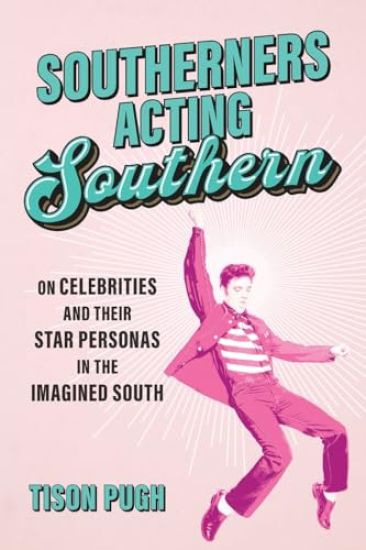
What is the difference between a star born in the South and a "southern star"? In Southerners Acting Southern, Tison Pugh answers this intriguing question, pondering the ways in which some performers from the South metamorphose into southern stars by accentuating their geographic and cultural roots as key aspects of their star personas. Many celebrities, particularly actors, seek to transcend their hometown roots in favor of achieving an "all-American" appeal, but some stars born in the South build their national and international fan base by emphasizing the southern aspects of their biography and by leaning into regional clichés and stereotypes that percolate throughout the U.S. cultural imaginary. In turn, some southern stars trot out the region's hoariest tropes of fading belles, gullible country rubes, and the succors of southern hospitality only to reveal the shallowness of these stereotypes and of their celebrity personas as well. Covering more than one hundred years of cultural history, Southerners Acting Southern allows readers to gauge the South's often-reluctant progress into modernity, including discussions on the intersection of race and celebrity for the region's Black stars and its increasing, if hesitant, embrace of queer ones. Chapters feature a wide-ranging selection of southern celebrities, including Louis Armstrong, Truman Capote, Elvis Presley, Tennessee Williams, Andy Griffith, Tina Turner, Dolly Parton, Tom Petty, Gloria Estefan, Oprah Winfrey, Reese Witherspoon, Jenna Bush Hager, Ellen DeGeneres, Tyler Perry, Matthew McConaughey, Aziz Ansari, and Miley Cyrus. Southerners Acting Southern moves from past to present, from musicians to media personalities, discerning the ways in which southernness contributes to the building of personal celebrity. Altogether, this luminous work of cultural criticism reveals that southern stargazing, as much as it might initially appear a flighty pastime of overzealous fans, divulges deeper truths about the South, and the United States as a whole, that might otherwise pass unnoticed.
An Introduction to Geoffrey Chaucer

An Introduction to Geoffrey Chaucer

Tison Pugh

University Press of Florida
2013
sidottu
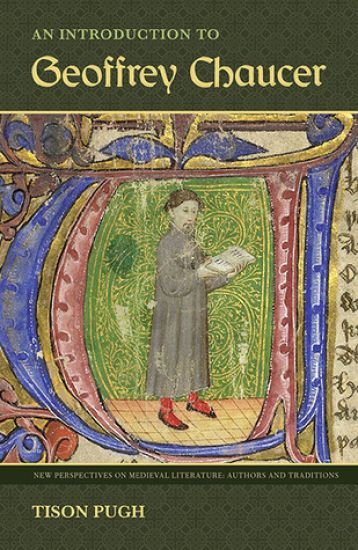
Geoffrey Chaucer is widely considered the father of English literature. This introduction begins with a review of his life and the cultural milieu of fourteenth-century England and then expands into analyses of such major works as The Parliament of Fowls, Troilus and Criseyde, and, of course, the Canterbury Tales, examining them alongside a selection of lesser known verses.One of the early hurdles faced by students of Chaucer is achieving ease and fluency with Middle English, but Tison Pugh provides a clear and concise pronunciation guide and a glossary to help novice readers navigate Chaucer’s literature in its original language. Additional critical apparatus, including a survey of the writer’s sources and brief summaries of major plot lines, make An Introduction to Geoffrey Chaucer an indispensable resource for students, teachers, and anyone who has ever wanted to learn more about this crucial figure of English literature.
An Introduction to Geoffrey Chaucer

An Introduction to Geoffrey Chaucer

Tison Pugh

University Press of Florida
2014
nidottu
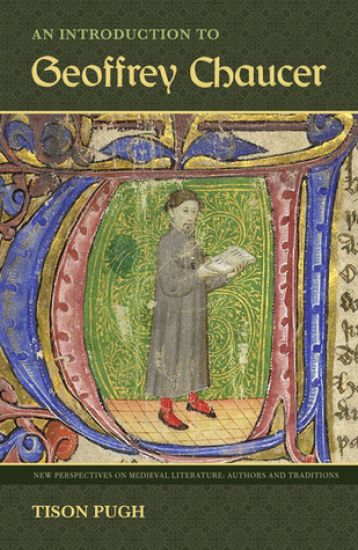
Geoffrey Chaucer is widely considered the father of English literature. This introduction begins with a review of his life and the cultural milieu of fourteenth-century England and then expands into analyses of such major works as The Parliament of Fowls, Troilus and Criseyde, and, of course, the Canterbury Tales, examining them alongside a selection of lesser known verses. One of the early hurdles faced by students of Chaucer is achieving ease and fluency with Middle English, but Tison Pugh provides a clear and concise pronunciation guide and a glossary to help novice readers navigate Chaucer's literature in its original language. Additional critical apparatus, including a survey of the writer's sources and brief summaries of major plot lines, make An Introduction to Geoffrey Chaucer an indispensable resource for students, teachers, and anyone who has ever wanted to learn more about this crucial figure of English literature.
The Queer Fantasies of the American Family Sitcom

The Queer Fantasies of the American Family Sitcom

Tison Pugh

Rutgers University Press
2018
nidottu
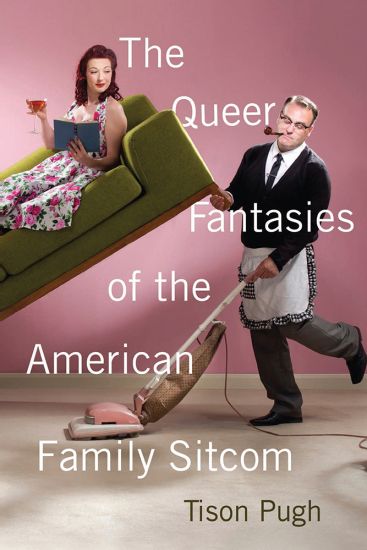
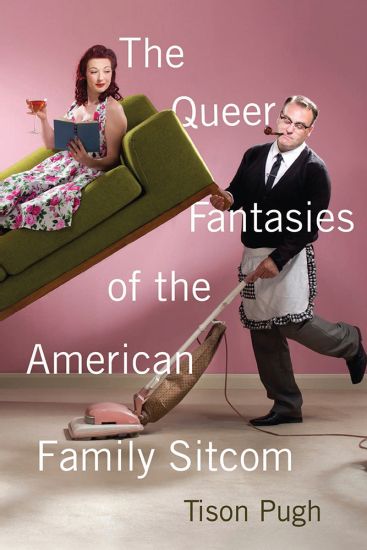
Winner of the 2019 John Leo and Dana Heller Award for the Best Work in LGBTQ Studies from the PCAThe Queer Fantasies of the American Family Sitcom examines the evasive depictions of sexuality in domestic and family-friendly sitcoms. Tison Pugh charts the history of increasing sexual depiction in this genre while also unpacking how sitcoms use sexuality as a source of power, as a kind of camouflage, and as a foundation for family building. The book examines how queerness, at first latent, became a vibrant yet continually conflicted part of the family-sitcom tradition. Taking into account elements such as the casting of child actors, the use of and experimentation with plot traditions, the contradictory interpretive valences of comedy, and the subtle subversions of moral standards by writers and directors, Pugh points out how innocence and sexuality conflict on television. As older sitcoms often sit on a pedestal of nostalgia as representative of the Golden Age of the American Family, television history reveals a deeper, queerer vision of family bonds. Download open access ebook here.
The Queer Fantasies of the American Family Sitcom

The Queer Fantasies of the American Family Sitcom

Tison Pugh

Rutgers University Press
2018
sidottu
Winner of the 2019 John Leo and Dana Heller Award for the Best Work in LGBTQ Studies from the PCAThe Queer Fantasies of the American Family Sitcom examines the evasive depictions of sexuality in domestic and family-friendly sitcoms. Tison Pugh charts the history of increasing sexual depiction in this genre while also unpacking how sitcoms use sexuality as a source of power, as a kind of camouflage, and as a foundation for family building. The book examines how queerness, at first latent, became a vibrant yet continually conflicted part of the family-sitcom tradition. Taking into account elements such as the casting of child actors, the use of and experimentation with plot traditions, the contradictory interpretive valences of comedy, and the subtle subversions of moral standards by writers and directors, Pugh points out how innocence and sexuality conflict on television. As older sitcoms often sit on a pedestal of nostalgia as representative of the Golden Age of the American Family, television history reveals a deeper, queerer vision of family bonds. Download open access ebook here.
Will & Grace

Will & Grace

Tison Pugh

WAYNE STATE UNIVERSITY PRESS
2023
nidottu
The sitcom Will & Grace (1998–2006, 2017–20) shifted the media landscape and its treatment of queer themes by starring an openly gay protagonist, Will Truman, on primetime network television. Will, along with his best friend Grace Adler and their constant companions Jack McFarland and Karen Walker, engaged in many stereotypical sitcom shenanigans imbued with decidedly queer twists. Despite the series' groundbreaking nature, its accuracy and responsibility in representing gay men—and of queer culture in general—has been questioned throughout its initial run and reboot. Author Tison Pugh places the sitcom in its historical context of the late 1990s and early 2000s, considering how it contributed to contemporary debates concerning queer life. Will & Grace returned in the Trump era, offering viewers another chance to enjoy the companionship of these quirky yet relatable characters as they grappled with seismic shifts in the nation's political climate. Pugh demonstrates that while heralding a new age of queer representation, characters across the series were homogenized through upper-class whiteness to normalize queerness for a mainstream US audience. In negotiating protocols of network television and the desires of audiences both gay and straight, this trailblazing series remains simultaneously haunted by and liberated from longstanding queer stereotypes.
Truman Capote

Truman Capote

Tison Pugh

University of Georgia Press
2014
sidottu
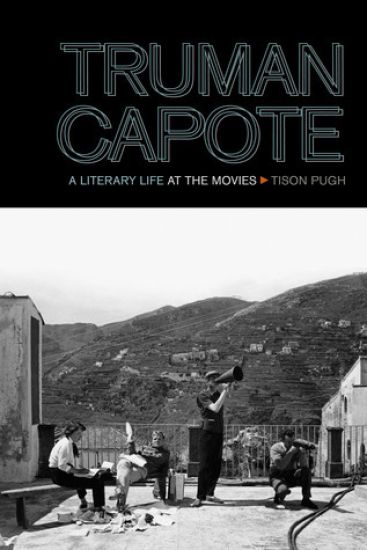
Truman Capote once remarked, “My primary thing is that I’m a prose writer. I don’t think film is the greatest living thing”; nonetheless, his legacy is in many ways defined by his complex relationship with cinema, Hollywood, and celebrity itself. In Truman Capote: A Literary Life at the Movies, Tison Pugh explores the author and his literature through a cinematic lens, skillfully weaving the most relevant elements of Capote’s biography— including his highly flamboyant public persona and his friendships and feuds with notable stars—with insightful critical analysis of the films, screenplays, and adaptations of his works that composed his fraught relationship with the Hollywood machine.Capote’s masterful short stories and novels ensure his status as an iconic author of the twentieth century, and his screenplays, including Beat the Devil, Indiscretion of an American Wife, and The Innocents, allowed him to collaborate with such Hollywood heavyweights as Humphrey Bogart, John Huston, and David O. Selznick. Throughout his professional life he circulated freely in a celebrity milieu populated by such notables as Marlon Brando, Elizabeth Taylor, and Marilyn Monroe. Cinematic adaptations of his literature, most notably Breakfast at Tiffany’s and In Cold Blood, play with or otherwise alter Capote’s queer literary themes, often bleaching his daring treatment of homosexuality in favor of heterosexual romance.Truman Capote: A Literary Life at the Movies reveals Capote’s literary works to be not merely coincident to film but integral to their mutual creation, paying keen attention to the ways in which Capote’s identity as a gay southerner influenced his and others’ perceptions of his literature and its adaptations. Pugh’s research illuminates Capote’s personal and professional successes and disappointments in the film industry, helping to create a more nuanced portrait of the author and bringing fresh details to light.
Truman Capote

Truman Capote

Tison Pugh

University of Georgia Press
2014
pokkari
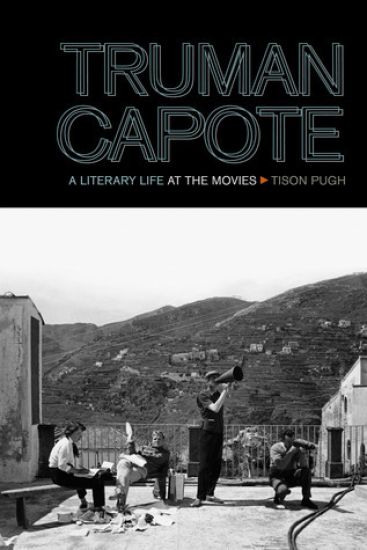
Truman Capote once remarked, “My primary thing is that I’m a prose writer. I don’t think film is the greatest living thing”; nonetheless, his legacy is in many ways defined by his complex relationship with cinema, Hollywood, and celebrity itself. In Truman Capote: A Literary Life at the Movies, Tison Pugh explores the author and his literature through a cinematic lens, skillfully weaving the most relevant elements of Capote’s biography— including his highly flamboyant public persona and his friendships and feuds with notable stars—with insightful critical analysis of the films, screenplays, and adaptations of his works that composed his fraught relationship with the Hollywood machine.Capote’s masterful short stories and novels ensure his status as an iconic author of the twentieth century, and his screenplays, including Beat the Devil, Indiscretion of an American Wife, and The Innocents, allowed him to collaborate with such Hollywood heavyweights as Humphrey Bogart, John Huston, and David O. Selznick. Throughout his professional life he circulated freely in a celebrity milieu populated by such notables as Marlon Brando, Elizabeth Taylor, and Marilyn Monroe. Cinematic adaptations of his literature, most notably Breakfast at Tiffany’s and In Cold Blood, play with or otherwise alter Capote’s queer literary themes, often bleaching his daring treatment of homosexuality in favor of heterosexual romance.Truman Capote: A Literary Life at the Movies reveals Capote’s literary works to be not merely coincident to film but integral to their mutual creation, paying keen attention to the ways in which Capote’s identity as a gay southerner influenced his and others’ perceptions of his literature and its adaptations. Pugh’s research illuminates Capote’s personal and professional successes and disappointments in the film industry, helping to create a more nuanced portrait of the author and bringing fresh details to light.
Innocence, Heterosexuality, and the Queerness of Children's Literature
Innocence, Heterosexuality, and the Queerness of Children’s Literature examines distinguished classics of children’s literature both old and new—including L. Frank Baum’s Oz books, Laura Ingalls Wilder’s Little House series, J. K. Rowling’s Harry Potter novels, Lemony Snicket’s A Series of Unfortunate Events, and Stephenie Meyer’s Twilight series—to explore the queer tensions between innocence and heterosexuality within their pages. Pugh argues that children cannot retain their innocence of sexuality while learning about normative heterosexuality, yet this inherent paradox runs throughout many classic narratives of literature for young readers. Children’s literature typically endorses heterosexuality through its invisible presence as the de facto sexual identity of countless protagonists and their families, yet heterosexuality’s ubiquity is counterbalanced by its occlusion when authors shield their readers from forthright considerations of one of humanity’s most basic and primal instincts. The book demonstrates that tensions between innocence and sexuality render much of children’s literature queer, especially when these texts disavow sexuality through celebrations of innocence. In this original study, Pugh develops interpretations of sexuality that few critics have yet ventured, paving the way for future scholarly engagement with larger questions about the ideological role of children's literature and representations of children's sexuality.Tison Pugh is Associate Professor in the Department of English at the University of Central Florida. He is the author of Queering Medieval Genres and Sexuality and Its Queer Discontents in Middle English Literature and has published on children’s literature in such journals as Children’s Literature, The Lion and the Unicorn, and Marvels and Tales.
On the Queerness of Early English Drama

On the Queerness of Early English Drama

Tison Pugh

University of Toronto Press
2021
sidottu
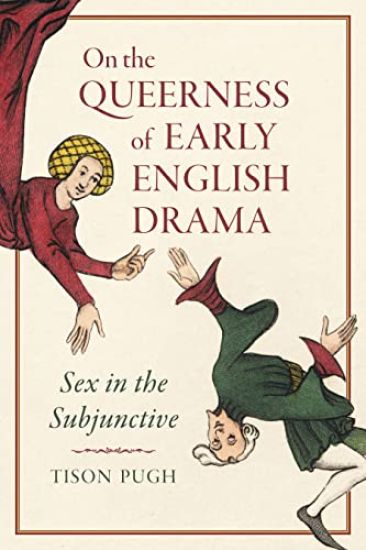
Often viewed as theologically conservative, many theatrical works of late medieval and early Tudor England nevertheless exploited the performative nature of drama to flirt with unsanctioned expressions of desire, allowing queer identities and themes to emerge. Early plays faced vexing challenges in depicting sexuality, but modes of queerness, including queer scopophilia, queer dialogue, queer characters, and queer performances, fractured prevailing restraints. Many of these plays were produced within male homosocial environments, and thus homosociality served as a narrative precondition of their storylines. Building from these foundations, On the Queerness of Early English Drama investigates occluded depictions of sexuality in late medieval and early Tudor dramas. Tison Pugh explores a range of topics, including the unstable genders of the York Corpus Christi Plays, the morally instructive humour of excremental allegory in Mankind, the confused relationship of sodomy and chastity in John Bale’s historical interludes, and the camp artifice and queer carnival of Sir David Lyndsay’s Ane Satyre of the Thrie Estaitis. Pugh concludes with Terrence McNally’s Corpus Christi, pondering the afterlife of medieval drama and its continued utility in probing cultural constructions of gender and sexuality
Chaucer's Losers, Nintendo's Children, and Other Forays in Queer Ludonarratology
Tison Pugh examines the intersection of narratology, ludology, and queer studies, pointing to the ways in which the blurred boundaries between game and narrative provide both a textual and a metatextual space of queer narrative potential. By focusing on these three distinct yet complementary areas, Pugh shifts understandings of the way their play, pleasure, and narrative potential are interlinked. Through illustrative readings of an eclectic collection of cultural artifacts-from Chaucer’s Canterbury Tales to Nintendo’s Legend of Zelda franchise, from Edward Albee’s dramatic masterpiece Who’s Afraid of Virginia Woolf? to J. K. Rowling’s Harry Potter fantasy novels-Pugh offers perspectives of blissful ludonarratology, sadomasochistic ludonarratology, the queerness of rules, the queerness of godgames, and the queerness of children’s questing video games. Collectively, these analyses present a range of interpretive strategies for uncovering the disruptive potential of gaming texts and textual games while demonstrating the wide applicability of queer ludonarratology throughout the humanities.
Queer Oz

Queer Oz

Tison Pugh

UNIVERSITY PRESS OF MISSISSIPPI
2023
sidottu
Regardless of his own sexual orientation, L. Frank Baum’s fictions revel in queer, trans, and other transgressive themes. Baum’s life in the late 1800s and early 1900s coincided with the rise of sexology in the Western world, as a cascade of studies heightened awareness of the complexity of human sexuality. His years of productivity also coincided with the rise of children’s literature as a unique field of artistic creation. Best known for his Oz series, Baum produced a staggering number of children’s and juvenile book series under male and female pseudonyms, including the Boy Fortune Hunters series, the Aunt Jane’s Nieces series, and the Mary Louise series, along with many miscellaneous tales for young readers. Baum envisioned his fantasy works as progressive fictions, aspiring to create in the Oz series "a modernized fairy tale, in which the wonderment and joy are retained and the heartaches and nightmares are left out." In line with these progressive aspirations, his works are often sexually progressive as well, with surprisingly queer and trans touches that reject the standard fairy-tale narrative path toward love and marriage. From Ozma of Oz’s backstory as a boy named Tip to the genderless character Chick the Cherub, from the homosocial adventures of his Boy Fortune Hunters to the determined rejection of romance for Aunt Jane’s Nieces, Queer Oz: L. Frank Baum's Trans Tales and Other Astounding Adventures in Sex and Gender shows how Baum exploited the freedoms of children’s literature, in its carnivalesque celebration of a world turned upside-down, to reimagine the meanings of gender and sexuality in early twentieth-century America and to re-envision them for the future.