Kirjojen hintavertailu. Mukana 12 016 292 kirjaa ja 12 kauppaa.

Kirjahaku

Etsi kirjoja tekijän nimen, kirjan nimen tai ISBN:n perusteella.

3 kirjaa tekijältä Todd Hedrick

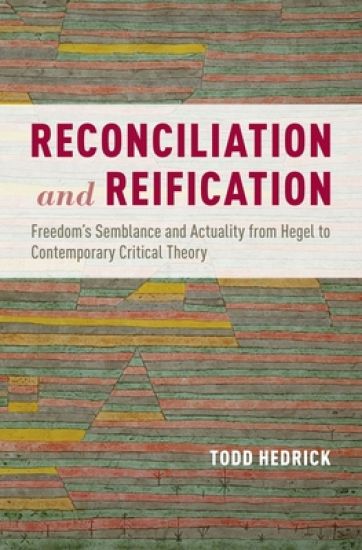
Reconciliation and Reification

Reconciliation and Reification

Todd Hedrick

Oxford University Press Inc
2018
sidottu
The critical theory tradition has, since its inception, sought to distinguish its perspective on society by maintaining that persons have a deep-seated interest in the free development of their personality--an interest that can only be realized in and through the rational organization of society, but which is systematically stymied by existing society. And yet tradition has struggled to specify this emancipatory interest in a way that is neither excessively utopian nor accommodating to existing society. Despite the fact that Hegel's concept of reconciliation is normally thought to run aground on the latter horn of this dilemma, this book argues that reconciliation is the best available conceptualization of emancipatory interest. Todd Hedrick presents Hegel's idea of freedom as something actualized in individuals' lives through their reconciliation with how society shapes their roles, prospects, and sense of self; it presents reconciliation as less a matter of philosophical cognition, and more of inclusion in a responsive, transparent political process. Hedrick further introduces the concept of reification, which--through its development in Marx and Lukács, through Horkheimer and Adorno--substantiates an increasingly cogent critique of reconciliation as something unachievable within the framework of modern society, as social forces that shape our identities and life prospects come to appear natural, as part of the way things just are. Giving equal weight to psychoanalysis and legal theory, this work critically appraises the writings of Rawls, Honneth, and Habermas as efforts to spell out a reconciliation more democratic and inclusive than Hegel's, yet still sensitive to the reifying effects of legal systems that have become autonomous and anonymous.
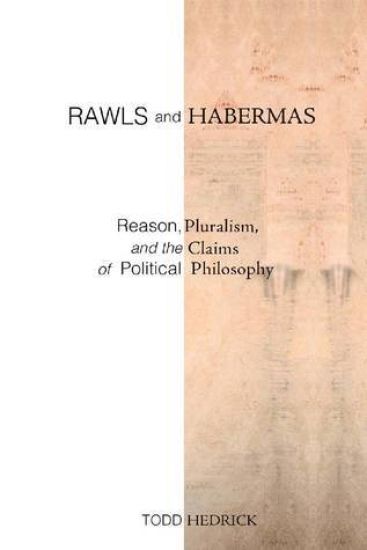
Rawls and Habermas

Rawls and Habermas

Todd Hedrick

Stanford University Press
2010
sidottu
This book offers a comprehensive evaluation of the two preeminent post-WWII political philosophers, John Rawls and Jürgen Habermas. Both men question how we can be free and autonomous under coercive law and how we might collectively use our reason to justify exercises of political power. In pluralistic modern democracies, citizens cannot be expected to agree about social norms on the basis of common allegiance to comprehensive metaphysical or religious doctrines concerning persons or society, and both philosophers thus engage fundamental questions about how a normatively binding framework for the public use of reason might be possible and justifiable. Hedrick explores the notion of reasonableness underwriting Rawls's political liberalism and the theory of communicative rationality that sustains Habermas's procedural conception of the democratic constitutional state. His book challenges the Rawlsianism prevalent in the Anglo-American world today while defending Habermas's often poorly understood theory as a superior alternative.
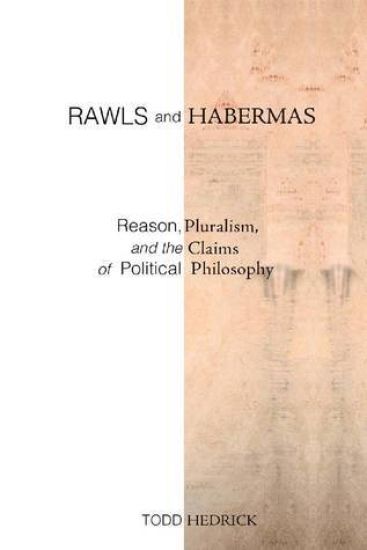
Rawls and Habermas

Rawls and Habermas

Todd Hedrick

Stanford University Press
2010
pokkari
This book offers a comprehensive evaluation of the two preeminent post-WWII political philosophers, John Rawls and Jürgen Habermas. Both men question how we can be free and autonomous under coercive law and how we might collectively use our reason to justify exercises of political power. In pluralistic modern democracies, citizens cannot be expected to agree about social norms on the basis of common allegiance to comprehensive metaphysical or religious doctrines concerning persons or society, and both philosophers thus engage fundamental questions about how a normatively binding framework for the public use of reason might be possible and justifiable. Hedrick explores the notion of reasonableness underwriting Rawls's political liberalism and the theory of communicative rationality that sustains Habermas's procedural conception of the democratic constitutional state. His book challenges the Rawlsianism prevalent in the Anglo-American world today while defending Habermas's often poorly understood theory as a superior alternative.