Kirjojen hintavertailu. Mukana 12 016 292 kirjaa ja 12 kauppaa.

Kirjahaku

Etsi kirjoja tekijän nimen, kirjan nimen tai ISBN:n perusteella.

3 kirjaa tekijältä Todd M. Compton

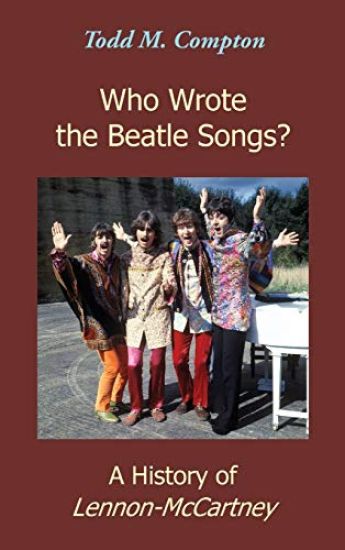
Who Wrote the Beatle Songs?: A History of Lennon-McCartney
Who Wrote the Beatle Songs: A History of Lennon-McCartney is a book in the tradition of Mark Lewisohn's The Beatles Recording Sessions, Walter Everett's The Beatles as Musicians, Ian MacDonald's Revolution in the Head, and Tim Riley's Tell Me Why --it surveys all of the songs by the Beatles. However, unlike those books, Who Wrote the Beatle Songs concentrates solely on songwriting. It also has a strong biographical element: I tell the fascinating story of John Lennon and Paul McCartney as songwriters.The Beatles are arguably the most influential group in the history of popular music, and the single most important element in their success was their songwriting. Unlike rock stars such as Elvis, Jimi Hendrix and Eric Clapton, they were songwriters first and performers second. They have been widely misunderstood because the history of their songwriting has not been examined carefully. Setting aside the songs of Harrison and Starr at this time, all their songs were attributed to "Lennon-McCartney," which suggests 50-50 songwriting ownership, in the tradition of George and Ira Gershwin. In fact, most of the Beatle songs were dominated by Paul or by John, and some were written entirely by one or the other (such as John's "Across the Universe" or Paul's "Hey Jude").After the Beatles breakup, Lennon and McCartney have given a number of interviews discussing who wrote which Beatle songs. Unfortunately, these interviews are often contradictory, a natural result of trying to remember events that took place many years (sometimes decades) earlier. John had a tendency to emphasize individual authorship in his interviews, while Paul frequently remembered collaboration (though often "finishing" collaboration, after one writer had substantially begun the song). To evaluate such complex, contradictory evidence, I've tried to use standard historical tools to come to a valid judgment on who wrote each Beatle song.The result is the first comprehensive, detailed assessment of who wrote the Beatle songs. Every chapter is devoted to a Beatles album, and its attendant singles. I give a careful attribution for every song and tell the story of how it was written. Then I evaluate conflicts or unities in the evidence. So this book is full of great stories--how John wrote "She Said She Said" after he heard Peter Fonda tell of a near-death experience at a party with the Byrds in L.A.; how Paul wrote "Yesterday" in his sleep, then sang it for months with the lyrics "Scrambled eggs--Oh baby, how I love your legs"; how George's mother, Louise French Harrison, filled in a gap in "Piggies" with "What they need's a damn good whacking ".When this survey is complete, we can draw conclusions about the individual songwriting talents of Paul, John and George, and can reject many widespread stereotypes about them. One clich is that John specialized in rock while Paul produced ballads. Actually, both of them wrote strong rock songs (like Paul's "Helter Skelter") and strong quiet songs (like John's "Goodnight"). Another common misapprehension is that the Beatles' best songs were based on close collaboration; actually, as these two songwriters progressed in maturity they wrote together less. Paradoxically, the songwriting flourished as the collaboration decreased.John became increasingly interested in lyrics, while Paul was always obsessively devoted to music (though they both wrote great music and lyrics at times). Who Wrote the Beatle Songs will celebrate and give a wealth of insight into the idiosyncratic brilliance of both of the Beatles' two main songwriters.
A Frontier Life

A Frontier Life

Todd M. Compton

University of Utah Press,U.S.
2013
sidottu
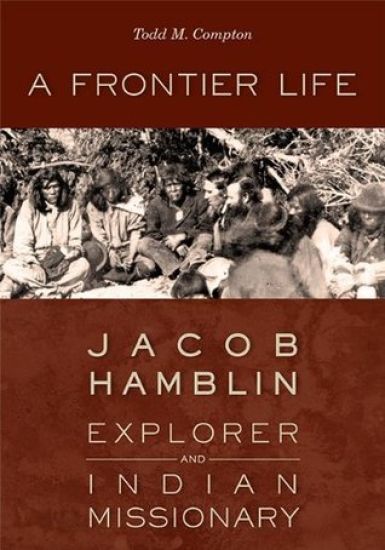
Jacob Hamblin has long been one of the most enigmatic figures in Mormon history. In this defining biography, Todd Compton reconstructs the fascinating life of the frontiersman, coloniser, missionary to the Indians, and explorer of the American West. With impeccable attention to detail, Compton examines and disentangles many of the myths and controversies surrounding this well-known figure. Hamblin’s Grand Canyon adventures and explorations as a guide alongside John Wesley Powell are well documented, as are his roles as a missionary, cultural liaison, and negotiator to the Indian tribes of southern Utah and Arizona. Hamblin struggled in this latter role, sometimes unable to bridge the gulf between Mormonism and Indian culture. He disavowed violent conflict and ceaselessly sought peaceful resolutions where others resorted to punitive action. He strove above all for mutual understanding in the absence of conversion. A Frontier Life provides a rich narrative that fleshes out a picture of a sometimes vilified figure, particularly in regard to his connection to the infamous Mountain Meadows Massacre where Compton provides nuanced discussion clarifying Hamblin’s postmassacre role—he was not present at the massacre, but reported on it to both Brigham Young and military investigators. Compton’s engagement with Mormon historiography and previous Hamblin portrayals will make this work of particular interest to both scholars and students. The casual reader will take pleasure in learning of a true pioneer who lived life at the geographical, cultural, and spiritual boundaries of his era. This dramatic, entertaining biography is a truly significant contribution to Mormon history.
A Frontier Life

A Frontier Life

Todd M. Compton

University of Utah Press,U.S.
2025
nidottu
Winner of the Juanita Brooks Prize in Mormon Studies Winner of the Evans Biography Award, the John Whitmer Historical Society Best Biography Award, and the Francis Armstrong Madsen Best Book Award Frontiersman, colonizer, missionary to the Indians, and explorer of the American West, Jacob Hamblin has long been one of the most enigmatic figures in Mormon history. In this defining biography, Todd Compton examines and disentangles many of the myths and controversies surrounding Hamblin. His Grand Canyon adventures and explorations as a guide alongside John Wesley Powell are well documented, as are his roles as a missionary, cultural liaison, and negotiator to the Indian tribes of southern Utah and Arizona. Hamblin struggled in this latter role, sometimes unable to bridge the gulf between Mormonism and Indian culture. He disavowed violent conflict and ceaselessly sought peaceful resolutions where others resorted to punitive action. He strove above all for mutual understanding in the absence of conversion. A Frontier Life provides a rich narrative that fleshes out a picture of a sometimes vilified figure, particularly in regard to his connection to the infamous Mountain Meadows Massacre, where Compton provides nuanced discussion clarifying Hamblin’s post-massacre role—he was not present at the massacre, but reported on it to both Brigham Young and military investigators. Compton’s engagement with Mormon historiography and previous Hamblin portrayals will make this work of particular interest to both scholars and students. The casual reader will take pleasure in learning of a true pioneer who lived life at the geographical, cultural, and spiritual boundaries of his era. This dramatic, entertaining biography is a truly significant contribution to Mormon history.