Kirjojen hintavertailu. Mukana 11 244 527 kirjaa ja 12 kauppaa.

Kirjahaku

Etsi kirjoja tekijän nimen, kirjan nimen tai ISBN:n perusteella.

31 kirjaa tekijältä Todd May

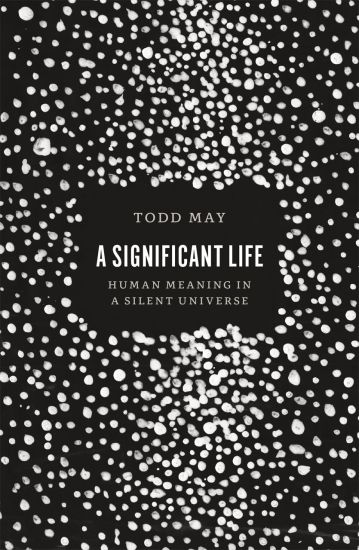
A Significant Life

A Significant Life

Todd May

University of Chicago Press
2016
nidottu
What makes for a good life, or a beautiful one, or, perhaps most important, a meaningful one? Throughout history most of us have looked to our faith, our relationships, or our deeds for the answer. But in A Significant Life, philosopher Todd May offers an exhilarating new way of thinking about these questions, one deeply attuned to life as it actually is: a work in progress, a journey and often a narrative. Offering moving accounts of his own life and memories alongside rich engagements with philosophers from Aristotle to Heidegger, he shows us where to find the significance of our lives: in the way we live them. May starts by looking at the fundamental fact that life unfolds over time, and as it does so, it begins to develop certain qualities, certain themes. Our lives can be marked by intensity, curiosity, perseverance, or many other qualities that become guiding narrative values. These values lend meanings to our lives that are distinct from but also interact with the universal values we are taught to cultivate, such as goodness or happiness. Offering a fascinating examination of a broad range of figures from music icon Jimi Hendrix to civil rights leader Fannie Lou Hamer, from cyclist Lance Armstrong to The Portrait of a Lady's Ralph Touchett to Claus von Stauffenberg, a German officer who tried to assassinate Hitler May shows that narrative values offer a rich variety of criteria by which to assess a life, specific to each of us and yet widely available. They offer us a way of reading ourselves, who we are, and who we might like to be. Clearly and eloquently written, A Significant Life is a recognition and a comfort, a celebration of the deeply human narrative impulse by which we make even if we don't realize it meaning for ourselves. It offers a refreshing way to think of an age-old question, of quite simply, what makes a life worth living.
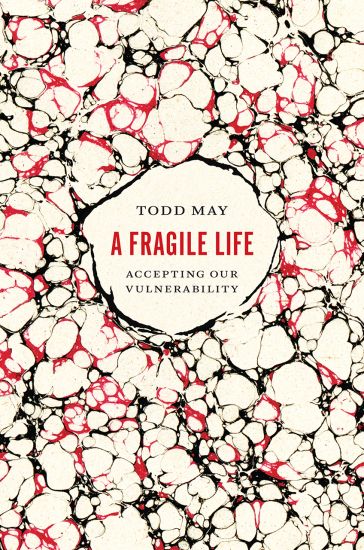
A Fragile Life

A Fragile Life

Todd May

University of Chicago Press
2017
sidottu
It is perhaps our noblest cause, and certainly one of our oldest: to end suffering. Think of the Buddha, Chuang Tzu, or Marcus Aurelius: stoically composed figures impervious to the torments of the wider world, living their lives in complete serenity and teaching us how to do the same. After all, isn't a life free from suffering the ideal? Isn't it what so many of us seek? Absolutely not, argues Todd May in this provocative but compassionate book. In a moving examination of life and the trials that beset it, he shows that our fragility, our ability to suffer, is actually one of the most important aspects of our humanity. May starts with a simple but hard truth: suffering is inevitable. At the most basic level, we suffer physically a sprained ankle or a bad back. But we also suffer insults and indifference. We suffer from overburdened schedules and unforeseen circumstances, from moral dilemmas and emotional heartaches. Even just thinking about our own mortality the fact that we only live one life can lead us to tremendous suffering. No wonder philosophies such as Buddhism, Taosim, Stoicism, and even Epicureanism all of which counsel us to rise above these plights have had appeal over the centuries. May highlights the tremendous value of these philosophies and the ways they can guide us toward better lives, but he also exposes a major drawback to their tenets: such invulnerability is too emotionally disengaged from the world, leading us to place too great a distance between ourselves and our experience. Rather than seeking absolute immunity, he argues most of us just want to hurt less and learn how to embrace and accept what suffering we do endure in a meaningful way. Offering a guide on how to positively engage suffering, May ultimately lays out a new way of thinking about how we exist in the world, one that reassures us that our suffering, rather than a failure of physical or psychological resilience, is a powerful and essential part of life itself.
A Decent Life

A Decent Life

Todd May

University of Chicago Press
2019
sidottu
You're probably never going to be a saint. Even so, let's face it: you could be a better person. We all could. But what does that mean for you? In a world full of suffering and deprivation, it's easy to despair--and it's also easy to judge ourselves for not doing more. Even if we gave away everything we own and devoted ourselves to good works, it wouldn't solve all the world's problems. It would make them better, though. So is that what we have to do? Is anything less a moral failure? Can we lead a fundamentally decent life without taking such drastic steps? Todd May has answers. He's not the sort of philosopher who tells us we have to be model citizens who display perfect ethics in every decision we make. He's realistic: he understands that living up to ideals is a constant struggle. In A Decent Life, May leads readers through the traditional philosophical bases of a number of arguments about what ethics asks of us, then he develops a more reasonable and achievable way of thinking about them, one that shows us how we can use philosophical insights to participate in the complicated world around us. He explores how we should approach the many relationships in our lives--with friends, family, animals, people in need--through the use of a more forgiving, if no less fundamentally serious, moral compass. With humor, insight, and a lively and accessible style, May opens a discussion about how we can, realistically, lead the good life that we aspire to. A philosophy of goodness that leaves it all but unattainable is ultimately self-defeating. Instead, Todd May stands at the forefront of a new wave of philosophy that sensibly reframes our morals and redefines what it means to live a decent life.
A Decent Life

A Decent Life

Todd May

University of Chicago Press
2021
nidottu
You’re probably never going to be a saint. Even so, let’s face it: you could be a better person. We all could. But what does that mean for you? In a world full of suffering and deprivation, it’s easy to despair—and it’s also easy to judge ourselves for not doing more. Even if we gave away everything we own and devoted ourselves to good works, it wouldn’t solve all the world’s problems. It would make them better, though. So is that what we have to do? Is anything less a moral failure? Can we lead a fundamentally decent life without taking such drastic steps? Todd May has answers. He’s not the sort of philosopher who tells us we have to be model citizens who display perfect ethics in every decision we make. He’s realistic: he understands that living up to ideals is a constant struggle. In A Decent Life, May leads readers through the traditional philosophical bases of a number of arguments about what ethics asks of us, then he develops a more reasonable and achievable way of thinking about them, one that shows us how we can use philosophical insights to participate in the complicated world around us. He explores how we should approach the many relationships in our lives—with friends, family, animals, people in need—through the use of a more forgiving, if no less fundamentally serious, moral compass. With humor, insight, and a lively and accessible style, May opens a discussion about how we can, realistically, lead the good life that we aspire to. A philosophy of goodness that leaves it all but unattainable is ultimately self-defeating. Instead, Todd May stands at the forefront of a new wave of philosophy that sensibly reframes our morals and redefines what it means to live a decent life.
A Fragile Life

A Fragile Life

Todd May

THE UNIVERSITY OF CHICAGO PRESS
2025
nidottu
Offering a guide on how to positively engage suffering, Todd May ultimately lays out a new way of thinking about how we exist in the world, one that reassures us that our suffering, rather than a failure of physical or psychological resilience, is a powerful and essential part of life itself It is perhaps our noblest cause, and certainly one of our oldest: to end suffering. Think of the Buddha, Chuang Tzu, or Marcus Aurelius: stoically composed figures impervious to the torments of the wider world, living their lives in complete serenity—and teaching us how to do the same. After all, isn’t a life free from suffering the ideal? Isn’t it what so many of us seek? Absolutely not, argues Todd May in this provocative but compassionate book. In a moving examination of life and the trials that beset it, he shows that our fragility, our ability to suffer, is actually one of the most important aspects of our humanity. May starts with a simple but hard truth: suffering is inevitable. At the most basic level, we suffer physically—a sprained ankle or a bad back. But we also suffer insults and indifference. We suffer from overburdened schedules and unforeseen circumstances, from moral dilemmas and emotional heartaches. Even just thinking about our own mortality—the fact that we only live one life—can lead us to tremendous suffering. No wonder philosophies such as Buddhism, Taosim, Stoicism, and even Epicureanism—all of which counsel us to rise above these plights—have had appeal over the centuries. May highlights the tremendous value of these philosophies and the ways they can guide us toward better lives, but he also exposes a major drawback to their tenets: such invulnerability is too emotionally disengaged from the world, leading us to place too great a distance between ourselves and our experience. Rather than seeking absolute immunity, he argues most of us just want to hurt less and learn how to embrace and accept what suffering we do endure in a meaningful way.
The Moral Theory of Poststructuralism

The Moral Theory of Poststructuralism

Todd May

Pennsylvania State University Press
1995
pokkari
Both Anglo-American and Continental thinkers have long denied that there can be a coherent moral defense of the poststructuralist politics of Michel Foucault, Gilles Deleuze, and Jean-François Lyotard. For many Anglo-American thinkers, as well as for Critical Theorists such as Habermas, poststructuralism is not coherent enough to defend morally. Alternatively, for Foucault, Deleuze, Lyotard, and their followers, the practice of moral theorizing is passé at best and more likely insidious.Todd May argues both that a moral defense of poststructuralism is necessary and that it is possible. First, he develops a metaethical view of moral theorizing that treats it as a social practice rather than a transcendentally derived guarantee for right action. He then articulates and defends antirepresentationalism, a principle central to poststructuralism. Finally, May offers a version of consequentialism that is consonant both with the principle of antirepresentationalism and with other poststructuralist commitments. In conclusion, he distinguishes morality from an aesthetics of living and shows the role the latter plays for those who embrace antirepresentationalism.
Between Genealogy and Epistemology

Between Genealogy and Epistemology

Todd May

Pennsylvania State University Press
1993
pokkari
Michel Foucault introduced a new form of political thinking and discourse. Rather than seeking to understand the grand unities of state, economy, or exploitation, he tried to discover the micropolitical workings of everyday life that have often founded the greater unities. He was particularly concerned with how we understand ourselves psychologically, and thus with how psychological knowledge developed and came to be accepted as true. In the course of his writings, he developed a genealogy of psychology, an account of psychology as a historically developed practice of power.The problem such an account raises for much of traditional philosophy is that Foucault's critique of psychological concepts is ultimately a critique of the idea of the mind as a politically neutral ontological concept. As such, it renders politically suspect all forms of subjective foundationalism, and the epistemological justification for Foucault's own writings is then called into question. Drawing on the writings of such Anglo-American philosophers as Wilfrid Sellars and Ludwig Wittgenstein, Todd May refutes the idea that Foucault's critiques of knowledge, and especially psychological knowledge, undermine themselves.
The Political Philosophy of Poststructuralist Anarchism

The Political Philosophy of Poststructuralist Anarchism

Todd May

Pennsylvania State University Press
1994
pokkari
The political writings of the French poststructuralists have eluded articulation in the broader framework of general political philosophy primarily because of the pervasive tendency to define politics along a single parameter: the balance between state power and individual rights in liberalism and the focus on economic justice as a goal in Marxism. What poststructuralists like Michel Foucault, Gilles Deleuze, and Jean-François Lyotard offer instead is a political philosophy that can be called tactical: it emphasizes that power emerges from many different sources and operates along many different registers. This approach has roots in traditional anarchist thought, which sees the social and political field as a network of intertwined practices with overlapping political effects. The poststructuralist approach, however, eschews two questionable assumptions of anarchism, that human beings have an (essentially benign) essence and that power is always repressive, never productive.After positioning poststructuralist political thought against the background of Marxism and the traditional anarchism of Bakunin, Kropotkin, and Proudhon, Todd May shows what a tactical political philosophy like anarchism looks like shorn of its humanist commitments—namely, a poststructuralist anarchism. The book concludes with a defense, contra Habermas and Critical Theory, of poststructuralist political thought as having a metaethical structure allowing for positive ethical commitments.
Reconsidering Difference

Reconsidering Difference

Todd May

Pennsylvania State University Press
1997
pokkari
French philosophy since World War II has been preoccupied with the issue of difference. Specifically, it has wanted to promote or to leave room for ways of living and of being that differ from those usually seen in contemporary Western society. Given the experience of the Holocaust, the motivation for such a preoccupation is not difficult to see. For some thinkers, especially Jean-Luc Nancy, Jacques Derrida, Emmanuel Levinas, and Gilles Deleuze, this preoccupation has led to a mode of philosophizing that privileges difference as a philosophical category. Nancy privileges difference as a mode of conceiving community, Derrida as a mode of conceiving linguistic meaning, Levinas as a mode of conceiving ethics, and Deleuze as a mode of conceiving ontology.Reconsidering Difference has a twofold task, the primary one critical and the secondary one reconstructive. The critical task is to show that these various privilegings are philosophical failures. They wind up, for reasons unique to each position, endorsing positions that are either incoherent or implausible. Todd May considers the incoherencies of each position and offers an alternative approach. His reconstructive task, which he calls "contingent holism," takes the phenomena under investigation—community, language, ethics, and ontology—and sketches a way of reconceiving them that preserves the motivations of the rejected positions without falling into the problems that beset them.
Gilles Deleuze

Gilles Deleuze

Todd May

Cambridge University Press
2005
sidottu
This book offers a readable and compelling introduction to the work of one of the twentieth century’s most important and elusive thinkers. Other books have tried to explain Deleuze in general terms. Todd May organizes his book around a central question at the heart of Deleuze’s philosophy: how might we live? The author then goes on to explain how Deleuze offers a view of the cosmos as a living thing that provides ways of conducting our lives that we may not have dreamed of. Through this approach the full range of Deleuze’s philosophy is covered. Offering a lucid account of a highly technical philosophy, Todd May’s introduction will be widely read amongst those in philosophy, political science, cultural studies and French studies.
Should We Go Extinct?

Should We Go Extinct?

Todd May

RANDOM HOUSE USA INC
2024
sidottu
Philosophical advisor to the hit NBC sitcom The Good Place contemplates the future of humanity--whether we should bring new humans into the world, or if the world would be better without us These days it's harder than ever to read a paper, watch TV, or even just sit at home looking out the window without contemplating the title question of philosopher Todd May's book: Should We Go Extinct? We live in an age characterized by worries about human extinction, particularly in light of the environmental changes wrought by the climate crisis. Discussion of our possible demise appears in newspapers and magazines around the country as well as on social media and at dinner tables. However, we have yet to confront directly the ultimate question of whether we should still be here in the first place. Now, more than ever, many people wonder whether we should bring more human beings into the world when it seems increasingly clear that not only do we face bleak prospects as a species but also that we seem powerless to rein in the damage our existence causes the Earth and those we share it with. In Should We Go Extinct? May reasons both for and against further procreation. He discusses the value that only humans can bring to the world and to one another as well as the goods, like art and music, that would be lost were we no longer to be here. On the other side of the ledger, he details the suffering we cause to nature and the non-human world. May considers the prospects and the complexities involved with such changes as an end to factory farming, curbing scientific testing of animals, reducing the human population, and seeking to develop empathy with our fellow creatures. In this brief but important book, May asks an essential question: How do we value what human beings add to the world against the harm and pain we cause each other and other living creatures? With sensitivity and wit, he offers a framework for an approach to the future that will make the book's title question feel less urgent--and more likely to elicit a humane response.
Friendship in an Age of Economics

Friendship in an Age of Economics

Todd May

Lexington Books
2012
sidottu
We live in an age of economics. We are encouraged not only to think of our work but also of our lives in economic terms. In many of our practices, we are told that we are consumers and entrepreneurs. What has come to be called neoliberalism is not only a theory of market relations; it is a theory of human relations. Friendship in an Age of Economics both describes and confronts this new reality. It confronts it on some familiar terrain: that of friendship. Friendship, particularly close or deep friendship, resists categorization into economic terms. In a sustained investigation of friendship, this book shows how friendship offers an alternative to neoliberal relationships and can help lay the groundwork for resistance to it.
Friendship in an Age of Economics

Friendship in an Age of Economics

Todd May

Lexington Books
2014
nidottu
We live in an age of economics. We are encouraged not only to think of our work but also of our lives in economic terms. In many of our practices, we are told that we are consumers and entrepreneurs. What has come to be called neoliberalism is not only a theory of market relations; it is a theory of human relations. Friendship in an Age of Economics both describes and confronts this new reality. It confronts it on some familiar terrain: that of friendship. Friendship, particularly close or deep friendship, resists categorization into economic terms. In a sustained investigation of friendship, this book shows how friendship offers an alternative to neoliberal relationships and can help lay the groundwork for resistance to it.
Nonviolent Resistance

Nonviolent Resistance

Todd May

Polity Press
2015
sidottu
We see nonviolent resistance all over today’s world, from Egypt’s Tahrir Square to New York Occupy. Although we think of the last century as one marked by wars and violent conflict, in fact it was just as much a century of nonviolence as the achievements of Mohandas Gandhi and Martin Luther King, Jr. and peaceful protests like the one that removed Ferdinand Marcos from the Philippines clearly demonstrate. But what is nonviolence? What makes a campaign a nonviolent one, and how does it work? What values does it incorporate? In this unique study, Todd May, a philosopher who has himself participated in campaigns of nonviolent resistance, offers the first extended philosophical reflection on the particular and compelling political phenomenon of nonviolence. Drawing on both historical and contemporary examples, he examines the concept and objectives of nonviolence, and considers the different dynamics of nonviolence, from moral jiu-jitsu to nonviolent coercion. May goes on to explore the values that infuse nonviolent activity, especially the respect for dignity and the presupposition of equality, before taking a close-up look at the role of nonviolence in today’s world. Students of politics, peace studies, and philosophy, political activists, and those interested in the shape of current politics will find this book an invaluable source for understanding one of the most prevalent, but least reflected upon, political approaches of our world.
Nonviolent Resistance

Nonviolent Resistance

Todd May

Polity Press
2015
nidottu
We see nonviolent resistance all over today’s world, from Egypt’s Tahrir Square to New York Occupy. Although we think of the last century as one marked by wars and violent conflict, in fact it was just as much a century of nonviolence as the achievements of Mohandas Gandhi and Martin Luther King, Jr. and peaceful protests like the one that removed Ferdinand Marcos from the Philippines clearly demonstrate. But what is nonviolence? What makes a campaign a nonviolent one, and how does it work? What values does it incorporate? In this unique study, Todd May, a philosopher who has himself participated in campaigns of nonviolent resistance, offers the first extended philosophical reflection on the particular and compelling political phenomenon of nonviolence. Drawing on both historical and contemporary examples, he examines the concept and objectives of nonviolence, and considers the different dynamics of nonviolence, from moral jiu-jitsu to nonviolent coercion. May goes on to explore the values that infuse nonviolent activity, especially the respect for dignity and the presupposition of equality, before taking a close-up look at the role of nonviolence in today’s world. Students of politics, peace studies, and philosophy, political activists, and those interested in the shape of current politics will find this book an invaluable source for understanding one of the most prevalent, but least reflected upon, political approaches of our world.
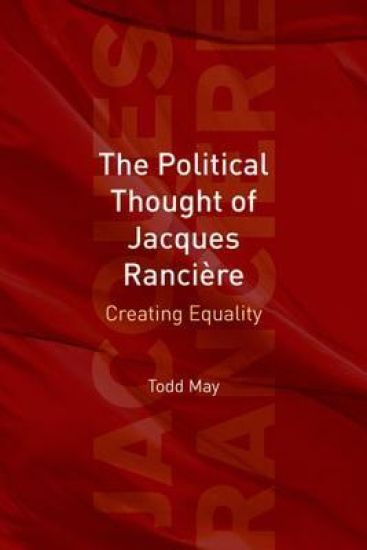
The Political Thought of Jacques Ranciere

The Political Thought of Jacques Ranciere

Todd May

Edinburgh University Press
2008
sidottu
Equality is not something that we must expect from state institutions. It is something that we must both presuppose and create through collective action. Todd May investigates in depth the philosophical grounds, ethical implications and practical consequences of the view of active equality. Much more than a commentary, his book is a powerful analysis of what politics means and how we can recover the project of political action. Jacques Ranciere This is the first single-authored book in any language devoted entirely to the thought of Jacques Ranciere. It focuses on his central political idea that a democratic politics emerges from the presupposition of equality. Todd May examines and extends this presupposition, offering a framework for understanding it, placing it in the current political context, and showing how it challenges traditional political philosophy and opens up neglected political paths. May aims to show that Ranciere's view offers both hope and perspective for those who seek to think about and engage in progressive political action. Key Features * offers a thorough discussion of Ranciere's concept of equality * provides an ethical framework in which to ground his politics * shows why Ranciere is crucial for political reflection today * both translated and untranslated works are referred to
The Political Thought of Jacques Ranciere

The Political Thought of Jacques Ranciere

Todd May

Edinburgh University Press
2008
nidottu
Equality is not something that we must expect from state institutions. It is something that we must both presuppose and create through collective action. Todd May investigates in depth the philosophical grounds, ethical implications and practical consequences of the view of active equality. Much more than a commentary, his book is a powerful analysis of what politics means and how we can recover the project of political action. Jacques Ranciere This is the first single-authored book in any language devoted entirely to the thought of Jacques Ranciere. It focuses on his central political idea that a democratic politics emerges from the presupposition of equality. Todd May examines and extends this presupposition, offering a framework for understanding it, placing it in the current political context, and showing how it challenges traditional political philosophy and opens up neglected political paths. May aims to show that Ranciere's view offers both hope and perspective for those who seek to think about and engage in progressive political action. Key Features * offers a thorough discussion of Ranciere's concept of equality * provides an ethical framework in which to ground his politics * shows why Ranciere is crucial for political reflection today * both translated and untranslated works are referred to
Contemporary Political Movements and the Thought of Jacques Ranciere
In this book, Todd May shows how democratic progressive politics can happen and how it is happening in very different arenas. He takes an intensive look at a range of contemporary political movements and shows how, to one degree or another, they exemplify the political thought of Jacques Ranciere. May's easy, clear writing style means that no philosophical background is required. Following an essential overview of Ranciere's thought he considers the following groups: the Algerian refugee movement in Montreal for citizenship, the first Palestinian intifada, the politics of equality and identity politics in relation to the Zapatista movement, a local food co-op in South Carolina and an anarchist press in Oakland. Essentially this book shows how political theory and practice can enlighten one another and in an age of cynicism, fear and despair, Todd May suggests there is hope for the possibility of progressive democratic action. It will appeal to Ranciere students, scholars and political activists alike.