Kirjojen hintavertailu. Mukana 11 244 527 kirjaa ja 12 kauppaa.

Kirjahaku

Etsi kirjoja tekijän nimen, kirjan nimen tai ISBN:n perusteella.

5 kirjaa tekijältä Toft Robert

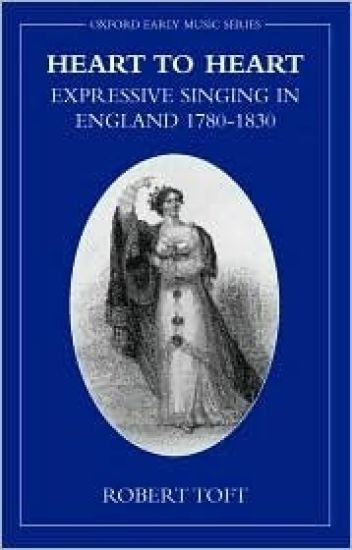
Heart to Heart

Heart to Heart

Toft Robert

Oxford University Press
2000
sidottu
This book establishes the principles of interpretation that singers active in England (both foreign and English) applied to recitatives, arias, and songs, by composers such as Handel, Mozart, and Rossini. Expression lay at the heart of persuasive singing during the late eighteenth and early nineteenth centuries and Robert Toft here ably places the concept and its practices in a broad cultural perspective. Singing was related closely to speaking in this period: when the techniques of delivery that were common to both arts (emphasis, accent, tone of voice, pauses, breathing, and gesture) are combined with resources peculiar to singing (portamento, messa di voce, tempo, rubato, vibrato, and ornamentation), the style which emerges differs markedly from that of the late twentieth century. Most singers today perform the repertoire of the late eighteenth and early nineteenth centuries, but until now no book has addressed the principles which governed song performance in this period or shown how historical understandings may be used to move and delight modern audiences.
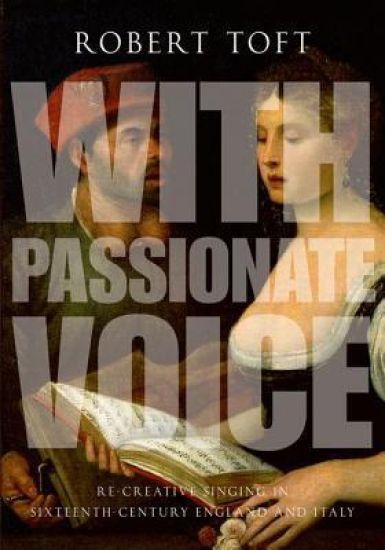
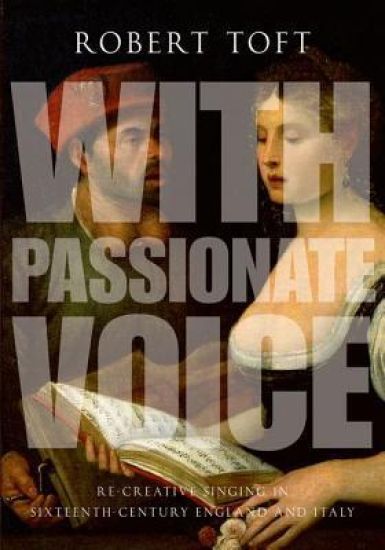
With Passionate Voice

With Passionate Voice

Toft Robert

Oxford University Press Inc
2015
sidottu
Musicians in the 16th century had a vastly different understanding of the structure and performance of music than today's performers. In order to transform inexpressively notated music into passionate declamation, Renaissance singers treated scores freely, and it was expected that each would personalize the music through various modifications, which included ornamentation. Their role was one of musical re-creation rather than of simple interpretation—the score represented a blueprint, not a master plan, upon which they as performer built the music. As is now commonly recognized, this flexible approach to scores changed over the centuries; the notation on the page itself became an ostensible musical Urtext and performers began following it much more closely, their sole purpose being to reproduce what was thought to be the composer's intentions. Yet in recent years, scholars and performers are once again freeing themselves from the written page—but the tools for doing so have long been out of reach. With Passionate Voice gives these tools to modern singers of Renaissance music, enabling them to learn and master the art of "re-creative singing." Providing a much-needed historically-informed perspective, author Robert Toft discusses the music of composers ranging from Marchetto Cara to John Dowland in the context of late Renaissance rhetoric, modal theory (and its antecedents in language), and performance traditions. Focusing on period practice in England and Italy, the two countries which produced the music of greatest interest to today's performers, Toft reconstructs the style of sung delivery through contemporary treatises on music, rhetoric and oratory. Toft remains faithful to the ways these principles were explained in the period, and thus breathes new life into this vital art form. With Passionate Voice is sure to be essential for vocalists, teachers and coaches of early music repertoire.
With Passionate Voice

With Passionate Voice

Toft Robert

Oxford University Press Inc
2015
nidottu
Musicians in the 16th century had a vastly different understanding of the structure and performance of music than today's performers. In order to transform inexpressively notated music into passionate declamation, Renaissance singers treated scores freely, and it was expected that each would personalize the music through various modifications, which included ornamentation. Their role was one of musical re-creation rather than of simple interpretation—the score represented a blueprint, not a master plan, upon which they as performer built the music. As is now commonly recognized, this flexible approach to scores changed over the centuries; the notation on the page itself became an ostensible musical Urtext and performers began following it much more closely, their sole purpose being to reproduce what was thought to be the composer's intentions. Yet in recent years, scholars and performers are once again freeing themselves from the written page—but the tools for doing so have long been out of reach. With Passionate Voice gives these tools to modern singers of Renaissance music, enabling them to learn and master the art of "re-creative singing." Providing a much-needed historically-informed perspective, author Robert Toft discusses the music of composers ranging from Marchetto Cara to John Dowland in the context of late Renaissance rhetoric, modal theory (and its antecedents in language), and performance traditions. Focusing on period practice in England and Italy, the two countries which produced the music of greatest interest to today's performers, Toft reconstructs the style of sung delivery through contemporary treatises on music, rhetoric and oratory. Toft remains faithful to the ways these principles were explained in the period, and thus breathes new life into this vital art form. With Passionate Voice is sure to be essential for vocalists, teachers and coaches of early music repertoire.
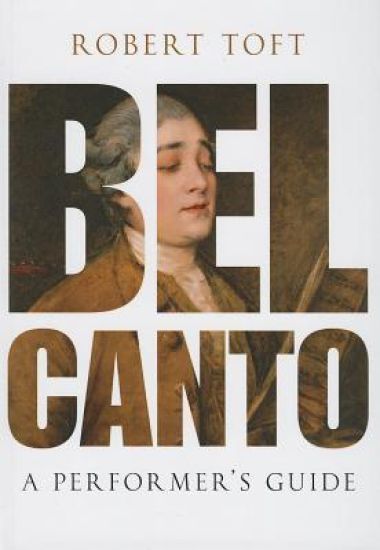
Bel Canto

Bel Canto

Toft Robert

Oxford University Press Inc
2013
sidottu
The art of bel canto, or 'beautiful singing,' is perhaps the most referenced and yet the most enigmatic and elusive style in the repertoire of the classically trained singer. During the bel canto era of the late eighteenth and early nineteenth centuries, composers routinely left the final shaping of recitatives, arias, and songs to performers. Vocalists in turn treated scores as a starting point for interpretation and personalized the music as their own, rather than merely giving voice to the score as written, transforming otherwise inexpressively notated music into passionate declamation. In other words, singers saw their role more as one of re-creation than of simple interpretation. Familiarity with the range of strategies prominent vocalists of the past employed to unlock the eloquent expression hidden in scores enables modern singers to take a similar re-creative approach to enhancing the texts before them. In this first ever guide to the bel canto style, author Robert Toft provides singers with the tools they need to bring scores to life in an historically informed manner. Replete with illustrations based on excerpts from Italianate recitatives and arias by composers ranging from Handel to Mozart, each chapter offers a theoretical discussion of one fundamental aspect of bel canto, followed by a practical application of the principals involved. Drawing on a wealth of documents surviving the era, including treatises, scores, newspaper reviews, and letters, this book reflects the breadth of practices utilized by singers of the bel canto era, affording modern day vocalists the opportunity to not only how singers altered and embellished the texts before them, but also to develop their own personal style of doing so. Complete with six complete aria scores for performers to personalize through bel canto techniques, and a companion website offering demonstrations of the principles explained, Bel Canto is an essential resource to any singer or vocal instructor looking to explore and master this repertoire.
Bel Canto

Bel Canto

Toft Robert

Oxford University Press Inc
2013
nidottu
The art of bel canto, or 'beautiful singing,' is perhaps the most referenced and yet the most enigmatic and elusive style in the repertoire of the classically trained singer. During the bel canto era of the late eighteenth and early nineteenth centuries, composers routinely left the final shaping of recitatives, arias, and songs to performers. Vocalists in turn treated scores as a starting point for interpretation and personalized the music as their own, rather than merely giving voice to the score as written, transforming otherwise inexpressively notated music into passionate declamation. In other words, singers saw their role more as one of re-creation than of simple interpretation. Familiarity with the range of strategies prominent vocalists of the past employed to unlock the eloquent expression hidden in scores enables modern singers to take a similar re-creative approach to enhancing the texts before them. In this first ever guide to the bel canto style, author Robert Toft provides singers with the tools they need to bring scores to life in an historically informed manner. Replete with illustrations based on excerpts from Italianate recitatives and arias by composers ranging from Handel to Mozart, each chapter offers a theoretical discussion of one fundamental aspect of bel canto, followed by a practical application of the principals involved. Drawing on a wealth of documents surviving the era, including treatises, scores, newspaper reviews, and letters, this book reflects the breadth of practices utilized by singers of the bel canto era, affording modern day vocalists the opportunity to not only how singers altered and embellished the texts before them, but also to develop their own personal style of doing so. Complete with six complete aria scores for performers to personalize through bel canto techniques, and a companion website offering demonstrations of the principles explained, Bel Canto is an essential resource to any singer or vocal instructor looking to explore and master this repertoire.