
Kirjahaku
Etsi kirjoja tekijän nimen, kirjan nimen tai ISBN:n perusteella.
17 kirjaa tekijältä Tom Griffiths

The Moulster and Griffiths Learning Disability Nursing Model
Hayley Goleniowska; Tom Griffiths; Helen Laverty; Emily Smith
Jessica Kingsley Publishers
2019
pokkari
The Moulster and Griffiths nursing model is the first developed specifically for learning disability nurses. This book describes the model and offers a solid framework to assess, plan, reflect on and evaluate person-centred care. With approximately 1.5 million people in Britain living with a learning disability and a proven correlation between the use of models of care and the achievements of outcomes for those supported, this book is the perfect tool for learning disability nurses. It ensures that there is a shared vision for learning disability nursing practice, and helps nurses address a wide variety of heath care needs.By providing an in-depth description of the model and accompanying downloadable material, the book provides a dedicated structure for learning disability nursing, and remains unique in its transferability to different clinical settings.
This beautifully written book tells the story of Australia's giant eucalypt, the Mountain Ash, which grows in the region north and east of Melbourne. A single tree can reach a height of 120 feet in 20 years, making it the tallest hardwood in the world. While celebrating the steep, wet, dense eastern forests of Australia, Tom Griffiths shows that they can be far from benign. Dependent on fire for their survival, this awesome natural vegetation can become a source of destruction, forcing people to confront their relationship with the bush. Visited seasonally by indigenous people and later a site of mining and saw-milling for settlers, as well as contested ground for conservationists, the life cycles and fire cycles of the forests span millennia. Tom Griffiths tells the environmental, ecological and social history of a unique Australian forest, and, in doing so, tells the story of the continent as a whole.
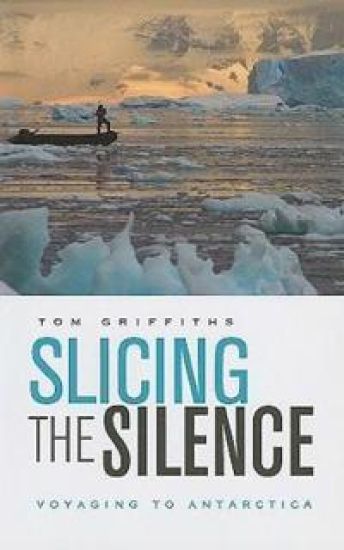
From Scott and Shackleton to sled dogs and penguins, stories of Antarctica seize our imagination. In December 2002, environmental historian Tom Griffiths set sail with the Australian Antarctic Division to deliver the new team of winterers. In this beautifully written book, Griffiths reflects on the history of human experiences in Antarctica, taking the reader on a journey of discovery, exploration, and adventure in an unforgettable land.He weaves together meditations on shipboard life during his three-week voyage with fascinating forays into the history and nature of Antarctica. He brings alive the great age of sail in the initiation of travelers to the great winds of the “roaring forties.” No continent is more ruled by wind, and Griffiths explains why Antarctica is a barometer of global climatic health. He charts the race to the South Pole, from its inception as part of the drive to map Earth’s magnetism, to the reasons for Robert Scott’s tragic death. He also offers vivid descriptions of life in Antarctica, such as the experience of a polar night, the importance of food for morale, and coping with solitude.A charming narrative and an informative history, Slicing the Silence is an intimate portrait of the last true wilderness.
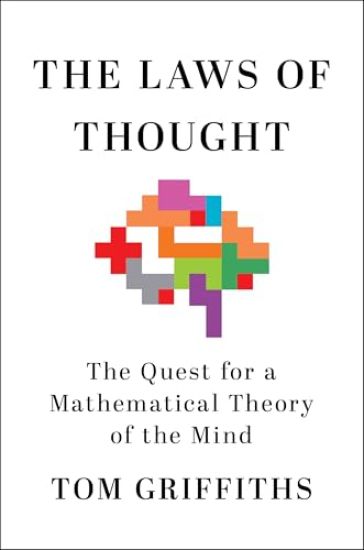
The Laws of Thought: The Quest for a Mathematical Theory of the Mind
Tom Griffiths
Henry Holt Company
2026
sidottu
From the coauthor of Algorithms to Live By, an exploration of the quest to use mathematics to describe the ways we think, from its origins three hundred years ago to the ideas behind modern AI systems and the ways in which they still differ from human minds Everyone has a basic understanding of how the physical world works. We learn about physics and chemistry in school, letting us explain the world around us in terms of concepts like force, acceleration, and gravity--the Laws of Nature. But we don't have the same fluency with concepts needed to understand the world inside us--the Laws of Thought. While the story of how mathematics has been used to reveal the mysteries of the universe is familiar, the story of how it has been used to study the mind is not. There is no one better to tell that story than Tom Griffiths, the head of Princeton's AI Lab and a renowned expert in the field of cognitive science. In this groundbreaking book, he explains the three major approaches to formalizing thought--rules and symbols, neural networks, and probability and statistics--introducing each idea through the stories of the people behind it. As informed conversations about thought, language, and learning become ever more pressing in the age of AI, The Laws of Thought is an essential read for anyone interested in the future of technology.


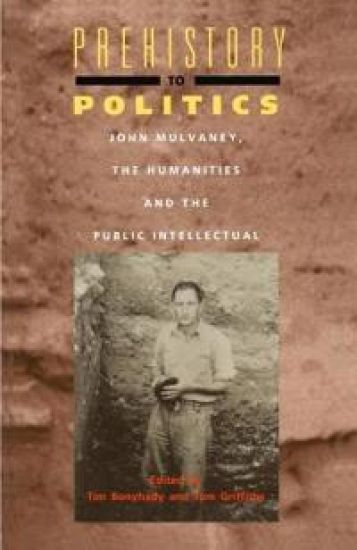
Who are public intellectuals? Why do they matter? What is the difference between an academic and an intellectual?Prehistory to Politics explores these issues by examining the life and work of John Mulvaney, one of Australia's foremost prehistorians, who has both changed our understanding of the past and made a major contribution to public debate and public policy about world heritage, archaeological and conservation practice, the function and operation of museums and the relevance of the humanities.A major campaigner for preservation of the Franklin River in the early 1980s, Mulvaney has also been an influential member of the Australian Heritage Commission and one of the most important advocates of the National Museum of Australia. He played a significant role in the campaign to preserve the site of First Government House in Sydney. Perhaps most controversially, he has been outspoken in his views about the return of skeletal remains by Australian Museums to Aboriginal people.In exploring these many facets of Mulvaney's work, Prehistory to Politics not only has much to say about the changing nature of Australian universities and the opportunities and obligations of academics but also casts new light on a wide set of archaeological, anthropological and environmental issues. It is both a history of ideas and a book about their implementation.
Walking In The Shadow Of The Son
Richard Griffiths; Tom Griffiths
Createspace Independent Publishing Platform
2017
nidottu
A fascinating exploration of how computer algorithms can be applied to our everyday lives.
Algorithms to Live by: The Computer Science of Human Decisions
Brian Christian; Tom Griffiths
Holt Paperbacks
2017
nidottu
An exploration of how computer algorithms can be applied to our everyday lives to solve common decision-making problems and illuminate the workings of the human mind. What should we do, or leave undone, in a day or a lifetime? How much messiness should we accept? What balance of the new and familiar is the most fulfilling? These may seem like uniquely human quandaries, but they are not. Computers, like us, confront limited space and time, so computer scientists have been grappling with similar problems for decades. And the solutions they've found have much to teach us. In a dazzlingly interdisciplinary work, Brian Christian and Tom Griffiths show how algorithms developed for computers also untangle very human questions. They explain how to have better hunches and when to leave things to chance, how to deal with overwhelming choices and how best to connect with others. From finding a spouse to finding a parking spot, from organizing one's inbox to peering into the future, Algorithms to Live By transforms the wisdom of computer science into strategies for human living.
Algorithms to Live by: The Computer Science of Human Decisions
Brian Christian; Tom Griffiths
Henry Holt Company
2016
sidottu
An exploration of how computer algorithms can be applied to our everyday lives to solve common decision-making problems and illuminate the workings of the human mind. What should we do, or leave undone, in a day or a lifetime? How much messiness should we accept? What balance of the new and familiar is the most fulfilling? These may seem like uniquely human quandaries, but they are not. Computers, like us, confront limited space and time, so computer scientists have been grappling with similar problems for decades. And the solutions they've found have much to teach us. In a dazzlingly interdisciplinary work, Brian Christian and Tom Griffiths show how algorithms developed for computers also untangle very human questions. They explain how to have better hunches and when to leave things to chance, how to deal with overwhelming choices and how best to connect with others. From finding a spouse to finding a parking spot, from organizing one's inbox to peering into the future, Algorithms to Live By transforms the wisdom of computer science into strategies for human living.


Matematika zhizni. Prostye algoritmy prinjatija vernykh reshenij
Brian Christian; Tom Griffiths
Alpina Publisher
2023
nidottu
Znaete, chto obschego mezhdu vyborom novoj kvartiry, poiskom sputnika zhizni i prodazhej zhilja? Vazhno ne prodeshevit i zhit dolgo i schastlivo. Kak eto sdelat s maksimalno vozmozhnoj garantiej uspekha? Otvet - "pravilo 37 %", kotoroe pozvoljaet najti optimalnyj balans mezhdu vremenem, potrachennym na poiski, i konechnoj vygodoj. A kak razobratsja s grudoj veschej v shkafu ili bystro rasstavit po alfavitu semejnuju biblioteku posle pereezda? Algoritm keshirovanija dannykh vam v pomosch! Nu a esli vy muchaetes s rassadkoj gostej na svadebnom bankete, metod relaksatsii - vashe spasenie.Dazhe esli ni odin iz upomjanutykh vyshe terminov vam ne znakom, ne rasstraivajtes i objazatelno prochtite knigu zhurnalista Brajana Kristiana i uchenogo-kognitivista Toma Griffitsa. Po ikh mneniju, programmisty i matematiki uzhe davno razrabotali algoritmy, kotorye pozvoljajut kompjuteram najti optimalnoe reshenie v zadannoe vremja i s minimalnymi zatratami sil i sredstv. Avtory knigi "Algoritmy dlja zhizni" schitajut, chto nam prosto neobkhodimo vospolzovatsja etimi narabotkami, i populjarno objasnjajut, kak imenno primenjat slozhnye matematicheskie algoritmy dlja reshenija povsednevnykh zadach, uspeshno izbegaja v svoikh objasnenijakh naukoobraznosti i izlishnego uproschenija.

Zhittja za algoritmami. Efektivnij sposib znajti kvartiru, kokhannja i parkovku
Brian Christian; Tom Griffiths
Nash Format
2020
sidottu
Inodi mi zazdrimo mashinam, jaki rozrakhovujut use do dribnits i ne pomiljajutsja. Ta scho, jak i ljudi mozhut zhiti za algoritmami j otrimuvati peredbachuvanij rezultat? Vigidno i vchasno prodati garazh, znajti sobi paru ta navit zv'jazati svetr. Jak stverdzhujut avtori, usi tsi diji mozhut buti uspishnimi, jakscho dotrimuvatisja pevnoji poslidovnosti krokiv, scho i je zagadkovim algoritmom.U tsij knizhtsi Brajan Kristian i Tom Griffits rozpovidajut pro teoriju, za osnovu jakoji vzjato doslidzhennja komp'juternikh algoritmiv, scho mozhut zastosovuvatisja dlja rozv'jazannja pobutovikh problem. Zhiti za algoritmami ne oznachaje isnuvati za odnomanitnoju skhemoju. Tse oznachaje shukati najkraschij variant virishennja problem, vitrachajuchi optimalnu kilkist zusil i chasu.Dlja shirokogo kola chitachiv, vsikh, khto khoche navchitis virishuvati tipovi problemi, z jakimi ljudi stikajutsja schodnja.PerekladachKaterina Disa