Kirjojen hintavertailu. Mukana 11 627 488 kirjaa ja 12 kauppaa.

Kirjahaku

Etsi kirjoja tekijän nimen, kirjan nimen tai ISBN:n perusteella.

6 kirjaa tekijältä Tom H. Hastings

Ecology of War & Peace

Ecology of War & Peace

Tom H. Hastings

University Press of America
2000
nidottu
How do mobilization for war and the actual war effort affect the environment? How do ecological conditions encourage war? What are possible, non-violent solutions to the ecological- conflict dynamic? Ecology of War & Peace attempts to answer these questions in readable prose with an unapologetic bias toward non-violence.
Meek Ain't Weak

Meek Ain't Weak

Tom H. Hastings

University Press of America
2002
nidottu
Meek Ain't Weak is a fresh examination of the indigenous roots of mass liberatory nonviolence. From African regions to South American culture, from Asian worldviews to the wisdom of the ancients of the subcontinent, the origins of nonviolent conduct in conflict are both important and ignored. This new approach to understanding national liberation and nonviolence will be of interest to those who study identity conflict, strategic studies, peace studies, international studies and the theory and practice of nonviolence.
Power

Power

Tom H. Hastings

Hamilton Books
2005
nidottu
In Power, Tom Hastings unpacks the methods, and considers causes and correlatives to violence and nonviolence. Hastings presents an overview of nonviolent power potential, examining it on personal, community, and transnational levels. He provides evidence of theories and historical records of nonviolent power through personal stories and the annals of human kind. Nonviolent alternatives are proposed and considered.
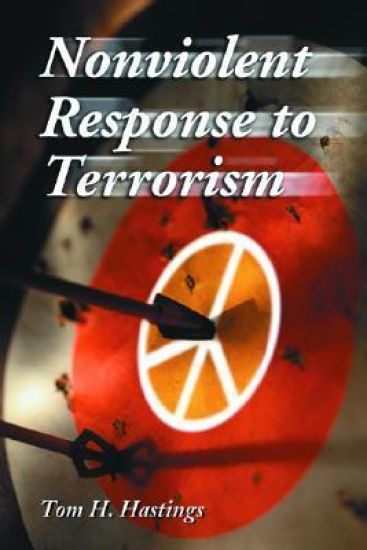
Nonviolent Response to Terrorism

Nonviolent Response to Terrorism

Tom H. Hastings

McFarland Co Inc
2004
pokkari
Terrorism, which by definition targets civilians, is unacceptable, but a violent response to violence usually causes more violence. This book outlines some of the best thinking about nonviolent methods of resisting terrorism in the growing fields of international aid and nonviolent interposition. The first section covers immediate nonviolent response to terrorism: international negotiations, mediations, and adjudication, UN and citizen sanctions, cross-cultural communication, citizen initiatives, international treaties and the World Court, the International Criminal Court, and nonviolent resistance through raising consciousness to mobilization and resisting state-sponsored terror. The second section, on long-term non-violent response to terrorism, discusses halting arms trade and militarism, stopping arms flow to terrorists, "defunding" the military, building sustainable just economies, aid to the poor, reducing privileged overconsumption, peace and conflict education, understanding and using the media, refugee repatriation, and helping indigenous liberation struggles. Instructors considering this book for use in a course may request an examination copy here.
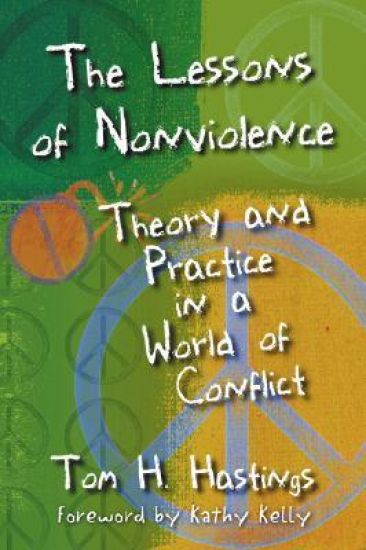
The Lessons of Nonviolence

The Lessons of Nonviolence

Tom H. Hastings

McFarland Co Inc
2006
pokkari
"Beginning back in the waning days of the Civil Rights movement, through the objection to the war in Vietnam, and on to the current global peace movement, this is a personal and professional account offered for the reader curious about whether and how nonviolence works"--Provided by publisher.
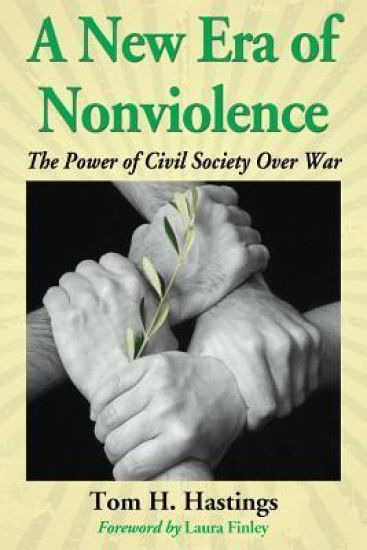
A New Era of Nonviolence

A New Era of Nonviolence

Tom H. Hastings

McFarland Co Inc
2014
pokkari
This book is an exploration of nonviolent strategies and tactics that have been used to prevent and end civil wars, invasions, and occupations. The problem of war is examined in light of efforts to transform destructive conflict into constructive conflict. Research into alternatives has produced a corpus of knowledge that enables civil society increasingly to expect success when it engages decision-makers in peaceful conflict resolution. The book asks the reader to consider the questions of social conflict using a cost-benefit analysis--which can reveal the advisability of strategic nonviolence. Research into the causes and correlates of war is robust, and when that research is applied to comparisons of conflict management methods, numerous conclusions about potential strategies for ending war emerge.