Kirjojen hintavertailu. Mukana 11 244 527 kirjaa ja 12 kauppaa.

Kirjahaku

Etsi kirjoja tekijän nimen, kirjan nimen tai ISBN:n perusteella.

3 kirjaa tekijältä Tom Keymer

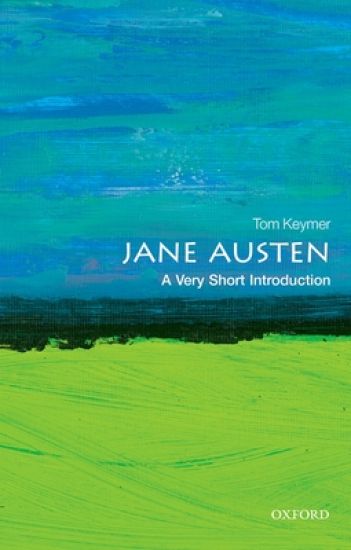
Jane Austen

Jane Austen

Tom Keymer

Oxford University Press
2022
nidottu
Jane Austen wrote six of the best-loved novels in the English language, as well as a smaller corpus of works unpublished in her day, including three volumes of witty, non-realist juvenilia and the innovative, unfinished Sanditon. She pioneered new techniques for representing voices, minds, and hearts in narrative prose, and was a penetrating satirist of social tensions and trends in an era dominated by the French Revolution, the Napoleonic Wars, and the socio-economic disruptions entailed by them. Yet Austen struggled for many years to break into print, and even as she became a published author in the last years of her relatively short life, reading tastes and book-trade expectations constrained as much as they enabled her literary career. This Very Short introduction explores the major themes of Austen criticism through close analysis of her major and minor works, with particular emphasis on the literary, social, and political backgrounds from which the novels emerge, and with which they engage. Thomas Keymer combines critical introductions to each of Austen's six major novels with an exploration of the key themes in her works, from national identity to narrative technique. The Austen who emerges is a writer shaped by the literary experiments and socio-political debates of the revolution decade, drawn in her maturity to a fundamentally conservative vision of social harmony, yet forever complicating this vision through the disruptive ironies and satirical energies of her prose. ABOUT THE SERIES: The Very Short Introductions series from Oxford University Press contains hundreds of titles in almost every subject area. These pocket-sized books are the perfect way to get ahead in a new subject quickly. Our expert authors combine facts, analysis, perspective, new ideas, and enthusiasm to make interesting and challenging topics highly readable.
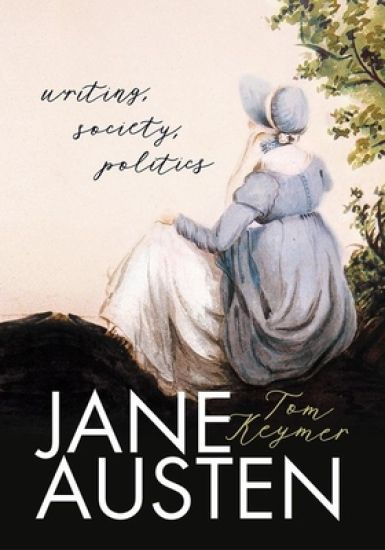
Jane Austen

Jane Austen

Tom Keymer

Oxford University Press
2020
sidottu
It is a truth universally acknowledged, that a single man in possession of a good fortune, must be in want of a wife. So runs one of the most famous opening lines in English literature. Setting the scene in Pride and Prejudice, it deftly introduces the novel's core themes of marriage, money, and social convention, themes that continue to resonate with readers over 200 years later. Jane Austen wrote six of the best-loved novels in the English language, as well as a smaller corpus of unpublished works. Her books pioneered new techniques for representing voices, minds, and hearts in narrative prose, and, despite some accusations of a blinkered domestic and romantic focus, they represent the world of their characters with unsparing clarity. Here, Tom Keymer explores the major themes throughout Austen's novels, setting them in the literary, social, and political backgrounds from which they emerge, and showing how they engage with social tensions in an era dominated by the French Revolution and the Napoleonic Wars. The Jane Austen who emerges is a writer shaped by the literary experiments and socio-political debates of her time, increasingly drawn to a fundamentally conservative vision of social harmony, yet forever complicating this vision through her disruptive ironies and satirical energy.
Richardson's 'Clarissa' and the Eighteenth-Century Reader
Written as a collection of letters in which very different accounts of the action are unsupervised by sustained authorial comment, Richardson’s novel Clarissa offers an extreme example of the capacity of narrative to give the reader final responsibility for resolving or construing meaning. It is paradoxical then that its author was a writer committed to avowedly didactic goals. Tom Keymer counters the tendency of recent critics to suggest that Clarissa’s textual indeterminacy defeats these goals by arguing that Richardson pursues subtler and more generous means of educating his readers by making them 'if not Authors, Carvers’ of the text. Discussing Richardson’s use of the epistolary form throughout his career, Keymer goes on to focus in detail on the three instalments in which Clarissa was first published, drawing on the documented responses of its first readers to illuminate his technique as a writer and set the novel in its contemporary ethical, political and ideological context.