Kirjojen hintavertailu. Mukana 11 244 527 kirjaa ja 12 kauppaa.

Kirjahaku

Etsi kirjoja tekijän nimen, kirjan nimen tai ISBN:n perusteella.

18 kirjaa tekijältä Tom Lewis

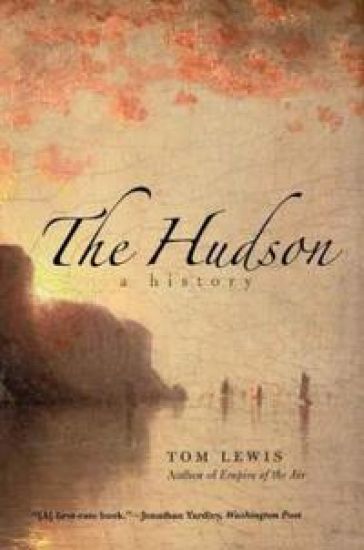
The Hudson

The Hudson

Tom Lewis

Yale University Press
2007
pokkari
A vivid history of the Hudson River and how it has fired the American imagination for four hundred years Flowing through a valley of sublime scenery, the Hudson River uniquely connects America’s past with its present and future. This book traces the course of the river through four centuries, recounting the stories of explorers and traders, artists and writers, entrepreneurs and industrialists, ecologists and preservationists—those who have been shaped by the river as well as those who have helped shape it. Their compelling narratives attest to the Hudson River’s distinctive place in American history and the American imagination. Among those who have figured in the history of the Hudson are Benedict Arnold, Alexander Hamilton, Franklin and Eleanor Roosevelt, the Astors and the Vanderbilts, and Thomas Cole of the Hudson River school. Their stories appear here, alongside those of such less famous individuals as the surveyor who found the source of the Hudson and the engineer who tried to build a hydroelectric plant at Storm King Mountain. Inviting us to view the river from a wider perspective than ever before, this entertaining and enlightening book is worthy of its grand subject.
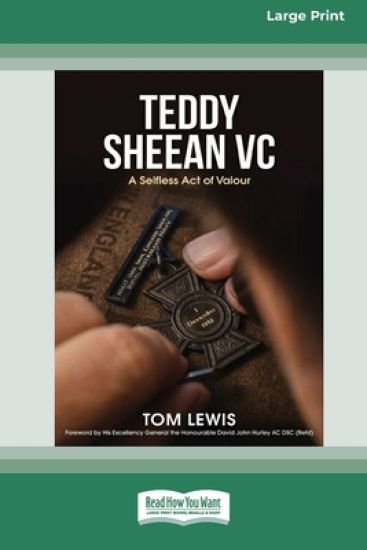
Teddy Sheean VC

Teddy Sheean VC

Tom Lewis

Readhowyouwant
2021
pokkari
No-one will ever know what made him do it. In 1942, 18-year-old Edward ''Teddy'' Sheean was one of the youngest and most inexperienced sailors on board the the corvette HMAS Armidale. Whilst on operation in the Timor Sea this warship came under heavy attack by Japanese aircraft. Armidale began sinking while swarmed by Japanese aircraft, strafing and bombing the stricken vessel and the crew who were desperately trying to Abandon Ship. The wounded Ordinary Seaman turned back to his gun, an Oerlikon 20mm anti-aircraft cannon and strapped himself into the harness. He began firing at the attacking Japanese aircraft, a courageous young man, determined to do his best to save his mates. This selfless act of valour helped save the lives of 49 crew, before Teddy himself went down with the Armidale. No member of the Royal Australian Navy has ever been awarded a Victoria Cross. Teddy's family and many others took up his case and fought for his recognition. It took more than 70 years for Teddy to becomes the first in Australia's Naval history to receive this highest award ¬- confirming Teddy Sheean is an Australian hero. Sheean is the 101st VC awarded to an Australian
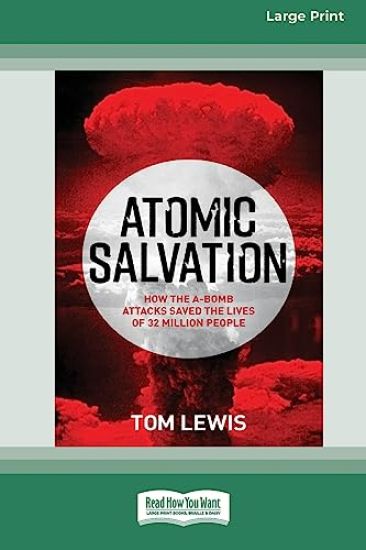
Atomic Salvation

Atomic Salvation

Tom Lewis

Readhowyouwant
2020
pokkari
So did not the atomic weapons bring about a great peace? Since the initial grateful acknowledgement of the success of the A-bomb attacks in ending World War II, there has been a steady reversal of opinion and sentiment: from a first hearty appreciation to a condemnation by many, of the United States for its actions. Atomic Salvation investigates the full situation of the times to a previously unplumbed depth. It examines documents from both Japanese and Allied sources, but it uses logical in-depth analysis to extend beyond the mere recounting of statistics. It charts the full extent of the possible casualties on both sides if a conventional assault akin to D-Day had gone ahead. The work is concerned solely with the military necessity to use the bombs, but it also investigates why that necessity has been increasingly challenged over the successive decades. Controversially, the book shows that the Japanese nation would have lost many millions of their people " likely around 28 million " if the nation had been attacked in the manner by which German was defeated: by amphibious assault; artillery and air attacks preceding infantry insertion, and finally by subduing the last of the defenders of the enemy capital. From the other side, the book investigates the enormous political pressure placed on America as a result of their military situation. The USA's Truman Administration had little choice but to use the new weapon given the more than a million deaths Allied forces would undoubtedly have suffered through conventional assault. Through investigation of reactions then and since, Atomic Salvation charts reaction to the bombings. It looks briefly at a range of reactions through the decades and shows that there has been relentless pressure on the world to condemn what at the time
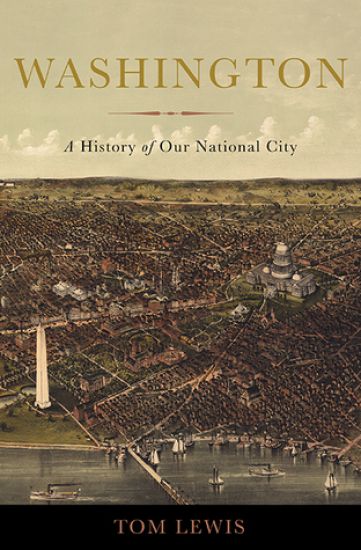
Washington

Washington

Tom Lewis

Basic Books
2015
sidottu
On January 24, 1791, President George Washington chose the site for the young nation's capital: ten miles square, it stretched from the highest point of navigation on the Potomac River, and encompassed the ports of Georgetown and Alexandria. From the moment the federal government moved to the District of Columbia in December 1800, Washington has been central to American identity and life. Shaped by politics and intrigue, poverty and largess, contradictions and compromises, Washington has been, from its beginnings, the stage on which our national dramas have played out.In Washington , the historian Tom Lewis paints a sweeping portrait of the capital city whose internal conflicts and promise have mirrored those of America writ large. Breathing life into the men and women who struggled to help the city realize its full potential, he introduces us to the mercurial French artist who created an ornate plan for the city " en grande " members of the nearly forgotten anti-Catholic political party who halted construction of the Washington monument for a quarter century and the cadre of congressmen who maintained segregation and blocked the city's progress for decades. In the twentieth century Washington's Mall and streets would witness a Ku Klux Klan march, the violent end to the encampment of World War I "Bonus Army" veterans, the 1963 March on Washington for Jobs and Freedom, and the painful rebuilding of the city in the wake of Martin Luther King, Jr.'s assassination."It is our national centre," Frederick Douglass once said of Washington, DC "it belongs to us, and whether it is mean or majestic, whether arrayed in glory or covered in shame, we cannot but share its character and its destiny." Interweaving the story of the city's physical transformation with a nuanced account of its political, economic, and social evolution, Lewis tells the powerful history of Washington, DC-the site of our nation's highest ideals and some of our deepest failures.
Bombers North

Bombers North

Tom Lewis

AVONMORE BOOKS
2023
nidottu
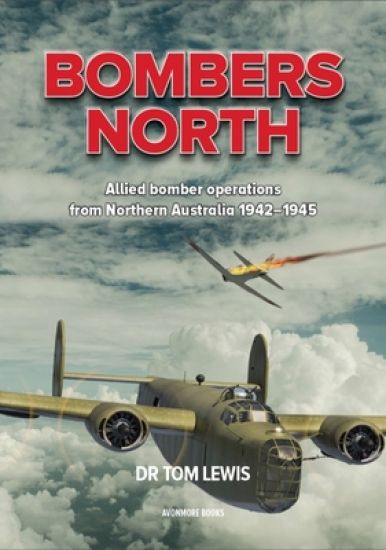
In early March 1942 Allied forces in the Netherlands East Indies surrendered and the lightning Japanese conquest of South East Asia was complete. Amid fears of a Japanese invasion of Australia, two understrength RAAF squadrons of Lockheed Hudsons began a brave fight back against the enemy from the Darwin area. These modest initial efforts were the beginnings of an unwavering campaign by Allied bombers waged from Northern Australia until the end of the war in August 1945. As the Hudson squadrons were rebuilt throughout 1942, they were joined by a unique Dutch squadron operating B-25 Mitchells. From 1943 USAAF Liberators joined the fight, and their great range enabled them to attack targets deep within the NEI. From 1944 they were replaced by RAAF Liberators. Other RAAF squadrons used an assortment of aircraft including Vengeances, Beauforts, Mitchells, Venturas and Catalina flying boats. The last type waged an important mining campaign against Japanese held ports in the NEI and later to the Philippines and beyond. Drawing on a wealth of new sources, Bombers North presents for the first time the full story of a little-known bomber offensive waged from remote northern Australia.
The Empire Strikes South

The Empire Strikes South

Tom Lewis

Avonmore Books
2020
nidottu
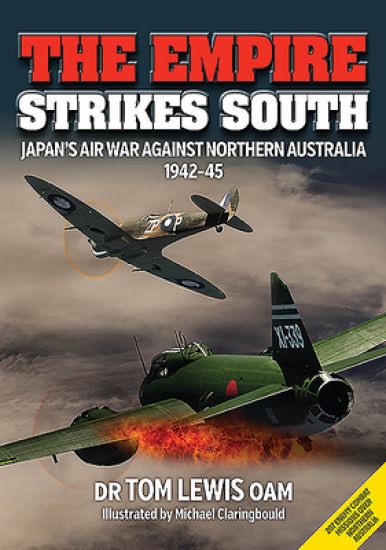
Very few Australians today know of the fierce air battles fought across the Top End of Australia in World War II.For more than two years Japanese aircraft crossed the coast and bombed relentlessly. Savage dogfights were fought between the legendary Zero fighter and Allied Kittyhawks and Spitfires. Big twin-engine Betty bombers rained down blast and fire upon airfields and towns, even penetrating as far inland as Katherine, some 300 kilometres from the coast.Nearly 200 Japanese aircrew died in the onslaught. This book lists all of their names and describes all of the combat missions – and reveals for the first time that the number of combat flights, aircraft shot down, and aircrew who died is far higher than previously thought. Scores of aircraft were downed in combat operations ranging from Exmouth to Townsville, with the majority of action taking place in the Northern Territory.This new extensive research shows the number of air raids was higher than the previously suggested figure of 64, with 77 raids on the Territory alone, while 207 enemy combat flights were carried out across Northern Australia. 187 Japanese airmen died when their aircraft were brought down. In many cases their bodies lie in remote sites across the vast bush and coastal waters of the north. Many of the wrecks have never been found.The Empire Strikes South describes all of the aircraft used, and gives an insight into the world of fighter pilots and aircrew. With a full range of new colour graphics by renowned illustrator Michael Claringbould, this significant new research reveals a battle for Australia that has been previously unknown.
Eagles Over Darwin

Eagles Over Darwin

Tom Lewis

Avonmore Books
2021
nidottu
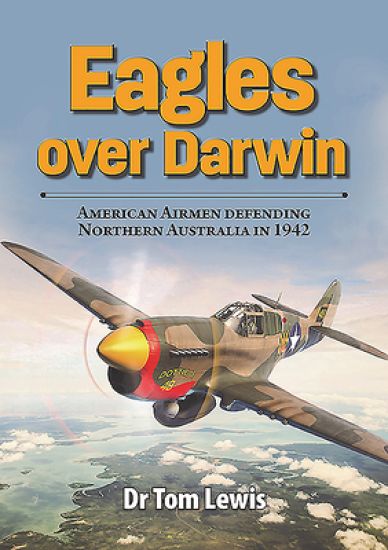
In 1942 the air defence of the northern Australian frontier town of Darwin was operated by airmen from the United States. That year was very nearly the end of Australia as a country. To those men the present nation owes a debt. A massive Japanese attack on Darwin on 19 February had left the town and its air base in ruins. An understrength squadron of USAAC P-40E Warhawks fought a gallant defence but was all but wiped out. Northern Australia was now at the mercy of Imperial Japanese Navy Betty bombers and Zero fighters whose crews were both skilled and experienced. However, help was on the way. The 49th Fighter Group was the first such group formed in the US to be sent overseas after the start of the Pacific War. Its destination was Darwin. From modest beginnings on make-shift airstrips, the 49th FG entered combat with its feared Japanese adversaries. Its P-40E Warhawks were poor interceptors but were rugged, reliable and well-armed. Unable to dogfight the highly manoeuvrable Zeros, the American pilots resorted to dive and zoom tactics more suited to their heavier fighters. Over several months the 49th FG pilots fought a brave and innovative campaign against a stronger enemy that did much to safeguard Australia in its darkest hour. Today lonely and long forgotten airfields still bear the name of American pilots who made the ultimate sacrifice. This is their story.
Divided Highways

Divided Highways

Tom Lewis

Cornell University Press
2013
pokkari
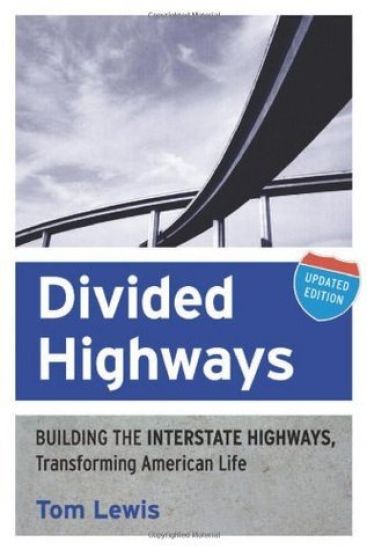
"Lewis describes in a convincing, lively, and well-documented narrative the evolution of America’s roadway system from one of the world’s worst road networks to its best."-John Pucher, Journal of the American Planning Association In Divided Highways, Tom Lewis offers an encompassing account of highway development in the United States. In the early twentieth century Congress created the Bureau of Public Roads to improve roads and the lives of rural Americans. The Bureau was the forerunner of the Interstate Highway System of 1956, which promoted a technocratic approach to modern road building sometimes at the expense of individual lives, regional characteristics, and the landscape. With thoughtful analysis and engaging prose Lewis charts the development of the Interstate system, including the demographic and economic pressures that influenced its planning and construction and the disputes that pitted individuals and local communities against engineers and federal administrators. This is a story of America’s hopes for its future life and the realities of its present condition. Originally published in 1997, this book is an engaging history of the people and policies that profoundly transformed the American landscape-and the daily lives of Americans. In this updated edition of Divided Highways, Lewis brings his story of the Interstate system up to date, concluding with Boston’s troubled and yet triumphant Big Dig project, the growing antipathy for big federal infrastructure projects, and the uncertain economics of highway projects both present and future. "Anyone who has ever driven on a U.S. interstate highway or eaten at an exit-ramp McDonald’s will come away from this book with a better understanding of what makes modern America what it is." – Chicago Tribune "A fascinating work... with a subject central to contemporary life but to which few, if any, have devoted so much thoughtful analysis and good humor." – Minneapolis Star-Tribune "Divided Highways is the best and most important book yet published about how asphalt and concrete have changed the United States. Quite simply, the Interstate Highway System is the longest and largest engineered structure in the history of the world, and it has enormously influenced every aspect of American life. Tom Lewis is an engaging prose stylist with a gift for the telling anecdote and appropriate example."-Kenneth T. Jackson, Harvard Design Magazine "Lewis provides a comprehensive and balanced examination of America’s century-long infatuation with the automobile and the insatiable demands for more and better road systems. He has written a sprightly and richly documented book on a vital subject."-Richard O. Davies, Journal of American History "This brightly written history of the U.S. federal highway program is like the annual report of a successful company that has had grim second thoughts. The first half recounts progress made, while the second suggests that the good news is not quite what it seems."- Publishers Weekly "Lewis is a very talented and engaging writer, and the tale he tells-the vision for the Interstates, Congressional battles, construction, and the impact of new highways on American life-is important to understanding the shape of the contemporary American landscape."-David Schuyler, Arthur and Katherine Shadek Professor of the Humanities and American Studies at Franklin & Marshall College, author of Sanctified Landscape: Writers, Artists, and the Hudson River Valley, 1820–1909
Darwin'S Submarine I-124

Darwin'S Submarine I-124

Tom Lewis

Tall Stories
2011
nidottu
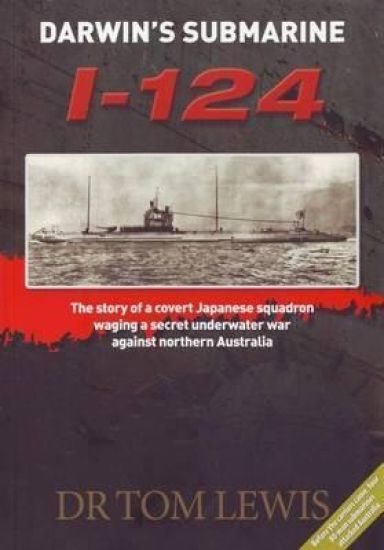
The first attacks on Australia by the Japanese were made by four submarines of the Sixth Submarine Squadron of the Imperial Japanese Navy. Together, these 80-man boats laid mines, and then waited in their killing zones for targets to torpedo.On 20 January 1942, it all went horribly wrong. Sunk with all hands, the submarine I-124 remains outside Darwin today, testimony to bravery but also to folly.Avonmore Books' new edition of a 1990s work features new and improved graphics; a host of photographs, and the complete story of the submarine action, and events through the decades beyond - for the sunken vessel did not lie easy. Code seekers; treasure hunters; and potential salvors eventually led to the formation of the Historic Shipwrecks Act.
Cyclone Warriors

Cyclone Warriors

Tom Lewis

AVONMORE BOOKS
2024
nidottu
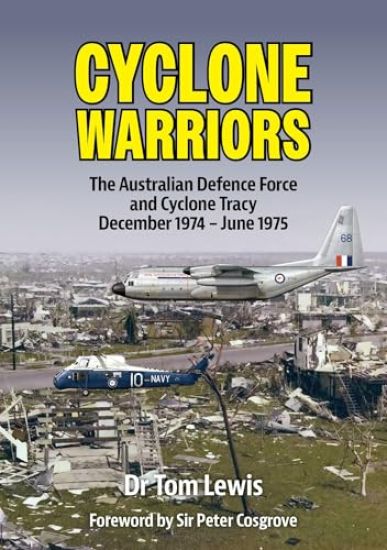
Cyclone Tracy was one of the most damaging disasters to ever impact Australia. The story of the terrible night of Christmas Eve 1974 has been told before, but the involvement of the Australian Defence Force has been under-emphasised. This book rectifies that by revealing the untold stories of those in uniform. Men and women of all three services experienced the cyclone, including the crew of HMAS Arrow which sank with the loss of two lives. The first outsiders to reach the shattered city flew in on RAAF aircraft, which quickly began flying out evacuees. Then the Navy embarked on its largest peacetime operation with the majority of the fleet including the aircraft carrier HMAS Melbourne deploying to Darwin. For the first month the Navy took the lead in cleaning up the city before a larger and better equipped Army force took over. The book argues strongly that the National Emergency Medal should be bestowed on all uniformed people involved, including civilians such as police, and that a prominent and fitting memorial be established in Darwin. Cyclone Warriors also dispels myths, and for the first time with extensive research provides the true number of fatalities incurred when Tracy tore apart Darwin. Tom Lewis is one of Australia’s foremost military historians having written over twenty books. He is a former naval officer and long time resident of Darwin.
The Submarine Six

The Submarine Six

Tom Lewis

Avonmore Books
2012
nidottu
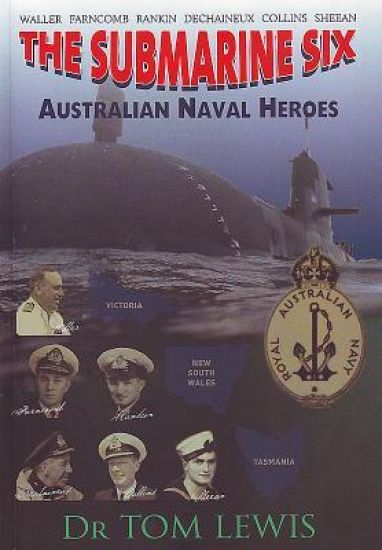
Naval conflicts take place often far from our shores. Ships and men sometimes disappear, to leave only mystery in their wake. In the 1990s the Royal Australian Navy broke with tradition, and for the first time named six submarines after naval heroes. This book shows the true depths of their acheivements. These were men whose warrior exploits stand alongside those of any other nations. But they have been largely unrecognised, save for those submarines. Captain Hec Waller, for example, fought to the end in HMAS Perth, alongside fellow cruiser HMAS Houston. The Houston’s Captain Rooks was deservedly awarded the Congressional Medal of Honor, America’s highest honor. Captain Waller, by comparison, was given distinction, but not of the highest rank. Should he have been given the Victoria Cross? Other heroes stand alongside him. Emile Dechaineux, hero of Dunkirk and the North Sea, battling it out against Japanese Kamikaze attack. John Collins, taking HMAS Sydney to victory against Italian cruisers. Hal Farncomb – the first Australian to command an aircraft carrier, in action off the French coast. But The Submarine Six also examines whether two more of its men deserve futher honor. Teddy Sheean, tenacious gunner from Tasmania, fought to the end in HMAS Armidale. Robert Rankin commanded HMAS Yarra against fearful odds, dying in defence of his convoy, attacked by overwhelming Japanese forces. Are they also VC candidates?
Empire of the Air

Empire of the Air

Tom Lewis

Cornell University Press
2021
pokkari
Empire of the Air tells the story of three American visionaries—Lee de Forest, Edwin Howard Armstrong, and David Sarnoff—whose imagination and dreams turned a hobbyist's toy into radio, launching the modern communications age. Tom Lewis weaves the story of these men and their achievements into a richly detailed and moving narrative that spans the first half of the twentieth century, a time when the American romance with science and technology was at its peak. Empire of the Air is a tale of pioneers on the frontier of a new technology, of American entrepreneurial spirit, and of the tragic collision between inventor and corporation.
Blood And Pus

Blood And Pus

Tom Lewis

Createspace Independent Publishing Platform
2014
nidottu
"Blood And Pus" by Tom Lewis is a comedy adventure set in north Morocco in 1925.Not suitable for children. Contains some swearing. Slight sexual content. Descriptions of violence.R sum September, 1925. The Spanish are trying to raise their flag once more over the northern Moroccan hills. The red and gold flag that was torn down by the formidable fighters of the Rif.The Spanish conscript troops just want to go home. Red and gold? Blood and pus, they grumble, as the stretcher cases pass.The volunteers of La Legi n don't mind. Their motto is "Viva la Muerte " ("Long Live Death ").Sargento Bellaco is never pleased about anything. But he is pleased about one thing. The Legi n used to be full of foreigners. English, Russians, all sorts. They're all gone now.Teniente Alva is unhappy. Every time the rifianos attack, he loses men. The rifianos lose more. Many more. But they can replace their losses. He can not.It is almost dark. And he has a mountain of paperwork to catch up on.Hakinh is a man of the desert. The real desert, not the swamps that some call desert.He has a nose for many things. For water, for food, for a really nicely shaped, that is to say, flat, piece of ground, for all things that should be cherished. And for blasphemy, licentiousness, uncleanness and profanity, that should be destroyed. Then there is the Englishman...The Englishman. The foreigner. The Englishman. The paperwork The Englishman.... the infidel.And there is B.C. Azabi, Congressman for Targist, Minister for Mixed Bathing.From the trenches of Monte Malmusi we go, by way of the crazy streets of the Riffian capital Ajdir, to the showpiece coastal town, shop window to the world of the Rif Republic, where everything is Modern and Normal.Mercenary Captain Collick and his sidekick De Lugny are there. They aren't interested in the cinema, or the department store, or the telephones.The Riffians have gold. Lots of gold. They have to keep it somewhere. And Collick knows where.Then there is the Englishman. The prisoner. He has had his uses. But he is beginning to become... a nuisance.
Late Walker And Other Verses

Late Walker And Other Verses

Tom Lewis

Createspace Independent Publishing Platform
2014
pokkari
This stylistically varied assembly of poems by Tom Lewis addresses the issues that concern the modern minded man of today. Whether it be television scheduling, suitable routes for walking expeditions, how to choose and present your spare time activity, Christian devotional requirements, or the Spanish Civil War (1936 to 1939), Tom Lewis is not afraid to confront the contemporary themes that matter.And it all ends with a good sing song.
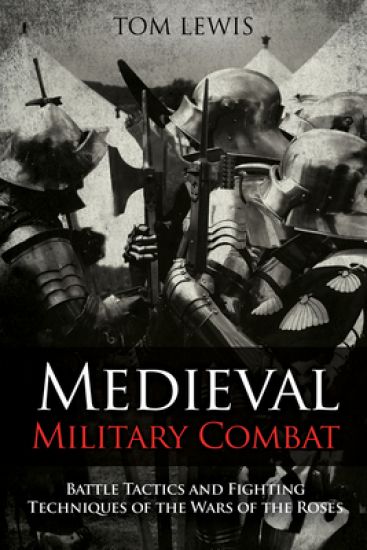
Medieval Military Combat

Medieval Military Combat

Tom Lewis

Casemate Publishers
2021
sidottu
We don't know how medieval soldiers fought. Did they just walk forward in their armour, to smash each other with their maces and poleaxes, for hours on end, as depicted on film in programs such as Game of Thrones?They could not have done so. It is impossible to fight in such a manner for more than several minutes as exhaustion becomes a preventative factor.Indeed, we know more of how the Roman and Greek armies fought than we do of the 1300 to 1550 period.So how did medieval soldiers in the War of the Roses, and in the infantry sections of battles such as Agincourt and Towton, carry out their grim work?Medieval Military Combat looks at the techniques of such battles. It suggests that medieval battle numbers are highly exaggerated, and that we need to look again at the accounts of actions such as the famous Battle of Towton, which this work uses as a basic for its overall study.