Kirjojen hintavertailu. Mukana 11 699 587 kirjaa ja 12 kauppaa.

Kirjahaku

Etsi kirjoja tekijän nimen, kirjan nimen tai ISBN:n perusteella.

5 kirjaa tekijältä Tom Perchard

After Django

After Django

Tom Perchard

The University of Michigan Press
2015
nidottu
How did French musicians and critics interpret jazz—that quintessentially American music—in the mid-twentieth century? How far did players reshape what they learned from records and visitors into more local jazz forms, and how did the music figure in those angry debates that so often suffused French cultural and political life? After Django begins with the famous interwar triumphs of Josephine Baker and Django Reinhardt, but, for the first time, the focus here falls on the French jazz practices of the postwar era. The work of important but neglected French musicians such as André Hodeir and Barney Wilen is examined in depth, as are native responses to Americans such as Miles Davis and Thelonious Monk. The book provides an original intertwining of musical and historical narrative, supported by extensive archival work; in clear and compelling prose, Perchard describes the problematic efforts towards aesthetic assimilation and transformation made by those concerned with jazz in fact and in idea, listening to the music as it sounded in discourses around local identity, art, 1968 radicalism, social democracy, and post colonial politics.

After Django

After Django

Tom Perchard

The University of Michigan Press
2015
sidottu
How did French musicians and critics interpret jazz—that quintessentially American music—in the mid-twentieth century? How far did players reshape what they learned from records and visitors into more local jazz forms, and how did the music figure in those angry debates that so often suffused French cultural and political life? After Django begins with the famous interwar triumphs of Josephine Baker and Django Reinhardt, but, for the first time, the focus here falls on the French jazz practices of the postwar era. The work of important but neglected French musicians such as André Hodeir and Barney Wilen is examined in depth, as are native responses to Americans such as Miles Davis and Thelonious Monk. The book provides an original intertwining of musical and historical narrative, supported by extensive archival work; in clear and compelling prose, Perchard describes the problematic efforts towards aesthetic assimilation and transformation made by those concerned with jazz in fact and in idea, listening to the music as it sounded in discourses around local identity, art, 1968 radicalism, social democracy, and post colonial politics.

From Soul to Hip Hop

From Soul to Hip Hop

Tom Perchard

Ashgate Publishing Limited
2014
sidottu
The essays contained in this volume address some of the most visible, durable and influential of African American musical styles as they developed from the mid-1960s into the 21st-century. Soul, funk, pop, R&B and hip hop practices are explored both singly and in their many convergences, and in writings that have often become regarded as landmarks in black musical scholarship. These works employ a wide range of methodologies, and taken together they show the themes and concerns of academic black musical study developing over three decades. While much of the writing here is focused on music and musicians in the United States, the book also documents important and emergent trends in the study of these styles as they have spread across the world. The volume maintains the original publication format and pagination of each essay, making for easy and accurate cross-reference and citation. Tom Perchard’s introduction gives a detailed overview of the book’s contents, and of the field as a whole, situating the present essays in a longer and wider tradition of African American music studies. In bringing together and contextualising works that are always valuable but sometimes difficult to access, the volume forms an excellent introductory resource for university music students and researchers.
Lee Morgan

Lee Morgan

Tom Perchard

Equinox Publishing Ltd
2006
sidottu
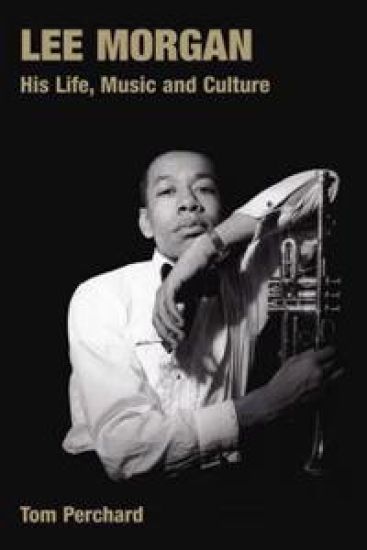
This is the first biography of the jazz trumpeter Lee Morgan (1938-72). He was a prodigy: recruited to Dizzy Gillespie's big band while still a teenager, joining Art Blakey's Jazz Messengers not much after, by his early-20s Morgan had played on four continents and dozens of albums. The trumpeter would go on to cultivate a personal and highly influential style, and to make records - most notably, The Sidewinder - which would sell amounts almost unheard of in jazz. While what should have been Morgan's most successful years were hampered by a heroin addiction, the ascendant black liberation movement of the late-60s gave the musician a new, political impulse, and he returned to the jazz scene to become a vociferous campaigner for black musicians' rights and representation. But Morgan's personal life remained troubled, and during a fight with his girlfriend at a New York club, he was shot and killed, aged 33. Although Lee Morgan lived and died in sensational style, the story told in this book doesn't just stumble between stages, studios, bars and needles; such a narrative couldn't do justice to the richness of the trumpeter's music, nor to the culture from which it came. Here, then, the events of Morgan's life are presented not just as items of biography, but also as points of departure for wider historical investigations that aim to situate the musician and his contemporaries in changing aesthetic, social and economic contexts. The work draws on many original interviews with Morgan's colleagues and friends, as well as extensive archival research and critical engagement with the music itself.
Lee Morgan

Lee Morgan

Tom Perchard

Equinox Publishing Ltd
2006
nidottu
This is the first biography of the jazz trumpeter Lee Morgan (1938-72). He was a prodigy: recruited to Dizzy Gillespie's big band while still a teenager, joining Art Blakey's Jazz Messengers not much after, by his early-20s Morgan had played on four continents and dozens of albums. The trumpeter would go on to cultivate a personal and highly influential style, and to make records - most notably "The Sidewinder" - which would sell amounts almost unheard of in jazz. While what should have been Morgan's most successful years were hampered by a heroin addiction, the ascendant black liberation movement of the late-60s gave the musician a new, political impulse, and he returned to the jazz scene to become a vociferous campaigner for black musicians' rights and representation. But Morgan's personal life remained troubled, and during a fight with his girlfriend at a New York club, he was shot and killed, aged 33.