Kirjojen hintavertailu. Mukana 11 544 188 kirjaa ja 12 kauppaa.

Kirjahaku

Etsi kirjoja tekijän nimen, kirjan nimen tai ISBN:n perusteella.

5 kirjaa tekijältä Tom Quirk

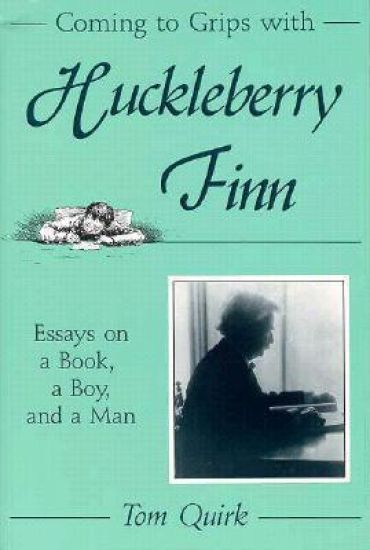
Coming to Grips with ""Huckleberry Finn

Coming to Grips with ""Huckleberry Finn

Tom Quirk

University of Missouri Press
1995
nidottu
Traces the history of ""The Adventures of Huckleberry Finn"" from 1876 to its position in today's American culture. Approaching the novel from several different perspectives, the author reveals how Mark Twain's imagination worked and why the novel has affected so many people in so many curious ways.
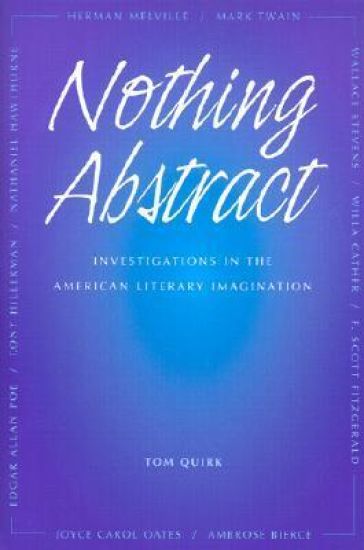
Nothing Abstract

Nothing Abstract

Tom Quirk

University of Missouri Press
2001
sidottu
Written by one of the leading scholars in the field, Nothing Abstract is a collection of essays gathered over the past twenty years - all of which, in some fashion, have to do with a genetic approach to literary study. In previous books, the author has traced and discussed the compositional histories of certain literary works. In this book, Tom Quirk takes a stand against the direction taken by modern critical theory and sets forth his approach to literature through source and influence study, the evolution of a certain writer's career, the establishment of biographical or other contexts, and the transition from one literary era to another. All of the essays that Quirk has chosen for this collection illustrate a scholarly method. The first two essays, somewhat general in their concerns, constitute a defense for the genetic method, and subsequent essays serve as evidence for the usefulness of genetic inquiry. The entire volume resists poststructuralist and later theory not through active confrontation, but merely by being what it is and doing what it does. More important though is that all of the chosen essays are intrinsically interesting. They tell fascinating stories - stories about literary genesis, biographical circumstances, and artistic ambitions and achievement. Authors discussed at length are Edgar Allan Poe, Tony Hillerman, Nathaniel Hawthorne, Herman Melville, Mark Twain, Ambrose Bierce, Wallace Stevens, Willa Cather, F. Scott Fitzgerald, and Joyce Carol Oates. Quirk also touches on Flannery O'Connor, Richard Wright, Robert Frost, Jack London, Stephen Crane, William Faulkner, and others. Nothing Abstract makes a great contribution to the study of important American writers and will be welcomed by all students and scholars of American studies and American literature.
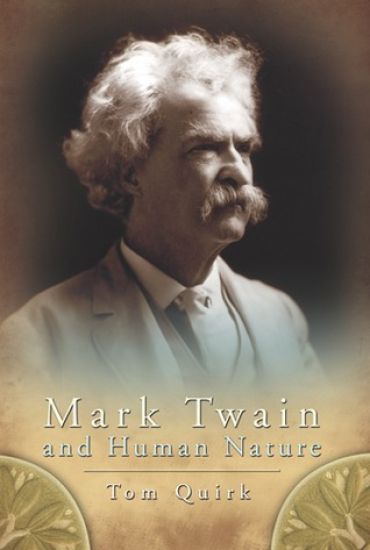
Mark Twain and Human Nature

Mark Twain and Human Nature

Tom Quirk

University of Missouri Press
2007
sidottu
Mark Twain once claimed that he could read human character as well as he could read the Mississippi River, and he studied his fellow humans with the same devoted attention. In both his fiction and his nonfiction, he was disposed to dramatize how the human creature acts in a given environment - and to understand why. Now one of America's preeminent Twain scholars takes a closer look at this icon's abiding interest in his fellow creatures. In seeking to account for how Twain might have reasonably believed the things he said he believed, Tom Quirk has interwoven the author's inner life with his writings to produce a meditation on how Twain's understanding of human nature evolved and deepened and to show that this was one of the central preoccupations of his life. Quirk charts the ways in which this humorist and occasional philosopher contemplated the subject of human nature from early adulthood until the end of his life, revealing how his outlook changed over the years. His travels, his readings in history and science, his political and social commitments, and his own pragmatic testing of human nature in his writing contributed to Twain's mature view of his kind. Quirk establishes the social and scientific contexts that clarify Twain's thinking, and he considers not only Twain's stated intentions about his purposes in his published works but also his ad hoc remarks about the human condition. Viewing both major and minor works through the lens of Twain's shifting attitude, Quirk provides refreshing new perspectives on the master's oeuvre. He offers a detailed look at the travel writings, including ""The Innocents Abroad"" and ""Following the Equator"", the novels, including ""The Adventures of Tom Sawyer"", ""Adventures of Huckleberry Finn"", and ""Pudd'nhead Wilson""; and an important review of works from Twain's last decade, including fantasies centering on man's insignificance in ""Creation"", works preoccupied with isolation - notably ""No. 44, The Mysterious Stranger"" and ""Eve's Diary"" - and polemical writings such as ""What is Man?"" Comprising the well-seasoned reflections of a mature scholar, this persuasive and eminently readable study comes to terms with the life-shaping ideas and attitudes of one of America's best-loved writers. ""Mark Twain and Human Nature"" offers readers a better understanding of Twain's intellect as it enriches our understanding of his craft and his ineluctable humor.
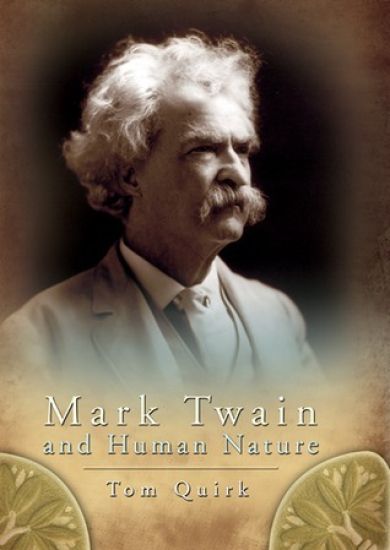
Mark Twain and Human Nature

Mark Twain and Human Nature

Tom Quirk

University of Missouri Press
2011
nidottu
Mark Twain once claimed that he could read human character as well as he could read the Mississippi River, and he studied his fellow humans with the same devoted attention. In both his fiction and his nonfiction, he was disposed to dramatise how the human creature acts in a given environment—and to understand why. Now one of America’s preeminent Twain scholars takes a closer look at this icon’s abiding interest in his fellow creatures. In seeking to account for how Twain might have reasonably believed the things he said he believed, Tom Quirk has interwoven the author’s inner life with his writings to produce a meditation on how Twain’s understanding of human nature evolved and deepened, and to show that this was one of the central preoccupations of his life. Quirk charts the ways in which this humourist and occasional philosopher contemplated the subject of human nature from early adulthood until the end of his life, revealing how his outlook changed over the years. His travels, his readings in history and science, his political and social commitments, and his own pragmatic testing of human nature in his writing contributed to Twain’s mature view of his kind. Quirk establishes the social and scientific contexts that clarify Twain’s thinking, and he considers not only Twain’s stated intentions about his purposes in his published works but also his ad hoc remarks about the human condition. Viewing both major and minor works through the lens of Twain’s shifting attitude, Quirk provides refreshing new perspectives on the master’s oeuvre. He offers a detailed look at the travel writings, including The Innocents Abroad and Following the Equator, and the novels, including The Adventures of Tom Sawyer, Adventures of Huckleberry Finn, and Pudd’nhead Wilson, as well as an important review of works from Twain’s last decade, including fantasies centering on man’s insignificance in Creation, works preoccupied with isolation—notably No. 44, The Mysterious Stranger and “Eve’s Diary”—and polemical writings such as What Is Man? Comprising the well-seasoned reflections of a mature scholar, this persuasive and eminently readable study comes to terms with the life-shaping ideas and attitudes of one of America’s best-loved writers. Mark Twain and Human Nature offers readers a better understanding of Twain’s intellect as it enriches our understanding of his craft and his ineluctable humour.
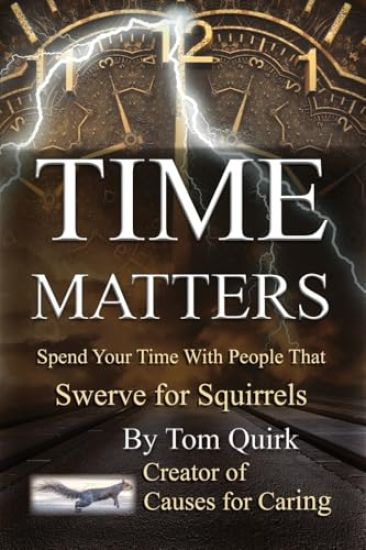
Time Matters

Time Matters

Tom Quirk

Lulu.com
2025
pokkari
Enjoy a laugh or ten. Shed a tear or three. Time Matters. What we do with our finite amount of individual time is as important as our life itself. Throughout that life, choosing positivity and focusing on the possibilities instead of the obstacles helps reveal and inspire all that we can accomplish. It's nothing short of amazing. The subtitle for this book, "Swerve for Squirrels," refers to the act of living in kindness with one another. People with this approach to life take merciful and considerate actions without even thinking about it - it's just how they live. I am married to such a person, and my family and friends are also fellow swervers. Even in business, I choose only to interact with those who share a similar philosophy. My charity-driven business platform, Causes for Caring, is a culmination of fifty-plus years of entrepreneurship. It can be the next Amazon of "for-profit" fundraising. Tom Quirk