Kirjojen hintavertailu. Mukana 11 244 527 kirjaa ja 12 kauppaa.

Kirjahaku

Etsi kirjoja tekijän nimen, kirjan nimen tai ISBN:n perusteella.

10 kirjaa tekijältä Tom Regan

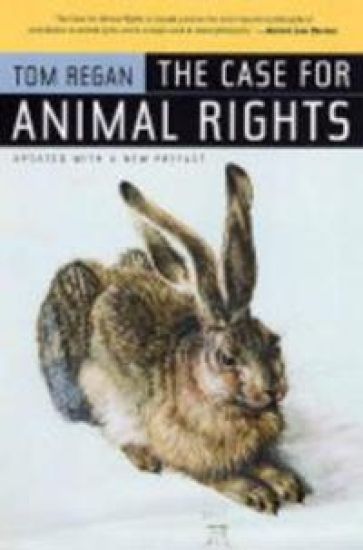
The Case for Animal Rights

The Case for Animal Rights

Tom Regan

University of California Press
2004
pokkari
More than twenty years after its original publication, The Case for Animal Rights is an acknowledged classic of moral philosophy, and its author is recognized as the intellectual leader of the animal rights movement. In a new and fully considered preface, Regan responds to his critics and defends the book's revolutionary position.
Animal Rights, Human Wrongs

Animal Rights, Human Wrongs

Tom Regan

Rowman Littlefield Publishers
2003
sidottu
What gives an animal 'rights?' What makes product testing on animals wrong? In Animal Rights, Human Wrongs prominent activist and philosopher Tom Regan skillfully puts forth the argument for animal rights through the exploration of two questions central to moral theory: What makes an act right? What makes an act wrong? Taking into consideration moral theories such as contractarianism, utilitarianism, and Kantian ethics, Regan provides the theoretical framework that grounds a responsible pro-animal rights perspective, and ultimately explores how asking moral questions about other animals can lead to a better understanding of ourselves. The necessity of making a transition from moral theory to moral practice becomes startlingly clear as Reagan examines the commonplace, everyday choices that would be affected by believing in a moral theory that affirms the rights of animals. For the many people who have ever wondered "what difference does it make if animals have rights," Animal Rights, Humans Wrongs provides a provocative and intriguing answer. For a discussion of animal rights tailored to a more general audience, see Empty Cages: Facing the Challenge of Animal Rights (Rowman & Littlefield, 2003).
Animal Rights, Human Wrongs

Animal Rights, Human Wrongs

Tom Regan

Rowman Littlefield Publishers
2003
nidottu
What gives an animal 'rights?' What makes product testing on animals wrong? In Animal Rights, Human Wrongs prominent activist and philosopher Tom Regan skillfully puts forth the argument for animal rights through the exploration of two questions central to moral theory: What makes an act right? What makes an act wrong? Taking into consideration moral theories such as contractarianism, utilitarianism, and Kantian ethics, Regan provides the theoretical framework that grounds a responsible pro-animal rights perspective, and ultimately explores how asking moral questions about other animals can lead to a better understanding of ourselves. The necessity of making a transition from moral theory to moral practice becomes startlingly clear as Reagan examines the commonplace, everyday choices that would be affected by believing in a moral theory that affirms the rights of animals. For the many people who have ever wondered 'what difference does it make if animals have rights,' Animal Rights, Humans Wrongs provides a provocative and intriguing answer. For a discussion of animal rights tailored to a more general audience, see Empty Cages: Facing the Challenge of Animal Rights (Rowman & Littlefield, 2003).
Animal Sacrifices

Animal Sacrifices

Tom Regan

Temple University Press,U.S.
1987
pokkari
The issues of animal rights and the use of animals in scientific experimentation are fraught with controversy. In an effort to define the bases of such strong emotional response towards an ethical issue, this book presents the teachings of the major religions of the world concerning animals and, more specifically, their use in science. Judaism, Christianity, Islam, Hinduism, Jainism, Buddhism, and Confucianism are represented in this collection of eight essays by religious authorities. Scriptural writings, written and oral tradition, law, religious parables, and even folklore are used to illustrate the position of each religion on this question. When there are no specific teachings regarding the relatively recent use of animals in scientific research, conclusions are derived from the view of man's relations with the rest of the world. In addition to the essays dealing with specific religions, there is also a chapter detailing recent uses of animals in scientific research throughout the world. It is estimated that 500 million animals a year are sacrificed to science. This volume attempts to find out for what purposes they are used, under what conditions, and with what legal protection. Based on a conference which explored the views of religion toward scientific experimentation on animals, this collection of essays addresses an explosive issue from a number of different perspectives. Animal Sacrifices is a fair-minded and informative discussion of a contemporary ethical dilemma. Contributors: John Bowker, Sidney Gendin, Rabbi Dr. J. David Bleich, Andrew Linzey, James Gaffney, Al-Hafiz, B. Z. Masri, Basant K. Lal, Christopher Chapple, Rodney L. Taylor, and the editor.
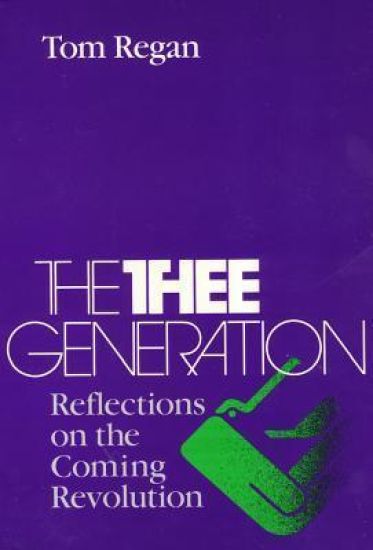
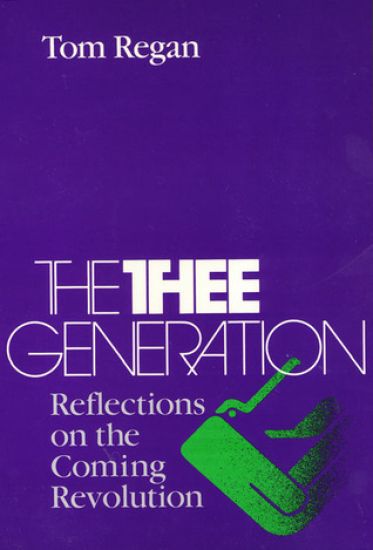
The Thee Generation

The Thee Generation

Tom Regan

Temple University Press,U.S.
1991
sidottu
The revolution examined in this collection of essays is a revolution of the human spirit. In this revolution, Tom Regan passionately contends that the expansive ethic of service is replacing the suffocating ethic of greed. Unlike previous generations, "The Thee Generation" asks, "What do I have to give?" rather than "What can I get to Keep?" Regan defines "Thee" as those to be served: the handicapped, the poor, the illiterate, the homeless, the starving and the abused, those newly born, and those soon to die. This generation is generous enough to include the animal kingdom, and even the earth itself, for the world of "The Thee Generation" is a place where a shared sense of community replaces the void of individual estrangement. Each of these provocative, readable essays, most of which have not been previously published, offers answers to important moral questions and attempts to identify the right reasons for those answers. Regan addresses such topics as child pornography, feminism, deep ecology, vivisection, Christian theology, and career choice. The questions he raises force us to consider the boundaries of the moral community, and what it means to be human in our own generation: "The human is but one life form among many, and what distinguishes us from the larger community of life is not our power to subdue but our responsibility to protect." Author note: Tom Regan, Professor of Philosophy at North Carolina State University, has published numerous books including Bloomsbury's Prophet (Temple) and The Case for Animal Rights.
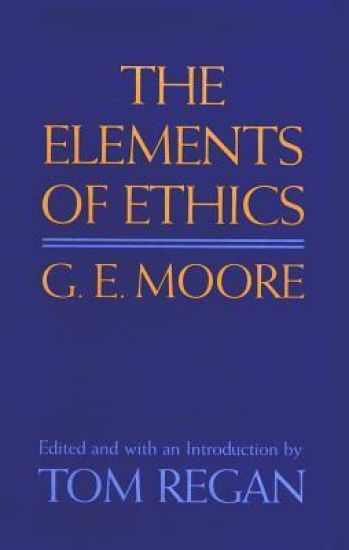
Elements of Ethics

Elements of Ethics

Tom Regan

Temple University Press,U.S.
1991
sidottu
George Edward Moore is among this century's most influential philosophers. Perhaps best known for his 'defense of common sense', he also made important contributions to metaphysics and theory of knowledge. But it is in ethics, and especially owing to the positions he develops in his "Principia Ethica", first published in 1903, that his ideas have had their most enduring influence. A forerunner to this famous work, "The Elements of Ethics" is a series of ten unpublished lectures that were presented by Moore, then in his mid-twenties. "The Elements" shows that "Principia Ethica" did not spring fully-formed from Moore's pen but evolved slowly over time. In these lectures, Moore begins with the same question he asks in "Principia Ethica": What is Good? Importantly, his answer is the same one he offers in Principia and many of its supporting arguments also appear, though sometimes in embryonic form. Moreover, in these lectures we also find sustained critiques of those who commit the 'naturalistic fallacy', and of John Stuart Mill's commission of it in particular. In "The Elements", however, Moore's position regarding ethics in relation to conduct differs in important respects from the one presented in Principia, and the former work contains important discussions, ranging from Christian ethics and the possibility of free will, not found in the latter. Tom Regan is Professor Emeritus of Philosophy at North Carolina State University. Among his many books are "Bloomsbury's Prophet: G. E. Moore and the Development of His Moral Philosophy" (Temple) and, most recently, "The Animal Rights Debate" (with Carl Cohen).
G E Moore: The Elements Of Ethics

G E Moore: The Elements Of Ethics

Tom Regan

Temple University Press,U.S.
2003
pokkari
George Edward Moore is among this century's most influential philosophers. Perhaps best known for his \u0022defense of common sense,\u0022 he also made important contributions to metaphysics and theory of knowledge. But it is in ethics, and especially owing to the positions he develops in his Principia Ethica, first published in 1903, that his ideas have had their most enduring influence. A forerunner to this famous work, The Elements of Ethics is a series of ten unpublished lectures that were presented by Moore, then in his mid-twenties. The Elements shows that Principia Ethica did not spring fully-formed from Moore's pen but evolved slowly over time. In these lectures, Moore begins with the same question he asks in Principia Ethica: What is Good? Importantly, his answer is the same one he offers in Principia and many of its supporting arguments also appear, though sometimes in embryonic form. Moreover, in these lectures we also find sustained critiques of those who commit the \u0022naturalistic fallacy,\u0022 and of John Stuart Mill's commission of it in particular. In The Elements, however, Moore's position regarding ethics in relation to conduct differs in important respects from the one presented in Principia, and the former work contains important discussions, ranging from Christian ethics and the possibility of free will, not found in the latter.