Kirjojen hintavertailu. Mukana 12 016 292 kirjaa ja 12 kauppaa.

Kirjahaku

Etsi kirjoja tekijän nimen, kirjan nimen tai ISBN:n perusteella.

7 kirjaa tekijältä Tom Smart

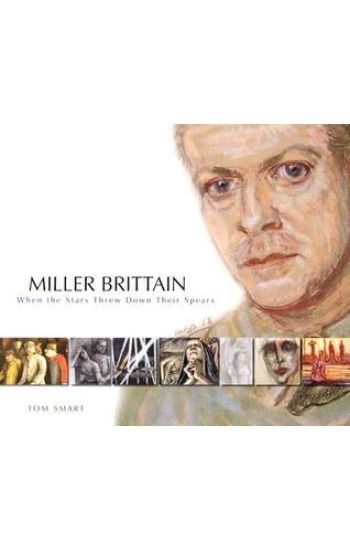
Miller Brittain

Miller Brittain

Tom Smart

Goose Lane Editions
2007
sidottu
Miller Gore Brittain (1912-1968) had an unerring sense of structure and composition. In the early 1930s, at the Art Students' League in New York, he experienced the pivotal moment in American art: the shift from tradition to abstract expressionism. When he returned to Canada, the Group of Seven still defined Canadian art, and he burst upon the scene with emotion-filled drawings and paintings of the human form. Later, combining figuration and abstraction, he explored the limits of the body and the borderlands of sanity to express the depths of despair and the heights of ecstasy. World War II interrupted Brittain's career and on his bombing missions he carried William Blake's Songs of Innocence and Experience with him. Blake's poetry, particularly "The Tyger," inspired the pervasive motif of Brittain's later career. At first a description of searchlights and shot-down aircraft, the star and spear motif later developed into iconic flowers and stems, heads and necks, sunbursts and smoke. In this illuminating and provocative book, Tom Smart examines the sweep of Brittain's work, his progression from social realism to abstraction and surrealism, while Allen Bentley shows the profound influence of Blake's thought in Brittain's painting and drawings.
Miller Brittain

Miller Brittain

Tom Smart

Goose Lane Editions
2007
sidottu
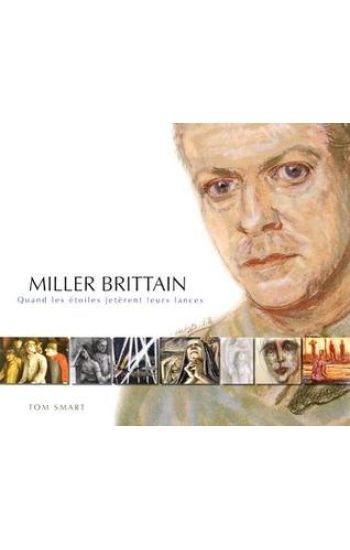
Dans Miller Brittain : Quand les étoiles jetèrent leurs lances, Tom Smart démontre pour la première fois la cohésion de l'imagerie de Brittain et les liens entre le réalisme social de ses premières oeuvres ultérieures, des abstractions figuratives et des compositions d'inspiration surréaliste. Miller Brittain a fait irruption sur la scène artistique canadienne À la fin des années 1930, avec ses dessins et ses peintures du corps humain temples d'émotion et admirablement exécutés. Pendant ses études À l'Art Students League, À New York, il avait intériorisé un point tournant de l'art américain, alors que les modes réalistes traditionnels étaient remis en question par une nouvelle génération d'artistes radicaux selon qui l'art se devait de refléter la vie de l'artiste et les conditions de vie des sujets représentés. À une époque où les paysages du Groupe des Sept dominaient la peinture canadienne, Brittain défia l'establishment avec son sens infallible de la ligne et de la composition, et ses récits humains attrayants. Plus tard, alliant l'art figurative et l'art abstrait, il explora les limites du corps et les confines de la raison afin d'exprimer les profondeurs du désespoir et les sommets de l'extase. Au cours de la Seconde Guerre mondiale, Brittain s'enrôla dans l'Aviation royale du Canada, fut décoré de la Croix du service distingué dans l'Aviation et devint un artiste de guerre canadien. Quand il partait en mission de bombardement, il emportait avec lui un exemplaire des Chants d'expérience, de William Blake. Dans Miller Brittain : Quand les étoiles jetèrent leurs lances, Smart fait voir comment le célèbre poéme " Le tigre ", de Blake, inspira le motif omniprésent dans les oeuvres de Brittain après la guerre, c'est-À-dire la cominaison de l'étoile et de la lance. Ce qui au départ représentait des faisceaux de projecteurs et des avions abattus devint au fil des années des représentationsiconiques de fleurs et de tiges, de têtes et de cous, de rayons de soleil et de fumée. Allen Bentley appuie les observations de Smart en montrant la profonde influence exercée par les théories de Blake sur l'oeuvre de Brittain dans l'après-guerre.
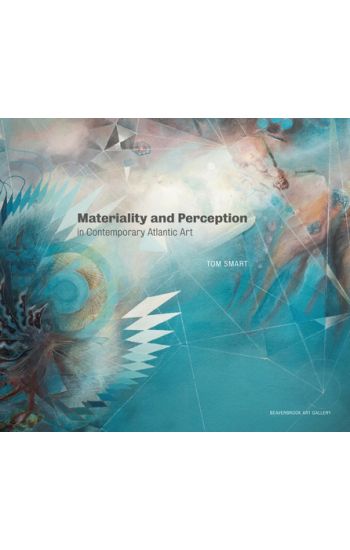
Materiality and Perception in Contemporary Atlantic Art
A fresh look at what is going on in the world of Atlantic Canadian art.Materiality and Perception in Contemporary Atlantic Art showcases over forty contemporary works of art from Atlantic Canada, from established artists such as Freeman Patterson, Gerald Beaulieu, Dawn MacNutt, and Alan Syliboy to emerging artists such as Emma Hassencahl-Perley, Ursula Johnson, and Marie Fox. This is art engaged with contemporary conversations: the frailty of bodies and land, the interactions between people and environment, Indigenous – Settler relations, and the inner and outer markings of identity.Focusing intently on the materiality of the objects themselves -- from jewellery to photographs, from carved paddles to video installations -- the works selected for this publication and the associated exhibition ask viewers to look again, challenging their initial perceptions about what they see and what they perceive about the context in which the work is made.Tom Smart's accompanying essay introduces each work and its context and discusses the role of the viewer in interpreting art objects and creating meaning, whether viewing works as discrete individual objects or as part of the larger, holistic whole.Materiality and Perception in Contemporary Atlantic Art accompanies the 2019 Marion McCain Exhibition of Atlantic Art at the Beaverbrook Art Gallery.
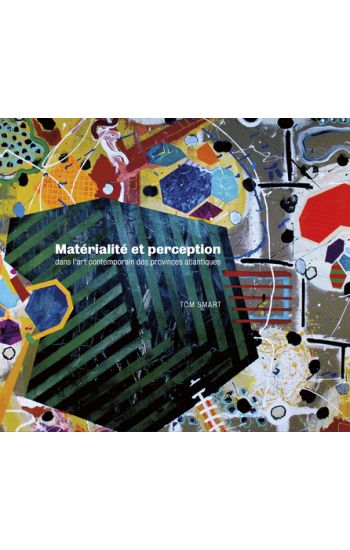
Matérialité et perception dans l'art contemporain des provinces atlantiques
Matérialité et perception dans lart contemporain des provinces atlantiques présente une quarantaine duvres contemporaines réalisées par des artistes canadiens renommés de la région, notamment Freeman Patterson, Gerald Beaulieu, Dawn MacNutt et Alan Syliboy, mais aussi par des artistes émergents comme Emma Hassencahl-Perley, Ursula Johnson et Marie Fox. Leur pratique est ancrée dans des préoccupations actuelles : la fragilité des corps et du territoire, les interactions entre les humains et lenvironnement, les relations entre les Autochtones et les colons ou encore les marqueurs identitaires internes et externes. Les uvres sélectionnées pour lexposition et cette publication bijoux, photographies, pagaies gravées ou installations vidéo sont centrées sur la matérialité des objets eux-mêmes. Elles interpellent le spectateur et linvitent á jeter un autre regard sur le contexte de leur création, á remettre en question ce quil voit et perçoit initialement. Lessai de Tom Smart présente chaque uvre dans son contexte, et traite du rôle du spectateur dans la création de sens et linterprétation des objets dart, tant individuellement quá titre déléments dun ensemble global plus vaste. Matérialité et perception dans lart contemporain des provinces atlantiques accompagne lexposition Marion McCain dart de la région atlantique 2019 présentée á la Galerie dart Beaverbrook.
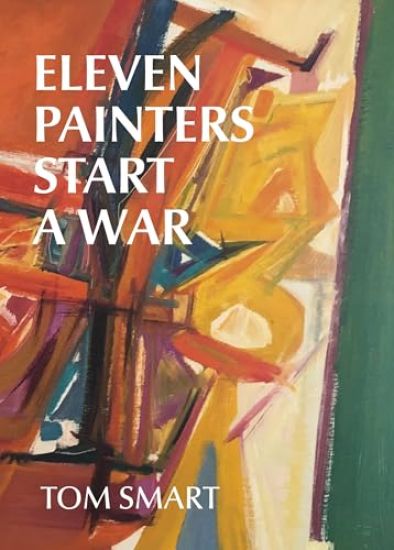
Eleven Painters Start a War

Eleven Painters Start a War

Tom Smart

Biblioasis
2026
sidottu
By the early 1950s, art societies and academies held a tight grip on what could and could not be shown in their annual public exhibitions. Their juries were conservative tastemakers and rabid anti-modernists. Abstract art was rarely selected for display, thus robbing innovative painters of opportunities to have their work seen, reviewed, and purchased. With no outlets to show their art, ambitious, impatient painters sought alternative exhibition venues as a means of advocating for changes in the status quo. In Eleven Painters Start a War, Tom Smart tells the story of the “Painters Eleven,” a group of abstract painters whose anti-establishment ethos was defined by a respect for diversity, creative freedom, abstraction, and contempt for aesthetic complacency. He charts their paths through the 1950s and early 60s as they fight for the acceptance of abstract painting in Canadian art galleries, the critical press, and in the public imagination. Through their interactions and steadfast belief in the promise of abstract art to contribute to a better society, the Painters Eleven managed to change attitudes toward this new way of painting, but not without facing the vitriol of the art establishment who accused them of “starting a war.”
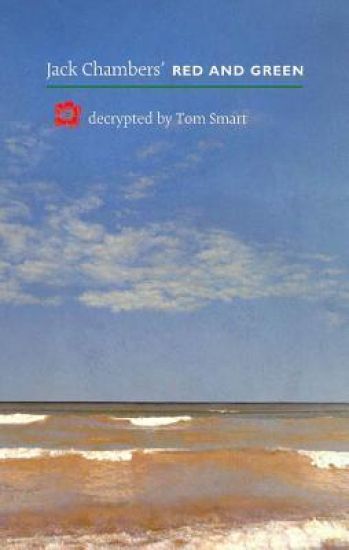
Jack Chambers' Red and Green

Jack Chambers' Red and Green

Tom Smart

Porcupine's Quill Inc.,Canada
2013
pokkari
What is the purpose of life? The purpose of art? What is the purpose of the artist? Jack Chambers probes these fundamental questions in his final piece of work -- an unpublishable manuscript -- 'Red and Green', now decrypted by author and curator Tom Smart.