Kirjojen hintavertailu. Mukana 11 699 587 kirjaa ja 12 kauppaa.

Kirjahaku

Etsi kirjoja tekijän nimen, kirjan nimen tai ISBN:n perusteella.

8 kirjaa tekijältä Tom Sorell

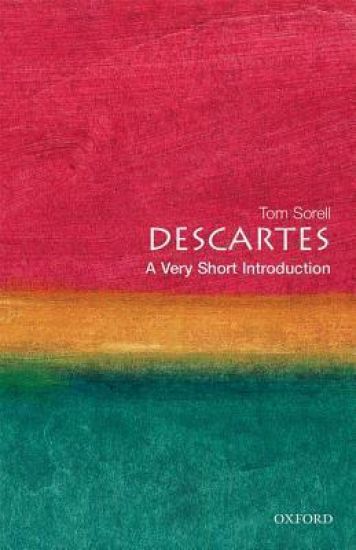
Descartes

Descartes

Tom Sorell

Oxford University Press
2000
nidottu
René Descartes (1596-1650) had a remarkably short working life, and his output was small, yet his contributions to philosophy and science have endured to the present day. He is perhaps best known for his statement 'Cogito, ergo sum'. By a mixture of 'intuition' and 'deduction' Descartes derived from the 'cogito' principle first the existence of a material world. But Descartes did not intend the metaphysics to stand apart from his scientific work, which included important investigations into physics, mathematics, psychology, and optics. In this book Tom Sorrell shows that Descartes was, above all, an advocate and practitioner of a new mathematical approach to physics, and that he developed his metaphysics to support his programme in the sciences. ABOUT THE SERIES: The Very Short Introductions series from Oxford University Press contains hundreds of titles in almost every subject area. These pocket-sized books are the perfect way to get ahead in a new subject quickly. Our expert authors combine facts, analysis, perspective, new ideas, and enthusiasm to make interesting and challenging topics highly readable.
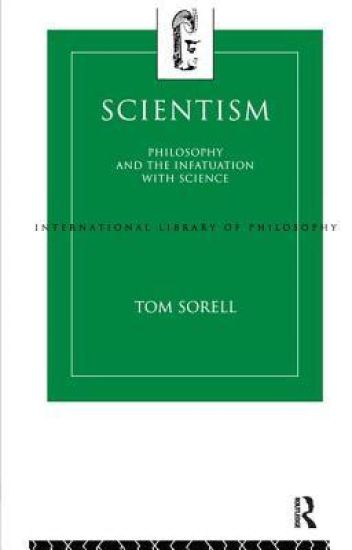
Scientism

Scientism

Tom Sorell

Routledge
1994
nidottu
First Published in 2004. Scientism is the belief that science, especially natural science, is the most valuable part of our culture. Although not confined to philosophers, it is from Bacon and Descartes up to the naturalized epistemology of Quine that the clearest statements of the scientistic attitude are to be found. This book shows how Western philosophy has been dominated by an identification with the aims of science and the rationality of its methods. This has resulted in attempts to either dismiss the unscientific or to put it on a scientific footing. The author criticizes this scientific view of philosophy, wishing not to devalue science but to increase the value placed on the arts and humanities. He insists that philosophy is not a science and condemns recent attempts in the name of naturalism to revive the project of a scientific philosophy.
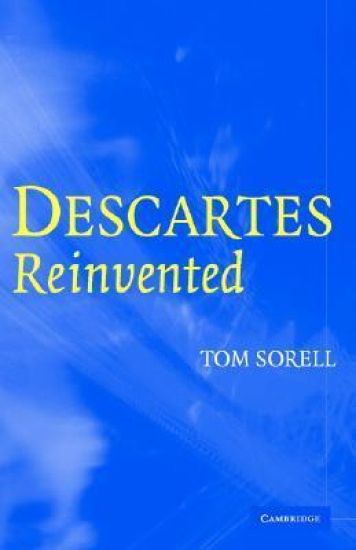
Descartes Reinvented

Descartes Reinvented

Tom Sorell

Cambridge University Press
2005
sidottu
In this study, Tom Sorell seeks to rehabilitate views that are often instantly dismissed in analytic philosophy. His book serves as a reinterpretation of Cartesianism and responds directly to the dislike of Descartes in contemporary philosophy. To identify what is defensible in Cartesianism, Sorell starts with a picture of unreconstructed Cartesianism, which is characterized as realistic, antisceptical but respectful of scepticism, rationalist, centered on the first person, dualist, and dubious of the comprehensiveness of natural science and its supposed independence of metaphysics. Bridging the gap between history of philosophy and analytic philosophy, Sorell also shows for the first time how some contemporary analytic philosophy is deeply Cartesian, despite its outward hostility to Cartesianism.
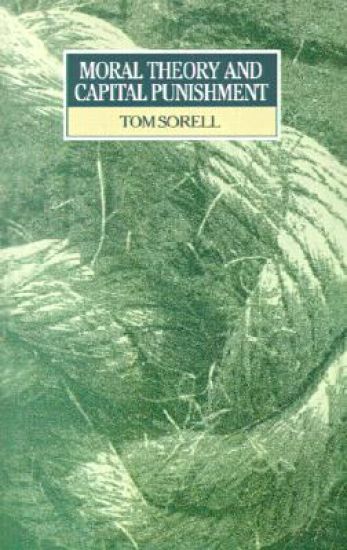
Moral Theory and Capital Punishment

Moral Theory and Capital Punishment

Tom Sorell

Blackwell Publishers
1987
nidottu
Tom Sorell's book concerns not simply capital punishment but the use of philosophical theories of right and wrong. He argues that such theories are not to be regarded as giving expert knowledge of value, still less a definite technique for resolving practical dilemmas. Instead, they improve moral rhetoric and raise the standard of persuasive speech for and against capital punishment, abortion and euthanasia by introducing higher standards of justification for claims about these practices. Moral Theory and Capital Punishment illustrated how philosophical theory can be applied to questions of wide public concern. It introduces the leading moral theories proposed by philosophers and derives from them a variety of arguments for and against the death penalty. The conclusion reached is that capital punishment is morally justifiable in certain cases but extremely difficult to introduce safely into general legislation.
Moral Theory and Anomaly

Moral Theory and Anomaly

Tom Sorell

Blackwell Publishers
1999
sidottu
Moral Theory and Anomaly considers and rejects the claim that moral theory is too utopian to apply properly to worldly pursuits like political office holding and business, and too patriarchal and speciesist to generate a theory of justice applicable to women and the non-human natural world.
Moral Theory and Anomaly

Moral Theory and Anomaly

Tom Sorell

Blackwell Publishers
1999
nidottu
Moral Theory and Anomaly considers and rejects the claim that moral theory is too utopian to apply properly to worldly pursuits like political office holding and business, and too patriarchal and speciesist to generate a theory of justice applicable to women and the non-human natural world.
Emergencies and Politics

Emergencies and Politics

Tom Sorell

Cambridge University Press
2013
sidottu
In this book Tom Sorell argues that emergencies can justify types of action that would normally be regarded as wrong. Beginning with the ethics of emergencies facing individuals, he explores the range of effective and legitimate private emergency response and its relation to public institutions, such as national governments. He develops a theory of the response of governments to public emergencies which indicates the possibility of a democratic politics that is liberal but that takes seriously threats to life and limb from public disorder, crime or terrorism. Informed by Hobbes, Schmitt and Walzer, but substantially different from them, the book widens the justification for recourse to normally forbidden measures, without resorting to illiberal politics. This book will interest students of politics, philosophy, international relations and law.
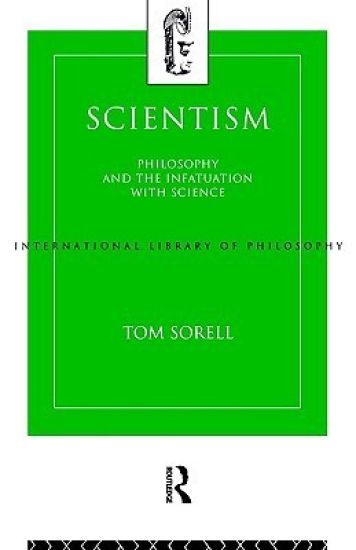
Scientism

Scientism

Tom Sorell

Routledge
2017
sidottu
First Published in 2004. Scientism is the belief that science, especially natural science, is the most valuable part of our culture. Although not confined to philosophers, it is from Bacon and Descartes up to the naturalized epistemology of Quine that the clearest statements of the scientistic attitude are to be found. This book shows how Western philosophy has been dominated by an identification with the aims of science and the rationality of its methods. This has resulted in attempts to either dismiss the unscientific or to put it on a scientific footing. The author criticizes this scientific view of philosophy, wishing not to devalue science but to increase the value placed on the arts and humanities. He insists that philosophy is not a science and condemns recent attempts in the name of naturalism to revive the project of a scientific philosophy.