Kirjojen hintavertailu. Mukana 11 244 527 kirjaa ja 12 kauppaa.

Kirjahaku

Etsi kirjoja tekijän nimen, kirjan nimen tai ISBN:n perusteella.

20 kirjaa tekijältä Tony Bennett

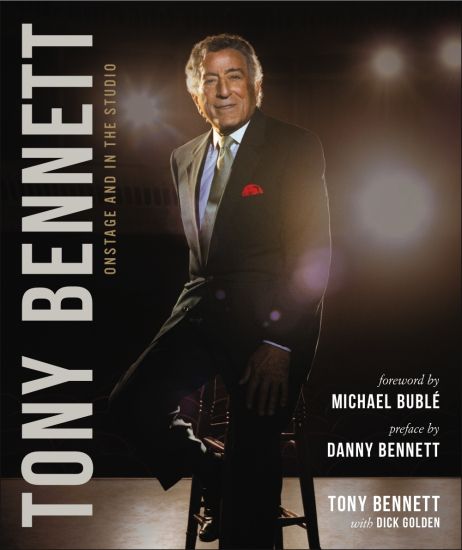
Tony Bennett Onstage and in the Studio
This beautiful definitive book—a follow-up to Tony Bennett: In the Studio (2007), which focused on Tony’s artwork—explores the themes, influences, and inspirations that inform his music and creative life. Along with more than 140 images, including photographs, personal memorabilia, album covers, and notes, this stunning volume includes essays from celebrated friends and colleagues.
Life Is a Gift

Life Is a Gift

Tony Bennett

HARPER PAPERBACKS
2013
nidottu
In this beautiful and rich New York Times bestselling retrospective, the entertainment icon shares with his fans the life lessons he has learned throughout a career that spanned six decades. Illustrated with Bennett's own hand-drawn artwork, Life Is a Gift is a work that will captivate, delight, and be cherished by fans and music lovers of all ages."Writing in the same style as he sings. . . Tony Bennett shares countless tales about showbiz, his famous friends, his family, and his artistic career. . . . His] tips for happiness, success, and longevity are like music to the ears." -- Publishers WeeklyLegendary singer, artist, and performer Tony Bennett was one of the world's most beloved entertainers for more than six decades. From the 78 to the LP to the digital age, Tony did it all. Decade after decade, this artistic icon--who won twenty Grammys, sung for ten presidents, and performed for royalty--refused to compromise his vision or values. Even now, Bennett's popularity grows as new generations discover his timeless songs and incredible voice.In this entertaining and thoughtful memoir, Bennett shares stories of friends and family and the essential lessons they taught him: of the value of hard work and of creating art that continues to inspire; of perseverance and a dedication to excellence; of the necessity of humility, love, respect, and, most important, gratitude. He pays tribute to all the remarkable talents he has had the honor to work with and to learn from, including Judy Garland, Fred Astaire, Louis Armstrong, Aretha Franklin, Barbra Streisand, Paul McCartney, Amy Winehouse, Lady Gaga, and others.
Life Is a Gift LP

Life Is a Gift LP

Tony Bennett

Harper Large Print
2012
nidottu
One of the most well-known and beloved vocalists of our time, Tony Bennett is an American icon. Now, in this rich and beautiful memoir, the legendary Grammy and Emmy Award-winning singer takes us behind the scenes of his multi-platinum career. Revealing, insightful, and always moving, Life Is a Gift tells the stories of Bennett's experiences in the music industry, what he learned, and who he met along the way, including Frank Sinatra, Nat King Cole, Ella Fitzgerald, Aretha Franklin, and Duke Ellington, as well as Amy Winehouse, John Mayer, and Lady Gaga. A "master class in life," this revealing retrospective offers an intimate look at Tony Bennett's journey, from growing up during the Great Depression to carving a career in popular music that has spanned more than six decades as his popularity among all generations continues to grow.
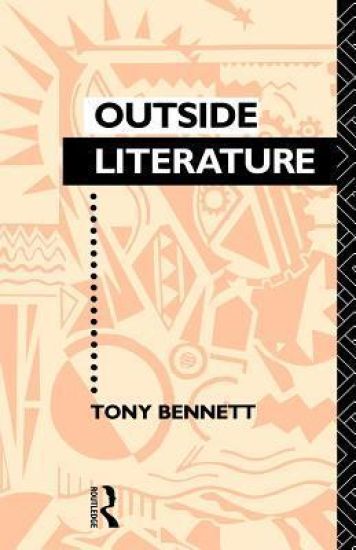
Outside Literature

Outside Literature

Tony Bennett

Routledge
1990
nidottu
Literature is often defined as a distinct category of writing in terms of particular formal or aesthetic attributes. Tony Bennett suggests that literature be re-defined as an institutionally defined field of textual uses and effects. Charting a course between literary aesthetics and their associated politics, Bennett engages critically with the central concerns of Marxist theoreticians such as Georg Lukacs, Fredric Jameson, Terry Eagleton and Frank Lentricchia. Outside Literature also includes a critique of post-structuralist and postmodernist methodologies which, Bennett suggests, are incapable of supporting anything more than a purely rhetorical politics. Drawing on the work of Foucault, Bennett asserts the need for a more definite enquiry into the institutional regulation of culture, in order that questions of literary and cultural politics be detached from the eviscerating generalities of literary and cultural criticism.
The Birth of the Museum

The Birth of the Museum

Tony Bennett

Routledge
1995
sidottu
In a series of richly detailed case studies from Britian, Australia and North America, Tony Bennett investigates how nineteenth- and twentieth-century museums, fairs and exhibitions have organized their collections, and their visitors.Discussing the historical development of museums alongside that of the fair and the international exhibition, Bennett sheds new light upon the relationship between modern forms of official and popular culture.Using Foucaltian perspectives The Birth of the Museum explores how the public museum should be understood not just as a place of instruction, but as a reformatory of manners in which a wide range of regulated social routines and performances take place.This invigorating study enriches and challenges the understanding of the museum, and places it at the centre of modern relations between culture and government. For students of museum, cultural and sociology studies, this will be an asset to their reading list.
The Birth of the Museum

The Birth of the Museum

Tony Bennett

Routledge
1995
nidottu
In a series of richly detailed case studies from Britian, Australia and North America, Tony Bennett investigates how nineteenth- and twentieth-century museums, fairs and exhibitions have organized their collections, and their visitors.Discussing the historical development of museums alongside that of the fair and the international exhibition, Bennett sheds new light upon the relationship between modern forms of official and popular culture.Using Foucaltian perspectives The Birth of the Museum explores how the public museum should be understood not just as a place of instruction, but as a reformatory of manners in which a wide range of regulated social routines and performances take place.This invigorating study enriches and challenges the understanding of the museum, and places it at the centre of modern relations between culture and government. For students of museum, cultural and sociology studies, this will be an asset to their reading list.
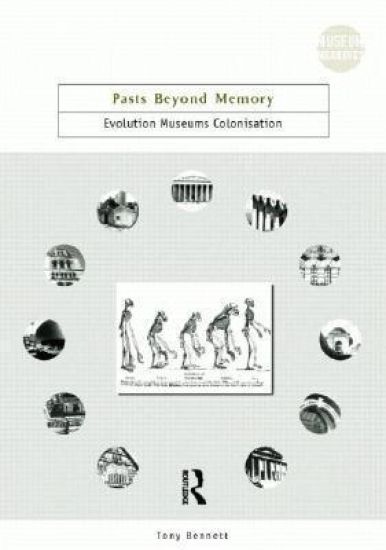
Pasts Beyond Memory

Pasts Beyond Memory

Tony Bennett

Routledge
2004
sidottu
Contributing to current debates on relationships between culture and the social, and the the rapidly changing practices of modern museums as they seek to shed the legacies of both evolutionary conceptions and colonial science, this important new work explores how evolutionary museums developed in the USA, UK, and Australia in the late nineteenth century.
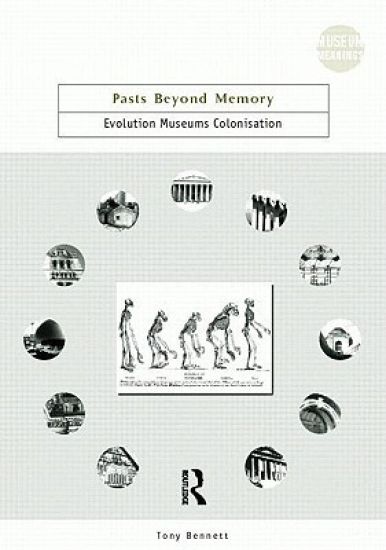
Pasts Beyond Memory

Pasts Beyond Memory

Tony Bennett

Routledge
2004
nidottu
Contributing to current debates on relationships between culture and the social, and the the rapidly changing practices of modern museums as they seek to shed the legacies of both evolutionary conceptions and colonial science, this important new work explores how evolutionary museums developed in the USA, UK, and Australia in the late nineteenth century.
Formalism and Marxism

Formalism and Marxism

Tony Bennett

Routledge
2003
sidottu
Russian Formalism and Marxist criticism had a seismic impact on twentieth-century literary theory and the shockwaves are still felt today. First published in 1979, Tony Bennett's Formalism and Marxism created its own reverberations by offering a ground-breaking new interpretation of the Formalists' achievements and demanding a new way forward in Marxist criticism.The author first introduces and reviews the work of the Russian Formalists, a group of theorists who made an extraordinarily vital contribution to literary criticism in the decade followig the October Revolution of 1917. Placing the work of key figures in context and addressing such issues as aesthetics, linguistics and the category of literature, literary form and function and literary evolution, Bennett argues that the Formalists' concerns provided the basis for a radically historical approach to the study of literature. Bennett then turns to the situation of Marxist criticism ad sketches the risks it has run in becoming overly entangled with the concerns of traditional aesthetics. He forcefully argues that through a serious and sympathetic reassessment of the Formalists and their historical approach, Marxist critics might find their way back on to the terrain of politics, where they and theri work belong.Addressing such crucial questions as 'What is literature?' or 'How should it be studied and to what end?', Formalism and Marxism explores ideas which should be considered by any student or reader of literature and provides a particular challenge to those interested in Marxist criticism. Now with a new afterword, this classic text still offers the best available starting point for those new to the field, as well as representing a crucial intervention in twentieth-century literary theory.
Formalism and Marxism

Formalism and Marxism

Tony Bennett

Routledge
2003
nidottu
Russian Formalism and Marxist criticism had a seismic impact on twentieth-century literary theory and the shockwaves are still felt today. First published in 1979, Tony Bennett's Formalism and Marxism created its own reverberations by offering a ground-breaking new interpretation of the Formalists' achievements and demanding a new way forward in Marxist criticism.The author first introduces and reviews the work of the Russian Formalists, a group of theorists who made an extraordinarily vital contribution to literary criticism in the decade followig the October Revolution of 1917. Placing the work of key figures in context and addressing such issues as aesthetics, linguistics and the category of literature, literary form and function and literary evolution, Bennett argues that the Formalists' concerns provided the basis for a radically historical approach to the study of literature. Bennett then turns to the situation of Marxist criticism ad sketches the risks it has run in becoming overly entangled with the concerns of traditional aesthetics. He forcefully argues that through a serious and sympathetic reassessment of the Formalists and their historical approach, Marxist critics might find their way back on to the terrain of politics, where they and theri work belong.Addressing such crucial questions as 'What is literature?' or 'How should it be studied and to what end?', Formalism and Marxism explores ideas which should be considered by any student or reader of literature and provides a particular challenge to those interested in Marxist criticism. Now with a new afterword, this classic text still offers the best available starting point for those new to the field, as well as representing a crucial intervention in twentieth-century literary theory.
Making Culture, Changing Society

Making Culture, Changing Society

Tony Bennett

Routledge
2013
sidottu
Making Culture, Changing Society proposes a challenging new account of the relations between culture and society focused on how particular forms of cultural knowledge and expertise work on, order and transform society. Examining these forms of culture’s action on the social as aspects of a historically distinctive ensemble of cultural institutions, it considers the diverse ways in which culture has been produced and mobilised as a resource for governing populations.These concerns are illustrated in detailed case studies of how anthropological conceptions of the relations between race and culture have shaped – and been shaped by – the relationships between museums, fieldwork and governmental programmes in early twentieth-century France and Australia. These are complemented by a closely argued account of the relations between aesthetics and governance that, in contrast to conventional approaches, interprets the historical emergence of the autonomy of the aesthetic as vastly expanding the range of art’s social uses.In pursuing these concerns, particular attention is given to the role that the cultural disciplines have played in making up and distributing the freedoms through which modern forms of liberal government operate. An examination of the place that has been accorded habit as a route into the regulation of conduct within liberal social, cultural and political thought brings these questions into sharp focus. The book will be of interest to students and scholars of sociology, cultural studies, media studies, anthropology, museum and heritage studies, history, art history and cultural policy studies.
Making Culture, Changing Society

Making Culture, Changing Society

Tony Bennett

Routledge
2013
nidottu
Making Culture, Changing Society proposes a challenging new account of the relations between culture and society focused on how particular forms of cultural knowledge and expertise work on, order and transform society. Examining these forms of culture’s action on the social as aspects of a historically distinctive ensemble of cultural institutions, it considers the diverse ways in which culture has been produced and mobilised as a resource for governing populations.These concerns are illustrated in detailed case studies of how anthropological conceptions of the relations between race and culture have shaped – and been shaped by – the relationships between museums, fieldwork and governmental programmes in early twentieth-century France and Australia. These are complemented by a closely argued account of the relations between aesthetics and governance that, in contrast to conventional approaches, interprets the historical emergence of the autonomy of the aesthetic as vastly expanding the range of art’s social uses.In pursuing these concerns, particular attention is given to the role that the cultural disciplines have played in making up and distributing the freedoms through which modern forms of liberal government operate. An examination of the place that has been accorded habit as a route into the regulation of conduct within liberal social, cultural and political thought brings these questions into sharp focus. The book will be of interest to students and scholars of sociology, cultural studies, media studies, anthropology, museum and heritage studies, history, art history and cultural policy studies.
Culture

Culture

Tony Bennett

SAGE Publications Inc
1998
sidottu
This major work, by one of the key figures in cultural studies, critically examines the theory, history and practice of culture. It is a comprehensive review of the main debates in cultural studies that is grounded in an historical account of the modern relations between culture and government. The book illuminates the relationship between culture and the social, as well as offering an important assessment of the role of intellectuals in relation to the organization of contemporary cultural life. Culture: A Reformer's Science is a major reappraisal of cultural studies; an engagement with the relations of culture and policy; and a critical examination of the conditions for intellectual work.
Culture

Culture

Tony Bennett

SAGE Publications Inc
1998
nidottu
This major work, by one of the key figures in cultural studies, critically examines the theory, history and practice of culture. It is a comprehensive review of the main debates in cultural studies that is grounded in an historical account of the modern relations between culture and government. The book illuminates the relationship between culture and the social, as well as offering an important assessment of the role of intellectuals in relation to the organization of contemporary cultural life. Culture: A Reformer's Science is a major reappraisal of cultural studies; an engagement with the relations of culture and policy; and a critical examination of the conditions for intellectual work.
Museums, Power, Knowledge

Museums, Power, Knowledge

Tony Bennett

Routledge
2017
nidottu
Few perspectives have invigorated the development of critical museum studies over the late twentieth and early twenty-first centuries as much as Foucault’s account of the relations between knowledge and power and their role in processes of governing. Within this literature, Tony Bennett’s work stands out as having marked a series of strategic engagements with Foucault’s work to offer a critical genealogy of the public museum, offering an account of its nineteenth-century and early twentieth-century development that has been constantly alert to the politics of museums in the present. Museums, Power, Knowledge brings together new research with a set of essays initially published in diverse contexts, making available for the first time the full range of Bennett’s critical museology. Ranging across natural history, anthropological art, geological and history museums and their precursors in earlier collecting institutions, and spanning the eighteenth to the twenty-first centuries in discussing museum practices in Britain, Australia, the USA, France and Japan, it offers a compelling account of the shifting political logics of museums over the modern period.As a collection that aims to bring together the ‘signature’ work of a museum theorist and historian whose work has long occupied a distinctive place in museum/society debates, Museums, Power, Knowledge will be of interest to researchers, teachers and students working in the fields of museum and heritage studies, cultural history, cultural studies and sociology, as well as museum professionals and museum visitors.
Museums, Power, Knowledge

Museums, Power, Knowledge

Tony Bennett

Routledge
2017
sidottu
Few perspectives have invigorated the development of critical museum studies over the late twentieth and early twenty-first centuries as much as Foucault’s account of the relations between knowledge and power and their role in processes of governing. Within this literature, Tony Bennett’s work stands out as having marked a series of strategic engagements with Foucault’s work to offer a critical genealogy of the public museum, offering an account of its nineteenth-century and early twentieth-century development that has been constantly alert to the politics of museums in the present. Museums, Power, Knowledge brings together new research with a set of essays initially published in diverse contexts, making available for the first time the full range of Bennett’s critical museology. Ranging across natural history, anthropological art, geological and history museums and their precursors in earlier collecting institutions, and spanning the eighteenth to the twenty-first centuries in discussing museum practices in Britain, Australia, the USA, France and Japan, it offers a compelling account of the shifting political logics of museums over the modern period.As a collection that aims to bring together the ‘signature’ work of a museum theorist and historian whose work has long occupied a distinctive place in museum/society debates, Museums, Power, Knowledge will be of interest to researchers, teachers and students working in the fields of museum and heritage studies, cultural history, cultural studies and sociology, as well as museum professionals and museum visitors.
Critical Trajectories

Critical Trajectories

Tony Bennett

Wiley-Blackwell (an imprint of John Wiley Sons Ltd)
2007
nidottu
Critical Trajectories: Culture, Society, Intellectuals brings together for the first time writings from one of the leading figures in cultural studies -- Tony Bennett. The selections in the volume span the period from the late 1970s to the present, representing issues of enduring concern in Bennett's work over this period and throughout his wide-ranging intellectual career. Charts the extensive influence of Bennett’s thinking across the humanities and social sciences - from cultural history to museums and memory, and from Bond and popular culture to cultural policy and governanceTackles some of the most important subjects in cultural studies, including aesthetics, textuality, the intellectual, and the role of cultural historyIncludes a new introductory essay pinpointing Bennett’s concerns in changing intellectual and political contexts
The Good Life

The Good Life

Tony Bennett

Atria Books
2007
pokkari
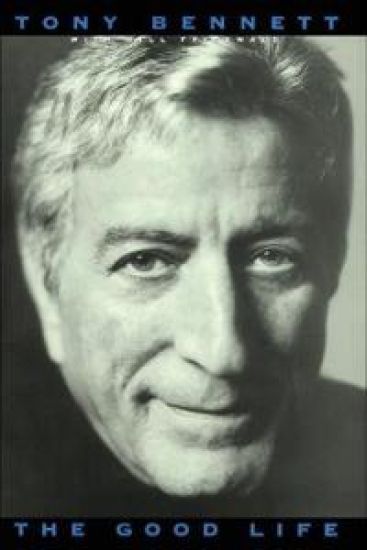
He's that regular guy from Astoria, Queens, who left his heart in San Francisco. He's the postwar heartthrob who inspired hundreds of young girls to wear black outside St. Patrick's Cathedral on his wedding day. He's the darling of the MTV generation who made music history when, at the age of 68, he won the coveted Grammy Award(R) for Album of the Year. He's the consummate artist known worldwide for his paintings. He's Tony Bennett, whose star shines brighter than ever as he enters his fifth decade of performing. Now, for the first time, this legend shares his amazing life story -- in a voice that's pure Tony Bennett: warm, resonant, and unforgettable. "Tony Bennett has not just bridged the generation gap, he has demolished it," praised "The New York Times." Since his appearance with the Red Hot Chili Peppers of the 1993 MTV Video Awards, and the addition of his seminal video, "Steppin' Out," to the MTV playlist, Bennett has become the hottest -- and coolest -- pop-culture icon for today's younger listeners, while remaining beloved by their parents and grandparents. An astonishing four generations have experienced the Tony Bennett magic -- the mesmerizing spell of a singer in love with singing, who embraces his audience with a soulful serenity communicated by both the man and his music. Honored with countless awards, including eight Grammys, and with more than ninety albums to his credit (more than thirty million sold for the Columbia label alone), no other recording artist has attained Bennett's stature -- or garnered the half-century of memories shared in "The Good Life." From Sinatra, Judy Garland and Ella Fitzgerald, to k.d. lang and Elvis Costello, Bennett shares his unique takes on the most fascinating talents of our time. Here is the story of his lifelong love affair with art, music, and performing -- from his childhood in Depression-era Queens, where opera and Billie Holiday flowed freely; to his stint as a singing waiter; to soaking up the New York jazz scene in the 1940s. With crisp wit and firmly grounded emotion, Bennett captures the people and places that shaped his sublime performances. The dozens of hits he introduced to the great American songbook, including "Because of You," "Rags to Riches," "Cold, Cold Heart," and his signature song, "I Left My Heart in Son Francisco," remain a legacy of truth and beauty for the classic art of intimate singing. In this wonderfully revealing self-portrait, we get to know Tony Bennett as he really is: an unpretentious and thoughtful human being. His key to success is consistency: His constant dedication in his pursuit of excellence has never wavered, despite the trials and tribulations one can encounter when placing integrity above all else. Through all of his personal and artistic challenges, he has remained, in his own words, "a humanist" whose Zen-like philosophy of life is an inspiration for all ages. Like the fascinating story he shares in "The Good Life, " Tony Bennett is one of a kind, an American treasure, an enduring artist seasoned with experience and self-knowledge, and a true class act.
Habit's Pathways

Habit's Pathways

Tony Bennett

DUKE UNIVERSITY PRESS
2023
sidottu
Habit has long preoccupied a wide range of theologians, philosophers, sociologists, psychologists, and neuroscientists. In Habit’s Pathways Tony Bennett explores the political consequences of the varied ways in which habit’s repetitions have been acted on to guide or direct conduct. Bennett considers habit’s uses and effects across the monastic regimens of medieval Europe, in plantation slavery and the factory system, through colonial forms of rule, and within a range of medicalized pathologies. He brings these episodes in habit’s political histories to bear on contemporary debates ranging from its role in relation to the politics of white supremacy to the digital harvesting of habits in practices of algorithmic governance. Throughout, Bennett tracks how habit’s repetitions have been articulated differently across divisions of class, race, and gender, demonstrating that although habit serves as an apparatus for achieving success, self-fulfillment, and freedom for the powerful, it has simultaneously served as a means of control over women, racialized peoples, and subordinate classes.
Habit's Pathways

Habit's Pathways

Tony Bennett

DUKE UNIVERSITY PRESS
2023
pokkari
Habit has long preoccupied a wide range of theologians, philosophers, sociologists, psychologists, and neuroscientists. In Habit’s Pathways Tony Bennett explores the political consequences of the varied ways in which habit’s repetitions have been acted on to guide or direct conduct. Bennett considers habit’s uses and effects across the monastic regimens of medieval Europe, in plantation slavery and the factory system, through colonial forms of rule, and within a range of medicalized pathologies. He brings these episodes in habit’s political histories to bear on contemporary debates ranging from its role in relation to the politics of white supremacy to the digital harvesting of habits in practices of algorithmic governance. Throughout, Bennett tracks how habit’s repetitions have been articulated differently across divisions of class, race, and gender, demonstrating that although habit serves as an apparatus for achieving success, self-fulfillment, and freedom for the powerful, it has simultaneously served as a means of control over women, racialized peoples, and subordinate classes.